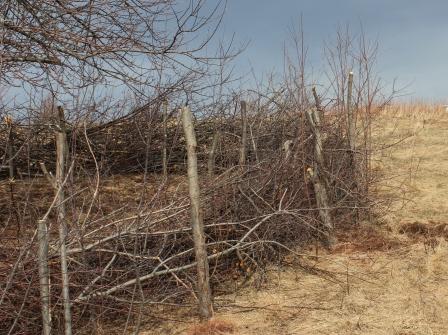
I am mulling over the idea of hedging two sides of my property. My primary end goal is stock-proof fencing on those sides - while I've put up a new wire fence on one side of the property, I'm very interested in hedging .
Currently, I have a dilapidated wire fence on those sides - the wooden posts have long rotted out, and there's intermittent steel posts holding the fence up. A few feet behind the fence is a row of trees. As you no doubt see in the attached photos, one 'feature' of this tree line is some fairly large, untended Box Elders ('Manitoba Maples' here) which have developed a bad habit of falling and smashing the existing fence flat. As my intention is to someday have a few beef cattle in this field, I need better fencing, and whether I do wire, electric or hedging, I can't have trees that will destroy a section every time we get a bad storm.
So, I'm working through the initial plans for how to get to a properly hedged fence from here for both the longetivity, beauty and habitat it provides with proper maintenance.. A few thoughts:
1. I fully expect that cutting the Box Elders to their stumps, essentially coppicing them, will lead to a flush of new growth. Within a few years, this will provide some good stems for hedging.
2. There's a few other species present and locally available to easily collect cuttings for planting to provide additional stems in the middle - Red Osier Dogwood and Willow come to mind as being nearby and very easy to propagate by cutting and sticking.
3. There's a fair amount of invasive buckthorn in the treeline. In one sense, I think it would make a good hedge species. However, it also has a lot of downsides to the ecosystem in general. Having dealt with it for years, manual removal typically isn't very successful and it would require herbicides to remove.
4. I really can't / won't invest a lot of money in this project. I would want to focus on species I can scrounge locally.
5. On paper, I'm in Zone 5A or 5B depending on the map. However, we've definitely had winter lows in the Zone 4b range and lots of wind exposure, so I plan to work within a 4b hardiness range.
This would be a plan over several years. There's a lot of trees to cut down and remove. They have to go anyways, or the wind will do it for me. The Sugar maples referenced in the photo description at the front of the property will be spared - they are actually several feet in front of the wire fence and maybe 6 feed in front of where the main hedge line would run and are still very strong..
I'd appreciate any suggestions on how best to get to where I want to be from here.
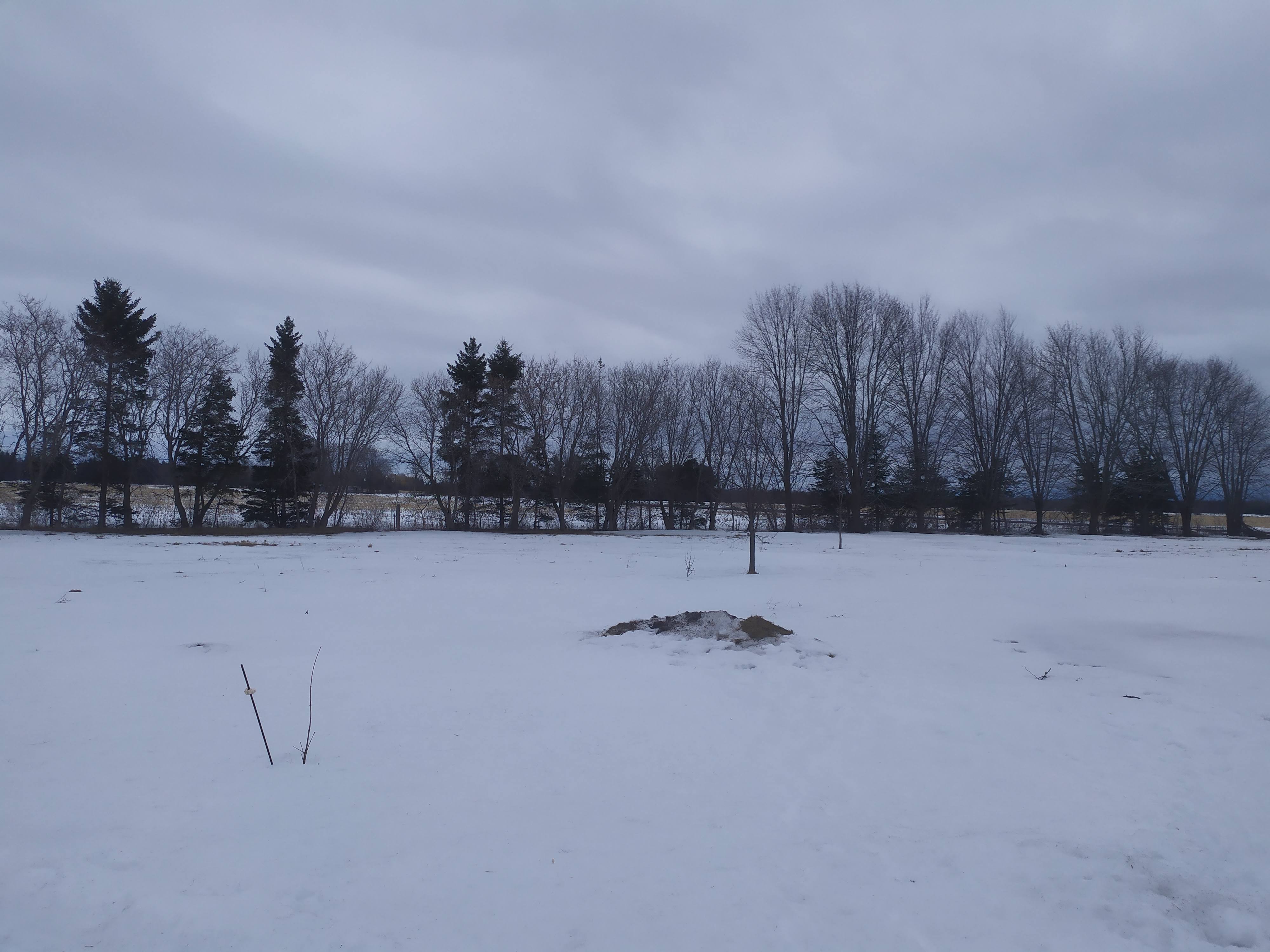
IMG_20230216_091904.jpg
Front section of east property line- note large sugar maples on the right end of the photo
I have hazel. They coppice and regrow quite fast - and generally pretty straight. The native population used them for spears many years ago. I'm 100 miles from Seattle, 60 miles from Olympia and 40 or so miles from the ocean in a forested ecosystem.
I was recently asked to install stock fencing inside a dogwood, hazel existing hedge to keep a dog in, using chestnut posts, when one the home owners came home he was asked what he thought of the fence, 'what fence'.
You couldn't see the fencing (summer time) which kept a very natural open feel to the property.
My approach in my property is to gradually create an edible hedge, I currently have apple, Maribelle, kiwi, hazel, crab apple, quince, blackberry, medlar, mulberry, plum and pear. All in-between the established pruned back trees and shrubs
I'm considering hedging in my front yard (primarily to keep the dog and possible future sheep in, but also to keep people out as I live in an urban area).
The challenge I have is that there are so many mature trees, including a gigantic oak, several massive loblolly pines and a handful of pecans with very wide canopies that there isn't the full sun environment.
I'm currently leaning towards Washington Hawthorn with pyracantha and gooseberries to fill in some of the shadier areas.
Hawthorn's primary selling point is that you can get seedlings from state nurseries for under $1 each.





 5
5



![[Thumbnail for IMG_3997.jpeg]](/t/210662/a/284407/IMG_3997.jpeg "Filename: IMG_3997.jpeg
Description:")