• Post Reply Bookmark Topic Watch Topic
  • New Topic
permaculture forums growies critters building homesteading energy monies kitchen purity ungarbage community wilderness fiber arts art permaculture artisans regional education skip experiences global resources cider press projects digital market permies.com pie forums private forums all forums
this forum made possible by our volunteer staff, including ...
master stewards:
  • paul wheaton
  • Anne Miller
  • Carla Burke
  • Nancy Reading
  • John F Dean
  • Timothy Norton
  • Jay Angler
stewards:
  • r ransom
  • Pearl Sutton
  • Tereza Okava
master gardeners:
  • Christopher Weeks
gardeners:
  • M Ljin
  • Megan Palmer
  • Kate Downham

Vaux's/chimney swifts - insect predators

 
pollinator
Posts: 455
Location: Zone 8b: SW Washington
88
forest garden trees food preservation bee solar
  • Mark post as helpful
  • send pies
    Number of slices to send:
    Optional 'thank-you' note:
  • Quote
  • Report post to moderator
I would like to start a conversation about Vaux's Swifts & Chimney Swifts.

They seem to be a major predator of flying insects, many of which are probably garden/farm pests.

I would guess that they soon will be (or already are) in trouble, for the following reasons:
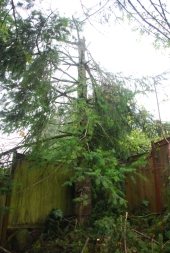
-Their natural roosts are large old trees which are hollow and which have the tops broken off. These have always been rare, but now they are exceedingly rare, due to development/logging and because most humans consider such trees to be dangerous "snags" which could fall on someone or fuel a wildfire - thus we cut them down.
- Chimney swifts (which are mostly in the east) adapted to use large chimneys for roosts long ago. Vaux's swifts only recently adapted to using chimneys.
- However, open-top chimneys are no longer used in new construction, and most large old chimneys have been capped or torn down. Thus the number of chimneys which swifts can utilize is shrinking rapidly.

Has anyone here done any of the following to help swifts:
1. Uncapped a chimney to make it available to swifts (and bats)
2. Protected a large hollow snag from being cut down
3. Created a snag by girdling or cutting off the top of a large tree. Or even blasting the top off with dynamite: http://www.opb.org/television/video/dynamiting-trees/
4. Built a swift roost
5. Planted a tree which you plan to convert to a snag at some point

I have done 1. & 5. and am considering doing 4. After uncapping the chimney, the swifts started using it within a few months.

For building a swift roost, I would like to build a stone masonry cylinder.

What thoughts do you have on swifts?

 
steward
Posts: 7926
Location: Currently in Lake Stevens, WA. Home in Spokane
366
  • Mark post as helpful
  • send pies
    Number of slices to send:
    Optional 'thank-you' note:
  • Quote
  • Report post to moderator
Thanks for posting this Dave.

Here are two good reads on the important need to maintain snags. One from OK, the other from WA.

http://wdfw.wa.gov/living/snags/
http://pods.dasnr.okstate.edu/docushare/dsweb/Get/Document-5202/Snags%20L-270.pdf
 
Paper jam tastes about as you would expect. Try some on this tiny ad:
Heat your home with the twigs that naturally fall of the trees in your yard
http://woodheat.net
reply
    Bookmark Topic Watch Topic
  • New Topic