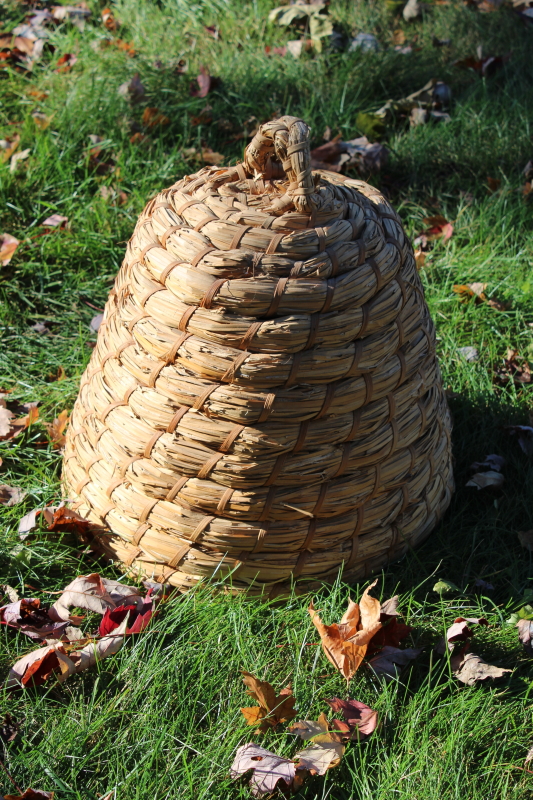
So, I know a guy who suddenly became a very good friend. All it took was him bringing me 44kg worth of straw...
Here's how I want to use them:
- Improving compost piles, biointensive style: good chunk of carbon matter, fresh damaged organic food from the market (last time I got 15 melons, was kind of funny), soil, water, repeat
- Mulching beds
- Growing mushrooms in them (a great guy on those very forum is growing stropharias, so that's definitely going to be part of the plan)
- Lasagna raised beds
Technically I could try things such as building a house or something, but I'm not there yet.
Now it's your turn. You suddenly go from no straw to 44kg of straw in your kitchen (about that...). What would you do ?
I would use them in this order, as they break down over time:
1. Build a winter shelter for a feral cat that I have been unable to catch + build it/ pile the extras around my house foundation as extra insulation + wind breaks for the winter.
2. Plant in winecaps in the spring (Northspore has some great videos on winecaps in straw bales--looks super easy)
3. After the mushrooms are done, you should have some great compost!
I routinely buy bales of straw for animal bedding. In winter I just keep adding clean sttaw to the top. After some time there’s a deep layer, which is urine soaked deep down, and permeated with goat (or sheep) poop… little pellets.
Eventually it begins to ferment and generate heat. By the time February comes around (a couple months after solstice in Northern hemisphere) it’s quite warm. Compost thermometer reads 90- 100 F. Perfect for new born kids when snow is deep outside and icy winds are blowing.
So I am using the straw for winter heating .😊
I used to do this so I could stsrt the milking season 3 months earlier.
In the springtime, I clear out that 1 foot deep compressed mass. It goes into the compost pile, or gets used as mulch. Some years I have stacked it in to a square of pallets, then watered it adequately to restart the heat, and then used it as a hot bed for tomato and pepper starts. I live at 6000 feet. Snow and winter retard the growing season. When the tomato plants are in the pallet enclosure on top of the used bedding straw, I put a cover over the top at night or when the weather is too cold. What this gets me is robust plants ready for full sun, tight compact foliage. Must everyone in my town has plants with root systems in tiny containers, and 2 feet tall spindly plants. When I take them to our tiny farmers’ market they are so clearly superior that I can charge 5 times as much for them, AND no one else can sell any of theirs until I am out.
You could also use the heat generating decomposing straw to heat a greenhouse!
Run the straw through a chipper and create a wonderful cover for new seeding. This can jump start a green manure patch such as planting buckwheat. If kept watered, it will provide for a higher rate of germination so the seeds do not have to be spread as thick.
Same chopped straw is great to create sun-dried clay bricks, cob walls, heat retention around a RMH exhaust, pizza ovens, a liner for large planters that retains moisture without allowing leakage of interior fill. Infill between two solid wood walls for insulation to use as either root cellar or ice house (or both depending on season).
Like Thekla, I use the deep litter method, in my goat/ sheep barn & chicken coop. We also stack a bale or two against the water spigots, to help insulate them. I also (back when I had a basement) used to stuff a bale into each basement window well, too improve the warmth in the whole house, and when I had an outside dog, I'd pile straw around & on his doghouse for warmth, because the poor (chow-chow/husky mix) baby was terrified of coming indoors, literally screaming and thrashing, when we tried to bring him in.
Use in cob and adobe has been mentioned. If you have no horse manure for your natural plaster, then you could use straw cut up fine. String trimmer in a trash barrel is one method.
![[Logo]](/templates/default/mobile/images/mobile-permies-2015.png)