posted 5 hours ago
Here i'd like to keep track of progress and inform others about the hedges i make on my project.
I do not have a lot of water at hand in the summer time when newly planted trees are most in need of it so i have some tricks.
I make distinctions between southfacing hedges that go from east to west which contain mostly of the hardiest trees i have found so far, peach trees.
The north south facing hedges consist of trees/shrubs and groundcover that because of their positioning provide some shade to each other.
Some trees are nitrogenfixers like acacia pseudorobinia which i use as a chop and drop tree and others are simply apple trees or plum mostly. Not a lot of pears as of yet.
I like these trees to be homegrown mostly. The peach trees are in their fourth generation freely crossing landrace. The apples come from a rootstock project i do, variety Bittenfelder and the plums are from a tree that appeared with city compost some ten years ago and has a suckering habit, it is a GreenGauge known to be true to seed. I have found and gathered an old pear variety with a suckering habit and i have a Mirabel plum which has a suckering habit.
Basicly i am trying to get trees established first, chop and drop to increase fertility, mulch with hay to keep grass down and see where it goes. It's experimental, there is quite some talk about syntropic agroforestry, but most trees do not apply to my context. The temperate climates are not very popular to try this kind of style. I understand it goes slowly, but i try to do it on the cheap, without much water, in shitty soil anyway. I'm not bothered with maximizing fruit harvest at all. Usually when the flows start coming i don't know what to do with the abundance so it goes to wasps, badgers, and rots back into the soil, if my neighbor lady or others who like to cook and preserve more than i, they come in and get some to make and share marmelades with it. I trust if flows get bigger solutions will appear.
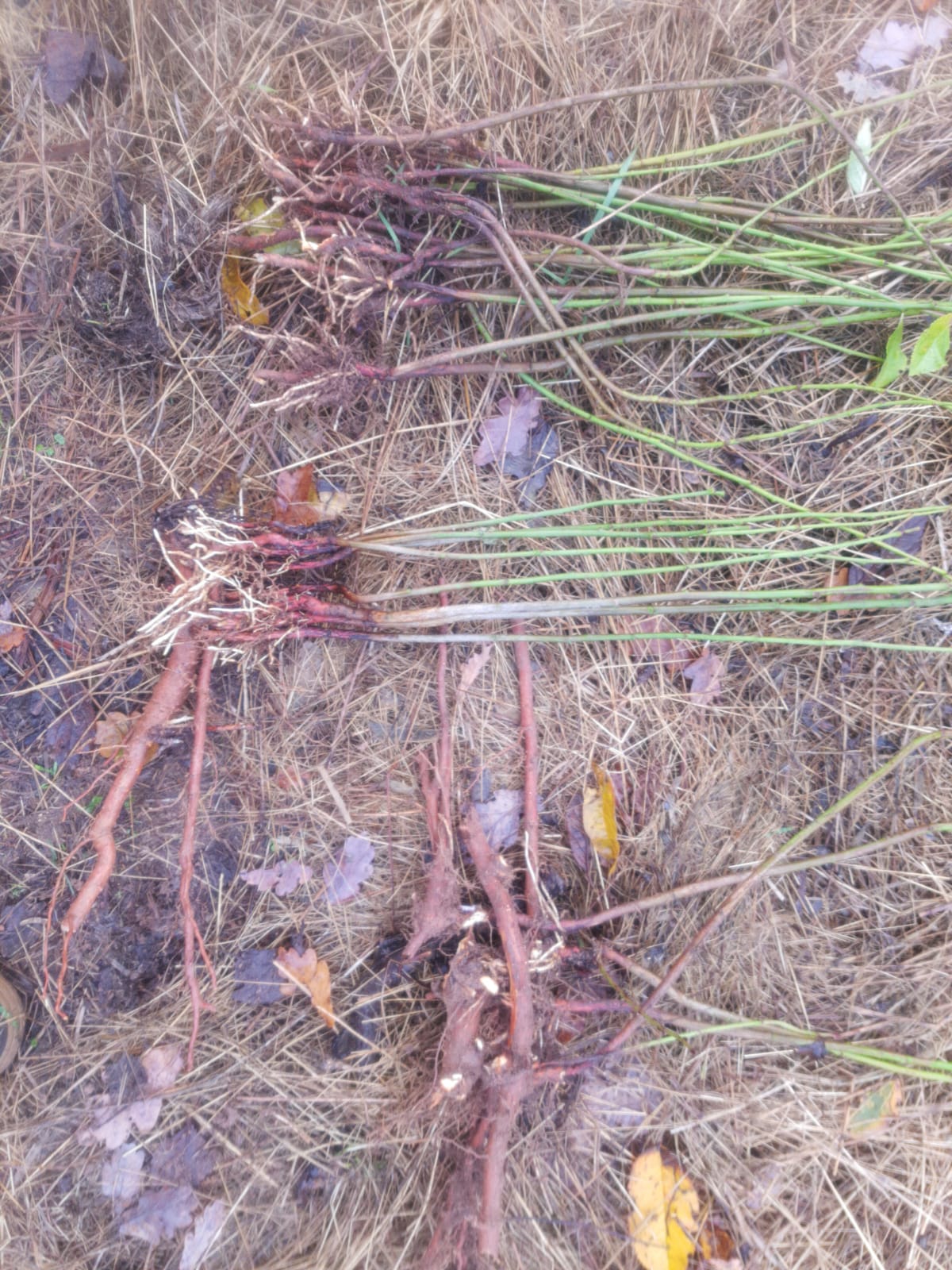
This is a year in which plumbs have suckered enormously here and there, and because it's that time of year where leaves have fallen off and the trees seem to rest i have taken advantage of a quiet morning to dig some up. Nature keeps surprising me. I haven't so far had the luck to get this kind of suckering with all the white roots. It's in the photo.. The middle is how i got them out of the soil, the left are the stems i could just pick off, on the right are the bigger roots. The bigger roots i give a chance in the field i'm transforming. The smaller ones get a chance in the passive tree nursery.
hugomorvan.jpg

Creating edible biodiversity and embracing everlasting abundance.






 5