May Gardner

pollinator
+ Follow
since Jun 09, 2026
Merit badge: bb list bbv list
Biography
Studying, practicing, experimenting, dabbling, living the organic permie life to various degrees (40%-100%) since the mid 1980's and in a few different environments. More in this post.
For More
USDA hardiness zone 7b, AHS heat zone 11, 11" of annual rain
Apples and Likes
Apples
Total received
In last 30 days
29
Forums and Threads

Recent posts by May Gardner

Besides all the things already mentioned, for me any kind of fiber arts are directly related to gardening. Growing cotton (some is naturally colored too-which is one of my favorites), and other fibers for spinning into yarns (flax, hemp, nettle, etc) or, depending on the fiber, making into cordage (banana shoots after harvest, inner barks of pruned branches, long leaves, etc), then leads to being able to use the results in all sorts of ways. The cordage and ropes can be used for knot tying crafts that are functional, decorative, or both. The yarn can be used for knitting, crochet, weaving, macrame, tatting, and oh so many crafts that are also functional, decorative, or both. There's also making the tools for the fiber crafts: knitting needles are easy, crochet hooks aren't all that much more involved, weaving looms can be quite simple or complex. Making a lucet is simple to make as well as shuttles or bobbins.

If you include animals in the gardening category you can include fiber arts from their hair, fleece, etc. That also brings felting of many different types into the picture too.

Also, in addition to weaving baskets which has been mentioned, there's plaiting mats out of fronds, long leaves, etc. as well as hats, totes, bags, even shoes! There's also thatching too.

I have also grown things just for their seeds, in order to make jewelry with those seeds by making them into beads and/or pendants, etc. via drilling holes, wrapping with cords, wire, and whatnot (and what knot too, lol).

Another thing that is directly related to gardening would be culinary arts of fruit and veggie carving, plating, and garnishing... not to mention the culinary arts in general, of course.

Oh, and bamboo! If you grow bamboo there are all sorts of things to do with that too, even instruments! And gourds, almost forgot to mention them--can make crafts of all sorts with them. Of course, there's also the pumpkin or turnip carving at Halloween.

Yes, I have done all of these things and more, some more than others--so fun!
16 hours ago
Thanks for the update, Tereza, and glad this thread helped.

In case it helps others I'll add a bit of my own experience with menopause. First, I'd like to highly recommend people get their bone density tested (via DeXA or REMS) early--preferably before age 30 as a baseline, but certainly by the cessation of menstruation. And I also think it'd be a good idea to keep an eye on it afterward. This is something that can be affected without symptoms to alert you.

Perhaps due to reasons Sylvia suspected (having a raw v*gan diet), or perhaps just 'cause PMS was never an issue for me and bleeding light (even when eating differently), but most would consider me lucky in that my symptoms were minimal for quite some time... and I experienced benefits for the first 5 years after menstruation ceased. However not all effects have symptoms, so perhaps if I'd had more bothersome symptoms I would have addressed things sooner, which would probably be more beneficial overall. More on that later.

My hot flashes were not bothersome and were more like an interesting occasional adventure. It was so odd how other people could feel the heat coming off my body when I had them, but they didn't last long so it wasn't a bother. The night sweats were more bothersome. Still, I could deal with it, as while it would wake me, I could still go back to sleep easily. I joked about my experience being 'covers on, covers off' using motions like the 'wax on, wax off' scene from "The Karate Kid" movie as the motions really did match, lol. My LDL and total cholesterol were higher than the reference ranges, which was very odd because I wasn't consuming things known to have cholesterol (as I was literally only eating fresh uncooked whole: fruits, greens, other veggies, and minimal nuts and seeds). My healthcare providers were not concerned about it though as my HDL and triglycerides were great and I had no CV risk factors.

I loved not having to think about whether I would get pregnant or not with intercourse, and felt so free in that way. Also, it seems my hormonal balance for the 5 years after menstruation ceased helped my libido immensely as practically anything would turn me on, and quickies were an easy reality for me like never before, in multiples for the first time in my life too. So, yeah, I thought I'd won the lottery for a while there.

Gradually after those 5 golden years though things caught up and while dryness wasn't the issue for me (even though I was a bit drier), atrophy (i.e. lack of tissue elasticity) did become an issue as did urinary urgency resulting in not always getting the pants off in time. My skin overall had gotten much drier too. I thought it was maybe due to having alkaline water to shower in rather than the more neutral to acidic water I'd had before, but now I know that wasn't it.

Also, my electrolyte balances were affected and I needed much more sodium than I used to, but it took me a while to connect it all (several hyponatremic trips to the ER and a stay at a rural hospital that nearly killed me due to mismanaging it with too large of sodium level swings).

I had some risk factors for osteoporosis so I asked to get a DeXA to get a baseline on my bone density 5 years after menstruation ceased, only to be surprised to find my bone density well into the osteoporosis range. That's a story of its own, but is the main reason I think if I'd had more symptoms sooner I may have done HRT earlier and perhaps been able to start building bone sooner (HRT helps prevent bone loss). I don't know if I actually lost bone during those 5 years (statistically I did), but I'm fairly certain I never reached what is considered peak bone mass as I was always small boned. Still, I may not have done HRT back then partly due to not wanting to have any prescriptions, but also due to:

I had an autoimmune condition that was managed without meds via the raw v*gan diet I had been following, but it wasn't getting rid of it altogether. It also made getting HRT questionable (some thought fine, most thought no), so I never considered it, until... About 9 years after my last menstruation I got some functional labs and worked with a functional medicine person who helped me figure out where I wasn't absorbing things, etc. After about a year this resulted in my autoimmune bloodwork showing normal (without it). So the autoimmune issue was moot, and I had the other issues building, so I considered HRT. My bone density hadn't gotten any worse, and perhaps a bit better (I'd been working hard on it via LIFTMOR protocols and similar), but I had a lot of density to build to get out of osteoporosis levels even.

I started HRT (transdermal estradiol and oral micronized progesterone) a couple weeks before the 10th anniversary of my last bleed. It has helped with the atrophy (along with a dialator), and the urgency (most of the time--levels still rise and fall between doses), and my sleep which by the time I'd started with it was not so great. My LDL and total cholesterol went down into the reference range too. "I" was less dry, but my skin overall still dry. By the time I started HRT I had HSDD and the HRT did not help with that, so after a few years I started transdermal testosterone as well. This helped my skin not be so dry-finally! Occasionally it has helped me feel like those golden 5 years postbleed, but the HSDD has still remained to a lesser degree than before the testosterone. We're still working on getting the correct dosage level for it though, as it's kind of a Goldilocks kind of thing: doesn't work if too little or too much either.

I have had a lot more trouble with the HRT than I did those first 5 years though, as I have skin allergies to adhesives and most everything, yet transdermal estradiol is the best method for me theoretically, especially given the autoimmune history. I started with estradiol patches which were a total no-go for my skin, then I switched to a different brand which my skin tolerated surprising well enough for about a year. After that year though, I could no longer find any undamaged skin to put them on (I get a rash, blisters, etc. and the oozing wounds take weeks to heal). My body was rejecting it in other ways too, and I was getting visual migraines (no headache, but did have the sensory sensitivity wooziness, etc in addition to the visuals).

My electrolytes were out of whack again too, which after some intense blood testing in relation to my doses I figured were due to the hormonal swings. My medical provider thought that using a gel daily would help me have less intense swings, and that worked. The gel has been okay with my skin too.

In the US even though testosterone is a primary therapy for HSDD, it is not FDA approved for women, so considered off-label. This means that insurance doesn't cover it and the usual way to get it for women is via a compounding pharmacy, or try to microdose men's testosterone therapy which is FDA approved for men, only. The thing was, I had trouble finding a compounding cream or gel base that my skin would tolerate for testosterone, but eventually I found a men's gel that had similar inactive ingredients to the estradiol gel (which I microdose to women's levels) and that has been tolerated well by my skin, thank goodness. The longevity and non-removability of pellets was just too scary given my skin and hormonal swing issues. Oral was too risky too, so if the mens gel didn't work I'd be looking at injections, which I'd rather skip. Testosterone can also help build muscle and bone, so that's a bonus too. If it doesn't end up helping my HSDD, I'm thinking I may keep taking it if I can--for the skin, muscle, and bone benefits, but it's yet to see. Sometimes I wonder if I'd have been better off just skipping the hormone therapies, but then I remember how things were getting before I started. There were other things happening too that I haven't mentioned (like having the only panic attack I've ever had). It has been challenging to get the HRT and testosterone that will work for me, but overall they are helping me in tangibly measurable ways. I have built more bone with just the HRT, and haven't tested since I started the testosterone.

6 days ago
Okay, I've got a question, but it's not so general, so I'll understand if you don't want to use it in the video.

Can a fireplace insert be converted to a rocket mass heater?

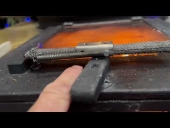
There is a building here that has what looks like a fireplace with brick chimney, but seems to be an insert of some sort that's supposed to be used like a regular chimney.. Nobody knows what's up with it, but it appears the real bricks used for the wall around it inside and the chimney itself are a facade to a metal (not cast iron) exhaust tube and enclosure for the wood pile area. It does not seem to have been intended to have glass to enclose the fire. It hasn't been used by anyone here. You can actually see the back of the brick wall inside as it seems the whole thing was built into the corner of a rom and you can see/get to the gap between the curve of the bricks and the corner of the room. You can also see the exhaust tube going up the brick chimney. It is doubtful this was ever a functional brick fireplace, and probably always had the metal insert.

The question is: could this be converted to a rocket mass heater? If so, what would be involved?
1 week ago
I love the look of pockets and their use potential, have used and loved cargo types of pants for many years... but eventually most of the built in pockets of garments literally rub me wrong if I use them regularly. My skin gets chaffed and sometimes tender like bruise without one from the weight and any movement of stuff in the same spot all the time. I have eyed those tie on pockets for skirts like in the OP video, and love both the idea and look of them.. but I know they would not work for me in practice as they'd have the same issues as the built in pockets for me.

The pockets that avoided that the longest were in long pants that had wide legs with ties at the bottom like the elastic in sweat pants. The key was the pockets were down at my ankles which were awesome in that they had flaps with straps that tied down with D rings which kept things from falling out but were easy to slip my fingers past without unbuckling... but due to how wide the legs were and how low the weight was they were not great for moving quickly with heavy things there.

Waist and fanny packs keep things from bothering me like the pockets, but they don't always work over the clothes I wear, or under them, as when I reach up (which happens a lot) the clothing under it can untuck itself or gets bunched up uncomfortably when my arms are back down again.

For town, I get tired of a purse over my shoulder, even cross shoulder, when I go to town. I used to have lots of pouches on my belt used for pocket knives, or all sorts of things, some I made.

I no longer like to wear belts, so I have pouches that I use elastic hair ties to attach to my belt loops (so they can be easily removed) and then I tuck those pouches into my pants so they sit down below the waistband but stay in place from friction. Some things will go into the pants pockets, but barely, and still tethered. Hard to explain, but it has been working for me when going to town.

I have everything tethered to my belt loops either via the elastic hair bands or carabiners. The carabiners are the ones used for keys, and they have a little length of webbing strap between the carabiner and the key ring that allows my to tuck it. The carabiner has a simple slide that allows you to lock it closed so it doesn't accidentally open up and unclip itself. This makes using it much easier when it's unlocked too. I use those for keys, of course, but also for other things sometimes. Mostly I use flat pouches with the elastic hair bands though, and I even use it for my phone because my phone case has a loop I can use for that.

Maybe I'll come back and add a photo or two of some of the tethering.

I started tethering everything because I got tired of something falling out of regular pockets. It's great for when you're in a hurry to go pee because you've held it too long and you just need to get the pants off quickly. The tethers are short enough that things stay close to the pants, so I can just take off my pants and let whatever falls out do it's thing. Then I can grab whatever is hanging too heavily and tuck it into my pants as I am sitting on the toilet afterwards, or just let 'em hang until I pull my pants back up. It works for peeing in the woods too.

In terms of around the land, I have various aprons (full or half) that I've been using to keep things for certain jobs in so that I can just grab the apron and put it on. I tie loops into the apron ties close to the apron, especially with the half aprons, so that I can clip my keys or other things on there that have carabiners. The tethers help them get to the nearest pocket better too. The aprons can get in the way when I want to lift and carry heavy things in front of me though. I usually wear the half aprons when I might be doing the lifting (if I wear pockets on me), then I rotate the apron around to face backward so it's no longer in the way. It's a hassle and so often my favorite pockets are not in my clothes or on me, but on other things that I can take with me and set down nearby.

I use pockets that you can attach to a bucket on buckets and/or large tote bags that have inner and outer pockets. The buckets can hold stuff I decide to harvest that wasn't planned or plant matter I want to take elsewhere rather than chop and drop. The pockets hold tools, water bottles, and other things I don't necessarily want to be carrying on my person the whole time. This actually works the best out on the land as it keeps me more mobile once I put the bucket down. My spouse also uses a used golf bag with caddy wheels for long handled tools instead of golf clubs, and there are loads of pockets on the outside for smaller tools.

Lol, so I've gone from having as many pockets as possible on my person either in my clothes or on belts, etc. to actually preferring clothes without pockets at all (since I rarely use them now). Funny that.
1 week ago
I like a lot of the new one BUT.... it seems just too dry given its origins, and could use a bit of lightening up. I think people would be missing out on part of the charm. Perhaps make that image you're attached to smaller and include it partway down the page, or to address concerns people have expressed here include some kind of currently acceptable humor. I really appreciate the humor here and there on this site, the elist emails, etc. and find it sorely lacking on the new page. That said, the new page has a cleaner crisper look and flow, so I'd start with that as the base.
Not a DIY solution, but since powdering was mentioned here it reminded me of how I've used freeze dried fruit and/or veggie powders in ways those colorful sugars are often used. It works great and tastes so much better. They're also great on uncooked cookies too: cut fruit into slabs, cookie cut them into holiday shapes, dip or dust them with the powder. If you make funnels out of paper or whatever, you can direct the color to certain spots to do dots, lines, etc. as well. Freeze drying preserves the color better than dehydrating too so you can get really saturated colors. It you have a freeze dryer you could make them of course, but I don't so I used purchased ones.
1 week ago
Awesome, yay! Love that you use goats milk too!
1 week ago
Does this book include how to make feta and similar types of brined curd cheeses?
1 week ago
Thanks for the additional links Catie, they do look helpful. Yes, good ideas about storage crops that don't need preservation.

I forgot to mention that I am growing winter squash, longkeeper types of tomatoes, sweet potatoes, dry beans & peas, etc. to store as-is for off-season eating, and we're planning on trying to come up with a root cellar of sorts (don't have a basement, garage, etc. though, and no good places inside that are humid enough. There's an old cistern that doesn't hold water due to cracks that we're toying with the idea of converting to a root cellar, but that's not for this season either.

I have been experimenting with seeing what will still grow or last over winter in the ground as it doesn't stay frozen during the day, even when it gets down to single digits (F). Certain things will grow most of the winter. So far I haven't got the timing down correctly for extending the season on the other end (to plant early), but I'm hoping I'll accomplish that this winter/spring. Still getting used to the timing deadlines of the seasons and all. Still figuring out how to grow potatoes and flint corn in this area. I am able to eat at least something homegrown at all times of the year, I'm trying to get back to having my whole diet homegrown, so I'm trying to accomplish that with many methods.

I'm resistant to using a heating pad and/or indoor grow lights though, so it'll either be direct seeding outside, or in flats I take out during the day and in during the night. The first year I was here I grew things in pots that I kept on carts to wheel inside at night and outside in the day for the winter, and it worked pretty well to have tomatoes, basil, citrus, and some other things that wouldn't survive outside... but we don't have the indoor space for the carts anymore, so I'm not doing that, but I could do a few flats of starts to plant out early.

Actually, Anne, I do like pickles. It's ferments in general that I'm a bit shy on for reasons I already mentioned. I have not looked into that Sally Fallon book, but I'll take a look at the discussion thread about it. Thanks!
2 weeks ago
Thanks everyone!

I have kind of let go of my attachment to getting this to work for this season, or at all, and I'm feeling better. I do still want it to work, but have come to terms with only preserving via freezing or dehydrating if needed. We're also going to make a solar dehydrator too, but that won't be for this season either. So now, I'm just going to explore without the time constraint and see if I find something that works for me.

I used to live in the tropics and growing all the food I eat year round did not require as much preservation, so trying to do that here is more involved and has included a dietary change among other things. Still, I love it here, so I want to make it work in some manner. It's yet to see how much canning will be involved, if at all. I'm thinking I might do some fruit canning at least, but that will be next season as the fruit I'd can (grapes, stone fruits, maybe pome fruits too) is not in season anymore. We've had some challenges with doing a high tunnel greenhouse here due to the wind and large temperature shifts, but perhaps it's worth looking into working that out again too, as if we can get that going then preservation isn't as necessary.

I will have to look into fermenting more. I was under the impression that while it takes a while for the fermentation process, once it's done then it is no longer shelf-stable and must be eaten or preserved in some other manner (refrigeration for short term, canning or dehydrating for longer).

Also, I have a history of having histamine issues, which ferments can increase. Many ferments I've tried don't agree with me (like kombucha, kimchi, most sauerkraut and yogurt). This could also be because garlic and/or cow dairy are often involved. That said, I did have some ferments in the past that didn't seem to bother me (for instance: I used to make something called sunflower seed cheese with short fermenting in coconut water about 25 years ago, don't remember the details, and goat yogurt has been okay when I can find it as I don't have goats)... so maybe I can find something that does agree with me if I'm careful? I do well with sheep feta and often goat feta as well. I also do fine with yeast breads and sourdough, but then, that's baked. My spouse makes L reuteri yogurt, but that's with cow dairy, which makes me wheeze. It's quite tasty though. We've looked into bringing goats into our lives, but am not ready for that now. Lemon salty ferment sounds delish, but alas, our climate doesn't work for lemons without dragging pots around or lots of protection that needs to go on each night and off during the day in the winter due to the temperature fluctuations. I love, love, love lemons though.

I'm not sure if I've had fermented pickles before. My mom loved, loved, loved pickles and we used to have them all the time when I was growing up. She made a refrigerator kind herself, but mostly we would buy them from the grocery store (when you could get sour dills without sugar or garlic in them) or get the big ones from a deli or something. I'm thinking some of the big ones may have been fermented, but don't know. She and I actually need to eat more salt than most people, so I don't need or want reduced salt things.

I will also look into Australia's standards, and maybe France's. Note that I didn't think a recipe has to be tested by the USDA to be safe, just that it was supposed to have been lab tested to be safe (a lot of universities test things, Ball does some, and perhaps other countries too). As far as I know this is not just for water bath canning, but for any canning (so even with pressure canning it seems there are similar limitations).

In-between my post and checking back here I did discover the Pomona pectin and it is promising for that, good to now some of you have used it successfully. I also like that it involves adding calcium to gel.

Kate, I have a glass-top electric stove that has burners that cycle on and off when turned to high, which apparently is a no-no for pressure canners. There was an article about what kinds of stoves can and can't work for canning, and it actually had a photo of the exact stove I have (same color too) as an example of what doesn't work, lol. It's a Frigidare Electrolux Gallery Series self cleaning oven with speed bake. It came with the old house I'm in. While I like the control an open flame gives for cooking, I prefer to not have natural gas or LP appliances.

I had thought for a while that I could just test the pH of the brine to make sure it was acidic enough and I'd be good for water bath canning, but supposedly there are other considerations that can affect it. Perhaps testing the inside of the food from a finished batch would do it. Those of you who are testing the pH of things for water bath canning: how, when, and where are you testing the pH?
2 weeks ago