Megan Palmer

gardener
+ Follow
since Jul 09, 2013
Merit badge: bb list bbv list
Forum Moderator
Megan Palmer currently moderates these forums:
For More
Zone 9A, 45S 168E, 329m Queenstown, NZ
Apples and Likes
Apples
Total received
In last 30 days
44
Forums and Threads

Recent posts by Megan Palmer

The last one that I saw and photographed was a couple of months ago but there's been more that I've seen that I haven't captured.
2 days ago
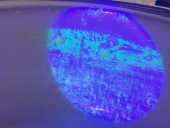
Another glow in the dark story from a fungal foray that I attended on Stewart Island - the photographic record of several bioluminescent fungi

https://www.landcareresearch.co.nz/news/glowing-fungi-and-new-rust-species-among-fungal-foray-finds

One of the fellow participants on the foray wrote a piece on other bioluminescent species found in NZ

https://www.myconeer.com/p/natures-nightlights-a-journey-through

4 days ago

Judson Carroll wrote: It ismore important to knowwhat is toxic than what is tasty.


I have attended forays in NZ organised by the Fungal Network of NZ where the focus is on collecting, identifying and data basing NZ specimens, however, if one’s interest is in edible species, I found it much more useful to learn to be confident in identifying the edibles by learning the environment that they grow in, the trees that they are most likely associated with etc.

There are very few truely poisonous fungi, many that are edible but not worth eating so personally, learning the edible species has been much more useful to me.

On the forays that we attended in Wales, we carried two baskets, one for the definitely edible species and another for ones that we would identify when we went back to the b&b.

We would sort and clean the edibles so that they could cooked for our evening meal then go through the other basket identifying them.

Aminita phalloides are the most notorious of the poisonous fungi, however the classic aminita muscaria although hallucinogenic is commonly consumed in Eastern Europe after boiling to remove the toxins.

Some people cannot consume stropharia rugosoannulata (wine caps) or Coprinopsis atramentaria (ink caps) with alcohol as they can make them very ill.

For me, learning to confidently identify edible species of fungi has been most useful, rather than worrying about what could kill me.

If in doubt, I keep the specimens separate for later identification but wouldn’t consume them.



5 days ago
We lived in the UK for 10 years, spending the last several years in a cottage in West Sussex that had bluebells growing in old woodland that was on our land.

There were morels, oyster mushrooms, blewitts and birch boletes growing in our wood and in the adjoining woods that we walked our dog in.

For several years we took an annual holiday in Wales, staying at a bed and breakfast owned by a woman named Hilary who hosted guided fungus forays led by a mycologist from Aberystwyth University.

The weekends were booked out every year and had a waiting list, we would book the following year after each stay.

We heard about the bed and breakfast by chance, had read about the forays and stayed there when we were went to visit the Centre for Alternative Technology which was nearby.

Hilary was a fantastic cook, kept goats and made cheese with the goat milk. I have her cookbook somewhere with many of the recipes that she used to serve our mushrooms.

Thank you Tim for reminding me of some happy memories of traipsing through the rain through forests and woodlands foraging for mushrooms and the excitement of finding chanterelles or porcini aka ceps aka penny buns - boletus edulis

5 days ago
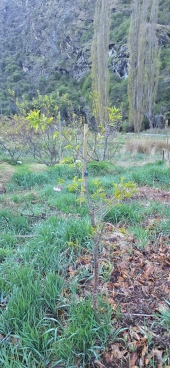
Here's a volunteer cherry seedling that came in with some mulch.

It will most likely be an ornamental flowering cherry but it was in a suitable spot to allow it to grow on with the intention of using it as a rootstock.

This year is the first time it has flowered so hopefully I will learn whether the fruit are edible.

Many friends have delicious fruiting cherry trees that I can scrounge scion wood from - our region is renowned for growing stone and pip fruit.
1 week ago
Here are two seedling apple trees growing at the community garden.

Neither were deliberately planted, one is in a neglected garden bed that hasn't been cultivated for at least six years and the other is beside the perimeter fence between a hazelnut and a seedling grown plum tree.

The fence line tree has a naturally weeping habit and the disused plot tree has a more upright habit.

Neither have previously been pruned but I decided to cut them back because I've been given scions of 7 apple varieties and wanted to graft onto them.

Was absolutely delighted to find blossoms on both trees.

Fingers crossed that we get some fruit from them that I get to taste and report back on.


1 week ago