gift
Companion Planting Guide by World Permaculture Association
will be released to subscribers in: soon!

Nina Wright

+ Follow
since Jul 19, 2020
Merit badge: bb list bbv list
For More
Apples and Likes
Apples
Total received
In last 30 days
2
Forums and Threads

Recent posts by Nina Wright

Add:
Nettles - so easy to gather stalks, tie together and hang to dry. then crumble off the leaves into powder. (Still using gloves - most of the stingers are disabled by drying, but not quite all! But the rest are neutralized by using the powder in cooking.) With a kid-leather clean gloves only used for nettle harvesting (that don't have air holes in the backs of the hands!)

diakon or oilseed radish: grows easily, reseeds, I leave the roots to rot in the ground (and break through the clay soil). Harvest the leaves and seed pods. Chopped and cooked, the leaves get softer and lose the radish tang (thank you!). The filled out, but not quite mature, abundant seed pods I cook like green beans (but my friends that like radish flavor eat them raw or chopped into salads)

The voles, gophers, and ground squirrels don't bother the nettles and radish, nor the brassicas, and the sunchokes seem to be fine. They did appreciate the skirret, though. So the main "crop" I am growing now is above-ground raised beds lined with corrugated sheet metal roofing, filled hĂĽgelkultur style.  

First sign spring is cabbage moths. We just need to start appreciating eating the larvae - they are probably high protein and fat!
I was disappointed to find that I am unable to beat duck egg whites into a foam, so was unable to bake macaroons. If anyone knows how to make stiff duck egg whites for cooking, I would sure enjoy knowing!
2 months ago
Any recipes for without mayo?
8 months ago
we've done mini versions of Paul's hugelkultur in split IBC totes and it has worked wonders!

Can you provide more information on this?
1 year ago
I am happy with liming. I save several 1/2 filled 5-gallon buckets in the fall. But the lime is so expensive in the little pickling lime bags! $10/lb was the best price I could find!

I bought a 50# bag @ $1.23/lb that should last the rest of my life:
https://www.azurestandard.com/shop/product/food/baking-pantry/calcium-hydroxide/cal-lime-calcium-hydroxide-food-grade/20410?package=BP424

("water glassing" is the old name, sounds more romantic, though from what I read that was actually a different chemical.)

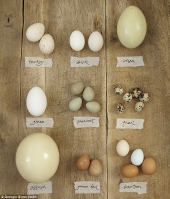
These are duck eggs with such a thick white, so that by 6 months later the whites are getting more "normal" runny. Anyway, I use them for pumpkin-pie like recipes with the winter squashes. Duck egg shells are so thick that I only had two or three with cracks that I threw away. But if it were a problem, I would take the plastic egg cartons my friends give me, remove their tops, and store the eggs nicely packaged in those.

I like my expensive toy the freeze drier (mine took 6 months and a lot of work on my part and theirs before it worked), but don't want to be dependent on it if/when consistent electricity isn't available (or yet another part of the freeze drier needs replacing).

1 year ago
When I researched silicone containers, utensils, etc for food use, silicone (with an e) is silicon-based PLUS PLASTICIZERS. Which plasticizers (and their leach-ability) is unknown for a particular product. Make your choices and place your bets, folks!

I did buy more mason jars - had to switch to small-mouth, though, as the only ones that boasted extra durability are small-mouth ones. (Sure, makes sense from a materials strength point of view, but who wants small mouth?)

I also became more careful with cooling broth in the frig before freezing, and to not let jars directly touch the sides of the freezer where there would be more temp differential.

I still store non-liquids in plastic as I try to figure out how to transition away from plastic and still do food storage - rightly or wrongly, I figure cool dry lumps are going to touch the plastic in fewer places and otherwise be more inert in the interactions.
1 year ago

Josh Hoffman wrote:

Their drinking water is in 5 gallon food-grade buckets with a 6" hole in the top half of  the side. The duck house shares a wall with the greenhouse. The buckets are in the greenhouse, next to holes in the wall. As the ducks get the water dirty with bits of their chicken feed, it gets dumped onto the greenhouse plants. So with this water near their food and two tubs in the trees, I only have to maintain their waters every few days for a dozen ducks.


Would this situation be enough water for them to also clear their nostrils?


My holes are lower and larger than those pictured, so, yes, they can dunk their heads.
1 year ago
Physical Barrier:  https://staliteenvironmental.com/vole-control-1
apparently is sharpish rocks that voles don't like to dig through. But still needs an overground barrier.

I have hundreds of pounds of fist-sized rocks that I need to get rid of (long story!) and am thinking of trenching around one of the inground beds and filling with the rocks. Then will just need an above-ground barrier.

My above-ground raised bed, bottom and sides of old metal corrogated roofing, got vole invaded. I think they got in the corners where the ends of the roofing couldn't exactly meet because of the corrogations and I didn't expect them to climb up the wood pallet sidings to reach the openings. Now I have to dig out the corners and reinforce them with metal.

In other beds, I will try what I used to do for the rampant pillbugs (they LOVE girdling pea sprouts) and earwigs: take 2 liter soda bottles (from a friend), make tubes to start the plants indoors then plant the whole tube outdoors. (For earwigs, I extended the tube with a second soda bottle to make it too high to seem worth climbing. But as the new beds with their wood chips aged, the ear wigs seem to not be the ravenous problem anymore as they were in the first years.)
Muscovies for me!

I had chickens for 30 years, mostly for eggs. Problem is, I don't care for chicken meat.
Now, with a larger lot (but still in a city), I have muscovies. They make almost no noise, so I can keep a drake for breeding (as opposed to roosters!). They run in the shaded side yard under the fruit trees, so moving their bathing tubs (https://www.homedepot.com/p/Black-Large-Concrete-Mixing-Tub-A-42/318924309#overlay) around to water the trees is useful. They are wood ducks, so don't need water to breed in. I grow greens for them to browse under the trees.

Muscovies can still fly: the wings have to be clipped yearly, like chickens.

I prefer their eggs - larger and more % of yolk for sunny side up on toast. The fat is supposed to be healthier for us than other fats (and tastes good). I harvest the drakes and older females, deboning all the meat to grind into sausage. If there is too much winter squash, grated squash goes into the sausage, too. Some of the fatty skin goes into the sausage, but most gets rendered into fat and chitlins. I like their meat so much better than beef.

Ducks are so much easier to fence than chickens: a 2' plastic fence on poles stuck in the ground will contain them.

Their drinking water is in 5 gallon food-grade buckets with a 6" hole in the top half of  the side. The duck house shares a wall with the greenhouse. The buckets are in the greenhouse, next to holes in the wall. As the ducks get the water dirty with bits of their chicken feed, it gets dumped onto the greenhouse plants. So with this water near their food and two tubs in the trees, I only have to maintain their waters every few days for a dozen ducks.

The muscovies have a shorter egg season and lay less eggs than Khaki's, but they do lay plenty. Toward the end of summer the cleanest eggs go into 5-gallon buckets of lime water for "waterglassing". I end up with three buckets half full of eggs, which carries me through winter and early spring.

CONS: they just won't eat so many of the things I used to feed the chickens. Partly, their bills can't handle food that the chickens can tear into. I haven't been able to convince them to eat sunflower seeds, even if I shell them first. I grew some wheat, but they don't know to get the seeds out of the heads.

My ducks don't like squash bugs. I tried growing winter squash (with its healthy crop of bugs) next to the run, so that I could let the ducks in. In 15 minutes they had gnawed into three half-grown butternuts and eaten NO bugs! (I later read that squash bugs are related to stink bugs, but still!). And they ate any of the vines that grew through the fence into their run. (This year I will make trellises for the winter squash, since the bugs are so prolific.)

Maybe if I only fed them once a day instead of at-will, their hunger would encourage experimentation of more foods - but that would be too much work on my part. So despite muscovies' reputation for being good foragers, at least when compared to chickens I don't agree.

1 year ago
https://harvestright.com/blog/2016/how-much-energy-does-freeze-drying-use/

I have the medium-size HarvestRight. Took months to get it working - them sending replacement parts for us to install, then finally they shipped it back to the factory and fixed the leak in the top of the chamber. They paid for everything except my electrician's time. though they gave me a $100 credit that I happily used to get extra trays.

You sometimes have to fuss with the door seal being properly clean.

All that said, I do like it! Especially the dried apple slices of my tasty cooking apples. Last spring I bought lots of asparagus when it a good price and separated the tender spear tips from the thicker lower stock which I sliced in pieces. I parboiled them and freeze dried. The spear tips are fun to eat as-is. The thicker pieces I either throw into some hot broth, or powder them in the food processor to be used for instant "cream of" asparagus soup.
2 years ago