

|

|
|
|
|
Anne Miller wrote:Cheerful Potato Mountain Herbs, please tell me more about Thneedwort as an internet search came up ZERO.
Why recommend something that causes:
M said, THE SIDE EFFECTS MAY INCLUDE DEATH, HALLUCINATIONS, COMA, PERMANENT PSYCHOSIS, KIDNEY FAILURE, DELIRIUM,
Cristobal Cristo wrote:Nicola,
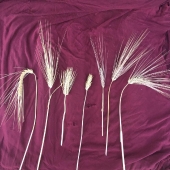
Ruminants do not need any grain to produce milk. Poultry does not need it either - only if someone wants to produce unnatural roasting chicken (extremely overweight very young bird, very tasty) - in the older times people were eating pullets.
I would say that the same rule applies to grains as to other food products - if it grows for you without extreme effort, pursue it.
I have tried twice: rye and wheat which were taken over by wet season weeds (which is 95% of natives/weeds/invasives that grow here). Then I learned that I have to prepare the soil better, by several shallow cultivations to destroy germinating natives within some timeframe and that I have to use much higher seeding ratios. Also in case of hand sowing, the distribution pattern is not uniform and it allows weed development in more open spots.
Mechanical seeder would be helpful, but it's rather too expensive for my 2000 m2 plot.
I was using recommended 200 kg/ha, so 20 kg per experimental 1000 m2. It was definitely not enough. It's probably right if helped with herbicides and fertilizers. I would opt for two times more to surpress weeds naturally. I may try again in the future.
Annette Henry wrote:Well, I watched a 'what not to do' vid this morning on asparagus and it made me very glad that my plans utterly failed last spring regarding my asparagus patch. I had no idea it was that invasive! My planned patch was far, far too close to my garden for that to work. So I began to re-imagine just what I should be doing instead. I know wild asparagus grows in my area. I found several stalks on my property just after we bought it. However, they are wild and I want some cultivated varieties. Growing them in pots and putting them in the way the old advice keeps harping on seems far too much work for someone who is already overwhelmed with things to do, and as I said, I know it grows wild here - just not where I can harvest it as it usually ends up mixed in with the hay.
So my idea is to till up a bed, and get it started really well, tilling some muck in and some 'potting soil' that's not really soil, more like chopped up bark. Rake out all of the stones, weeds, and such, you know the drill. But then, rake in asparagus seeds. Just, rake it in and water and see if they come up.
Good idea? Bad idea?
Missouri zone 6 on the plains for the usual questions.

John Suavecito wrote:
If you add biochar before inoculating it and then add compost, research has shown a delay in plant growth. The biochar sucks in the nutrition from everything around it for a couple of years until it achieves a homeostasis. Compost is a great way to inoculate biochar, but it takes time. If you want to inoculate quickly, I recommend liquid inoculation. I would add biochar after inoculation.
My two cents,
John S
PDX OR