Hi Byunghyun Song,
Welcome to permies. You've caught me on a rainy day at the library, so I'll write a response.
You ask some important big-picture questions that many people ask early on in their explorations. As you read more on these forums, you'll see some of the many practices for transforming the structure of everyday life to produce health and happiness in our interpersonal and ecological relationships and reducing exploitation.
I enthusiastically agree that visiting communities, spending time with people who are living how you want to live, is an excellent way to learn.
Some years ago I visited about 17 communities in the eastern United States, as well as attending conferences that drew international visitors. I am now reforming an ecological community house and following several other projects. In the US, I used ic.org to find communities and organize my travels. There is one community listed there in South Korea (
https://www.ic.org/directory/community/seonae-ville/). That could be a good place for you to start. Word-of-mouth is an excellent way to learn about projects. Once you meet people near you who live cooperatively, they will connect you to many other people and projects. Many of these have little or no online presence, because they're so fulfilled 'in real life'.
People free up their time and money in many different ways. Some work hard and live frugally for some years to save money to do something big. As soon as people start living together and sharing labor and equipment, they save a lot of money and time. If you live with 6 others, you only have to cook one night a week. Instead of seven things, you only need one hammer, one broom, one stove... people sharing stuff is the nightmare of an extractive consumer capitalist economy. Once you live with people whose company you enjoy, you find you don't need to buy entertainment or status symbols or stress treats. Eating healthy vegetarian food and enjoying the company of your friends costs very little money.
Buying land, starting businesses, and building from scratch costs a lot of money and can destroy friendships. Starting a project is much, much harder than joining an existing project. Groups who start communities are groups who already have strong interpersonal ties, a lot of trust, and experience. Often these projects still fail, and that's ok. You can build skills and find cofounders by living in existing communities for years or decades.
I want to warn you about a mistake that some people make: too much planning, too little doing. I do recommend traveling and living in communities. However, I warn against developing "an integrated model of shared living". There is no integrated model. Everything ecological is local. Each group of people living cooperatively and ecologically together is different depending on the personalities, the culture, the infrastructure, the local resources. Computer-based tools (or written documents) can be a way to organize and share your thinking, but be careful of spending more time modeling a lifestyle than actually living it. Both you and the people you'd like to inspire will learn how to live eco-cooperatively by experiencing it day-to-day in your body, more than by reading about it.
A key component of transforming economic structures at the community level is to be producers (solving fundamental needs) more than consumers. As a farmer, you understand how to produce food and to vastly reduce your community's dependence on exploitative food systems. A successful community figures out what it has the ability to sustainably produce for itself and for trade (based on the skills and interests of its members), what it can glean from the waste streams of nearby systems (food waste, repurposing materials, clothing, donations), what it can trade with mutually respectful neighbors (farmer's markets, local supply chains, education), and what it uses its income to purchase from the global economy (solar panels, nails). When you are a net producer of something that your local economy values, you generate not only income but also goodwill.
Many more details are covered in these forums and in the practices of existing communities -- how to have income-earning businesses, build ecological housing, minimize fossil fuel use, promote social wellbeing, grow and store food, and care for health.
Are there examples of communities that have reorganized everyday life and livelihoods around the commons?
Yes. There are many different examples around the world. Twin Oaks (
https://www.twinoaks.org/) is one example near where I live. They are a village of 70-100 people, with families and children, operating for 60 years. People have small personal items, but otherwise everything is owned and shared by the commons. They built their buildings (a dozen people per large house, a large kitchen and dining hall, workshops and farm), using materials both industrially purchased and salvaged. They grow a lot of food, have chickens and cows, but also buy some food and glean excess food from waste streams. They have extensive land and forestry and wood heating, but also use grid electricity and solar power. They have shared cars and bicycles and a large free clothing 'store'. They use planner-manager governance, in which people manage their areas of expertise and elected members serve short terms making larger-scale planning decisions, with written input and democratic override from the community as a whole. Members work full-time in the community, or work outside the community with earned income going to the commons. The community has previously run a large hammock-making business. It produces local organic tofu for sale. It has a computer-based book-indexing business. A major source of income is selling seeds. Children are born, raised, educated there. Elders die and are buried there. People have the option to use local public schools and government-subsidized industrial healthcare, and to participate as citizens. Many things work very well at Twin Oaks. Many people are happy living there and glad not to live in mainstream society. Like anywhere, it has areas for improvement.
There are many other examples around the world, and they all look different. The resources I know of are rather Western-focused. Annual conferences are a good start for meeting a large number of people at one time.
https://www.ic.org/
https://www.icsacommunity.org/
https://ecovillage.org/
https://www.zegg.de/en/
https://www.tamera.org/
https://auroville.org/
https://svanholm.dk/english/
https://www.twinoaks.org/
https://livingenergyfarm.org/
Letting you know that your attachment is not available.
Sophie






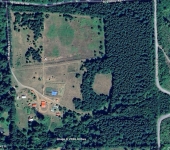
 (I live at an affiliated community house in town. When I did my own community travel journey I used https://www.ic.org/directory/ to plan my route, usually one stop at a time. LEF was the most inspiring place I visited, and I've settled nearby for now.)
