I appreciate that there has been a lot of nuance in this thread about the fact that trees are not always beneficial. They are when it's a good species fit for the climate and the biome, and plants in general transpire moisture, which modifies local climate. A few rambling thoughts about this below.
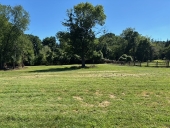
I really think the idea that a dry landscape is automatically bad or dead is pretty backwards, kind of old fashioned thinking that has really been shown to be wrong in many ways. Healthy grasslands are plains are appropriately adapted to their regional climate, and I think it's a good strategy if any trees and shrubs and herbs selected for planting in that environment are just well adapted to the climatic conditions in those areas (so, we may not want to plant those desperately thirsty almonds in a naturally dry biome).
Fun story: I used to live in Nebraska, the proud home of Arbor Day, where Charles Bessey and others (with Teddy Roosevelt's enthusiastic support!) researched and experimented with planting dense stands of (poorly adapted and introduced) tree species in national forest land in the Great Plains, in regions where the soil is actually loose loess and the climate is overall dry year-round. They did this because they were convinced that the plains were a sickly desert with no life (and so were deserts!). But the stands they planted in the middle of the state are now a sickly, sad timber reserve, too densely planted for even most recreational use. And after growing those stands for a century, they did not, in fact, succeed in changing the regional climate in any way, even when the stands were planted across very large plots, and they never produced a healthy, self-sustaining ecosystem. I've heard that most of the trees grew up so unhealthy in that environment that they are actually infertile. Instead, the main thing they accomplished was to create a massive fire hazard that has to be constantly monitored, at ongoing expense, by the U.S. forest service.
The idea that there is something wrong with having native grasslands, that they are sad and dead, seems to have persisted in the popular imagination, despite the fact that those biomes actually support diverse and healthy ecosystems in the wild. Those environments are simply not forested, like, say, the wetter eastern U.S., except sometimes in patches located right near bodies of water. And those deserts and grasslands are not sad: they are vibrant and beautiful.
This is not to say that permaculture efforts to improve water retention and plant carefully selected woodland garden plants in these climates are misguided. I think you can support and improve soil quality and plant managed, innovative, healthy woodlands in these climatic environments using permie principles. But I do think it's important to be thoughtful about the species you plant when making those designs, and to recognize that retaining the limited annual rainfall through better design and planning is not the same as changing regional climate. While development, overgrazing, monoculture commercial farming with pesticide use, and all the related damage associated with those practices can have very localized climatic effects, and it is good to counteract those damaging impacts, that's likewise not quite the same thing as just regionally being in a drier climate...and I would argue that maybe it should not be considered the same thing.
Maybe I'm way off, but I guess that I think of permaculture as working together with and leveraging natural patterns (including climate), instead of trying to 'fix' them!