|

|
|
|
|

|

|

|
|

|
 1
1


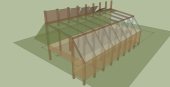
Matt Rainey wrote:I'm about 4-5 feet deep into this exact project right now. I was digging it by hand before the ground froze (Northern Michigan (USA)), but I'll pick back up once spring rolls around. Our designs are pretty similar, except mine is only illustrated on the pages of my mind. I've encountered pooling water, which was mildly surprising (hilltop living, basement is woodframed with no problems....), but I'm guessing the 150% of normal precipitation levels might have had a hand in that. I'll be piping the excess water to a lower aquaculture site. I've sorted the excavated soil as I've worked - top soil for other projects, clay for other projects, mixed clay/sand/gravel I used to make a sledding hill for my youngins. I have no regrets about choosing to dig by hand. It was great exercise for me, and I learned a lot about the soil in that area. Best of luck. I keep waiting for people to tell me I'm stupid, but people seem to be waiting to see how it turns out.
dave dixon wrote:Wondering if you have had a chance to look at Michael Reynold's Earthship concept. Recycled tires rammed with earth might make a good thermal mass for the greenhouse, eliminate the timber dilemma and re-purpose some waste. This is a great idea, ICF are perfect for insulated tanks. Look forward to seeing your finished product.
dave dixon wrote:Insulated Concrete Forms are snap and stack forms for poured concrete walls. The nylon or plastic spacers can be used as screwing "targets" for sheet goods like cement board, plywood or drywall. Lined with EPDM pond liner you end up with a strong R45 fish tank. I think it is usually easier to build a berm than find a suitable hill that may contain something unwanted. Your mass can be shaped to drain and added insulation barrier can stabilize temperature even further.
1

|
Let me tell ya a story about a man named Jed. Poor mountain man with a tiny ad:
the next generation of humanure
https://www.richsoil.com/willow
|