RE: "Rehabilitation on mine dumps"
(My reply grew large so I decided to make it a post.)
There is a way turn mine tailings into healthy productive soil, a way to get mineral saturated soils to reduce quickly for environmental health and for some garden vegetables, but more easily turned into soils adequate for productive fruit trees and shrubs.
To do this the mineral sources(or toxins) need identified and trapped.
For example: Effluent around mine tailings from mining tunnels would need to be trapped in bio-filtration basins above and below slope that are constructed on contour with added bio-filtration features. There are a number a ways to build these bio-filtration features, however if you are in a mining area you likely have stone available. Pick stone that isn't laden with the same heavy minerals, if the area has no other stone you may need to use woody materials. This also applies to industrial or construction areas.
The shape of the bio-filter basins can be built as a series of swales, they can be small pits, the shape should reflect the drainage and slope topology to minimize the need to disturb the mineral rich surface further. It is essential to
measure your precipitation and runoff to see which is appropriate. The point of these features is to slow sheet or channel flow into a trap so that minerals contained will deposit into a bio-filtration basin where they can be trapped into vermi-myco filtration elements so the minerals are consumed by microbiology and cannot escape back into the environment.
The myco-filter and vermiculture part is simple, use locally sourced shrub/plant slash for placement in the bottom of the trenches or pits or flattened out over the bottom of the swale then topped with stone (don't bury green wood). If you can inoculate the bottom with manure, compost or biochar or a combination do that step before adding the slash. If you don't have stone use sand or hard wood limbs or chips.
Bio-Filtration Swale Adaption:
In the bottom of the swale dig a vermitrench, keep the bottom nice and level so that it makes a bottom contour bio-filtration vermitrench.
*(see attachment)
Vermi-trench Bio Filtration:
-Runoff-->-->-->-->--Stone Mulch--Contour Bund---------------
---------------------- Trench packed with Weedy Slash-------------
--------------------------larger limbs to the bottom-------------------
--------------------biochar-compost paper/cardboard------------
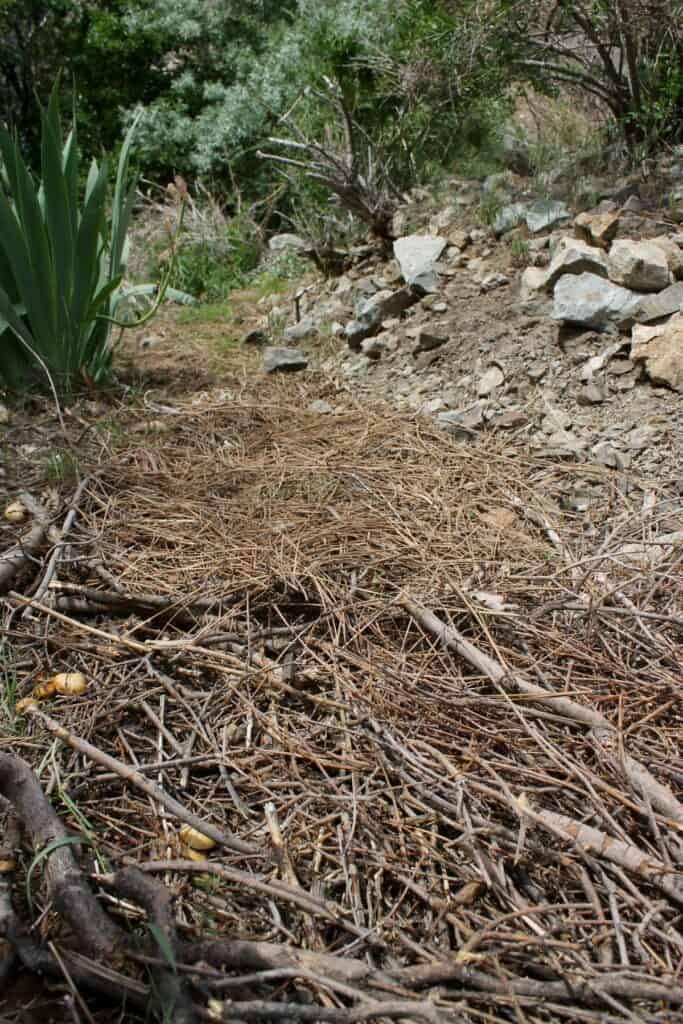
Typically red worms(vermi) will populate the woody materials along with mycelium. When stones cover the woody materials, rock worms are encouraged into the space further aerating, mixing and consuming woody materials in the trench. Dew moisture that collects on the bottom side of the stone mulch increases the time both types of worms can be active in the trench-swale or pit bottom.
The trench may produce mushrooms. Unless the soil tests clean with rigorous testing for this soil-
never consume any produced mushrooms, instead collect them and dispose of them offsite(for very toxic soils).
Surface adaptation: On the top of the vermitrench
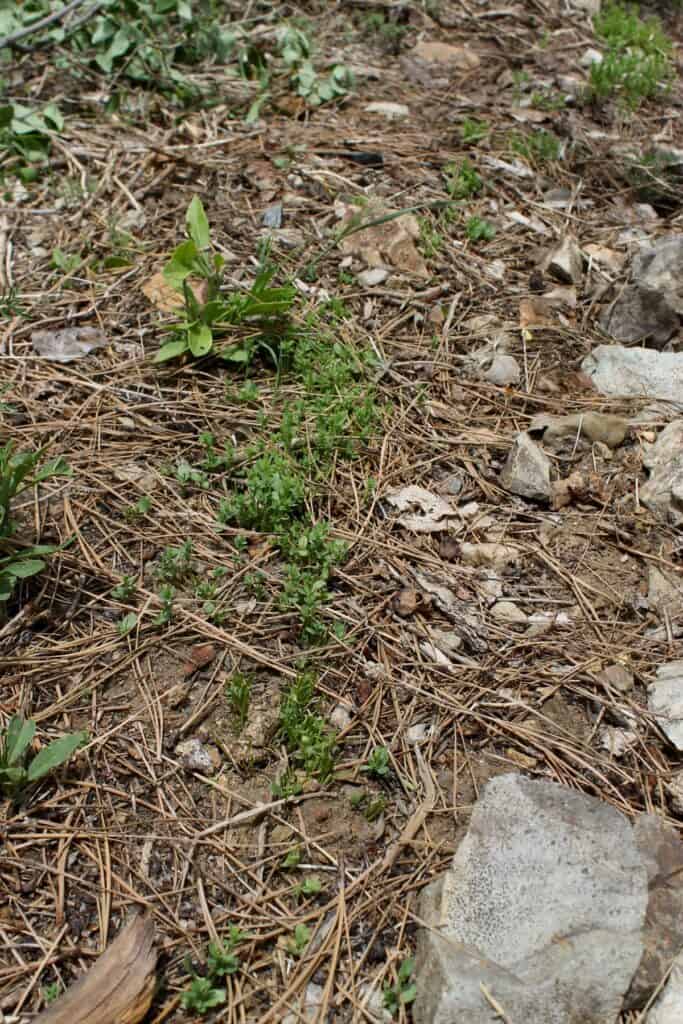
add a seed mix of plants that are needy for the minerals you are reducing. For some climates sun flowers are used, however many flowering plants are good mineral reducers. Some plants are highly specified to certain minerals. If in lava soils, you may have high silica, flax for example will reduce silica in the soil column. So mixing Si reducers like flax works in concert with Fe/Ca reducers like alfalfa. Choose a seed mix that is matched to the soil, minerals and climate. For high concentrations in soil
do not compost the same mineral harvesting plant slash in the spot they were grown, that will put the harvested minerals back onto the surface. Once high concentrations of mineral begin to drop, this is less of a concern.
Here is a great guide on a standard vermitrench:
https://www.redwormcomposting.com/large-scale-vermicomposting/the-vermicomposting-trench/
There are numerous resources that exist about myco-filtration and biochar, the above method was applied in Western Nevada at 5000 feet in elevation, where the soils were laden with heavy minerals such as mercury, lead and arsenic, however this bio-filtration system works for most metals and toxins. How long remediation takes will always depend on the level of toxicity in the soil. Using local materials to fill the mineral-trapping-basins will stop the flow of toxicity in the slope while the mycelium and vermi-trench biology are actively reduce minerals from the soil column-on contour. By shading the soil with stone or heavy woody materials you both accelerate the bio-remediation and lengthen it's effective time.
There is an enhancement one can make to biochar used for bio-filtration, this suggests "doping" the biochar during biochar burn with iron. Generally this would be adding a small amount of iron rust into the burn chamber. This apparently conditions the biochar for scrubbing cations like Cu, Pb, Ar etc. Google for more info :
https://www.google.com/search?q=mag+biochar+recipe
My inspiration for the vermi-trench adaptation is worth looking into, and that is Suzanne Simard's TED Talk
"How the tree talk to each other" and Paul Stamets book
"Mycelium Running".
Trees and mycelium work together to mitigate toxicity in the soil as well as communicating threats like pests or fire. The trees in the forest are communication through the mycelium network, in return mycelium is sheltered and fed-continually.
This cycle can be designed into mining and industrially impacted landscapes.
The contours and the stone mulch applied protects mycelium hyphae nets so they can absorb more moisture and minerals over large distances, allowing greater access to moisture and nutrients for tree roots in the environment. Over time the soil and mycelium nets grow larger and topsoil deepens, increasing the mycelium net's efficiency and ability to scour toxins from the environment. The topsoil that grows over the toxic surface seals off heavy minerals and toxins from open air and surface runoff.
To accelerate bio-remediation for gardening use a
2-3% biochar to compost mix. Add a layer 3-5 inches thick under the cardboard and woody materials at the bottom of the bio-filtration basin. Optionally, add another top dressing of the biochar-compost mix the next season(ideally before precipitation). Each season retest PH and for minerals(or toxins) then reapply for a bio-remediation boost as needed.
2-3% biochar compost: 1-1.2 gallons(3.8 to 4.5 liters) of biochar mixed into 1 square (yard/meter) of compost.
One can also choose a very specific planting regime specific for mineral harvesting and bio-filtration for added long term bio-filtration. So long as one chooses
species that like the target minerals you can reduce them on long timescales. These bio-filtration features are nearly permanent, if the water-access mainframe is well constructed and bio-filtration features are added it will continue to buffer and reduce toxins from the environment forever.






 5
5


![[Thumbnail for bio-swale.jpg]](/t/378125/a/292939/bio-swale.jpg "Filename: bio-swale.jpg
Description:")