posted 1 hour ago
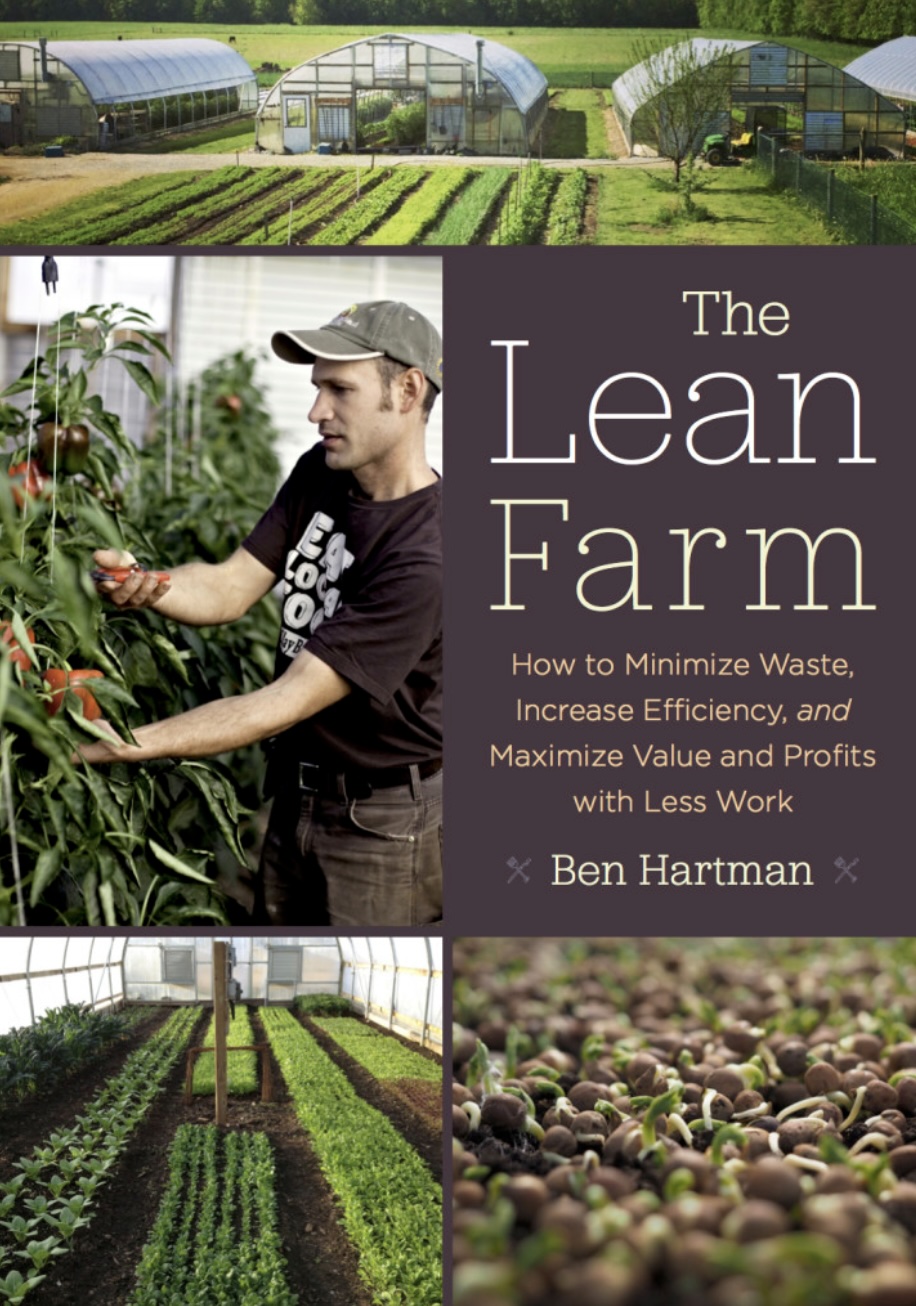
This book gets 10 out of 10 tacos from me - reading it truly changed how I think and operate on the farm.
Ben Hartman farms in a small space, and the book uses the same strategies that were made famous by Toyota leadership's car 'lean manufacturing':
- just in time processes: make only what is needed, when it is needed, with materials on hand only to the extent needed
- quality control throughout the production process
- process improvement as a small daily ongoing mindset, not an occasional review
Farmer Hartman got serious about implementing Toyota's same 'lean manufacturing' timing tasks, counting steps, assessing more or less efficient ways to do the same things. He brought a sharp focus into which products were profitable and which were not, in the full evaluation of effort, costs and payment. He emphasized the value of producing items that are pre-ordered, so each item is sold up front and the sales are tracked to plan for the next year's production.
His rewards were cost savings (stop growing what doesn't sell, stop spending time on things that are not being done well), larger profit in dollars and minutes. The book describes each of his major and minor considerations. These are valuable to anyone who feels like they are overstretched or underresourced.
We farm because we LOVE farming. We love little plants popping their leaves up, and we adore our spring lambs or chicks, or whatever you farm.
So when we are planting a row of something, we are happy to plant a few more seeds, a few more feet, a few more chicks, two more trees, another few goats.... and Farmer Hartman explains his conscious choice to NOT do that - to stop at the point that the planned amount is planted or onsite, even when there are a few more feet of row or another empty stall... because those plants or critters will grow, and will need to be managed or harvested, and then when they are beyond the amount that sells, something will need to be done with them, decisions will have to be considered and actions will have to be taken. This creates additional burden that is completely unnecessary. The difference between an ideal, efficient farm and a stressful life for the farmer can be this simple - more is not better.
Because we like a lot of the things we do, we don't feel a need to pay attention to how long we spend doing them or how they could be done more efficiently. Farmer Hartman penciled out the numbers to show that it was actually a more efficient and profitable strategy to have multiple tool sheds, all with the same tools, located strategically near where they were needed, than to have one central tool stock that required travel back and forth.
Lots of farmers are more interested in the work of farming and less interested in the spreadsheet side of tasks planned and done, connecting expectations of production and market, balancing the numbers. The less awareness there is of the numbers, the more likely that the farm will not run efficiently.
Big conclusions (maybe they should be obvious, but they weren't to me):
- paying attention to the quantification of work is a quick way to reduce useless effort
- paying attention to exactly what the marketplace actually purchases from your farm is the best way to do more of what works
- it takes MUCH more effort to increase your profitability (and income) than it does to reduce your expenses (which increases your income)
- if you reduce production costs by 10%, that is MORE than 10% raise in your bottom line, because you don't also have to pay tax on that difference.
- Don't create additional work for yourself by overproducing
- Avoid speculative production for anything other than a small scale trial
Highly recommended - see what you think.
LeanFarm_BHartman.jpg
“Not everyone can be a truffle. Most of us are potatoes. And a potato is a very good thing to be.” Massimo Bottura, Never Trust A Skinny Italian Chef









 1