• Post Reply Bookmark Topic Watch Topic
  • New Topic
permaculture forums growies critters building homesteading energy monies kitchen purity ungarbage community wilderness fiber arts art permaculture artisans regional education skip experiences global resources cider press projects digital market permies.com pie forums private forums all forums
this forum made possible by our volunteer staff, including ...
master stewards:
  • Carla Burke
  • Nancy Reading
  • paul wheaton
  • John F Dean
  • r ransom
  • Jay Angler
stewards:
  • Timothy Norton
  • Tereza Okava
  • Pearl Sutton
master gardeners:
  • Christopher Weeks
  • M Ljin
gardeners:
  • Jeremy VanGelder
  • Megan Palmer
  • Thekla McDaniels

Hobby, crafting, or art no-buy and reviews (perennial self-accountability thread)

 
steward & author
Posts: 47938
Location: Left Coast Canada
19862
10
art trees books chicken cooking fiber arts
  • Likes 2
  • Mark post as helpful
  • send pies
    Number of slices to send:
    Optional 'thank-you' note:
  • Quote
  • Report post to moderator
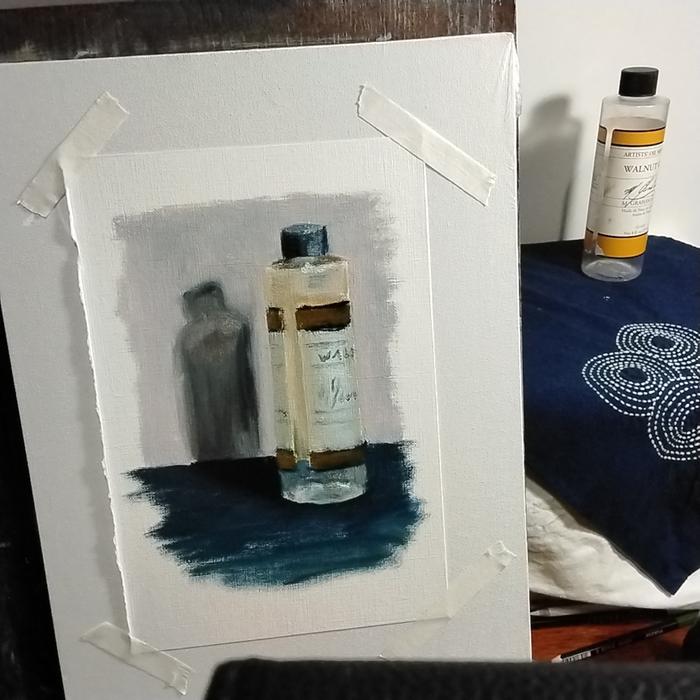
M Graham walnut oil review

one brush, one hour, limited palette, oil painting


I am sad to finish this bottle of walnut oil as it will be difficult to get more in the future.  More of that at the end of the review.

I use walnut oil for three main things in oil painting.

To start with, it's excellent for cleaning brushes while painting.  Dipping a brush in the oil and wiping off the excess paint with a rag.  For today's painting, my experiment was to use just one brush, and this oil came in handy.

The second use is to adjust flow of the paint or improve working time (open time / slow drying time).  It doesn't act like a solvent, but rather, makes the paints feel more painty. Like when I wanted to do the thin lines pretending  to be words in this painting.  Diluting the paint wth a drop of oil made that technique easier.  It helps that I'm not in a hurry and I like longer drying times.  For those in a rush, linseed oil is probably better.

And most important to me, extending the open time.  Or, the length of time the paint can be worked.  Walnut oil dries slightly slower than linseed oil.  Mixing in a drop of oil per half inch squeeze of oil paint, can give me an extra day or three to use that paint.  Which means wasting less paint and saving money.

I would completely recommend this, especially for people in the usa and left coast of Canada as it's a local company from Oregon.

M Graham walnut oil is especially nice as it feels ...how to say?  More viscosity?   Less greasy? More slippery?   There is something here that linseed doesn't have, which makes it an essential ingredient to solvent-free oil painting.


That shop I mentioned upthread, that is closing out their fine art supplies.   They used to sell this oil at $17 (after loyalty discount).  To buy it now is going to be about $40 per bottle.   I bought two more bottles at the old shop as soon as I discovered their plans.  Each one seems to last me a year.  By then, maybe things will be different.

 
Posts: 4
  • Likes 2
  • Mark post as helpful
  • send pies
    Number of slices to send:
    Optional 'thank-you' note:
  • Quote
  • Report post to moderator

r ranson wrote:I've been thinking of going on a no-buy for my hobbies starting in the new year.  I'm just waiting on a black Friday sale to get a few more watercolours,  and that should keep me happy for at least a year.

Only now, it looks like a postal strike might squash those plans and my no-buy starts early.

So what are my no-buy guidelines?
- no new art or crafting supplies
- unless I used up completely the previous one AND it's something essential like yellow ochre or paper
- proudly show off empty package of finishes supplies
- it's okay to buy supplies for classes but see if I can make do with what I have first
- birthday treat okay. But just one.
- allowance for life because life is messy
- thrift store and second hand okay
- that charcoal pencil I adore but is always out of stock is okay so long as limit to $35 or less for the year.

That seems like liveable guidelines. I wonder if they would work.

Basically the goal is to save up for some big things I want to get next year black Friday while getting to know how to use what I already have.  I've started wasting crafting time researching new things I could get when really,  I probably have what I need already.

Anyone else doing a no-buy for their hobby, crafting,  or art?  What guidelines will you follow?


The thrift-store allowance is smart too — it scratches the itch without derailing your goals. And giving yourself a tiny yearly budget for that elusive charcoal pencil keeps things motivating rather than restrictive. With structure and compassion built in, this looks like a no-buy you can actually enjoy and stick to.
 
r ransom
steward & author
Posts: 47938
Location: Left Coast Canada
19862
10
art trees books chicken cooking fiber arts
  • Likes 2
  • Mark post as helpful
  • send pies
    Number of slices to send:
    Optional 'thank-you' note:
  • Quote
  • Report post to moderator
Review: Paul Ruben 170ml titanium white oil paint

Aka, the big one


I give the paint 10 out of 10, but the container would be hard pressed to get a 3 out of 10.

This is a good mid-grade white paint.  A workhorse paint with decent tinting strength.  It works well with all student oil paint brands I have tried and can hold it's own with professional grade oil paint.  The open time is about two days (time the paint stays workable at room temperature)  but is easily extended to weeks with a clove box.

There was no binder separation (oil oozing out), and the moderate drying time and texture makes me feel there is no excess filler or additives.

It's also a massive amount of paint for $10 canadian.  (Winton, cheapest student paint around here, 200ml is about $30cad).  I bought three.

This titanium white is much higher quality than any of the other paul rubens paints I tried.  Even their other whites.  

I used this paint for studio studies and even some of my more time worthy paintings. I would love to use this paint en plein air (on the go), except the tube itself is a pain.

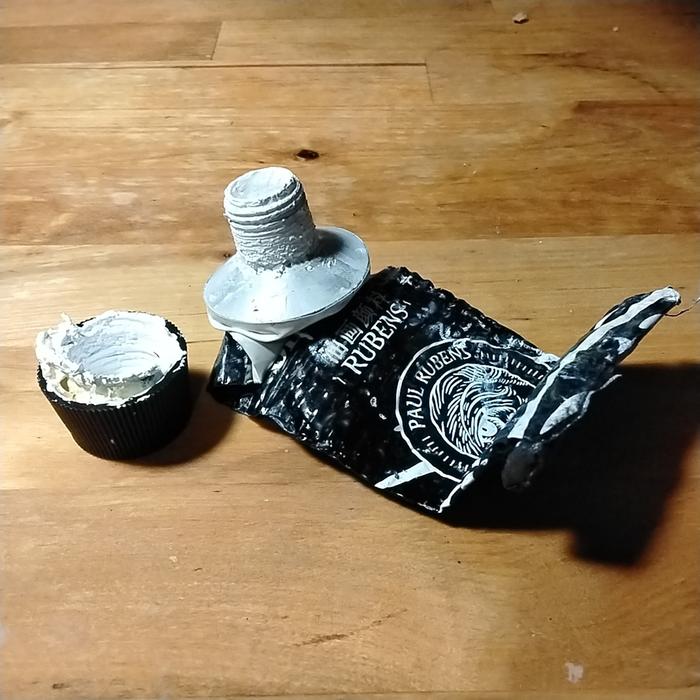
After a week or so, little pinpricks holes started forming at he back end of the tube (it's good to squeeze from the back).  It took a while to figure out why I kept getting paint on my hands.  When I tried using a paint roller key where we roll the tube around the key shaped thing to push the paint forward, the tube ripped.  I am gentle with my paint tubes and haven't had this happen before or since.  Trying to crimp it and fold over the broken bits caused more holes, so i patched it with gaffer tape.  And over time the oil desolved much of the tape, but whatever.

If only that was the only issue I had with this tube.  

Before I bought my first paint, I learned that caps are the main failure point.  Cracking of plastic caps was a historical norm, as most plastics do badly when exposed to oil.  Always keep old caps that survived. Always keep you threads clean, inside and out.  Always be gentle when applying, careful to not cross thread and never tighten in anger.  

I took these lessons to heart, so I was shocked to see this lid split apart between the inner and outer shell.  In the end, I had to let ths paint build up as it acted as a barrier like the lid was supposed to.   Although it also means I can't leave the paint idle as eventually, all the paint would harden in the tube.  Good thing I like the paint.


In the end, I got so frustrated with the packaging, i put the remaining paint in some spare tubes (we can buy empty tubes from art suppliers like Kama).  There is probably about 30 to 40ml of paint left.  There is probably another 10ml i couldn't get out of the old tube.  We load the new tubes from the back of the tube, keep tapping the air out, then crimp and turn the open end to seal it.  The same repair that didn't work on the paul rubens tube.  

If you ever see this paint, it's a good quality at an affordable price...even including the spare paint tubes.  
 
r ransom
steward & author
Posts: 47938
Location: Left Coast Canada
19862
10
art trees books chicken cooking fiber arts
  • Likes 3
  • Mark post as helpful
  • send pies
    Number of slices to send:
    Optional 'thank-you' note:
  • Quote
  • Report post to moderator
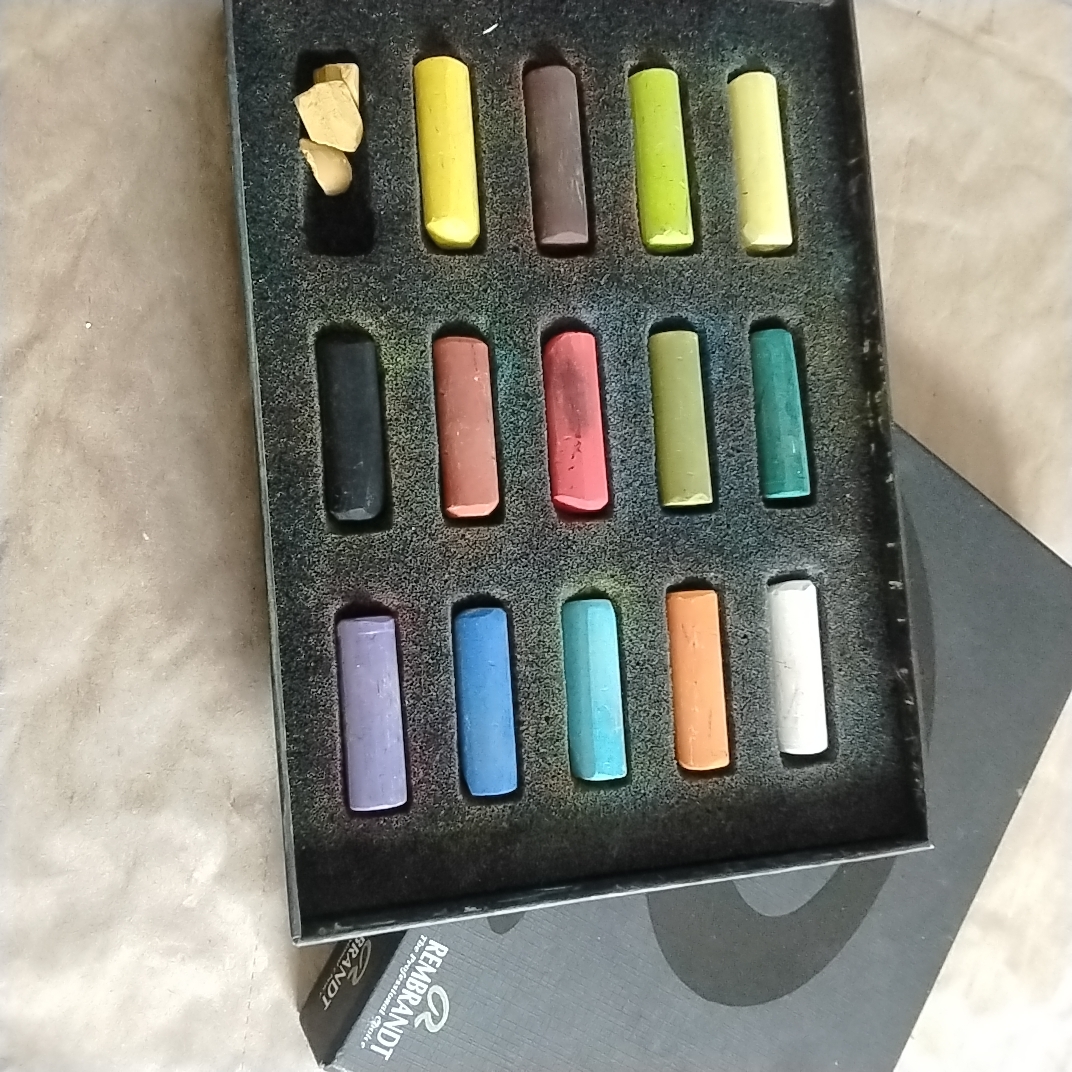
Holiday purchase was for one tube of oil paint, some clay for reasons, and some soft pastels.   I have one more big purchase planned for birthday,  but otherwise, i should be able to make the rest of the year a no buy.
 
r ransom
steward & author
Posts: 47938
Location: Left Coast Canada
19862
10
art trees books chicken cooking fiber arts
  • Likes 2
  • Mark post as helpful
  • send pies
    Number of slices to send:
    Optional 'thank-you' note:
  • Quote
  • Report post to moderator
It's odd.  I haven't ordered my birthday paint yet.  I feel like now is the wrong time.   Partly because I have enough and partly because I feel like I will need it this summer.

So I officially reserve my birthday paint for later in the no buy.
 
r ransom
steward & author
Posts: 47938
Location: Left Coast Canada
19862
10
art trees books chicken cooking fiber arts
  • Likes 4
  • Mark post as helpful
  • send pies
    Number of slices to send:
    Optional 'thank-you' note:
  • Quote
  • Report post to moderator
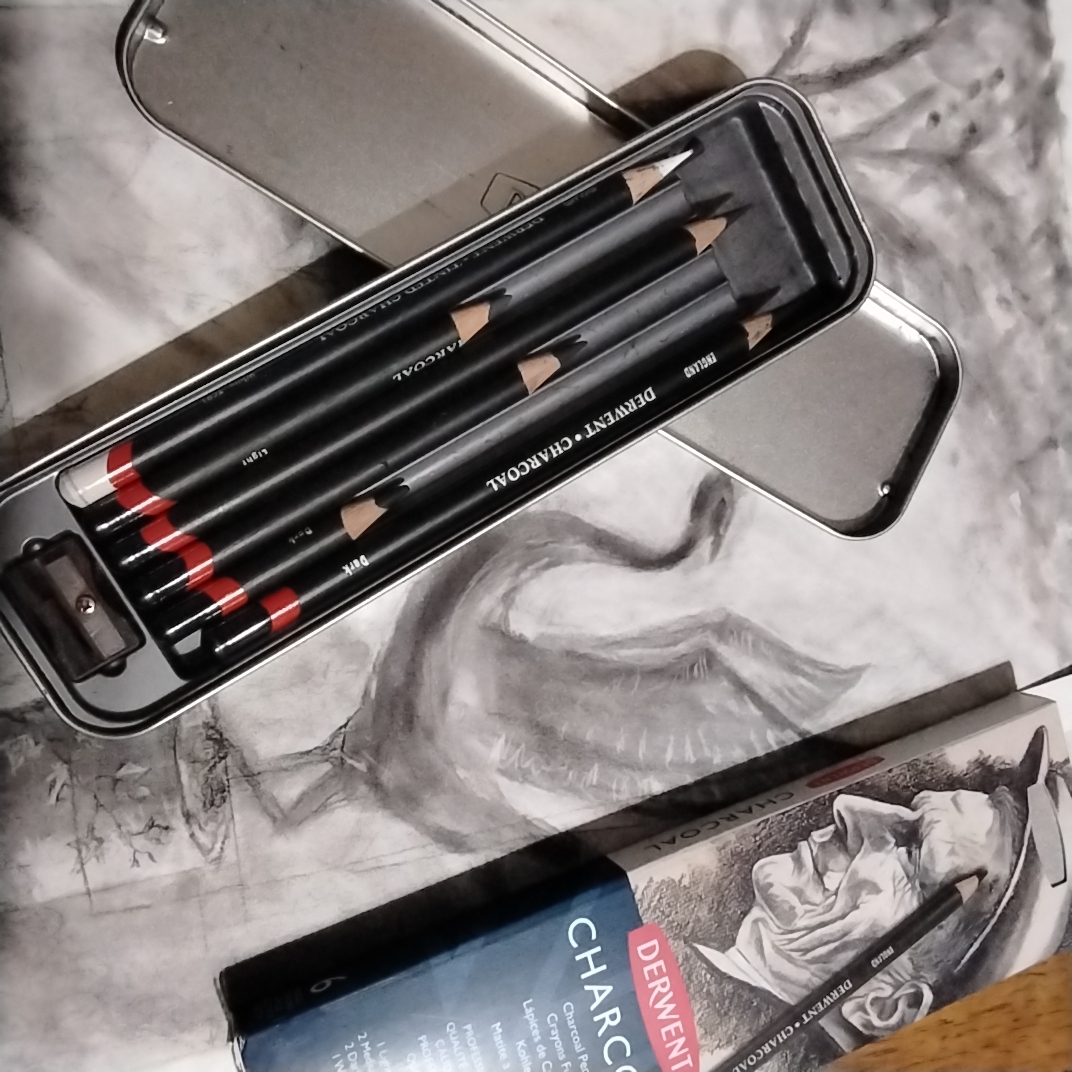
It turns out that I really like charcoal and similar black dusty mediums.  I've tried a lot of different kinds, from homemade ,  to almost waxy drawing charcoal that feel more like coloured pencils, to conte crayons which I adore but are well beyond my budget for daily drawing.  I even found a few sets by winsor and newton at a yard sale that are lovely.  

And yet, I almost always reach for my derwent set when drawing.   It just seems to be a good match for me. It's not as dusty as some and the pencils have nice feedback on the paper.  The sound is more pleasant than other charcoal.  There, but less scratchy.  Not as high pitched or as annoying as graphite.

As you can see, some are getting a bit short.  

The medium and dark have duplicates in the set, which is perfect for moments when I'm drawing and don't want to stop to sharpen.  I can just grab the other dark.  The light, alas, only has one and that's going down fast.  The shortest pencil is now too small for the charcoal pencil friendly sharpener.

I had hoped to buy two pencils to replace the dark and light when they finally are used up.  But it turns out, it's more expencive to buy two pencils than a whole new tin with 6 pencils and a sharpener.

One can never have enough tins, I suppose. It still feels wasteful.

But I love 'em and will use them.
Derwent-charcoal-set-well-loved.jpg
Derwent charcoal set well loved
 
r ransom
steward & author
Posts: 47938
Location: Left Coast Canada
19862
10
art trees books chicken cooking fiber arts
  • Likes 4
  • Mark post as helpful
  • send pies
    Number of slices to send:
    Optional 'thank-you' note:
  • Quote
  • Report post to moderator
Where am I with my no buy (low buy) art supplies this year?

Birthday shopping still waiting for later.  I haven't needed anything yet.  

I bought a frame and could spend $40 shipping, or add $25 more stuff to my order for free shipping. I added some earth colours as I go through them a lot, like yellow ochre and raw umber.  Does it count if I'm saving money by buying these?  I don't need them, yet, but the idea of wasting money on shipping from a shop I already have mixed emotions towards, just felt wrong.

Emotionally, I feel anxious about the disruptions in the middle east, as many minerals and ingredients for pigments only come from there.  Colbalt for sheep nutrition is already out of stock everywhere.  Colbalt blue paint has been intermittently in stock these last 6 months, and I expect in a few months from now, it will be difficult to get or phased out entirely like so many other mineral colours these last few years.  

I've often wanted to try that colour. But also, I can't see it being one I would use often, especially if it is hard to replace.  So like limited edition paints, I avoid falling in love with it.

On the whole, I feel comfortable with my art supplies that if something happened in my life, and I couldn't buy more, I can keep going for years.  That's a good feeling.  Like a full panty and the first snow of winter. I know it's going to be alright.
 
r ransom
steward & author
Posts: 47938
Location: Left Coast Canada
19862
10
art trees books chicken cooking fiber arts
  • Likes 4
  • Mark post as helpful
  • send pies
    Number of slices to send:
    Optional 'thank-you' note:
  • Quote
  • Report post to moderator
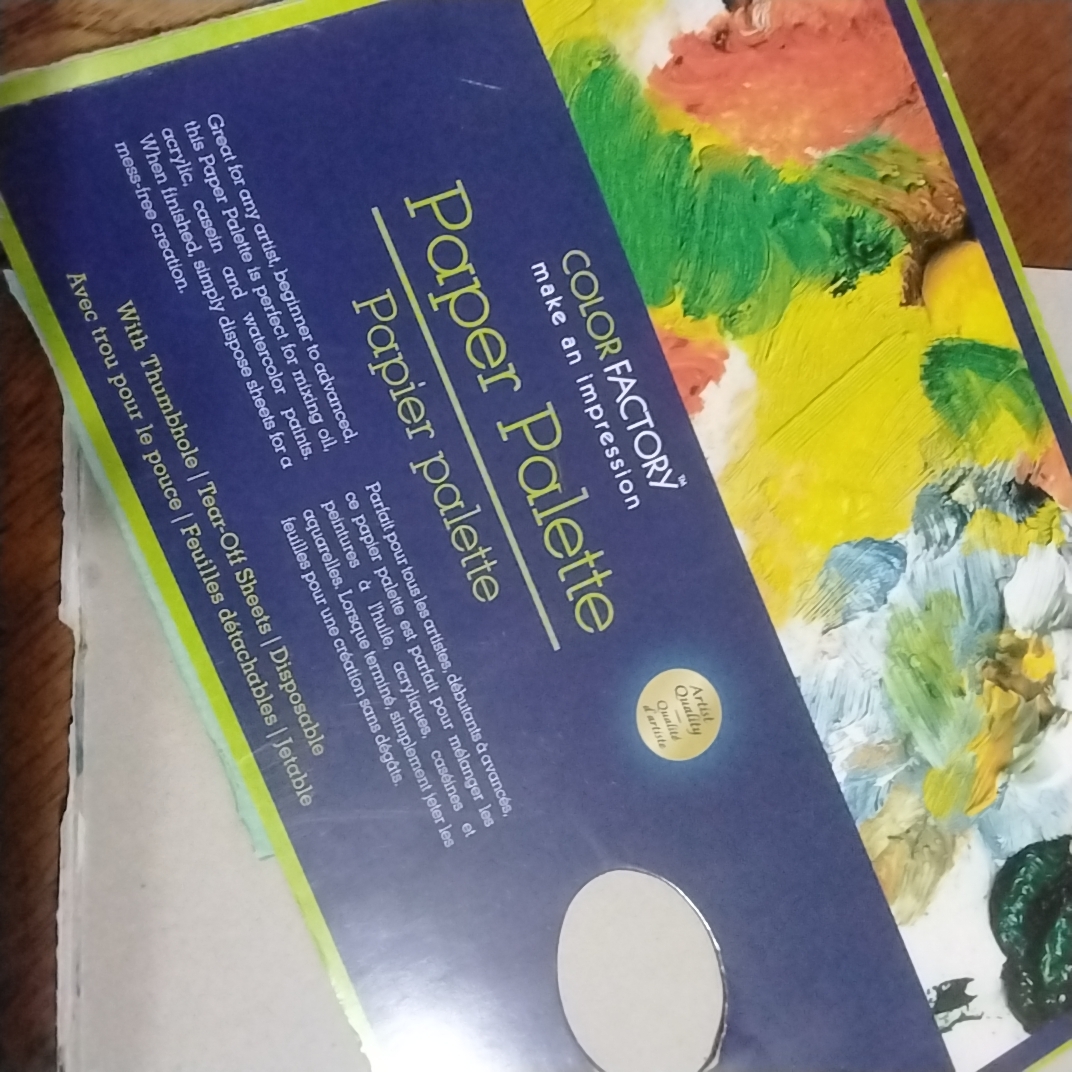
I probably got it from the dollar store as it's usually the best price.  Disposable paper palette for acrylic and oils.  I use it mostly in class or if I'm mixing an extra big mess of paint.  Anything where cleanup needs to be quick or would take multiple rags to mop up.  This review goes for all disposable pallets of this type as all the ones I've tried are about the same.

The paper is flimsy and attached on one short edge, this makes it move easily and wrinkle under the palette knife. Much tinner than wax paper used for baking.  It needs tape or clips to hold it down.  Wood is much nicer to work with.

But ease of cleanup is sometimes useful.   I have a few more almost finished paper palettes, from there, I will want to decide if I want to keep on with this for class, or find a more portable wood palette and way to transport it full of paint.
Color-factory-disposal-palette.jpg
Color factory disposal palette
 
r ransom
steward & author
Posts: 47938
Location: Left Coast Canada
19862
10
art trees books chicken cooking fiber arts
  • Likes 2
  • Mark post as helpful
  • send pies
    Number of slices to send:
    Optional 'thank-you' note:
  • Quote
  • Report post to moderator
Another 37ml tube of winton titanium white finished.

Fast drying without weird alkyd texturw makes it perfect for class.  Weak tinting strength makes me use a lot.
 
r ransom
steward & author
Posts: 47938
Location: Left Coast Canada
19862
10
art trees books chicken cooking fiber arts
  • Likes 4
  • Mark post as helpful
  • send pies
    Number of slices to send:
    Optional 'thank-you' note:
  • Quote
  • Report post to moderator
You know what it's like?  It's been a whole day worth of jagged edges, haven't even had first coffee, it's not even 6am yet.  Take a moment while the coffee brews and finally there is breathing space.  And then ...


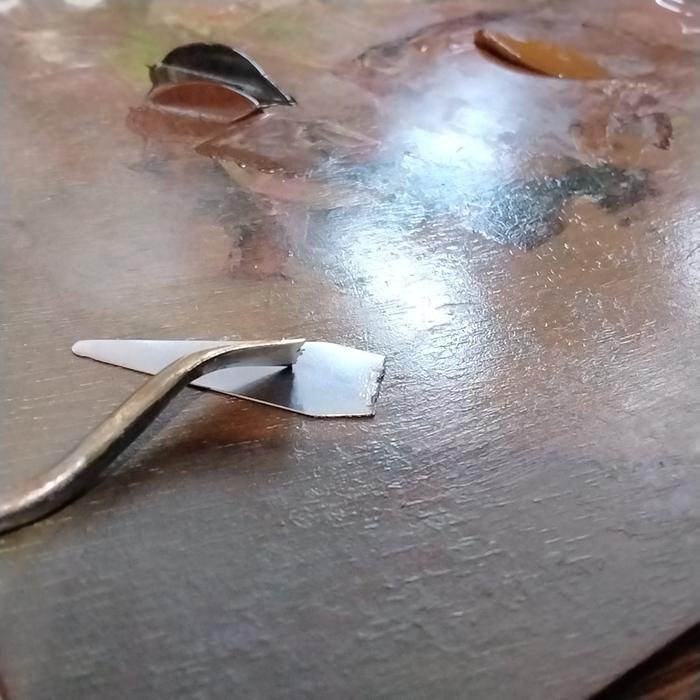
Brushes, paints, canvas, all come and go depending on what each painting needs.  The one thing each oil painting I've made so far has in common, is the paint was mixed with this knife.

I hadn't planned for this.


Review.
This is from one of those sets where you get half a dozen for a couple of dollars.  They are pretty much everywhere from dollar store to online.  All about the same quality.  It's often difficult to find a knife this small in those sets, so I was very lucky.  I often paint small canvases and don't need a lot of any one colour.  A small knife makes sense for my style.  

Considering a basic palette knife starts at about $20, this little guy held up well.  Sometimes the tang came loose in the handle, but a bit of superglue did the trick.

I often dreamed of upgrading it, but it's one of those things we need to see in person and that's difficult these days.

Today, I feel all adrift.  
One more loss in an already broken day.
 
r ransom
steward & author
Posts: 47938
Location: Left Coast Canada
19862
10
art trees books chicken cooking fiber arts
  • Mark post as helpful
  • send pies
    Number of slices to send:
    Optional 'thank-you' note:
  • Quote
  • Report post to moderator
Thank you again to the kind person who sent new palette knives.  They are splendid and fun to try out different shapes.


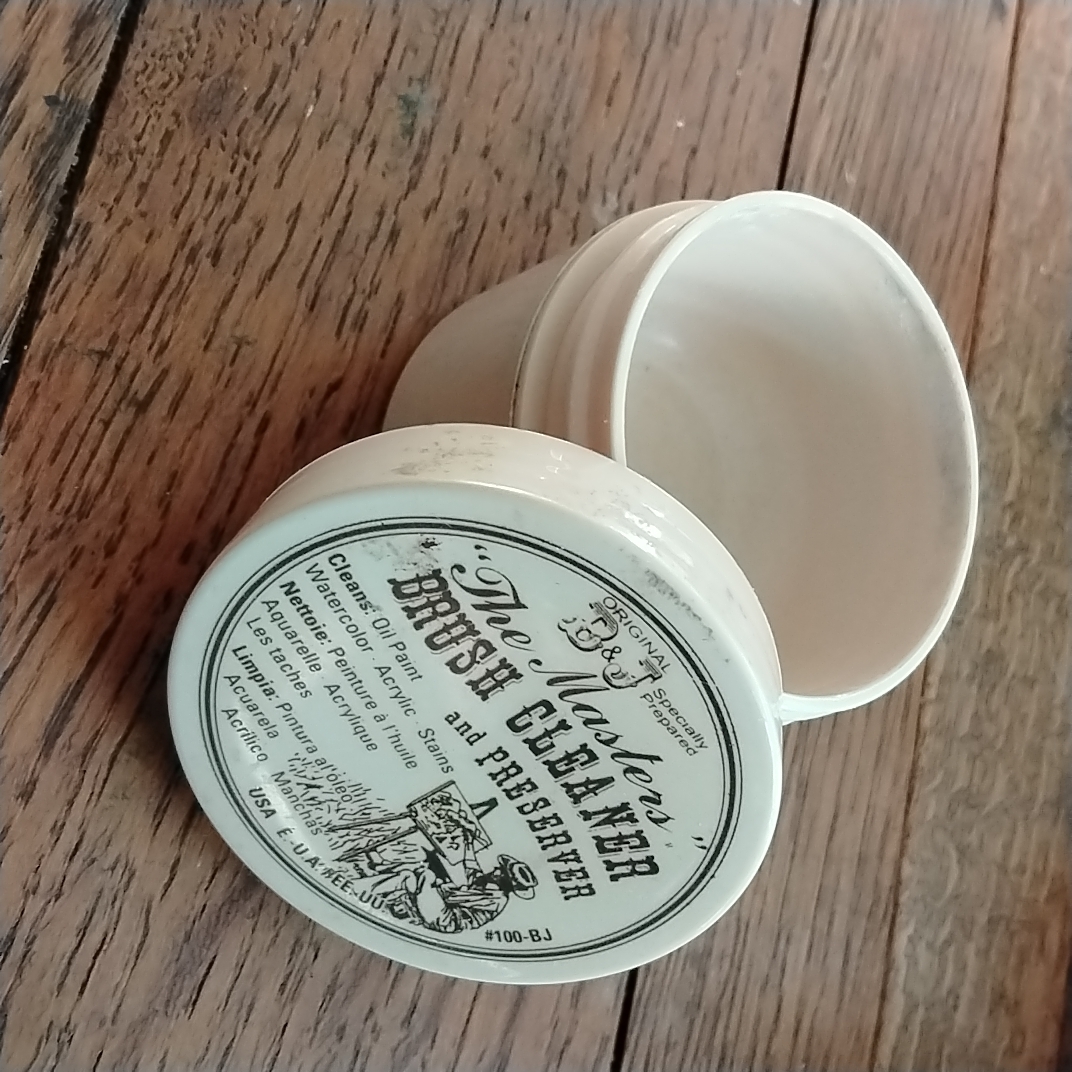
Today I used up Masters Brush Cleaner

I bought this when I started watercolour about 5 years ago (has it really been that long?).  There isn't much use for it with watercolour brushes as they generally wash clean with water so long as paint doesn't get into the ferruel.  Experiments aside, this brush soap is mostly dedicated to oil paint brushes.

I cannot see on the outside how much soap this masters brush cleaner claimed to hold, but the outside is about two inches across and maybe a generous inch and three quarters tall....on the outside.  For some reason the inside is just under an inch tall, and as they don't fill it to the top, we are only getting about 3/4inch of soap.  I'm sure there is a reason for the extra space between the layers of plastic, but psychologically, it's not leaving a good taste.

For cleaning oil painting brushes, masters soap works okay on their own.  Wipe the brush down as much as possible with a cloth before we lather, massage, rinse, repeat...quite a few times.  And it gets there in about half the time of hand soap or dish detergent.  I don't like this method as a lot of pigment and oil washes down the drain.

My preferred method is to soak the brushes in a jar of murphy oil soap mixed half and half with water. Even 10 min is enough to soak out most of the pigment and oils into the murphy jar which can then have a lid put on and reused about a dozen times (when lemon smell fades, it's time to change the oil soap and dispose of the old pigment solution according to your local waste management advise - usually drop off at the same place we recycle lightbulbs and batteries).  Now the masters soap only has to rinse away the residue from the previous soap and maybe a bit of leftover pigment (if lots of pigment, swish around in the oil soap again).  

Rinse brush recently removed from oil soap, lather in masters soap, massage bristles with fingers, rinse.  A normal brush needs this once, but one I've used for major scrubbing the paint into the surface may need a couple of times.  The murphy oil soap did most of the work, the masters brush cleaner only cleans out the residue from the first soap and act like a condition to the bristles.  

Masters soap works the same for me with both synthetic and natural hair brushes.

The masters soap pot may be small, but it lasted 2 years with this style.  I paint most days but usually use an oil bath for my brushes and once that reaches critical mass, I'll do a big clean of all the dirty brushes once or twice a week.

I accidentally bought two of these brush cleaners at the time, so no interruption of routine.   But I don't know if I would buy it again as it's only mildly better tha  castile hand soap.  I suppose that it fits neatly into a compact container is also a bonus.  Okay, I'm on the fence.

I want to try something like this soap for brush cleaning .   It looks just like one I used to buy for everyday soap.  I might see if I can find an even more local source.  If it doesn't work out, I can use it for hand soap.


side note: this is my brush cleaning routine at this time.  I'm often experimenting and will quickly change if a lazier or cheaper option appears.  However, I still haven't bought artists solvent yet and kind of like having a solvent free paint environment.
Masters-brush-cleaner-soap-review.jpg
Masters brush cleaner soap review
 
r ransom
steward & author
Posts: 47938
Location: Left Coast Canada
19862
10
art trees books chicken cooking fiber arts
  • Mark post as helpful
  • send pies
    Number of slices to send:
    Optional 'thank-you' note:
  • Quote
  • Report post to moderator
No-buy art supplies status summer 2026

I spent my birthday money on a giant canvas that was on sale.  Well, giant for me as I'm often working on 4in canvas and this one is 16x20in.  It's also a higher quality than I've used before and seems to be nice.  It's high enough quality to need keys but the ones given won't stay in.  There is a lot of spring to a canvas this size and I would love to be able to firm it up a little.  It's big enough that the wood and cloth change with humidity and weather.

As they were 60% off, I bought two as I have two master copies I'm keen to paint.

The rest was spent on backups of my favourite paints.  Another giant tube of gamblin flake white replacement.  Kama naples yellows and some red ochre are my favourite.  Although it's one of the more affordable paint companies, I save the paints for best because I am afraid of using them for practice. Maybe the extra tube will fix this problem in me.

I also got another tube of nickle yellow from kama as this seems the absolute best modern equivalent of lead tin yellow used by the dutch masters.  Not sure what to use it for with every day painting, but kama's nickle yellow is indispensable for master studies.

That's it.

I'll want to put in an order for more linseed oil by the end of summer.  I'm waiting for it to go on sale at opus as I will buy a frame from them if my giant painting works out.   If not, I'll buy from linseed oil from kama as it's cheaper and everything I bought from there seems a much higher quality than anywhere else.  The problem is, shipping is expencive, so I need to get a few things to get free shipping.

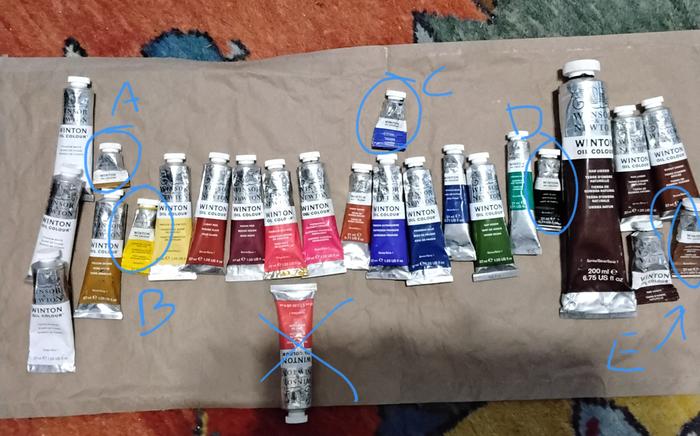
Otherwise, I've been focusing on getting to know what pigments and paints I have.  I want to inventory the student grade oil paints.  

I look around at what I have now and feel it's pretty comfortable.   Nothing urgent.   Everything might make it to black Friday if I am careful with the oil.
 
r ransom
steward & author
Posts: 47938
Location: Left Coast Canada
19862
10
art trees books chicken cooking fiber arts
  • Likes 1
  • Mark post as helpful
  • send pies
    Number of slices to send:
    Optional 'thank-you' note:
  • Quote
  • Report post to moderator
Review time

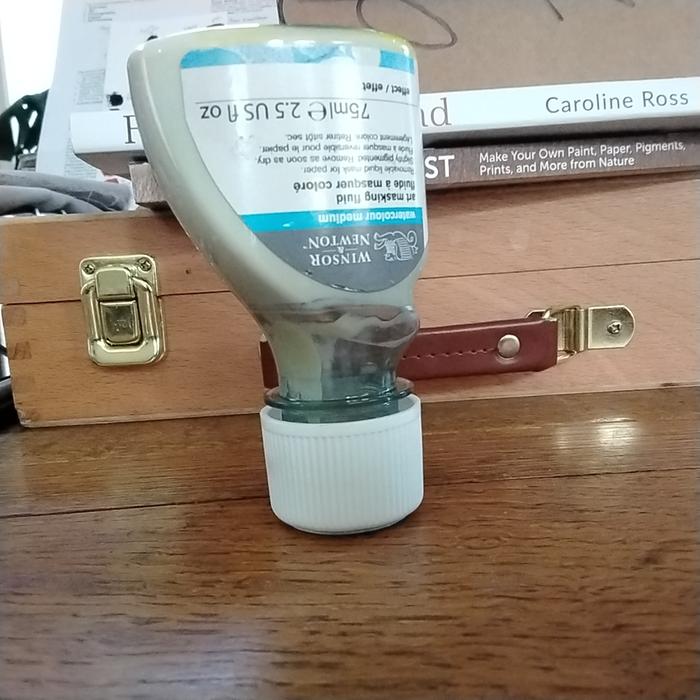
This is winsor and newton masking fluid I bought 5 years ago.


And yes, it's upside down.

The thing about masking fluid is that it's supposed to be fluid, but this is now too old.  This is a shame because I'm in the mood to paint some comfort chickens and it is ideal for dabbing where the reflection in the eye needs to be so it can stay white.

Masking fluid preserves the white of the paper.  We paint it on the paper where we want there to be white, then paint with watercolour as per normal.  When finished, remove masking fluid and white spots show up.

This W&N masking fluid works good.  A bit like socks really.  Socks usually only get noticed when there is a problem.  I (almost) never had a problem with it ripping the paper or other issues.  Except that one time I'm using very expencive paper.  It doesn't like high end paper.

The only thing is it's good to get it off the paper in 2 days or less.  Also, it smells.

And if it too old, it turns solid.

I don't have any plans to replace this product as I can work around the spots I want to keep white or use gouache.   The more I learn about painting history, the more silly this "don't use white" hangover from the mid 20th century looks.  Many great painters from the past used white watercolour or body colour: turner, constable, Emily carr, van gogh...Basically anyone from pre history to about 1940 when it was suddenly forbidden.

But masking fluid was useful when I was starting out.   I'm glad I got it.  I'm also surprised how little I miss it. I'm kind of relieved it's done.
 
r ransom
steward & author
Posts: 47938
Location: Left Coast Canada
19862
10
art trees books chicken cooking fiber arts
  • Likes 3
  • Mark post as helpful
  • send pies
    Number of slices to send:
    Optional 'thank-you' note:
  • Quote
  • Report post to moderator
eview time:

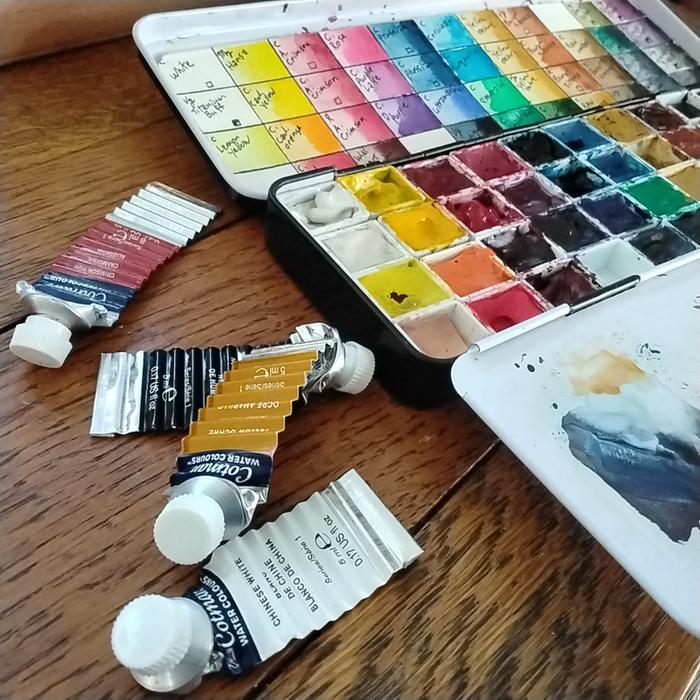
I used up some Cotman watercolour tubes


These are from the first student grade set of paints I got as a gift to get me started with real (not amazonbasics version) of watercolours.   How I use these are to squeeze them into half pans and reactivate as needed.  The other day I saw a video of some paints that went hard in the tube and even though there was only a little bit left, every drop of paint represents a dozen or more paintings.  So I thought might as well top up some pans.  

Looking at the colours I used up first, yellow ochre is no surprise. I don't know why, but it's the colour I use most in any medium.  I don't think I'm using so much, but it always empties first.  Alizarin crimson also is expected.  It's a great colour for chickens and mixing.  Get the right yellow, and it makes a nice orange-red.  A workhorse colour.

What's more surprising is the black and the white.  When I first learned watercolours, the "rule" was never use black or white.  So I didn't for the first couple of years.  Then one day I was looking at some watercolours by my favourite artists like van gogh, emily carr, constable, even turner.  They all didn't mind using white or black.  It's just more colours to them.  So I started experimenting.  Treat white and black as if they are colours, and not value adjusters, they are wonderful colours to have on our palette.

The white is also useful for transparency adjusting.  This can help push attention away from or towards an area on the painting.  Constable's standing stones paintings are a good example of how this works.  

So what do I think of these paints?  

Cotman watercolour paints are a solid student grade paint made by a company with something like 200 years of expierence getting people addicted to painting.   Dependable comes to mind.  Not brilliant in colour or in performance, but I never feel like I'm having to have a conversation with the paints or fight against them.  All the colours behave more or less the same.  It's very ... like cream of wheat without any jam or toppings.  Much of a muchness.

And that's exactly what I needed when learning to paint with watercolours.  And I often return to these paints when playing around with colour and new ideas because with these paints, it's mostly about colour (hue, saturation, value) and transparency.  

When dried in pans, these paints tend to shrink and crack, especially the earthy coours, but are easily glued back in with a drop of honey.  I think it's a bit by design as the ones bought as pans seem to behave much better.

They all mix well together, they all have a decent tinting strength for a student grade paint.  

I don't have plans to buy any of these again... except maybe the yellow ochre.  I've tried a few professional yellow ochres now and to be blunt, they aren't any better than this student grade yellow ochre like cotman.  At half the price, I might as well stick with cotman for umbers and ochres.

White and black on the other hand, this is a bit weak.  I've already switched to holbein for most of the white and black needs - their peach black is the most black paint I've ever seen, in any medium.  As for white, holbein again with their watercolour white for transparency adjustment and mixing, or their gouache white for things that need to be white.  
 
r ransom
steward & author
Posts: 47938
Location: Left Coast Canada
19862
10
art trees books chicken cooking fiber arts
  • Likes 4
  • Mark post as helpful
  • send pies
    Number of slices to send:
    Optional 'thank-you' note:
  • Quote
  • Report post to moderator
Also, I rage bought some watercolour paints.

This is mostly because a student grade watercolour paint is about $12 a half pan locally and these professional paints were about $4 a full pan (twice the paint) on sale, but after shipping, tax, and duty. It's not fair that canadians have to pay so much more for art supplies just because the import deals has everything coming via the usa with a markup for each country and ...about four and a half hours of rant basically saying, we shouldn't have to pay this much.  And really the normal conclusion is to support local amazing paint makers like Beam and Kama... but the temptation was too big to buy these british paints...sigh.

Or maybe I should just give up and make my own watercolours and oil paints.  But then, where to get the pigments.  sigh.  

So I bought half a dozen colours or so.  Not even sure how many paints to expect.

I don't know yet if i made a sound decision.  I'm wallowing in buyers remorse as that money could have been spent on a black Friday paint sale.
 
r ransom
steward & author
Posts: 47938
Location: Left Coast Canada
19862
10
art trees books chicken cooking fiber arts
  • Likes 4
  • Mark post as helpful
  • send pies
    Number of slices to send:
    Optional 'thank-you' note:
  • Quote
  • Report post to moderator

r ransom wrote:Also, I rage bought some watercolour paints.

...
So I bought half a dozen colours or so.  Not even sure how many paints to expect.

I don't know yet if i made a sound decision.  I'm wallowing in buyers remorse as that money could have been spent on a black Friday paint sale.


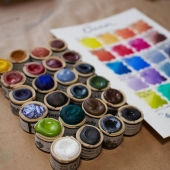
The paints arrived and I swatched them.

There is nothing especially wrong with them except one tube stinks of rotten tooth (but only I can smell it,  apparently).  I guess, I've gotten used to handmade watercolours and this is just sort of bland in comparison.
 
r ransom
steward & author
Posts: 47938
Location: Left Coast Canada
19862
10
art trees books chicken cooking fiber arts
  • Likes 3
  • Mark post as helpful
  • send pies
    Number of slices to send:
    Optional 'thank-you' note:
  • Quote
  • Report post to moderator
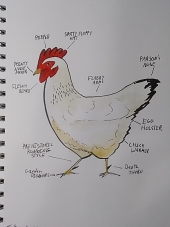
I contacted the makers of the paint and they said it's a fairly normal smell for the specific pigment.   I hope it goes away when the paint dries in the pan so I can paint my chicken and write my review.  

Then again, it would be an interesting challenge to paint a chicken without red.


I know some pigments just stink, to some people.  Pretty sure it's genetic as not everyone smells mars black pbk11, as rotten potatoes.   It's not so bad in cheaper paints, but get a strong pigment load in oil paint and it's overwhelming.  

Maybe this new paint is like that.
 
I agree. Here's the link: http://stoves2.com
reply
    Bookmark Topic Watch Topic
  • New Topic