It depends on what & how motor is used... If we are speaking of a little muffin fan to move equipment cooling air, by all means, verify that it is free spinning, and rotor bearings are not "dragging" or that fan blades are not overloaded with dust & airborne grease residue....IF YOU CAN SPIN FAN BLADE WITH NO POWER ON UNIT, AND IT SPINS FOR A LON-N-N-GGG TIME, I would not change motor... Unless you had other problems like the capacitor...
Oh, here we go testing.... And the meter steps into the mix ..... The BEST one, is the one you understand... But in the homeowner trying to save a buck, it will take you a long time to recover the tool (meter) cost....
LET ME EXPLAIN:: I am a repair technician..... ABSOLUTELY NOT ON ANY FREON OPERATING SYSTEMS...
I repair restaurant equipment, ovens, fryers, dishwashers, grills, booster heaters, heat lamps.... Exhaust fans, can openers, KitchenAid mixers @ 5 quart, to mixers of 140 quart size, pizza dough rollers, dough dividers, meat tenderizers, hamburger grinders....
Getting back to your trouble shooting, the motor you are testing, what are you looking for

All motors draw current, oh heck, here we go, there is also voltage, and circuit resistance.... All part of the motor being operated.... SO, WHAT METER ?? In this scenario, I would go with the least expensive "amprobe" style meter, with the newer digital upgrade....
From Lowes, the Ideal brand, is a *backup* I carry in my tool arsenal on my service vehicle... It reads AC amps, ( amp-clamp )volts ( test leads), & resistance (test leads), plus DC volts( test leads) but no "amp-clamp" for the DC...
This will provide all the information you need for household testing...
Now, back to the troubleshooting...
1. You need to know *run amps*
2. Start amps
3. Voltage supplied
4. Voltage drop, running...
5. Voltage under load
6. ""Rating plate"" max loading amps..
The little "muffin fan"" will draw a very, very small amount of amps...
Any amprobe style meter will barely be able to display it....but,.. you can see it if you will put an amplifier in the test set-up....
(Now comes the magic of being a little bit hocus-pokus) involved...
Get some nylon zip ties, about 6" size...
Get about 36" of insulated, stranded wire ( 14 or 16 gauge )
Make a coil with exactly 10 turns or loops... About the size of a toilet paper tube....zip tie the loops to make a coil DO NOT TWIST THE WIRES TOGETHER IN MAKING THE DONUT SHAPED COIL....
Now remove insulation from last 1/2" of coil leads....
Disconnect ONE of the wires going to muffin fan motor (it doesn't matter which wire....) and connect your magic coil to the wire you removed, and other end of magic coil wire to where your muffin fan was connected.... (Use wire nuts, if you have some) If no wire nuts, tape so nothing touches any bare wires and surfaces...
NOW, TAKE YOUR AMPROBE, squeeze the clamp arm, put open "snout" thru the coil, and release clamp handle...
Set your amprobe to the lower scale, now turn on the muffin fan....
If the muffin fan was drawing
.1 amp, (which you could not see meter deflecting) before, now with magic coil, will show about 10x the reading... Or maybe 1 amp.....
Have I twisted your mind around....
We always look to see if the motor draws current. ... If not, go to next item to test..
In the larger motors, say 1/4 hp, 1/3 hp...
With your amprobe, open jaw, include ONE wire of motor you are testing...
((normally you want to see the meter display up to about 3X the RUN current, when the motor first starts))
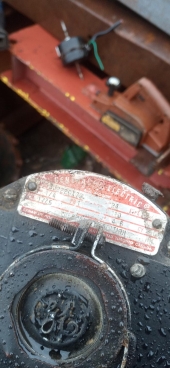
Where do we get the "run current" number, from motor data plate...
The 1/4 HP motor with a squirrel cage fan blade would draw about
5 amp... So starting amps would be around 15 amps ... ""And this is just for the initial start of the motor rotor turning...""
Hopefully you understand my way of explaining just one little nugget of troubleshooting....
Joe B...






 2
2