• Post Reply Bookmark Topic Watch Topic
  • New Topic
permaculture forums growies critters building homesteading energy monies kitchen purity ungarbage community wilderness fiber arts art permaculture artisans regional education skip experiences global resources cider press projects digital market permies.com pie forums private forums all forums
this forum made possible by our volunteer staff, including ...
master stewards:
  • Carla Burke
  • Nancy Reading
  • John F Dean
  • r ransom
  • paul wheaton
  • Jay Angler
  • Timothy Norton
stewards:
  • Pearl Sutton
  • Tereza Okava
  • Nicole Alderman
master gardeners:
  • Christopher Weeks
gardeners:
  • M Ljin
  • Megan Palmer
  • Pete Podurgiel

How are you using your Sunchoke biomass

 
Posts: 7
Location: Kansas City metro 6a
1
  • Likes 9
  • Mark post as helpful
  • send pies
    Number of slices to send:
    Optional 'thank-you' note:
  • Quote
  • Report post to moderator
Currently, the only livestock I have are chickens.  They won't the foliage, or at least, mine won't.  I've had issues with sunchokes spreading when using the biomass as mulch.  I have a pretty big pile drying on a tarp until I figure out what to do.  I already have more of these things than I could ever hope to use.  I'm thinking about burning it and using the ash somewhere on the property.
 
gardener
Posts: 2322
Location: Zone 6b
1559
forest garden fungi books chicken fiber arts ungarbage
  • Likes 12
  • Mark post as helpful
  • send pies
    Number of slices to send:
    Optional 'thank-you' note:
  • Quote
  • Report post to moderator
I steep the leaves in a big can filled with water to brew for a few days. In warm weather the soft tissues break down into a soupy texture. Even the fibrous stalks break down too given longer time and only the cellulose backbones are left which I spread around plants as mulch. I use the liquid diluted as fertilizer.
 
master steward
Posts: 16302
Location: Pacific Wet Coast
10798
duck books chicken cooking food preservation ungarbage
  • Likes 12
  • Mark post as helpful
  • send pies
    Number of slices to send:
    Optional 'thank-you' note:
  • Quote
  • Report post to moderator
In my ecosystem, I just let my sunchoke tops die back to feed the underground portion of the plants. Once dry, they don't regenerate, but they're marginal on my land.

Also the deer eat them.

If I had dried stocks that weren't needed in the compost as extra browns, I'd biochar them as I'd much rather have biochar than ash.
 
master gardener
Posts: 6952
Location: Carlton County, Minnesota, USA: 3b; Dfb; sandy loam; in the woods
4384
8
forest garden trees books chicken food preservation cooking fiber arts seed woodworking homestead ungarbage
  • Likes 14
  • Mark post as helpful
  • send pies
    Number of slices to send:
    Optional 'thank-you' note:
  • Quote
  • Report post to moderator
I leave them standing as winter insect habitat where I don't harvest the tubers. Where I do, I either drop them nearby or toss them on a compost heap.
 
master pollinator
Posts: 475
Location: UK
175
kids urban seed
  • Likes 10
  • Mark post as helpful
  • send pies
    Number of slices to send:
    Optional 'thank-you' note:
  • Quote
  • Report post to moderator
Mine end up as a loose mulch around the beds once the ground freezes. They're so hollow and fibrous they take ages to break down without shredding first, but they do eventually disappear. Bit annoying that a few always seem to root from whatever bits land on soil though.
 
Posts: 2
  • Likes 3
  • Mark post as helpful
  • send pies
    Number of slices to send:
    Optional 'thank-you' note:
  • Quote
  • Report post to moderator
I wish I had your troubles with biomass to dispose of. Our voles don't leave enough of the chokes for we himans to get a decent harvest. Any ideas? We live in a busy road so barn cats aren't an option
 
steward
Posts: 19694
Location: USDA Zone 8a
4945
dog hunting food preservation cooking bee greening the desert
  • Likes 7
  • Mark post as helpful
  • send pies
    Number of slices to send:
    Optional 'thank-you' note:
  • Quote
  • Report post to moderator

Cindy Cain wrote:I wish I had your troubles with biomass to dispose of. Our voles don't leave enough of the chokes for we himans to get a decent harvest. Any ideas? We live in a busy road so barn cats aren't an option


Have you heard of vole proof fencing?

I have also read that voles don't like open spaces where a predator might attack them so make some open space around the sunchokes.

Encourage snakes to visit your yard by furnishing low pan of water and a rock habitat.

Here are some threads that might help:

https://permies.com/t/40/275416/Permie-deal-Voles

https://permies.com/t/65575/Dealing-Voles-Moles

https://permies.com/t/161387/rid-voles
 
pollinator
Posts: 1692
Location: zone 4b, sandy, Continental D
463
  • Likes 10
  • Mark post as helpful
  • send pies
    Number of slices to send:
    Optional 'thank-you' note:
  • Quote
  • Report post to moderator
I try to harvest all of my sunchoke each year, as tubers of the year are more rounded, easier to clean, and since they escaped in my garden, that's going to be quite a chore. I can then sort them, keep the largest/ best ones for us. The damaged ones can go to the chickens or as bait to the deer who absolutely go bananas for them, and hubby still dreams of "bagging the Big One". They made flowers for us this year, but we are expecting our first frost in a week, so I might as well clip them for bouquets: I'll never get seeds out of them, and that will encourage more tuber production, although it's getting late.
I won't do much with the leaves: they can fall and rot wherever they are.
With my brand new machete, the large stalks can be dried out and planted in my hugel to stop the strong winds we can get from the West and North. They will add a lot of height protection. The small ones can be shredded and added as mulch wherever I need mulch which is... everywhere...
Anyway, that's the plan as of 9/29/26.
 
gardener
Posts: 3950
Location: Western Slope Colorado.
1080
5
goat dog food preservation medical herbs solar greening the desert
  • Likes 12
  • Mark post as helpful
  • send pies
    Number of slices to send:
    Optional 'thank-you' note:
  • Quote
  • Report post to moderator
I’m growing sun chokes mixed with sunflowers, comfrey, locust trees and what ever will grow, to promote soil development.  The plants are drying up in my test plot.  For the winter I will leave the dead stalks standing.  My hope is that they will slow the wind, keep the snow from blowing away, which insulates the ground and provides added moisture to the soil.

The birds will eat - are eating the seeds.

I guess there are tubers below ground, but I am having gut issues and it is probably not the best time to introduce a totally new food item which is rumored to irritate the gut in some people.  The tubers are there incase of starvation conditions or maybe I missed the best harvest conditions.  I don’t know much about harvesting them.

Anyway I’m leaving them standing, and if they blow over, I’ll still leave them in place.
 
Cécile Stelzer Johnson
pollinator
Posts: 1692
Location: zone 4b, sandy, Continental D
463
  • Likes 8
  • Mark post as helpful
  • send pies
    Number of slices to send:
    Optional 'thank-you' note:
  • Quote
  • Report post to moderator

Thekla McDaniels wrote:

I guess there are tubers below ground, but I am having gut issues and it is probably not the best time to introduce a totally new food item which is rumored to irritate the gut in some people.  The tubers are there incase of starvation conditions or maybe I missed the best harvest conditions.  I don’t know much about harvesting them.
.


About these "gut issues". It's a pity that you have gut issues with them as these tall plants are very resilient and do produce an enormous amount of food for  practically nothing.
The red ones are quite farty, the white ones not so much.
The culprit is inulin. To lessen its effects:
• Acid boiling: Simmer sliced sunchokes in water mixed with lemon juice or vinegar for about 10 to 15 minutes before roasting or using them in a recipe.
• Fermentation: Pickle the sunchokes first, as the live bacteria consume the gas-producing inulin during the jarring process.
• Smaller portions: Eat small amounts at a time so your digestive system can adjust to the prebiotic fiber. I know that the first time I consume them, I must use only a small amount, then I can increase the dose. Eventually, I can eat a normal portion raw. (It's a bit like mosquito bites: the first ones of the season cause the biggest reaction. afterwards, not so much.)
• Pair with digestive herbs: Serve your dish alongside carminative herbs and spices like ginger, fennel, or peppermint tea
 
gardener
Posts: 5799
Location: Cincinnati, Ohio,Price Hill 45205
1409
forest garden trees urban
  • Likes 13
  • Mark post as helpful
  • send pies
    Number of slices to send:
    Optional 'thank-you' note:
  • Quote
  • Report post to moderator
Mine are dying back right now,so I'm cutting the stalks and stripping off the leaves.
They are sitting in the car right now, getting a little solar drying.
These will be for our two pet bunnies as winter treats.

The leaves and any stalks that are already brown go right into a nearby bed or pathway.
I'm harvesting the roots for my neighbor who is doing a vegetarian farm to table catering gig.
I'm replacing them with pots of raspberry cuttings, though I'm putting a sunchoke and beans in each pot.
 
Posts: 25
Location: Manton, CA
5
4
trees wood heat homestead
  • Likes 9
  • Mark post as helpful
  • send pies
    Number of slices to send:
    Optional 'thank-you' note:
  • Quote
  • Report post to moderator

Cindy Cain wrote:I wish I had your troubles with biomass to dispose of. Our voles don't leave enough of the chokes for we himans to get a decent harvest. Any ideas? We live in a busy road so barn cats aren't an option


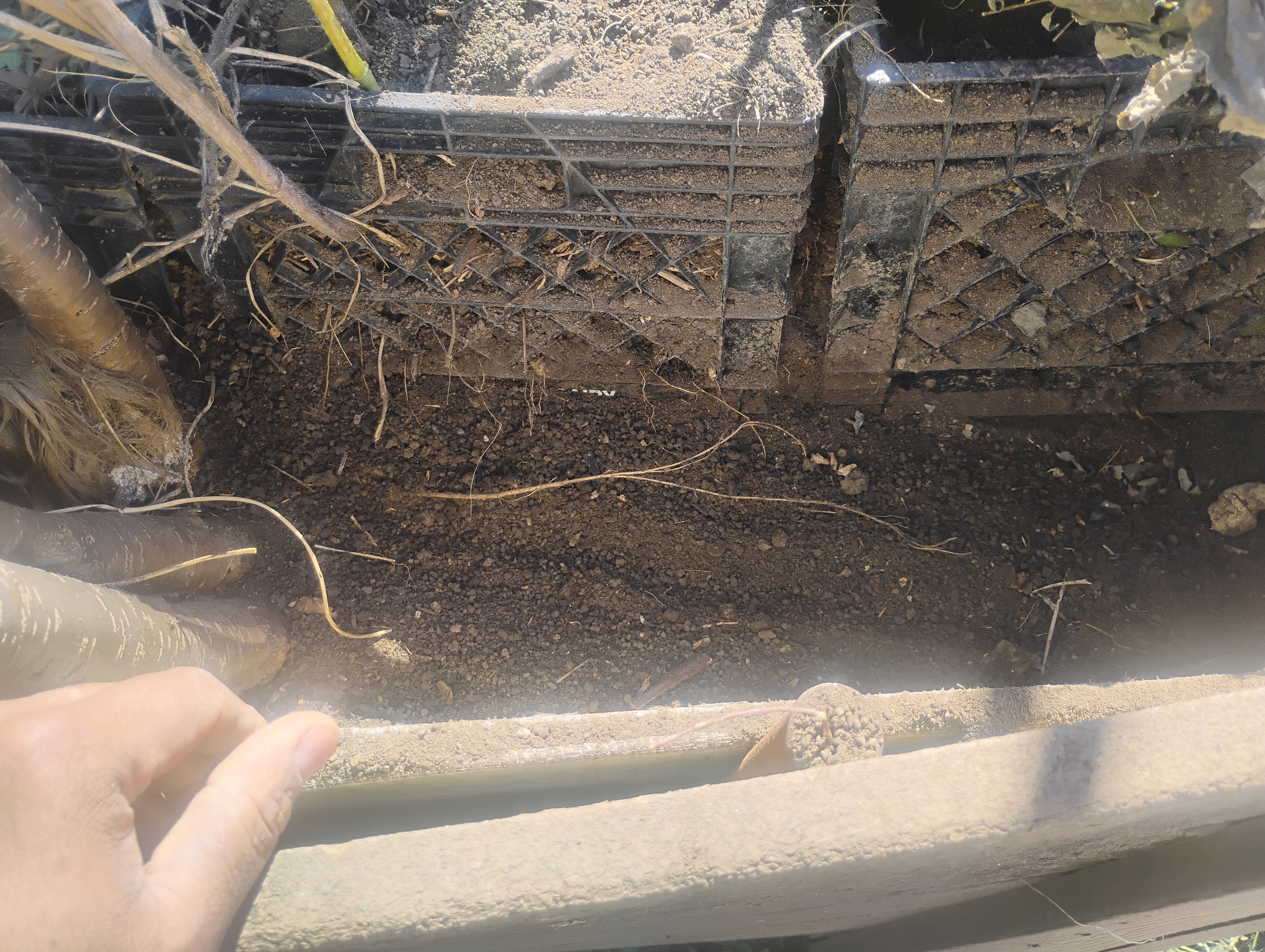
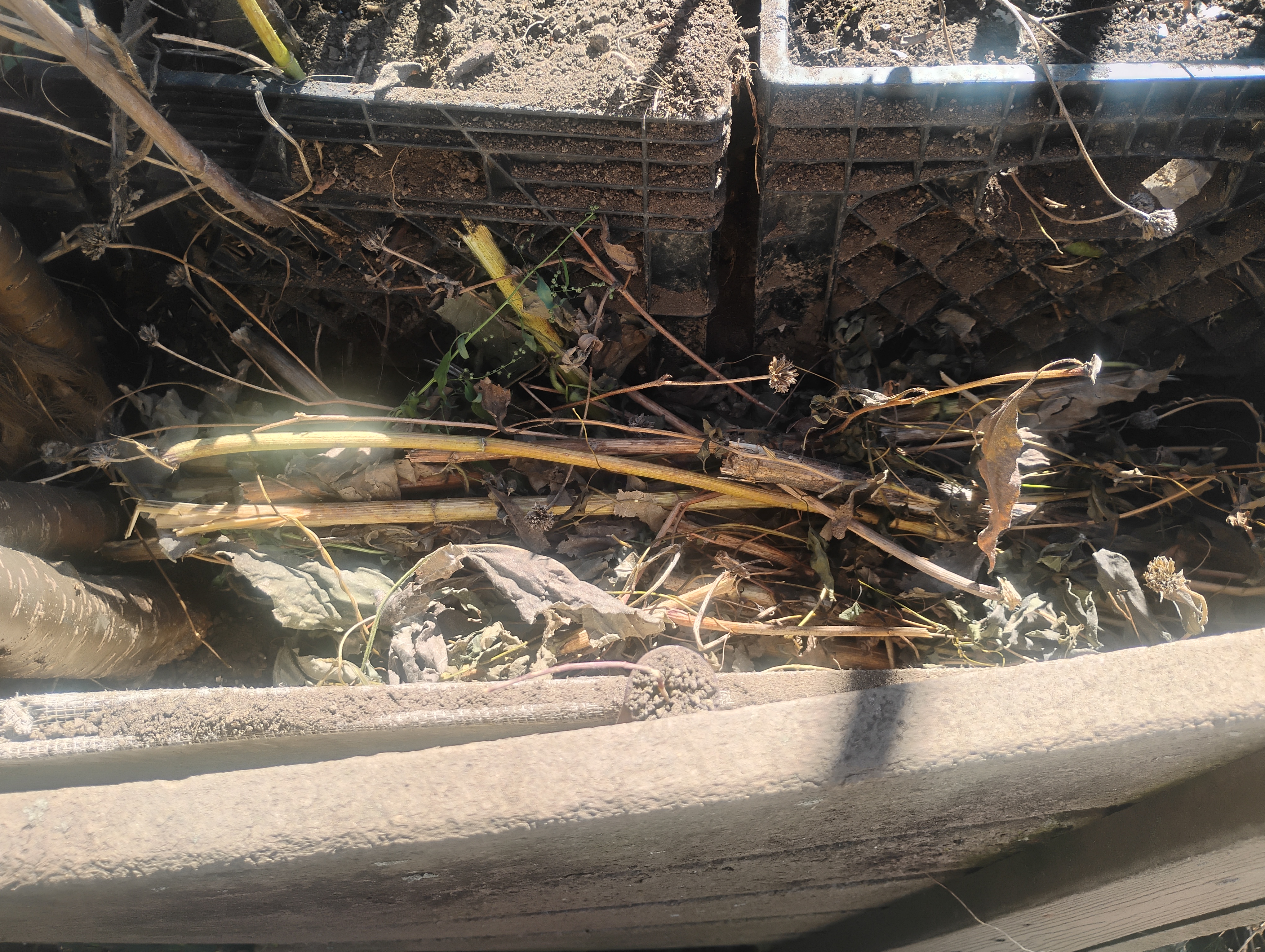
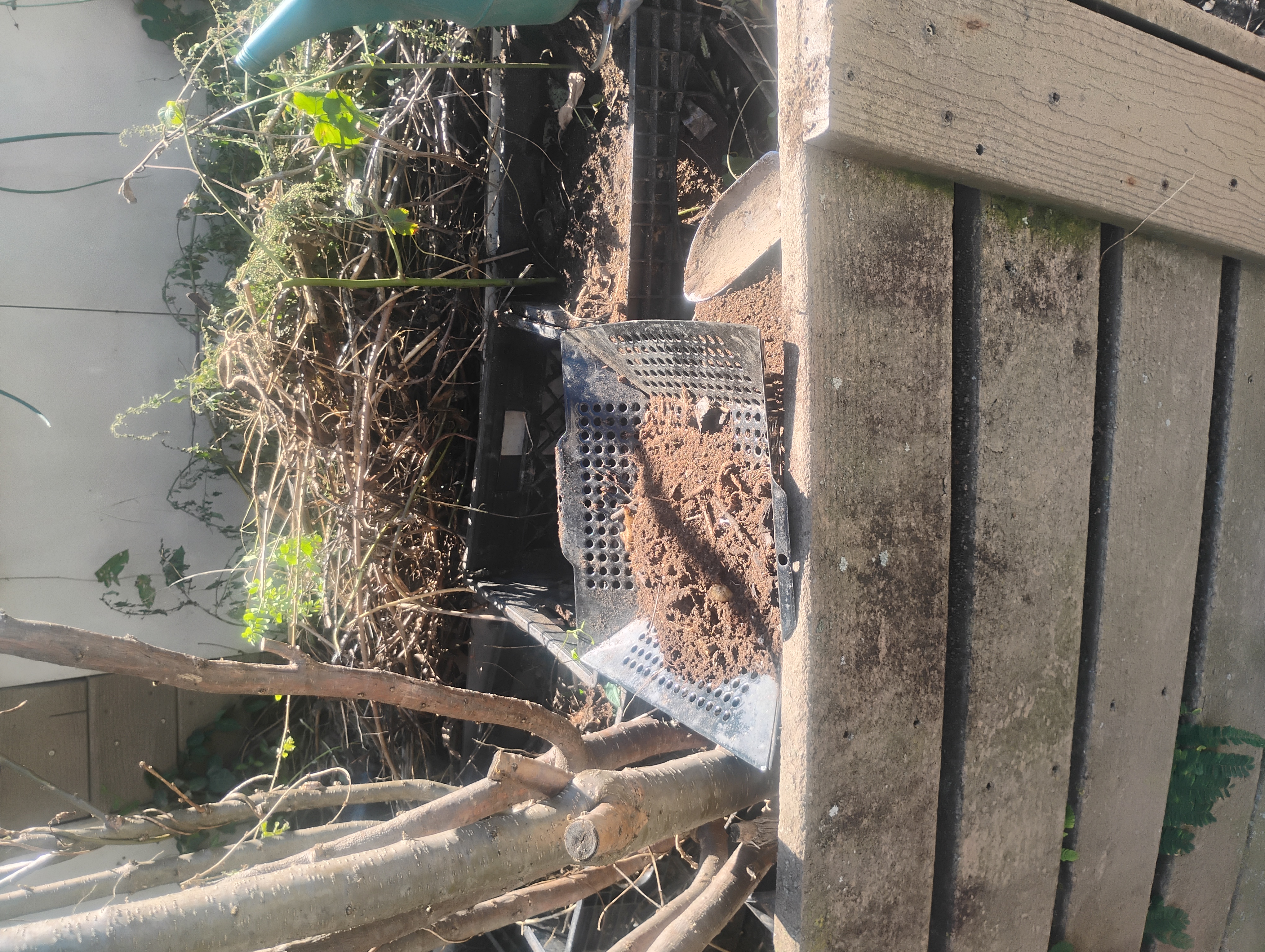
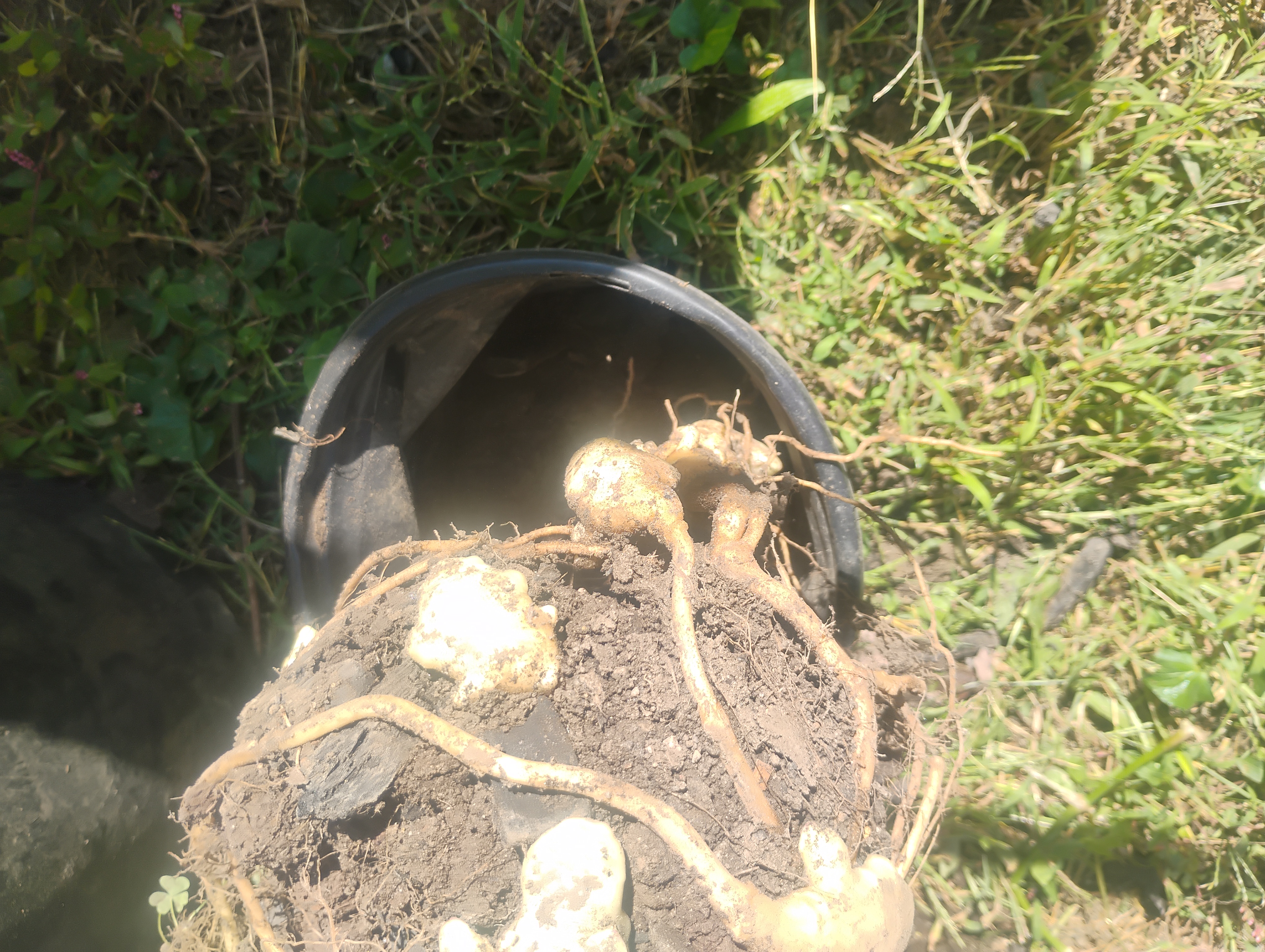
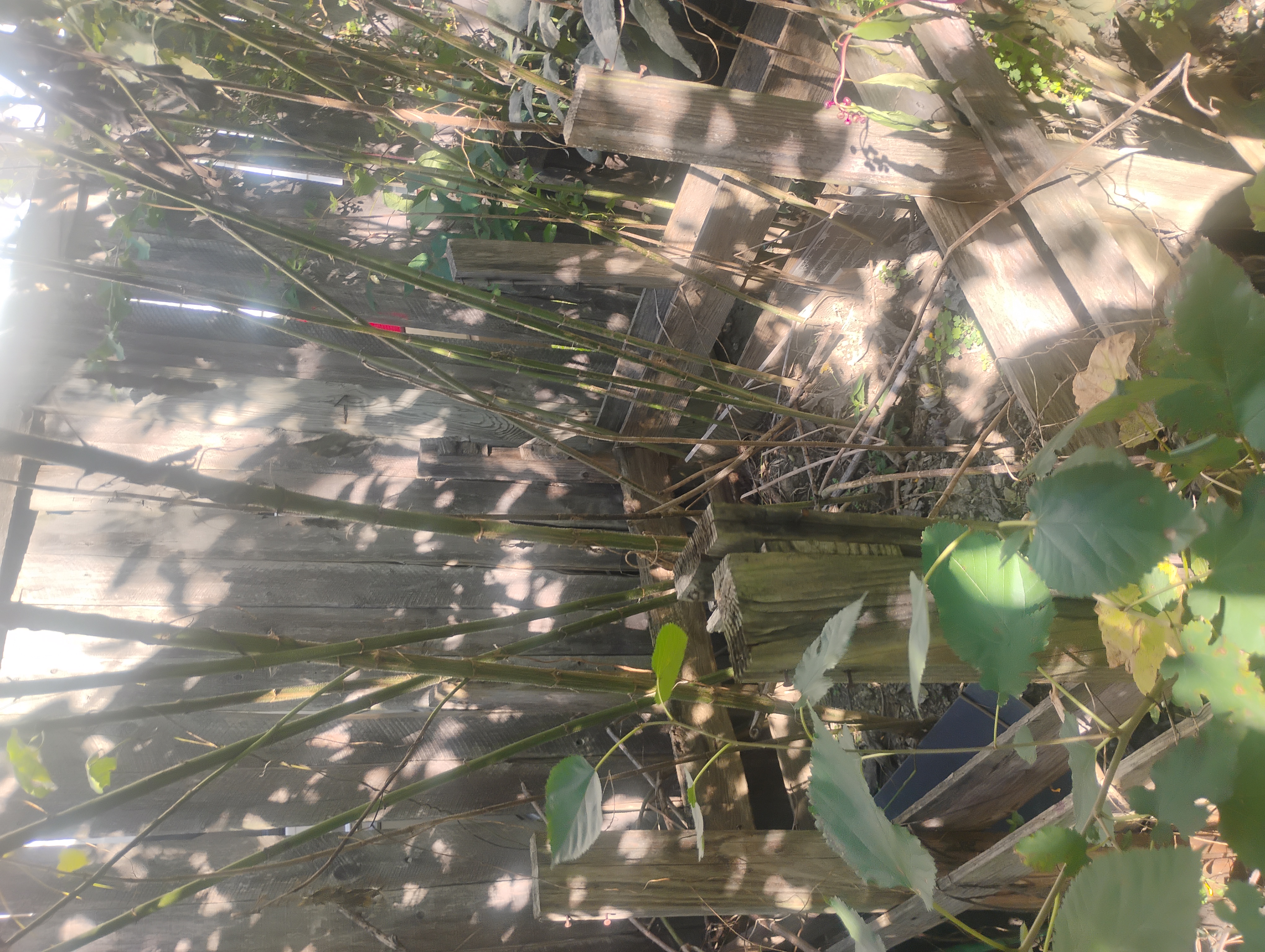
I am still experimenting as this is my first year growing them, but I grew them on top of a hugel mound with a six inch trench around it.  I dug the trench and put them on the hugel to keep the sunchokes from escaping, but the unexpected benefit is  I could see gopher holes in that garden area and see where they went right up to the trench and when they hit daylight in the trench, they turned around.  I'm also hopeful that if they made it across the trench that running into big logs would be a turn off also. Maybe this will work for voles also.

I am going to try to attach a picture but I don't know if it will work, but I think you get the idea from my description.  

my sunchoke picture on my google drive

chokescropped.jpg
[Thumbnail for chokescropped.jpg]
 
Bras cause cancer. And tiny ads:
Mike Oehler's Low-Cost Underground House Workshop & Survival Shelter Seminar - 3 DVD+2 Books Deal
https://permies.com/wiki/48625/Mike-Oehler-Cost-Underground-House
reply
    Bookmark Topic Watch Topic
  • New Topic