gift
Justin Rhodes 45 minute video tour of wheaton labs basecamp
will be released to subscribers in: soon!
  • Post Reply Bookmark Topic Watch Topic
  • New Topic
permaculture forums growies critters building homesteading energy monies kitchen purity ungarbage community wilderness fiber arts art permaculture artisans regional education skip experiences global resources cider press projects digital market permies.com pie forums private forums all forums
this forum made possible by our volunteer staff, including ...
master stewards:
  • Carla Burke
  • Nancy Reading
  • r ransom
  • John F Dean
  • paul wheaton
  • Jay Angler
stewards:
  • Timothy Norton
  • Pearl Sutton
  • Tereza Okava
master gardeners:
  • Christopher Weeks
  • M Ljin
gardeners:
  • Jeremy VanGelder
  • Matt McSpadden
  • thomas rubino

Pollarding street trees - preserving shade in troublesome spots

 
pollinator
Posts: 3936
Location: Kent, UK - Zone 8
742
books composting toilet bee rocket stoves wood heat homestead
  • Likes 3
  • Mark post as helpful
  • send pies
    Number of slices to send:
    Optional 'thank-you' note:
  • Quote
  • Report post to moderator
I'm Australian living overseas, and periodically get to spend time with family in Australia. On my last visit to Melbourne I was struck by the prevalence of carefully pollarded street trees.

In many places there was an avenue of trees planted either side of the road. Repeated pollarding had been used to form a really strong, but size restricted framework. Pollarding keeps the trees to a manageable size, so that maintenance crews can quickly sort out a whole street worth of trees, but also preserves shade for the summer, and prevents trees from fouling power lines.

In some cases whole rows were grown into uniform "Y" shapes, with power lines right down the centre line of the "Y".
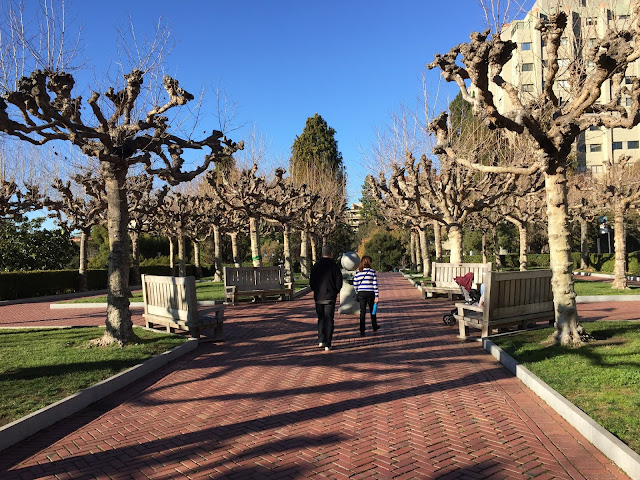


This image is of a rather formal pollard of the style you see in Europe - the Australian ones seemed somehow both more casual and more practical.

There are many other uses for pollard, but I was struck by how well this system worked in a location where shade was needed for summer temperature reduction, but full sized trees would be inappropriate.

I've really struggled to find an example image of what I saw, but this gives an indication:


Notice that at some point in the past they have all been pollarded at the same height - around 7ft - so all branch at that point.

 
gardener
Posts: 5577
Location: Cincinnati, Ohio,Price Hill 45205
1205
forest garden trees urban
  • Mark post as helpful
  • send pies
    Number of slices to send:
    Optional 'thank-you' note:
  • Quote
  • Report post to moderator
I wish we would do this in the states.
Most urban forestry here seems to be entirely reactive, with no planning.
Rather than pollarding a tree when it gets to be 7 feet, they  top it when it's 25 feet tall and threatening utility lines.
The trees usually die from this maltreatment, and are replaced with a fast growing, weak timbered tree that soon suffer from its own brutal beheading.
 
Not so fast naughty spawn! I want you to know about
Learn Permaculture through a little hard work
https://wheaton-labs.com/bootcamp
reply
    Bookmark Topic Watch Topic
  • New Topic