Howdy from Elgin, Texas!

I was all set to give you some great advise about my incredibly difficult climate, but you've got it EASY in Elgin, Il vs. Elgin, Tx, so never fear.

Here's my first set of advise about the site you've got:
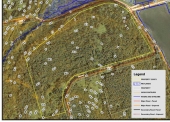
You have a lot of road frontage. I'd build a small swale (filled with mulch to make a path) to help capture the rain water, but more importantly, I'd put about a 5 ft wide bed in there and fill it with plants specifically designed to bring in insects. I'm using Johnny's Selected Seeds bee food mix, but you also need to get some members of the Carrot family in there to attract parasitic wasps. Adult parasitic wasps need nectar and pollen for energy. They lack mouthparts capable of extracting nectar from tubular flowers and so require plants with shallow, exposed nectaries to feed. Members of the carrot family (Apiaceae), such as angelica, chervil, fennel, dill, and cilantro, bear umbrella-shaped clusters (umbels) of minuscule flowers that the wasps can feed on. Don't worry, these aren't the wasps that can sting humans- they're the ones that feed on garden pests.
There's a couple reasons I'd do this first. First, the mulch swale will capture any potentially toxic water with icky stuff in it that might wash down the road. Mulch tends to be a great place for mycological networks, and mushroom spawn is a fantastic way of breaking down most types of toxic crud. Having the attractive flower patch will not only make your neighbors happy despite other weird things you might do (who doesn't love flowers?), but give you a buffer of things that aren't edible in case you get some over spray of toxic gunk from your neighbors, and provide habitat for attracting pollinators (bees of all varieties, etc), as well as the parasitic wasps. It takes one to two years to balance out the predator insect/pest ratio, so if you start working on providing the habitat for the wasps NOW, you're going to be way ahead of the game for setting everything else up.
The next thing I would do is call every tree trimming company in Elgin and ask them to dump their trimmings on your property. With that much water flowing through, you've probably got some erosion issues, and a nice, fat layer of mulch will make everything better. Also, if you start laying it down NOW, when it comes time to plant you're going to have some gorgeous stuff to plant in. If you haven't seen the Back to Eden garden video, I strongly recommend it. There's a whole lot of talk about God and Jesus in that film, and I'm as secular as they come, but it's still worth it just to see this man's garden.
Once you've got that done, you're going to need to go out there with some graph paper and a level and mark your contours, so you can figure out where to dig some swales. That'll help the water infiltrate, instead of run off your property, and once you know where your swales go, you can start planning your plantings.
Figure out what you want your nitrogen fixing trees to be, figure out what fruit trees work well in your zone (hint: most of them, but figs) and which trees you want, and what plants you'll want to fill in all the layers of your garden. If you don't know what the seven layers of a food forest are, look it up, and find local species that work for you. If you haven't read Dave Jacke and Eric Totsenmeyer's Food Forset Gardening, if nothing else, for the 600 plant profiles in the second volume. If you ever end up with a spot where you're not sure what kind of plant will survive there, well, that's the book to help you out. Don't get overwhelmed when you read it, though. Use it as inspiration, not for intimidation.
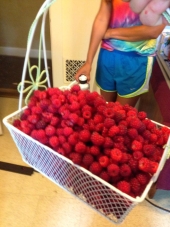
Trees are kind of expensive, so I'd start with the trees that are going to take the longest to get established- canopy layer nut trees, full sized apples, things along those lines- and then the low shrubs, like blackberries and raspberries that will fill in the spaces while the tall trees are getting established (and provide food while waiting for the large trees, for use or for sale to be able to afford more trees), and then fill in all the other layers in between.
Also a good resource for you:
http://web.extension.illinois.edu/forestry/forest_mgmt/land_assistance.html If you have 5 acres and plan on planting trees, Illinois wants to help you. Looks like there's all kinds of good stuff for you to take advantage of there.
Keep us posted on what's going in, it looks like a GREAT project!






.png)


 1
1