posted 4 months ago
For growers looking to extend their season or cultivate year-round in cold climates, choosing the right greenhouse architecture is a critical crossroad. The debate typically comes down to two philosophies of climate control: passive solar design and active solar systems. While both leverage the sun, they manipulate thermal energy in fundamentally different ways.
The Passive Approach: Harmony with Thermodynamics
A passive solar greenhouse relies entirely on natural thermodynamics—convection, conduction, radiation, and buoyancy—to regulate its microclimate. It features a strict architectural layout: a glazed, south-facing wall to maximize winter solar gain, heavily insulated north and side walls to prevent heat loss, and high thermal mass (such as water barrels or masonry) inside the structure.
During the day, the thermal mass absorbs radiant heat. At night, it radiates that heat back into the space. Ventilation is handled via non-electric, wax-filled piston actuators that mechanically open roof and wall vents as the air expands with heat.
• Pros: Zero operational energy costs, immune to grid failures, and virtually no moving parts to break.
• Cons: Less precise temperature regulation, manual microclimate management, and reduced efficiency during prolonged, multi-day overcast spells. Open water tanks can cause humidity problems.
The Active Approach: Engineered Environmental Control
An active solar greenhouse uses mechanical and electrical components to forcefully move, store, and distribute thermal energy. While it still utilizes solar gain through glazing, it does not rely on passive radiation alone to balance the diurnal cycle.
Instead, active systems employ automated exhaust fans, motorized intake dampers, and dedicated solar thermal collectors. A prime example is a climate-battery system, or subsurface thermal battery. When the greenhouse peak overheats during the day, high-CFM fans pull that hot, humid air down into a network of perforated pipes buried deep beneath the soil, actively charging the earth with heat to be pumped back up at night.
• Pros: Precision climate and humidity control, automated fail-safes, and the ability to store massive amounts of thermal energy for later use.
• Cons: Higher upfront capital costs, reliance on electrical components (fans, sensors, dampers), and increased operational complexity.
The Verdict: Choosing Your Infrastructure
The distinction between passive and active is no longer a strict binary; modern technical designers frequently build hybrid systems. These structures use passive insulation and orientation as the baseline armor, but introduce low-wattage, automated fans and dampers to optimize heat capture and prevent crop scorching.
For a low-maintenance backyard setup, pure passive is unmatched. However its less precise thermal operation requires more gardener intervention. With an active (automated) greenhouse, The growing conditions can be tightly controlled. This control relieved the gardener of being “tethered” to the greenhouse as is the case with most passive solar greenhouses.
Investing in active thermal engineering is the key to unlocking truly optimal plant growth and gardener freedom.
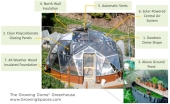
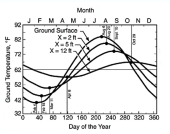
The TerraPoniK greenhouse is a hybrid design that embraces active control to achieve remarkable thermal efficiency and stable climate regulation for rapid healthy plant growth. It uses a shallow (2-ft deep) fully insulated diurnal-climate-battery with air super-heater to deliver dramatic improvements in the rate of soil-thermal charging and discharging. It behaves more like a Thermal-Capasitor than a Thermal-Battery. 3-5 day autonomy is also part of the design so long weekends away are possible.
TerraPoniK – “Engineered for Growth” (these are greenhouse DIY plans that I am finalizing with more information to come.)







 6
6