

|

|
|
|
|

John Weiland wrote:
Tommy Bolin wrote:....
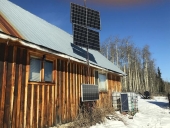
My winter yard faces a frozen lake, our solar gain with snow on the ground is pretty good, so, to me, the idea of 'pitching' fixed panels to maximize gain is short sighted.
....
Interesting!... May consider this approach for upcoming install. Our roof definitely holds snow, even with a ~45 degree pitch and metal surface. With roof snow and your design, I'm assuming bifacial panels would make good sense? It also seems like slightly tilted brackets on top of a sturdy pole would allow some gain back in summer, yes? Liking this approach!...

Alex Howell wrote:
That being said, there is also an enormous wave of bot traffic on almost all websites coming from Lanzhou, China (the company I work for is also experiencing this). It all comes from data-centers scraping data to train AI.....
As you showed though, there is an uptick insign-upsand posts, so the forums are definitely getting more popular?
Just wanted to mention that the China traffic is, as you suspected, potentially not as exciting as one might initially think... Although maybe we'll generate a super permie AI that will go rouge and reshape the world someday!
Kevin Olson wrote:Be aware, there are a couple of pages missing from the scan (there's only one page between numbered pages 90 and 94, but I can't tell which 2 page numbers are AWOL). I would assume this was merely an oversight
cristobal cristo wrote: I read a better explanation in an older masonry building book - steel surfaces heat to temperatures high enough to burn the dirt particles and the fumes created pollute the air. It makes sense, taking into consideration that dirt will be partially composed of organic compounds like skin, hair, food remnants, microplastic, etc.
Sure, agreed, but that seems an incomplete answer. The accumulation since prior use burns off, then what, remaining settling dust burns as well? how much of that can there be?
The volume of air in contact with steel ( the source of 'ions' ) is immensely greater than any airborne solids, which obviously have to have a mass less than air to float onto stove in the first place.
Another point I've not heard made. Traditional steel woodstoves likely contribute more fine particulate to inside air. Masonry of whatever form seems more airtight.
Regardless, the historical observation remains the same. No hot steel in the house, wait for the sauna to stabilize before jumping in.
Hot rock good, hot steel bad.
Finns have a colloquial name for sauna, 'poor man's pharmacy'. Positive ions, really hot air and bit of steam jump start the immunity
