|

|

|

|

|

|
|
|
|
|
|
|
|

|

|

|

|
.png)
|


 7
7


Some places need to be wild
8
FFS


 7
7

- Tim's Homestead Journal - Purchase a copy of Building a Better World in Your Backyard - Purchase 6 Decks of Permaculture Cards -
- Purchase 12x Decks of Permaculture Cards - Purchase a copy of the SKIP Book - Purchase 12x copies of Building a Better World in your Backyard


 5
5
The First Axiom of Life: Don’t do dumb things.
6
Our inability to change everything should not stop us from changing what we can.


 7
7


 16
16

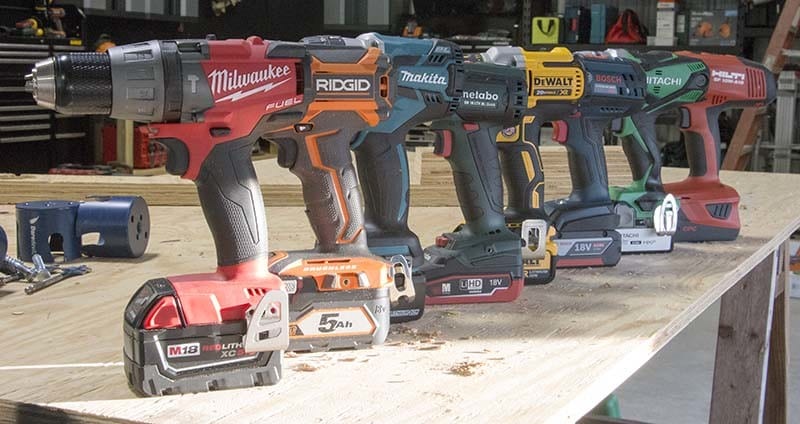
Folks in the field commonly think their favorite tool brand beats everyone else, and they refer to it by color. For example:
Yellow = DeWalt
Red = Milwaukee
Teal = Makita
Orange = Ridgid
Blue = Bosch
However, things get a bit murkier when it comes to multiple tool manufacturers using similar colors. Take Red for instance. It really depends on what tools Pros use. Instead of Milwaukee, those using framing nailers or staplers might think about SENCO. For rotary hammers or demo hammers, Hilti comes to mind.
Having attended a number of manufacturers’ tool events, the product managers and marketing folks also refer to the competition by color.
~Permies FAQ ~ Dragons, Fairies and even a Mini-Paul! ~ You Know You're a Permie When...~ All About Permies, including tutorials ~Herbal Hugel Spiral of Randomness!~Tricks to Keep the Dirt from Sliding off a Hugel~List of Cascadia Bloggers and Facebook Pages!~


 11
11
Some places need to be wild
9
Air and opportunity are all that stand between you and realizing your dreams!
9
Some places need to be wild
6
Some places need to be wild
5
"The only thing...more expensive than education is ignorance."~Ben Franklin. "We can easily forgive a child who is afraid of the dark; the real tragedy of life is when men are afraid of the light." ~ Plato
7
John
9
Our inability to change everything should not stop us from changing what we can.
9
Some places need to be wild
6
Eric Hanson wrote:Separately I would like to buy into the Greenworks 80v line.
5
Some places need to be wild
6
7
Eric Hanson wrote:Christopher,
Ok, if you had to recommend a battery chainsaw platform, what would it be? Since I am considering Milwaukee, might the Milwaukee saw do it?
Air and opportunity are all that stand between you and realizing your dreams!
8
8
Some places need to be wild
6
FFS
8
FFS
6
9
"Condemnation by category is the lowest form of hatred for it is cold hearted and abstract, lacking the heat and even the courage of a personal hatred." -Wendell Berry
7
8
Some places need to be wild


 8
8
'What we do now echoes in eternity.' Marcus Aurelius
How Permies Works Dr. Redhawk's Epic Soil Series
11
8
8
10
Joylynn Hardesty wrote:Anyone know when each brand tends to run their sales? I'm leaning towards makita myself.
"Condemnation by category is the lowest form of hatred for it is cold hearted and abstract, lacking the heat and even the courage of a personal hatred." -Wendell Berry
7
9
Ned Harr wrote:I had a bad experience with a Dewalt cordless drill in my young days (batteries stopped taking a charge after less than a year) so I swore off cordless for years. Apparently in the interim the technology improved.
8
7
Just because you are not able to imagine or do something, does not mean that I can't or that it in fact cannot be safely done.
6
Steve Zoma wrote:
Ned Harr wrote:I had a bad experience with a Dewalt cordless drill in my young days (batteries stopped taking a charge after less than a year) so I swore off cordless for years. Apparently in the interim the technology improved.
Funny story Ned… I jumped started the grid on a Milwaukee M-18 battery about a year ago. True story as crazy as it sounds…
I was working at a hydroelectric station when one of the units kicked off-line and got a call to go in and fix it. Everything was fine, so I restarted the unit but the jenny would not go online. The Motor Operated Potentiometer on the auto-sync was acting up. Voltage swings were so high that it would not allow the auto-sync to phase in with the grid. It being early Saturday and with no help, and nothing to lose, not to mention high power prices; I took a M-18 Milwaukee battery, connected a wire to the outlet lugs of the battery and dialed the MOP to where I was getting 4160 volts out of the auto-sync.
Bang…and I mean BANG!
It shook the whole dam, all 88,000 cubic yards of dam as the phasing was not quite right when she dropped in with the grid, but it went, did not throw the protective relays to my utter surprise and jacked the grid by another 8 megawatts for the weekend.
It was fine as long as it was running and not trying to sync, but for whatever reason it would not motor the MOP to the right voltage. Using the battery (18 volts on a 24 volt control circuit) you could dial it in using the ohms reading on a fluke meter to get it to where it would drop in with the grid. I no longer work there but the last I know they were still doing that to put the unit number two online.
Crazy times, but one tale to tell the grandchildren someday.
7
Some places need to be wild
8
Eric Hanson wrote:Lots of helpful opinions & information here. Here is a basic list of 18v tools I want to acquire:
Compact Drill/Driver (NOT hammer drill)
Impact/oil impulse driver
Circular saw
Sawzall
Maybe a Torque Wrench
Other Goodies:
Lighting
Holzall
16” Chainsaw (might bump this up)
Eric

|
Time is mother nature's way of keeping everything from happening at once. And this is a tiny ad:
better than an outhouse, and can be indoors
https://www.richsoil.com/willow
|