• Post Reply Bookmark Topic Watch Topic
  • New Topic
permaculture forums growies critters building homesteading energy monies kitchen purity ungarbage community wilderness fiber arts art permaculture artisans regional education skip experiences global resources cider press projects digital market permies.com pie forums private forums all forums
this forum made possible by our volunteer staff, including ...
master stewards:
  • Devaka Cooray
  • Carla Burke
  • John F Dean
  • Nancy Reading
  • Timothy Norton
  • r ranson
stewards:
  • Jay Angler
  • Pearl Sutton
  • paul wheaton
master gardeners:
  • Christopher Weeks
  • M Ljin
gardeners:
  • thomas rubino
  • Eino Kenttä
  • Jeremy VanGelder

Glazing and underpainting - for the frugal oil painter (grisaille, brunaille, verdaille, etc)

 
steward & author
Posts: 44103
Location: Left Coast Canada
16936
9
art trees books chicken cooking fiber arts
  • Likes 2
  • Mark post as helpful
  • send pies
    Number of slices to send:
    Optional 'thank-you' note:
  • Quote
  • Report post to moderator
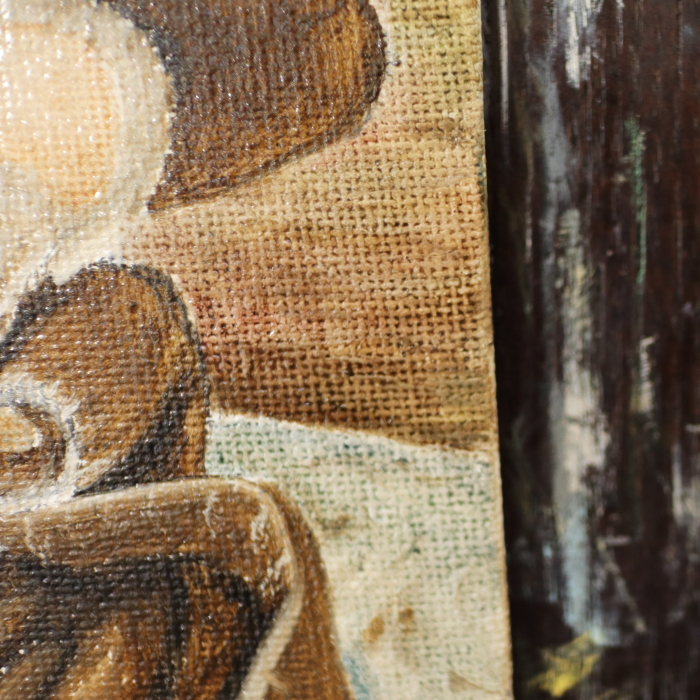
I'm beginning to see why painters that use glazing and this kind of realism go to such lengths to work on a smooth surface.   The layers of paint are so thin, especially in the shadows, as part of that way of achieving realism.  Some layers one or two particals of pigment thick.

With a canvas, especially with stand oil added to the glaze, the pigment falls between the weaves of the fabric rather than distributing evenly loke they did in the under painting.   You can see this in the blue of the rock especially.


There are lots of other ways to achieve realism in oil painting, but the frugal nature and challenges of glazing apeal to me.
 
r ransom
steward & author
Posts: 44103
Location: Left Coast Canada
16936
9
art trees books chicken cooking fiber arts
  • Likes 2
  • Mark post as helpful
  • send pies
    Number of slices to send:
    Optional 'thank-you' note:
  • Quote
  • Report post to moderator
I had an ah ha moment this morning.  

Trying to fix some foliage, making it darker in patches, I accidentally fell into my watercolour style of working with pigments and brush stokes.  

Glazing is all about making the painting darker, as is modern watercolour style.  So it makes sense.

Say, I'm darkening a shadow under a leaf to make it stand out better.  I put my red/green mix along the edge of the leaf bottom.  Lightly wipe my brush and grab a bit of stand oil mixed with the lighter colour of the body of the surface under the leaf (usually another leaf), but not too much paint/oil.  Like I wouldn't want to grab too much water on the brush if watercolour.  Return to the painting and "pull" the shadow colour I put down before so it blends with the dry paint layer.  

Ahhh, it makes sense when I think of watercolour techniques, but when I try to put it in oil painting words, something breaks.

But it works.  I feel like I might actually be close to understanding Glazing.


Key point, must be transparent colours. Actually transparent.  For this I used hansa light, quin rose, and some earth green or green earth.  It's transparent,  almost floculating green.  To darken the greens, more paint or more red.  To lighten, more oil /  less paint, or more yellow, or both.  Note, not all hansas are transparent so test fist.

Doesn't work as well with thinner oil like regular walnut or linseed.  Needs some stand oil mixed in there.  Haven't tried with stand alone as I keep a small jar of 1:1 stand:linsed (or walnut or both) oil.  

And yes, it probably doesn't make sense but it's mostly a note to myself so I can do an example later if people want.

 
girl power ... turns out to be about a hundred watts. But they seriously don't like being connected to the grid. Tiny ad:
Homestead Pigs Course
https://permies.com/wiki/365748/Homestead-Pigs
reply
    Bookmark Topic Watch Topic
  • New Topic