• Post Reply Bookmark Topic Watch Topic
  • New Topic
permaculture forums growies critters building homesteading energy monies kitchen purity ungarbage community wilderness fiber arts art permaculture artisans regional education skip experiences global resources cider press projects digital market permies.com pie forums private forums all forums
this forum made possible by our volunteer staff, including ...
master stewards:
  • Devaka Cooray
  • Carla Burke
  • John F Dean
  • Nancy Reading
  • Timothy Norton
  • r ranson
stewards:
  • Jay Angler
  • Pearl Sutton
  • paul wheaton
master gardeners:
  • Christopher Weeks
  • M Ljin
gardeners:
  • thomas rubino
  • Eino Kenttä
  • Jeremy VanGelder

Tiny brush dam progress

 
pollinator
Posts: 3987
Location: 4b
1455
dog forest garden trees bee building
  • Likes 12
  • Mark post as helpful
  • send pies
    Number of slices to send:
    Optional 'thank-you' note:
  • Quote
  • Report post to moderator
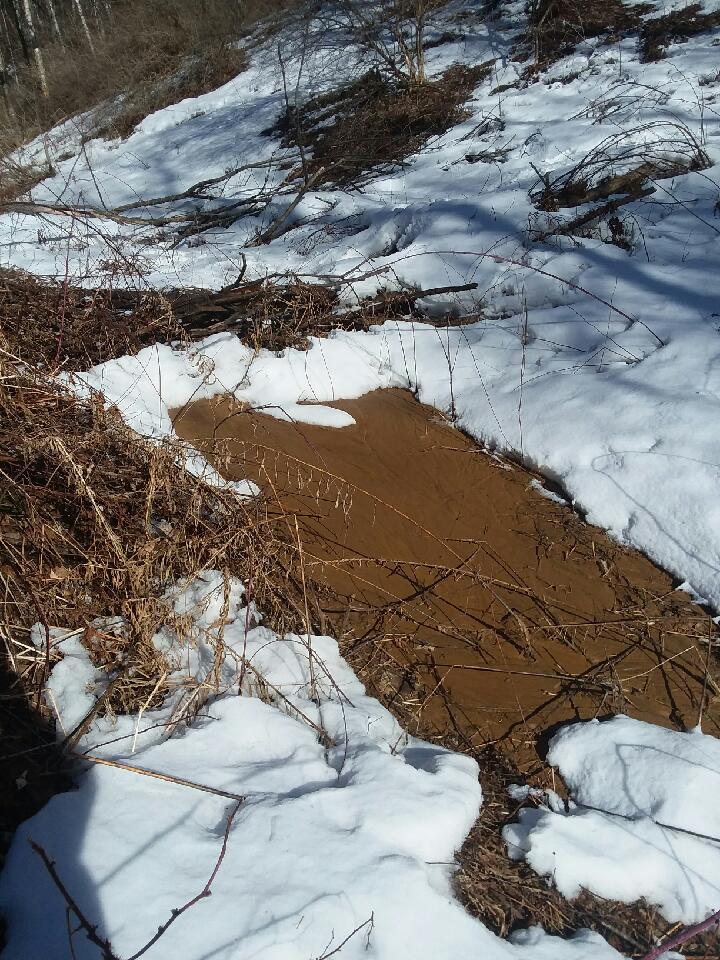
This is a small (very small) brush dam I started on last fall.  There was no real attempt to work on it, I just threw a few downed sticks and limbs into a run off area when I was walking around "observing", which is my slang for walking around in the woods with my dogs.  The progress is somewhat artificial.  We are building in the area, so there is a lot of loose dirt and sand that washes away easily.  I think it does show the effectiveness of even small earthworks.  This area has filled in a pretty substantial amount since last fall, at least a foot or two, and will fill in a lot more with the spring run off.  My plan is to keep building it higher as the soil washes down.  I'm hoping it slows the water enough to create at least a temporary spring pond, and possibly do better than that.  Even if I don't end up with a pond, it may create a spring downstream from here.  I don't have pigs, or I would be using them to seal the area upstream on my little dam.
brush-dam.jpeg
Small brush dam
Small brush dam
 
Trace Oswald
pollinator
Posts: 3987
Location: 4b
1455
dog forest garden trees bee building
  • Likes 3
  • Mark post as helpful
  • send pies
    Number of slices to send:
    Optional 'thank-you' note:
  • Quote
  • Report post to moderator
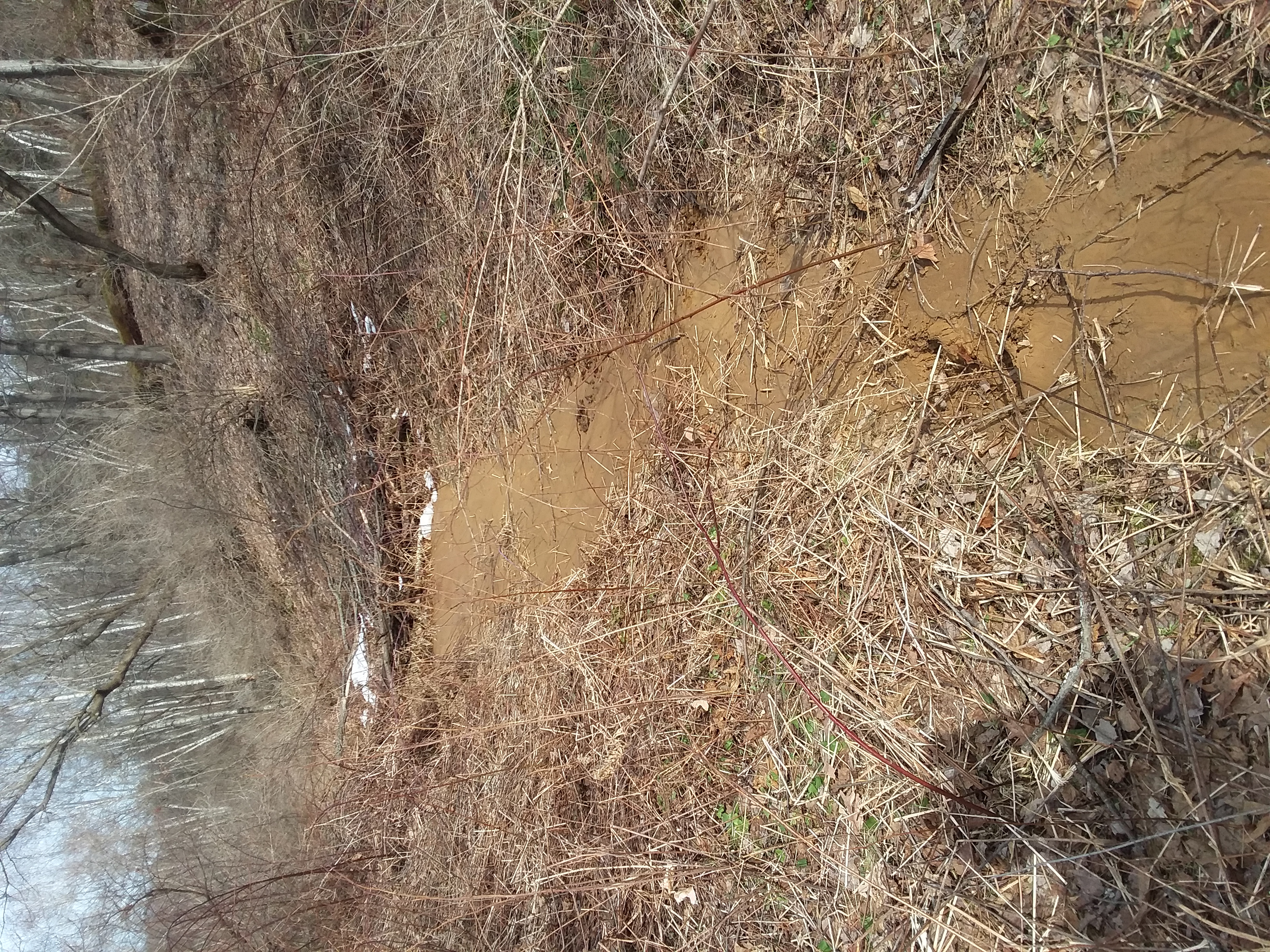
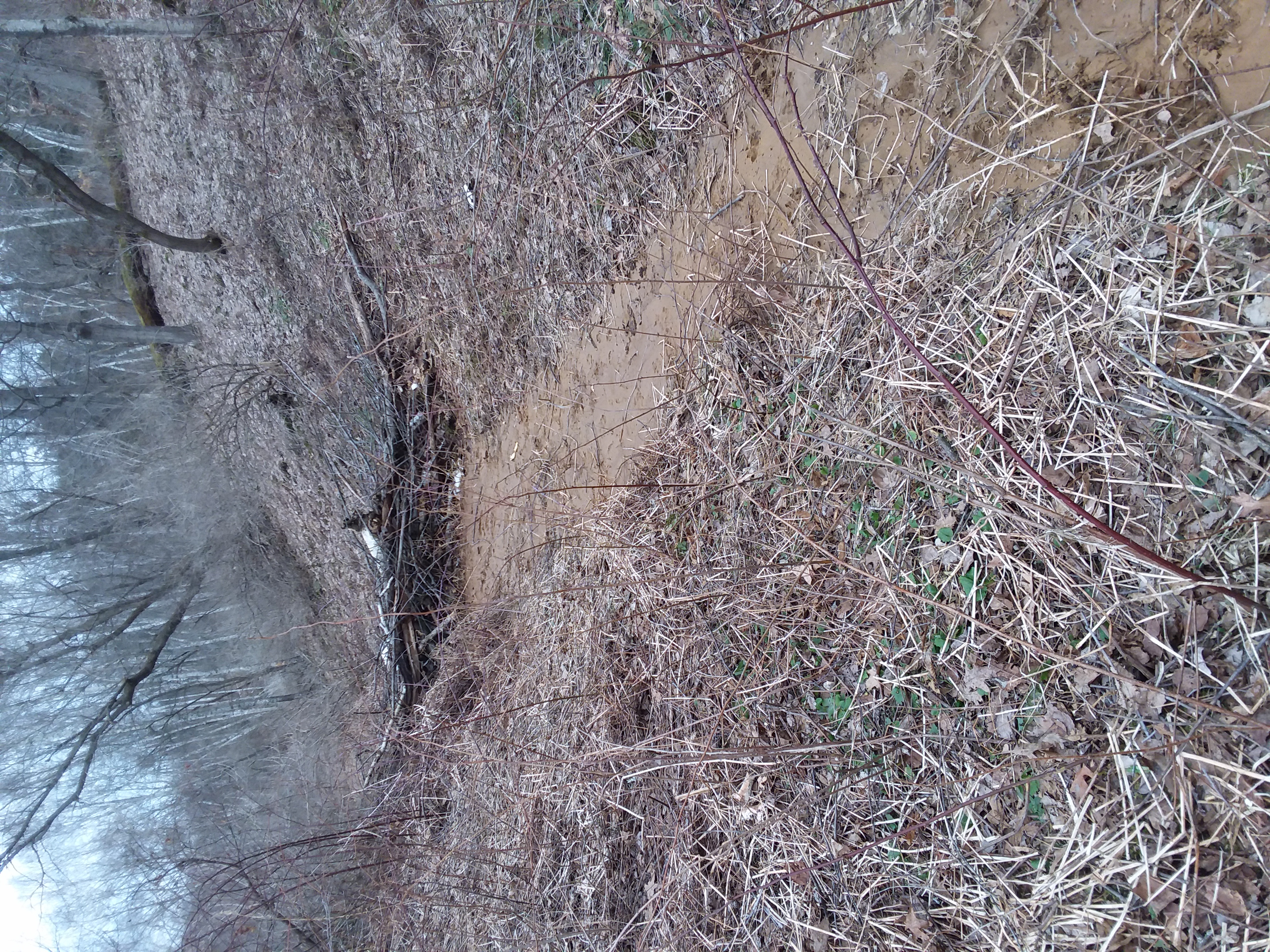
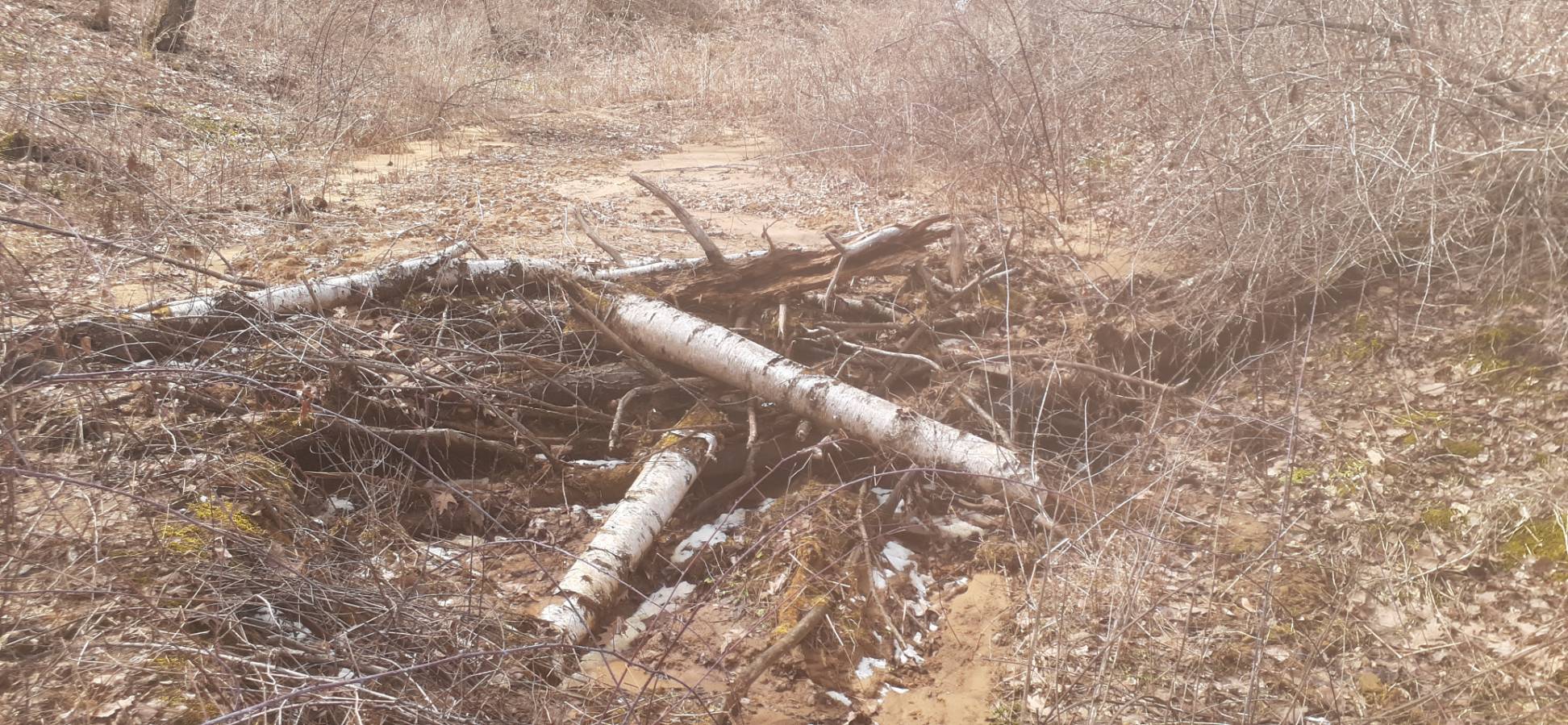
Now that more of the snow has melted, it's a little easier to see what is happening. I'm very happy with the changes from even this small brush dam. I took a picture without the snow.  The next is a picture farther away. It isn't great, but you can see how the run off area is narrow but beginning to spread in front of the dam. I'm not trying to stop water yet. Just trying to slow, spread, and sink it.

I made some progress adding to it today. I didn't have my chainsaw or I could have doubled what I did.

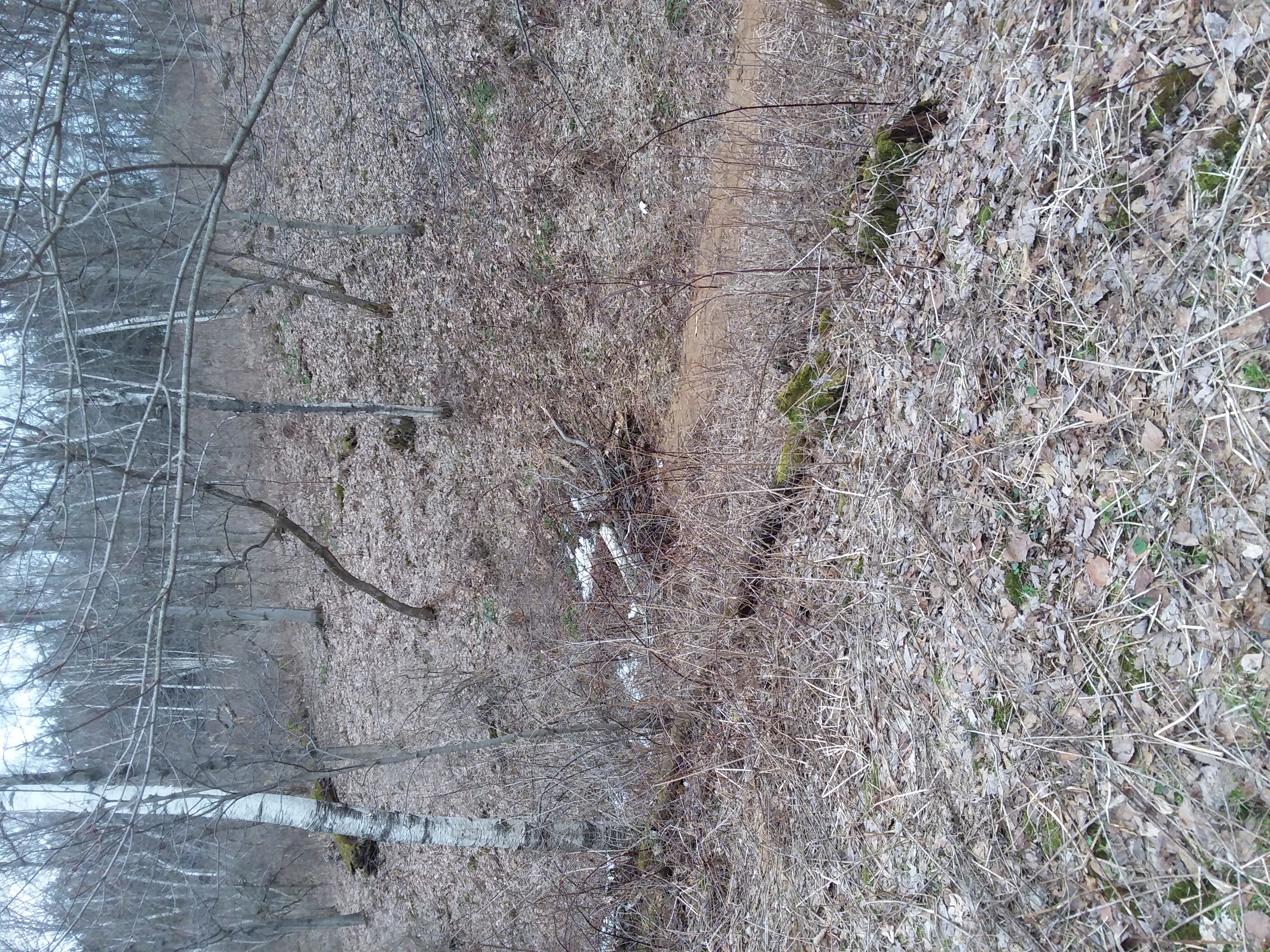
The last picture is partway up the hill on one side so you can see the area I am working with.
20200327_152315.jpg
 The dam
The dam
20200327_152604.jpg
Looking down stream
Looking down stream
20200327_175551.jpg
Progress
Progress
20200327_175643.jpg
Terrain
Terrain
 
Trace Oswald
pollinator
Posts: 3987
Location: 4b
1455
dog forest garden trees bee building
  • Likes 7
  • Mark post as helpful
  • send pies
    Number of slices to send:
    Optional 'thank-you' note:
  • Quote
  • Report post to moderator
Today a dug a swale 7 or 8 feet in front of the brush dam.  I took all the soil from the swale and threw it onto the bottom of the dam to slow the water more. I dug through 6 inches or so of sand that washed down, then through a few inches of top soil. I hit a layer of clay so solid it was nearly impossible to get a shovel to penetrate it. It was like hitting brick. I tried to take a picture of a chunk I managed to pry loose but it doesn't do justice to how solid this clay is. I may need a pick to go deeper. The plan is to take it out to about twice as wide and a few inches deeper to get more clay for the dam. I also need to level the bottom of the swale.
20200523_185740.jpg
[Thumbnail for 20200523_185740.jpg]
20200523_185732.jpg
[Thumbnail for 20200523_185732.jpg]
20200523_184851.jpg
[Thumbnail for 20200523_184851.jpg]
 
pollinator
Posts: 1234
Location: Chicago/San Francisco
196
  • Likes 2
  • Mark post as helpful
  • send pies
    Number of slices to send:
    Optional 'thank-you' note:
  • Quote
  • Report post to moderator
> hard clay

An idea if you get feeling really impatient, and you can get power out there: Try cutting bite sized chunks with a shovel tip on a small roto-hammer. Don't want a big one - too heavy. 1/2"?  About 12#, tool and tip.

But needs power.  I'm starting to see why the guys at WL keep trying to make the perfect self charging battery pack. <g>  

Looks like a fascinating project. Thanks for sharing.


Rufus
 
pollinator
Posts: 5831
Location: Bendigo , Australia
520
plumbing earthworks bee building homestead greening the desert
  • Likes 1
  • Mark post as helpful
  • send pies
    Number of slices to send:
    Optional 'thank-you' note:
  • Quote
  • Report post to moderator
Have you thought of having a series of dames running down the stream.
If you use a clear hose filled with water you could determine where the toe of the upstream dams just touches the tailwater of the lower dam.
With a series running down stream you could hold back a lot of water even with 2 foot high embankments.
 
Trace Oswald
pollinator
Posts: 3987
Location: 4b
1455
dog forest garden trees bee building
  • Likes 3
  • Mark post as helpful
  • send pies
    Number of slices to send:
    Optional 'thank-you' note:
  • Quote
  • Report post to moderator

John C Daley wrote:Have you thought of having a series of dames running down the stream.
If you use a clear hose filled with water you could determine where the toe of the upstream dams just touches the tailwater of the lower dam.
With a series running down stream you could hold back a lot of water even with 2 foot high embankments.


John, I have started a series of these dams, I just don't post them all. I figure people will get tired of me posting "And here is another one..."  I'll have to do some research to understand the rest of your post 😊  I know how to use a hose as a level, but I'm unfamaliar with the other terms.
 
John C Daley
pollinator
Posts: 5831
Location: Bendigo , Australia
520
plumbing earthworks bee building homestead greening the desert
  • Likes 2
  • Mark post as helpful
  • send pies
    Number of slices to send:
    Optional 'thank-you' note:
  • Quote
  • Report post to moderator
Sorry about the Engineer speak!!
A like to use the correct terms, so that over time the community has it correct.
The worst is "cement', when people mean, "concrete".Cement is a component of concrete,
just as flour is a component of a cake, but nobody calls the cake, flour !!
Toe of upstream dam- the base of the dam at the downstream side of that dam.
Tailwater - when water backs up behind a dam, it sits at a level consistent with the height of that dam.
Where the water level backed up, strikes the natural stream running into the dam, that area is called the tailwater.
 
Trace Oswald
pollinator
Posts: 3987
Location: 4b
1455
dog forest garden trees bee building
  • Mark post as helpful
  • send pies
    Number of slices to send:
    Optional 'thank-you' note:
  • Quote
  • Report post to moderator

John C Daley wrote:Sorry about the Engineer speak!!
A like to use the correct terms, so that over time the community has it correct.
The worst is "cement', when people mean, "concrete".Cement is a component of concrete,
just as flour is a component of a cake, but nobody calls the cake, flour !!
Toe of upstream dam- the base of the dam at the downstream side of that dam.
Tailwater - when water backs up behind a dam, it sits at a level consistent with the height of that dam.
Where the water level backed up, strikes the natural stream running into the dam, that area is called the tailwater.


Got it. I appreciate the explanation.
 
Trace Oswald
pollinator
Posts: 3987
Location: 4b
1455
dog forest garden trees bee building
  • Likes 4
  • Mark post as helpful
  • send pies
    Number of slices to send:
    Optional 'thank-you' note:
  • Quote
  • Report post to moderator
The swale/brush dam is doing it's job.  We had a big storm, and there is no longer any trace of my swale.  The soil level on the upstream side of the brush dam is more than a foot higher than the downstream side now.  It looks as though I need to start adding to the dam again.

dam1.jpg
[Thumbnail for dam1.jpg]
dam2.jpg
[Thumbnail for dam2.jpg]
 
Posts: 31
2
  • Mark post as helpful
  • send pies
    Number of slices to send:
    Optional 'thank-you' note:
  • Quote
  • Report post to moderator
in your first post you mention using pigs to seal the area upstream...how does that work exactly?  Not familiar with these things yet
 
Trace Oswald
pollinator
Posts: 3987
Location: 4b
1455
dog forest garden trees bee building
  • Likes 1
  • Mark post as helpful
  • send pies
    Number of slices to send:
    Optional 'thank-you' note:
  • Quote
  • Report post to moderator

Nikolai Stepanovitch wrote:in your first post you mention using pigs to seal the area upstream...how does that work exactly?  Not familiar with these things yet


Nikolai, there is a really good thread here on permies that explains the process in detail.  Gleying a pond with pigs - Permies thread
 
pollinator
Posts: 1345
Location: Virginia USDA 7a/b
359
4
hugelkultur forest garden hunting chicken food preservation bee
  • Likes 2
  • Mark post as helpful
  • send pies
    Number of slices to send:
    Optional 'thank-you' note:
  • Quote
  • Report post to moderator
Trace, totally different climate but same problem with occasional plentiful rain and erosion:


They used rocks in a Yemeni pattern, which is simply a way of interlocking the stones to prevent downward creep of the whole unit. This allows the stones to let more water through as the water rises, but catches the sediment and some water and pushes as much as possible laterally at the dam/weir. They made a mistake in siting the dams/weirs where they would collect the most water rather than where they could divert the water out of the gully and into another area, which would be my intention with this method. At least you want to catch sediment which will gradually terrace the gully. This means the energy is dissipated on the sides of the gully and it is slowed before falling to the next rock dam or weir.

I used to build these when I was a kid for hours and we built one so extensive we diverted a year-round creek about 200' so it was on our property. I'm sure that isn't legal but I was maybe 13. It took several days of labor even using rocks from the creek bottom, and would take an awful lot of concrete bags because we made it about 3x as thick as high, but we backed up a huge amount of water in the spring and gradually the erosion wore a new path through the high point we targeted. The "dam" lasted a few years even with a year round creek until we got a massive spring with water that totally overran the dam. Even after there were split streams going into both "watersheds" for at least a decade. The idea was essentially to create oxbow-effect erosion to decrease the velocity. I knew none of these terms at the time we just messed around until it worked.

I don't think this diverting strategy would work unless the height of the dam is very close to the height of the ridge between watersheds, but still could operate like keylining done right.
Weirs.jpg
[Thumbnail for Weirs.jpg]
 
Trace Oswald
pollinator
Posts: 3987
Location: 4b
1455
dog forest garden trees bee building
  • Likes 8
  • Mark post as helpful
  • send pies
    Number of slices to send:
    Optional 'thank-you' note:
  • Quote
  • Report post to moderator
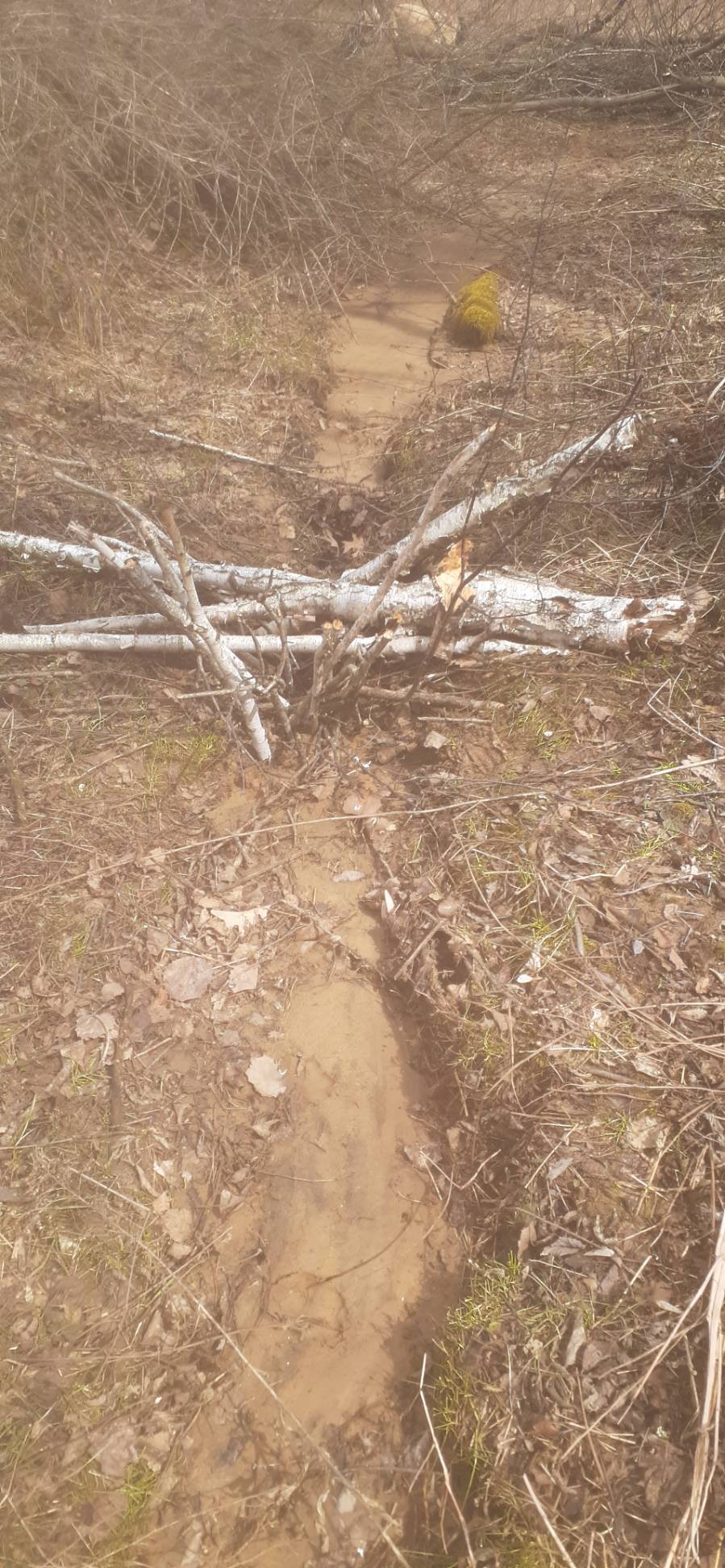
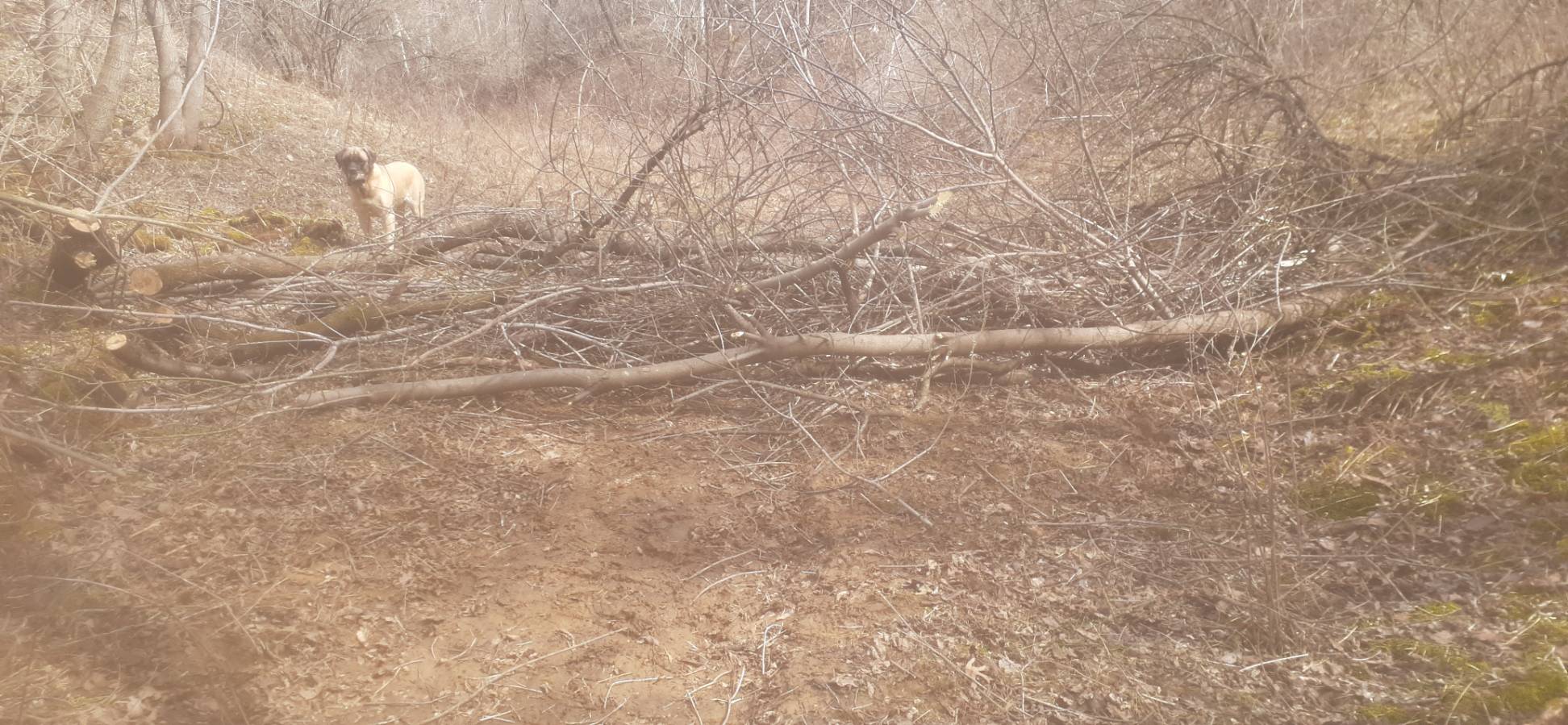
I thought I would do a small update to this.  The brush dam that I made first has filled completely in.  The dam itself is about 5 feet tall.  The picture isn't great, but you can see that the soil level is now at the top of the dam.  I'll add another 2 or 3 feet to the top of this as time allows.  The job gets bigger each time of course, because the width keeps increasing.

Rather than a series of "dams" as John and I discussed back in the day, I'm now envisioning this becoming a series of terraces, rather than dams.  I'm still hoping to slow the water enough to create some springs "downstream" eventually.  Time will tell.

I included a picture of a small brush dam and the way I start them.  That will be added to until it looks like the other one.

I also took a picture of a larger one I built yesterday.  Hopefully, I get extra credit for the mastiff with the deer bone in her mouth :)
brush-dam-old.jpg
Original brush dam
Original brush dam
brush-dam-2.jpg
Beginning of brush dam
brush-dam.jpg
New dam, with mastiff
 
John C Daley
pollinator
Posts: 5831
Location: Bendigo , Australia
520
plumbing earthworks bee building homestead greening the desert
  • Mark post as helpful
  • send pies
    Number of slices to send:
    Optional 'thank-you' note:
  • Quote
  • Report post to moderator
Where is all the soil coming from?
Can you grow something to hold it in place?
Or set up a series of small terraces higher up with just rocks etc to slow the water down.
 
Trace Oswald
pollinator
Posts: 3987
Location: 4b
1455
dog forest garden trees bee building
  • Likes 1
  • Mark post as helpful
  • send pies
    Number of slices to send:
    Optional 'thank-you' note:
  • Quote
  • Report post to moderator

John C Daley wrote:Where is all the soil coming from?
Can you grow something to hold it in place?
Or set up a series of small terraces higher up with just rocks etc to slow the water down.


I'm working hard to do that. We had a house built on the land and are working to get plants and grass growing on the construction area around the house to stop the soil eroding down the valley. Our land is clay , but there is a large sand vein running through right near the house. The land falls steeply at the edge of what will be the yard. We planted grass and clover last year, but it was late in the year and isn't well established yet. There is a huge area washed out and traveled down the valley.  I have ideas to stop that as well, and I'll post those as I get them going. I'll show the wash out area I am dealing with currently. Pictures from last fall.
20210812_195254.jpg
[Thumbnail for 20210812_195254.jpg]
20210812_195130.jpg
[Thumbnail for 20210812_195130.jpg]
 
John C Daley
pollinator
Posts: 5831
Location: Bendigo , Australia
520
plumbing earthworks bee building homestead greening the desert
  • Mark post as helpful
  • send pies
    Number of slices to send:
    Optional 'thank-you' note:
  • Quote
  • Report post to moderator
Is that wash away as a result of the earthworks?
If so that contractor is a bad boy!

Somehow you have to stop the water getting anywhere near that 'cliff' edge.
 
Trace Oswald
pollinator
Posts: 3987
Location: 4b
1455
dog forest garden trees bee building
  • Likes 4
  • Mark post as helpful
  • send pies
    Number of slices to send:
    Optional 'thank-you' note:
  • Quote
  • Report post to moderator

John C Daley wrote:Is that wash away as a result of the earthworks?
If so that contractor is a bad boy!

Somehow you have to stop the water getting anywhere near that 'cliff' edge.


The issue is that all runoff from the house and a hill funnel down a slight swale in the yard and travel into the existing valley.  Where it drops off steeply, the wash out starts.  And yes, that was created where the earthworks from the yard get to the area the tree line starts.  I can correct the issue, it will just take some time.  It has washed out down to bedrock, I think I can slow the water in the small swale to soak more of it, and then just taper the edges of the washout on all sides and plant them.  I don't mind the cut down to the rock, I actually like the way it looks.  

The washout is a blessing in a way.  The soil that washed down to my first brush dam created a sand terrace.  It should sink a lot of water, as well as cleaning it.  They are a few places "upstream" between the washout and the first dam where I can create more dams, and thus, more terraces.  I think I can create a series of steps that can be planted with moisture lovers.  Further down past the area that fills with soil, I'm going to create a series of swales into the heavy clay to sink even more water, with another brush dam downstream from each.  Several valleys converge into the main one at various places.  My hope is to slow the water along each of them and create a spring, or ideally, a pond, in the area the land levels out.
 
30 seconds to difuse a loaf of bread ... here, use this tiny ad:
6 Ways to Keep Chickens, ebook - now FREE for a while
https://permies.com/t/138684/Ways-Chickens-ebook-FREE
reply
    Bookmark Topic Watch Topic
  • New Topic