Thank you Annie Miller and D Nikolls for your input! It has caused me to rethink. I had been hesitant to use perforated pipe, wondering how could it possibly spread evenly across hundreds of holes along a 100ft run, but perhaps the point is that it is better than no pipe. I also realized that maybe I was less concerned about using fabric because of how clean I expect the output to be, and perhaps just saying "tertiary" level of cleaning may not have adequately conveyed why.
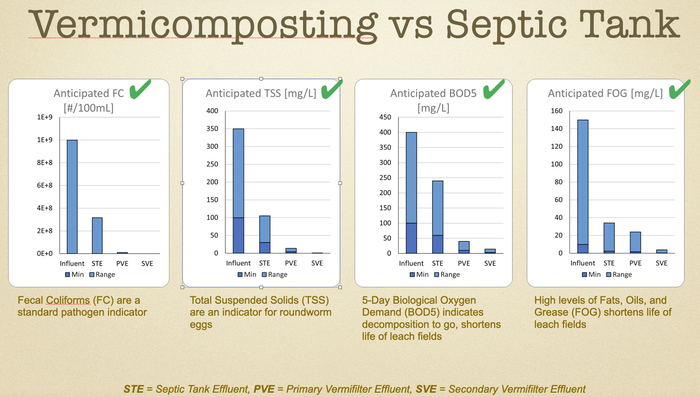
Here's my attempt to try to quantify the difference between a standard septic tank vs vermicomposting/vermifilters. Keep in mind that wastewater parameters vary widely around the world and performance of a vermifilter depends on various factors.
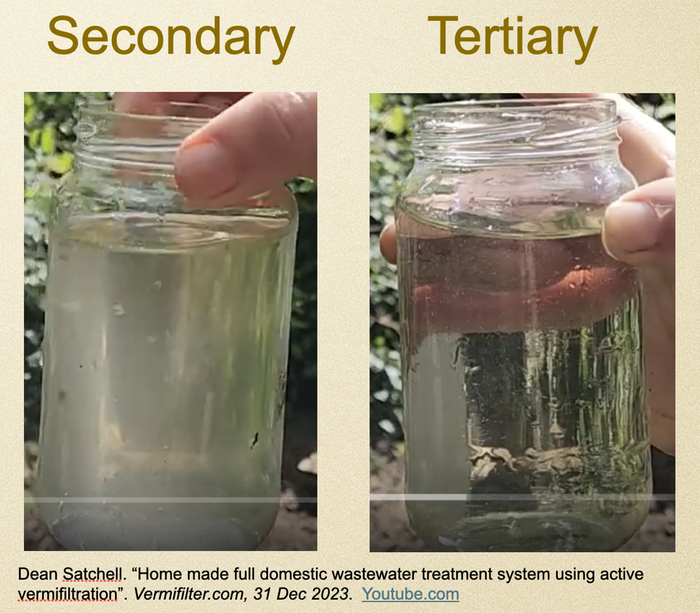
This image is an attempt to show a visual comparison between secondary and tertiary treated wastewater from an operating recirculating vermifilter, pulled from a video
here.
Given that the recirculating aerobic vermifilters are so effective at removing suspended solids and finishing off any composting (BODs) that would form a biological mat, I really don't expect my output to form a mat. To try to quantify how much the mat from septic tank output might help with evenly spreading the effluent, I read this past week that it can reduce the soil percolation rate by 100x to 1000x. To compensate and meet the criteria of even distribution along such a long lateral, it may make sense to try something like Anna Edey's
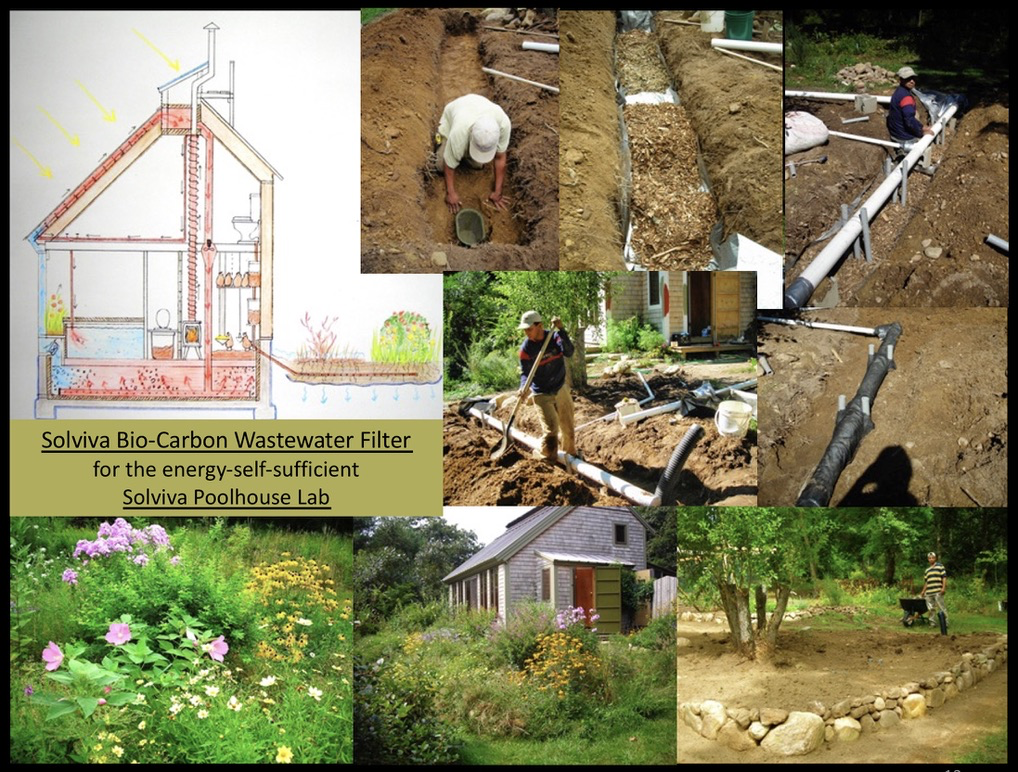
Greenfilters. She lined the bottom and 2-inches up the side of a level trench with plastic, raised the perforated pipe up on cinder blocks, filled around it with mulch, and planted thirsty plants and bushes right next to it. She claimed it worked for at least 18years (before she moved). Here's one of the pictures from her website:









 7
7