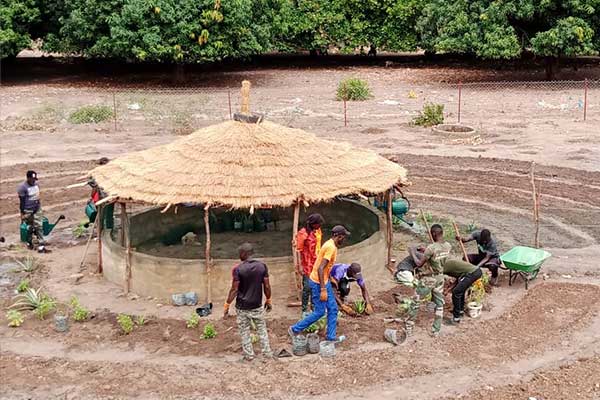
The Sahara desert is turning into Africa's green wall
We are getting some rain now in my part of western New Mexico USA, but nowhere near enough to reverse the drought conditions that we've been living with for years. Rainfall is too often measured in hundredths of inches! And yet there is a project along the bottom edge of Africa's Saraha Desert called The Great Green Wall. The 8,000-kilometer (nearly 5000 miles) mega-project of theAfrican Union and backed by the United Nations is intended to stop the Sahara Desert from growing. Today, nearly 20 years later, the project has restored about 20% to 30% of its goal.
Seems to me if they can grow plants that provide food for humans and forage for livestock and wildlife, plus control the creep of the Sahara Desert, I should be able to grow 50 foot long garden in New Mexico.
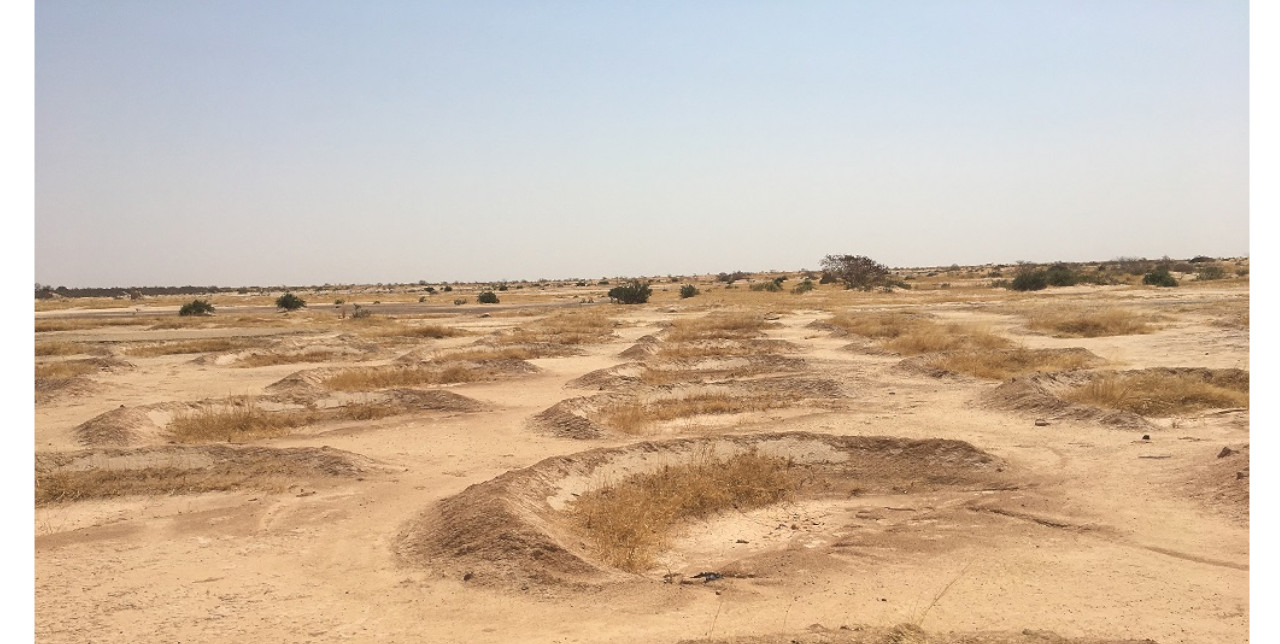
Zaï (or tassa) is a farming technique of digging pits in less permeable soil to catch water and concentrate compost.
The pits are between 15 and 50 centimetres (0.5 and 2 ft) across and around 5 to 15 centimetres (2 to 6 in) deep, spaced approximately 80 centimetres (3 ft) apart. The technique is traditionally used in western Sahel (Burkina Faso, Niger, Mali) to restore degraded drylands and increase soil fertility. The technique has also been adopted by smallholder farmers in semi-arid regions of East Africa, particularly in Kenya, where farmers in counties such as Kitui use it in combination with modern agricultural practices to improve water retention and crop yields in dryland conditions.[
Zaï holes were reintroduced since the 1980s by Yacouba Sawadogo, a farmer from Burkina Faso, who introduced the innovation of filling them with manure and compost to provide plant nutrients. The manure attracts termites, whose tunnels help further break up the soil. He also slightly increased the size of the holes over the traditional models. Zaï holes help by improving the yields of trees, sorghum, and millet by up to 500 percent.
As an alternative to the zaï technique, some agricultural engineers suggest using a diking technique, especially in the case of very light soils.
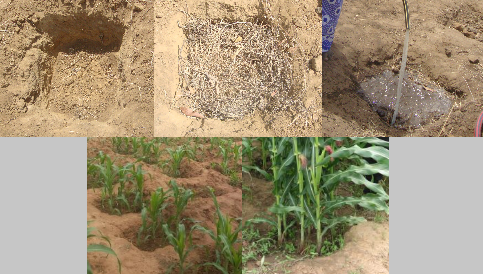
Image is of Zaï holes from Wikipedia
NEXT: Half-moon basins
Note: I am developing this post gradually as I do the research and learn how to properly embed images. Please be patient!





.png)




 11
11