Many people have heard of the term "Victory Garden" in reference to gardens grown to help stretch taxed food supplies during conflicts such as World War One and World War Two. Did you know that there was a thing such was a "Victory Flock" as well? I just learned about them very recently. While other protein sources were being rationed, home raised chickens could provide both eggs and meat to a family. These chickens could forage for most of their food while being supplemented from household scraps.
Here are a few photos I stumbled on from the past
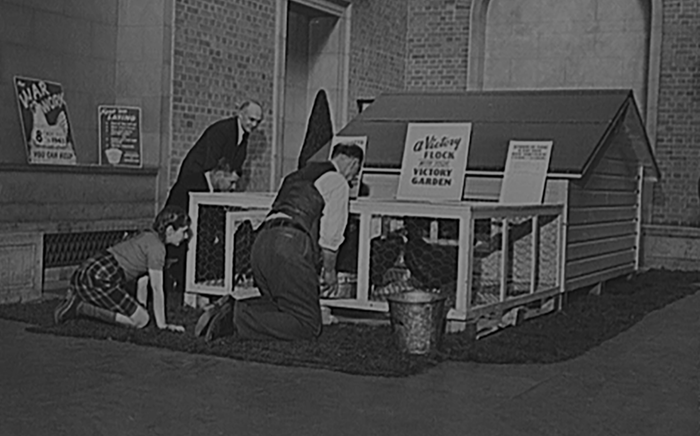
Photo by Edwin Rosskam, Office of War Information, May 1943
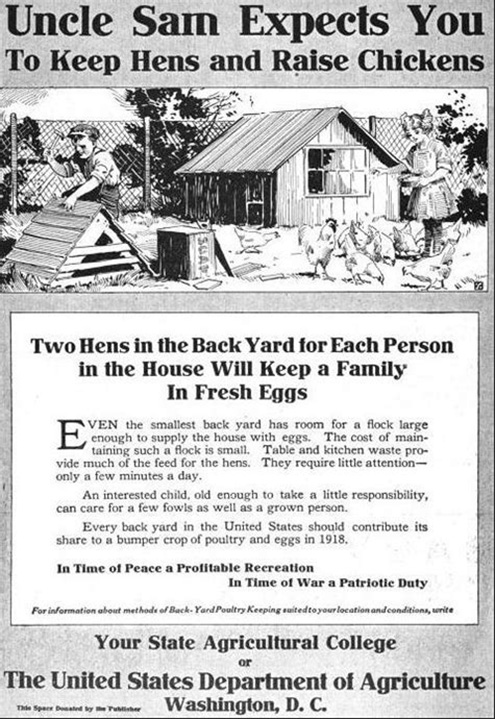
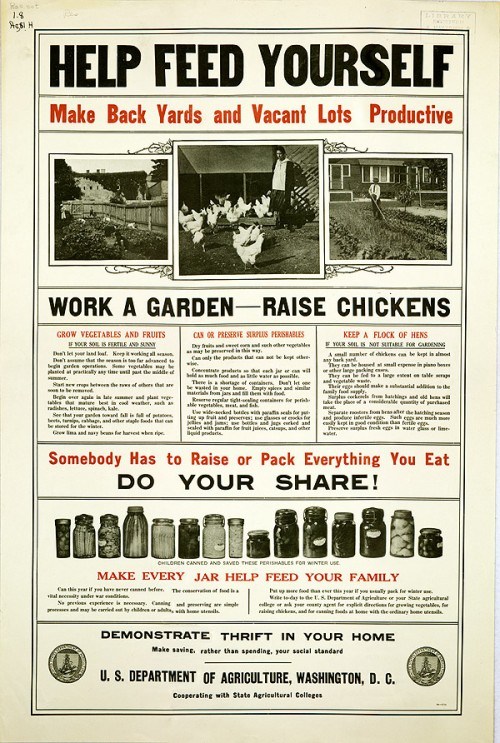
1914-1918 U.S. Poster
I can see how these events could of contributed to household chicken raising culture that we have today. Speaking of contributing, what do you kind folk know about this subject? Any family accounts of raising chickens during trying times?
My grandfather used to tell stories about his childhood during the great depression. He was born in 1930 in the Central Valley of California. If you’ve ever read the Grapes of Wrath, that’s a bit of context. His family was fortunate to own their home in town, and his grandparents were fortunate not to lose their farm (they grew raisin grapes rather than wine grapes; vineyards for wine production were forcibly destroyed due to prohibition). My grandfather told me they kept a chicken coop in their little yard. They were very poor (he didn’t wear shoes except in the winter), but they had food. He also told me that hobos would often come to their back door to beg a meal, and his mother always gave them something. According to my grandfather, she would often cook them some eggs.
You cauld call my current flock of chickens a "Victory Flock." I built a coop to have victory over the high egg prices we had recently. It has helped with that. One of our hens went broody this spring. So I asked for fertilized eggs on a local chicken keeper's Facebook group. She hatched a chick three weeks ago! So we might be able to keep the flock going long term.
Tradition is not the worship of ashes, but the preservation of fire.