I always grow yard long beans. It's the only bean I have tried that will produce all summer in my Northern California zone 9B garden. I gathered the dried beans in 2023 and have been growing them since. This year I thought maybe they are getting a little old, so I bought green yard long beans a Botanical Interest seed, and a red Chinese long bean from Bakers Creek. I planted one of each, 1,2,3,1,2,3,... I didn't count them, but I planted very densely, and there didn't appear to be any empty spots, if I didn't get 100% gremination, I got pretty close.
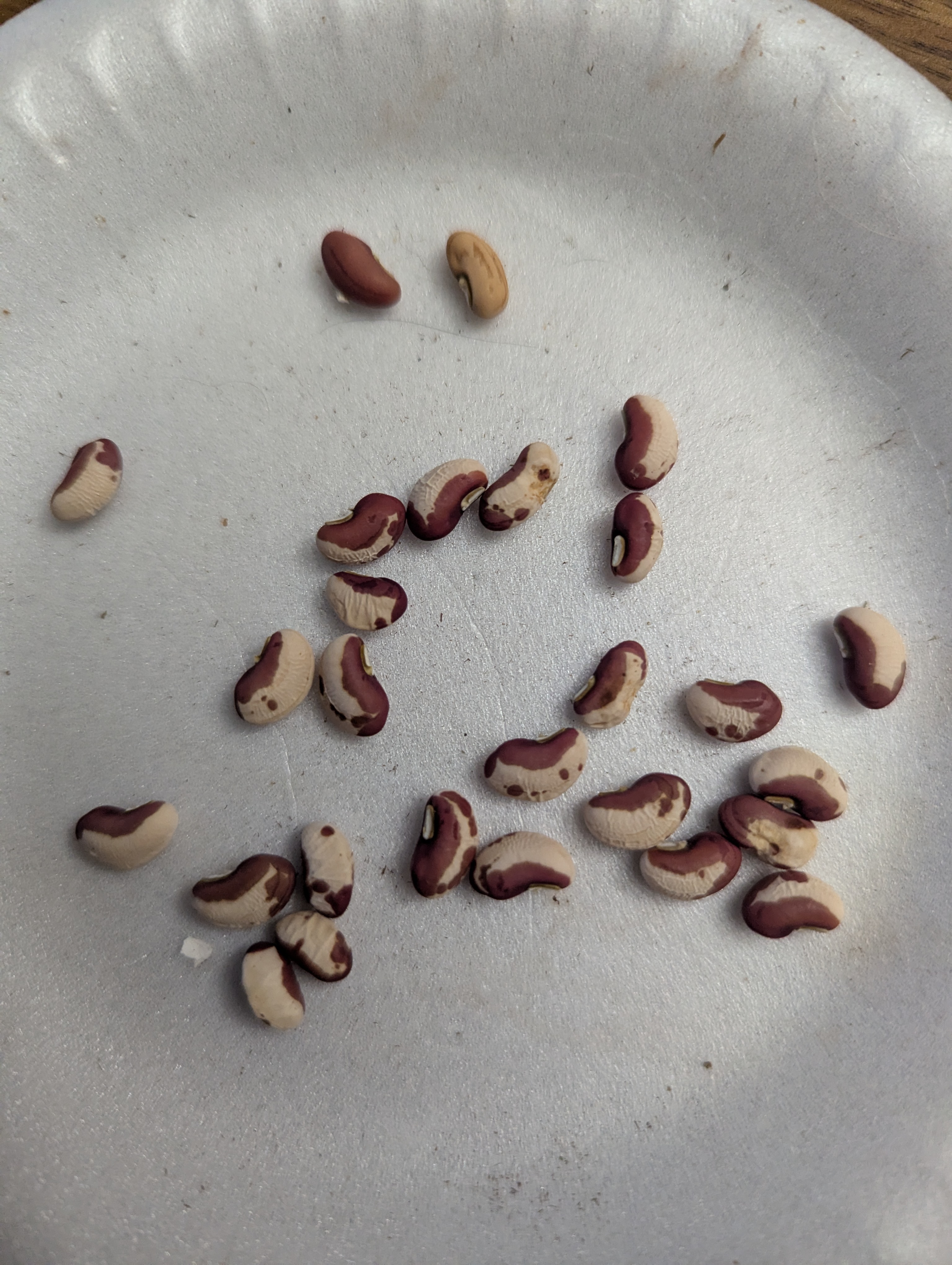
At this time of the summer we are kind of burnt out on Beans. Even though I have been talking lots to work, I still have tons of dried beans on the vine. I picked a bunch today to save. The beans are mostly kind of red, some tan, and some black. size very, but I have never noticed a difference when I grow a small bean versus a large one (I don't save very small beans, or deformed ones) 2 of the pods had beans that are red and tan/off white. I have never seen that in this kind of bean before. I have always planted green and red long beans together. The only real difference I can think of is I did have a bush bean growing at the same time for quite a while. Usually by the time the long beans are producing the regular beans have stopped producing. But not this year.( we had a pretty mild summer compared to normal). I was under the understanding that the yard long beans are not a true bean, so it doesn't seem like they would cross, but I don't know anything about seed breading.
What do you think? Is it a cross between the varieties? a disease? Should I keep them and plant them next year?
Thanks
PXL_20260908_030405576.MP.jpg
The top two are what the Beans usually look like
“We can complain because rose bushes have thorns, or rejoice because thorn bushes have roses.” — Abraham Lincoln
As far as I know, bush beans (Usually Phaseolus vulgaris) do not cross with yard long beans (Vigna unguiculata).
Yard long beans however can cross with black eyed peas, same species (different subspecies, depending on the classification.
Thank you I appreciate the info. I have always gotten solid color beans, so I wasn't sure.
I did notice something interesting this year. Aphids always infest the beans in August. This year they came very early, I don't think they were even producing when the aphids arrived. My initial thought was we had a very mild winter, I think we hit 32 once. So I figured bugs would be an issue. I also wonder if there was less pests pressure on the adapted beans? I guess I will never know, but it does make me wonder.
Thanks again
“We can complain because rose bushes have thorns, or rejoice because thorn bushes have roses.” — Abraham Lincoln
I grow both yard long and red noodle and I thought I had the seed figured out where the red noodles had red seed and the yardlong black. This year, growing both again and saving seed from both I see that almost all are red seeded ...only one pod so far with black seed.
I can easily tell which plants produced the seed and both are making red seed.
None as interesting looking as your white and red ones though....plant them and see what happens😊
I need to grow them on a hoop like I saw you do where they can hang down ..I lose a lot to seed where I miss seeing them.
"We're all just walking each other home." -Ram Dass
"Be a lamp, or a lifeboat, or a ladder."-Rumi
"It's all one song!" -Neil Young
Judith I have noticed the same thing you are talking about. The majority of the seeds I get are red. The black ones are few and far between. I like variety, but honestly don't care what color they are.
The sad truth is I'm not really a bean fan. I grow them because my family enjoys them, they produce like crazy, even when covered with aphids they just keep producing. I do love the look of them.
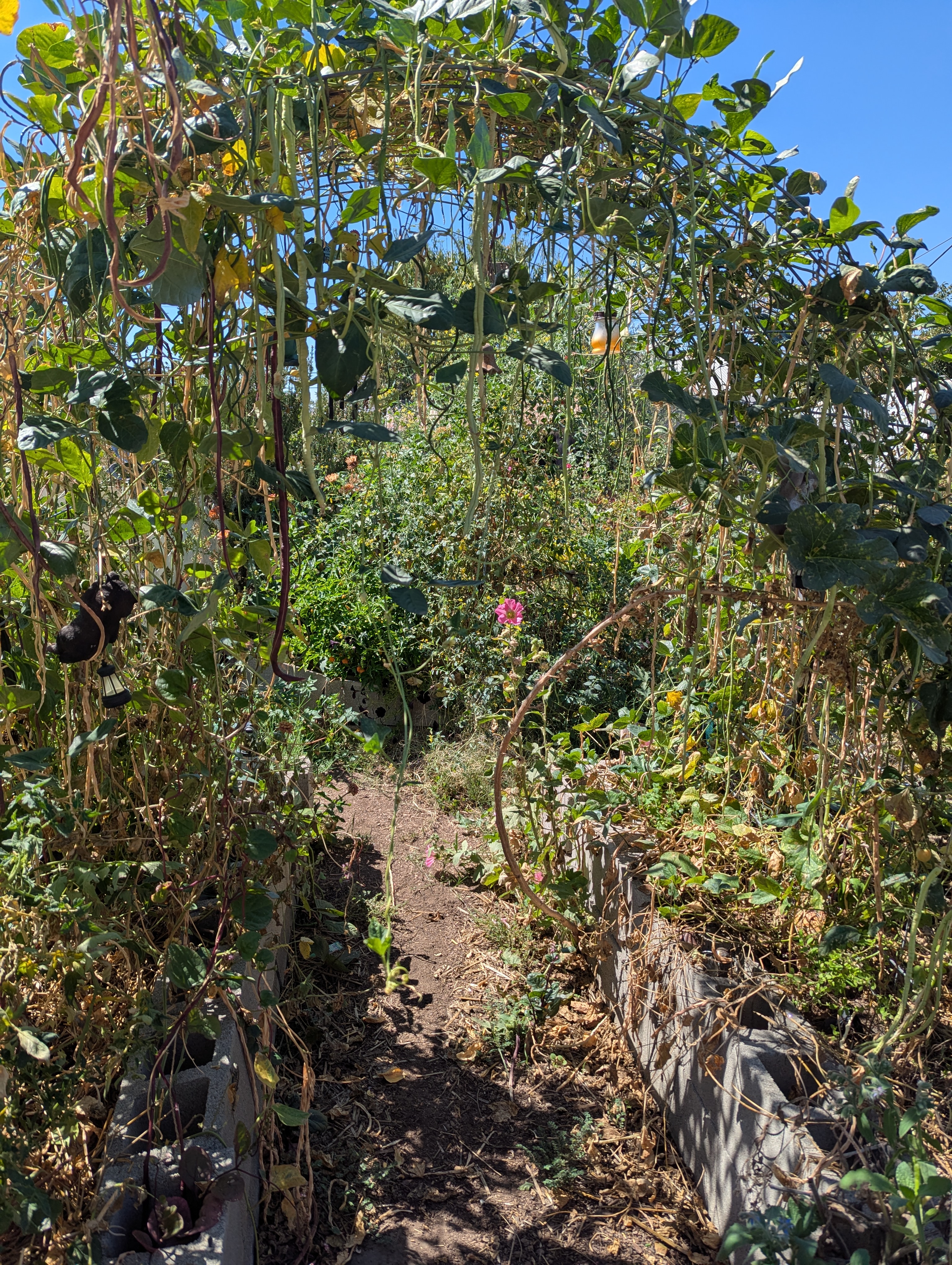
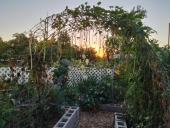
Years ago I saw the cattle panel trellis and I had to have one, ended up doing 2. I have never been sorry. Peas, beans, squash, melon, Malabar spinach, you name it, it works and looks amazing.
PXL_20260911_211301753.jpg
end of bean season
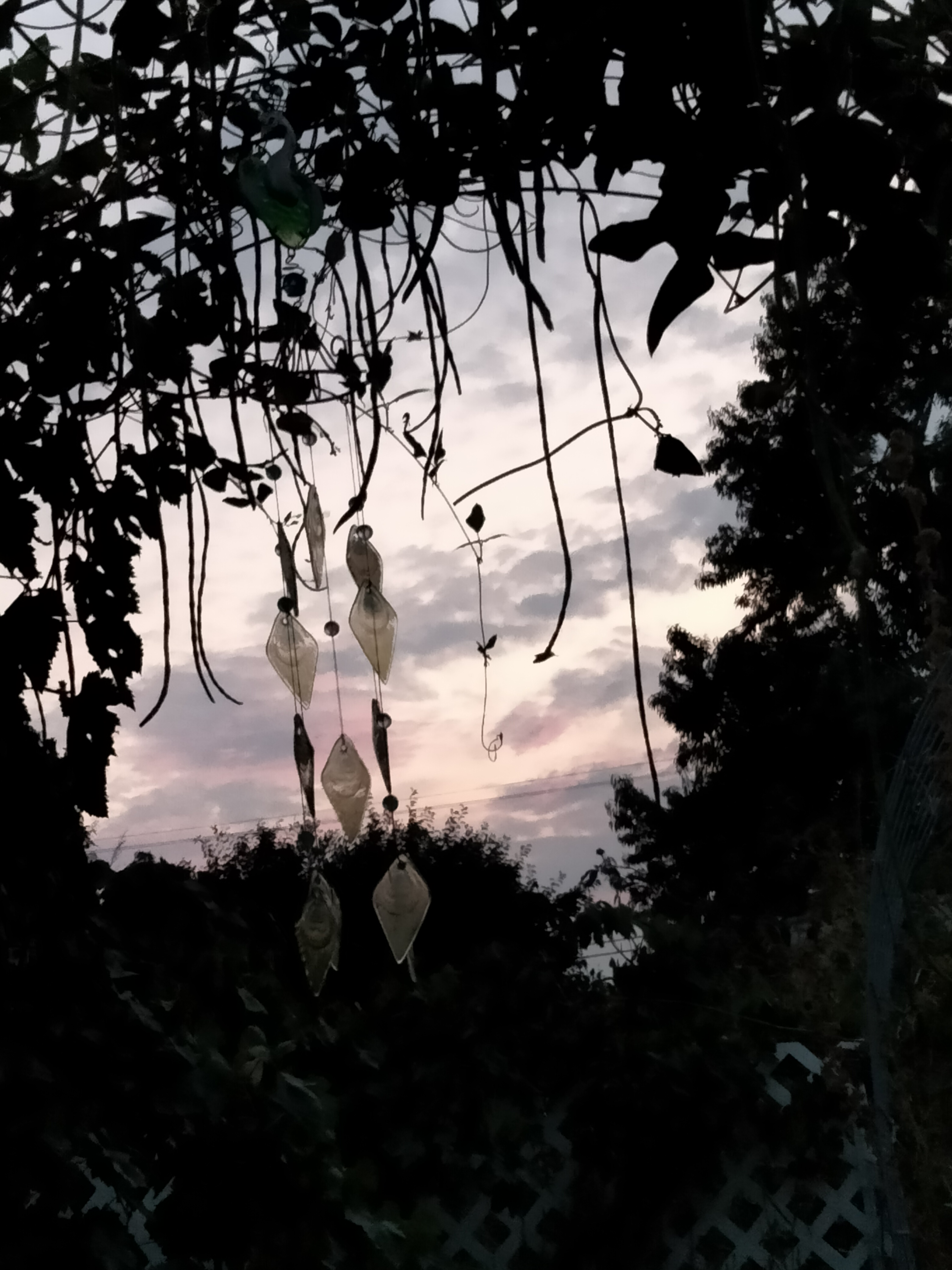
IMG20230831195108.jpg
one of my favorite garden photos
“We can complain because rose bushes have thorns, or rejoice because thorn bushes have roses.” — Abraham Lincoln



.png)


 4
4