May Lotito

gardener
+ Follow
since Jun 11, 2020
Merit badge: bb list bbv list
For More
Zone 6b
Apples and Likes
Apples
Total received
In last 30 days
13
Forums and Threads

Recent posts by May Lotito

Thom Bri wrote:
Do you have a fixed fallow schedule?


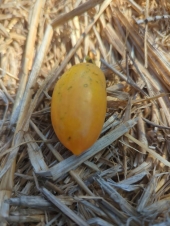
So far my use of land isn't cyclic but just one way: when the fertility drops, I grow perennial bushes and trees. I guess that just delay the issues for a few years because after the perennials start fruiting, they are quickly going downhill. I am working on bringing these plants back to health first and growing annuals less intensively. Here is last year's 3 sister patch let go wild with a persimmon tree and a dozen garlic bulbs.
My corns are growing quickly and the space is filling up. They are quite uneven, some are 2 ft tall and a few are half the size. I planted a second batch of corns in a different spot and some squash seeds somewhere else. My soil isn't fertile enough to support all three sisters, or even two continuously. In one spot I grew squashes for two years and corn with bean in a third year (amended with compost every time), it was still so exhausted that stilt grasses took over afterwards. Thom you have amazing soil and great stewardship in your garden.
I saw a few spring migration monarch butterflies this month and they love my purple milkweeds! Survival rate for the caterpillars is low though and I only found two in the last instar.
1 week ago
Hi Steve, a blast of water will knock most the aphids off and hopefully natural predators will show up to take care of the rest for you.

Today I saw some sharpshooters making holes on a sunflower leaf and a predatory stink bug came over to suck the life out of one. But they also killed other caterpillars I like too.

M.J. you have a eastern dobsonfly (Corydalus cornutus) and red-spotted purple butterfly (Limenitis arthemis). Cool bugs indeed!


1 week ago
Mediterranean soils are mostly neutral to slightly alkaline from calcareous parent materials, yet there are pockets of acidic soil in northern mountainous Greece, according to this article:

Soil Resources and the Role in Agriculture Sector of Greek Economy
Environment and Ecology Research 8(3): 70-75, 2020

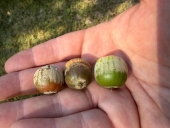
Are different types of oaks growing in these areas? In the humid and non glaciated parts of US where soils are acidic from heavy leaching, the red oaks are thriving. They grow slower and have higher tannin content. The acorns take two seasons, up to 18 months to mature and are more bitter. I am wondering if you plant acorns from other Mediterranean that have more alkaline soil, will the seedlings have a hard time adapting? What caused the low yield of acorns from local oaks last year?
1 week ago
I am in the Ozark plateau of Midwest US and there are over two dozen species of native oak trees. Settlers fell them for timbers, especially the white oaks for cooperage, and cleared the land for cattle ranching. When the soils get more acidic and poorer, fewer oaks are able to grow. Blackjack oak (Q marilandica) is one that thrives in the dry upland soil. Missouri Botanical Garden has a page about it:https://www.missouribotanicalgarden.org/PlantFinder/PlantFinderDetails.aspx?taxonid=280720

I have several mature blackjack oaks and they aren't doing too well: lots of caterpillars, wormy acorns, dying branches marcescence etc. I am trying to revive them and it seems to be working.
2 weeks ago
Your garden is so beautiful and the blueberry bush is amazingly prolific! Do you see any monarch butterfly yet? I am about one week behind with the blooms. Also my elephant garlic scapes are droopy rather than holding straight up like yours. Is that normal? I leave 3 to bloom so I can have bigger bulbs. Your lotus looks good and I guess you will see the flower stalks this summer. My fruit yield isn't too exiting this year, just a dozen peaches and apples each, and maybe several pears. One persimmon from a grafted tree and hopefully a couple pawpaws.
2 weeks ago
Since it's a seedling tree, you have the sprouts just the same as the original tree. Early this year the power company came over and cut down a bunch of trees in my front yard and I lost my apple and pear trees since the grafts were gone. I did salvage some cuttings and grafted them to my other trees (only one made it). So if you have other apple trees, maybe grafting the suckers will work. By the way, how many years has the apple tree been fruiting? Was the fruiting wood low last year? The root suckers are more juvenile and may take a few years to bloom.
2 weeks ago
Dying of ponderosa trees have been in the news for years. The species is adapted to arid and high elevation regions in western US. It depends on natural fires to recycle nutrients and to suppress competitions. Part of the reasons for their decline is fire management in the past decades to disrupt low intensity burns so that less fire resistant needle-leaf such as firs and junipers are growing under to compete for water, building up fuel load and making fire events more extreme. Eventually the ponderosas weaken and die off to pest attacks. Oregon State University has an article on the proper managements to restore the health of ponderosa forest here:
https://extension.oregonstate.edu/forests/fire/restoring-ponderosa-pine-forests-dry-side-oregon

In some of southern range of ponderosa such as Texas Davis Mountains, weather has a major impact as long term droughts and higher temperatures are shifting the ecosystem towards shrubland and grassland. The ponderosas forests are not coming back. I don't know if oaks can fill in their place or not. Bur oaks, for example, are fire and drought resistant and part of the tall grass prairies in Midwestern US.
3 weeks ago
Grains are high in calorie density compared to root crops which make them important staples. Different regions grow certain types of grains that are more suitable to local temperature and rainfall patterns. Wheat can grow in colder climate with dryland farming. Corn, sorghum and rice are C4 plants so they are productive in hot and high light environments. Rice is indispensable in feeding people in hot humid regions because the flooded paddies are anaerobic to maintain soil fertility for repeated cropping.

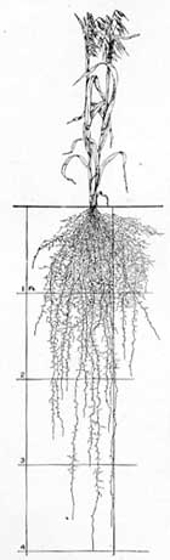
I like to grow winter rye mainly as cover crop. They offer some greens for chickens and protect the soil from wind erosion. In late spring I cut some down to plant my garden and let some go to seed. So far I just let my chickens have the grains but I am considering cooking the berries too. I haven't eaten rye before except store rye bread.

I had some issues the last time I grew rye as a crop instead of cover crop. After the ryes were done, the soil looked quite depleted and sat baking in summer drought. The harvest timing and probably allelopathic effect make growing a following ground cover difficult. I sow less densely this year, allowing other weeds to grow in between. They can take over the space when the rye is gone.