
• Post Reply Bookmark Topic Watch Topic
  • New Topic
permaculture forums growies critters building homesteading energy monies kitchen purity ungarbage community wilderness fiber arts art permaculture artisans regional education skip experiences global resources cider press projects digital market permies.com pie forums private forums all forums
this forum made possible by our volunteer staff, including ...
master stewards:
  • Carla Burke
  • Nancy Reading
  • r ransom
  • John F Dean
  • paul wheaton
  • Jay Angler
stewards:
  • Timothy Norton
  • Pearl Sutton
  • Tereza Okava
master gardeners:
  • Christopher Weeks
  • M Ljin
gardeners:
  • Jeremy VanGelder
  • Matt McSpadden
  • thomas rubino

Fall Garden Prep, Fall Leaves

 
pollinator
Posts: 874
Location: Illinois
193
  • Likes 15
  • Mark post as helpful
  • send pies
    Number of slices to send:
    Optional 'thank-you' note:
  • Quote
  • Report post to moderator
Harvest is all done, frost has killed all my veggies except the greens. It's time to think about next season.

Where I live, west of Chicago, we can expect snow from November through March, some winters a month earlier and later than that. The ground is typically frozen hard December through the end of February. So anything I want to do needs to get done now.

I have a typical suburban lot with lots of trees around it, so lots of leaves. I also have very heavy clay soil. The topsoil around here is normally excellent soil but of course it was all scraped off when the lots were prepped for building, so we have no topsoil at all. It makes gardening and even growing a nice lawn very difficult.

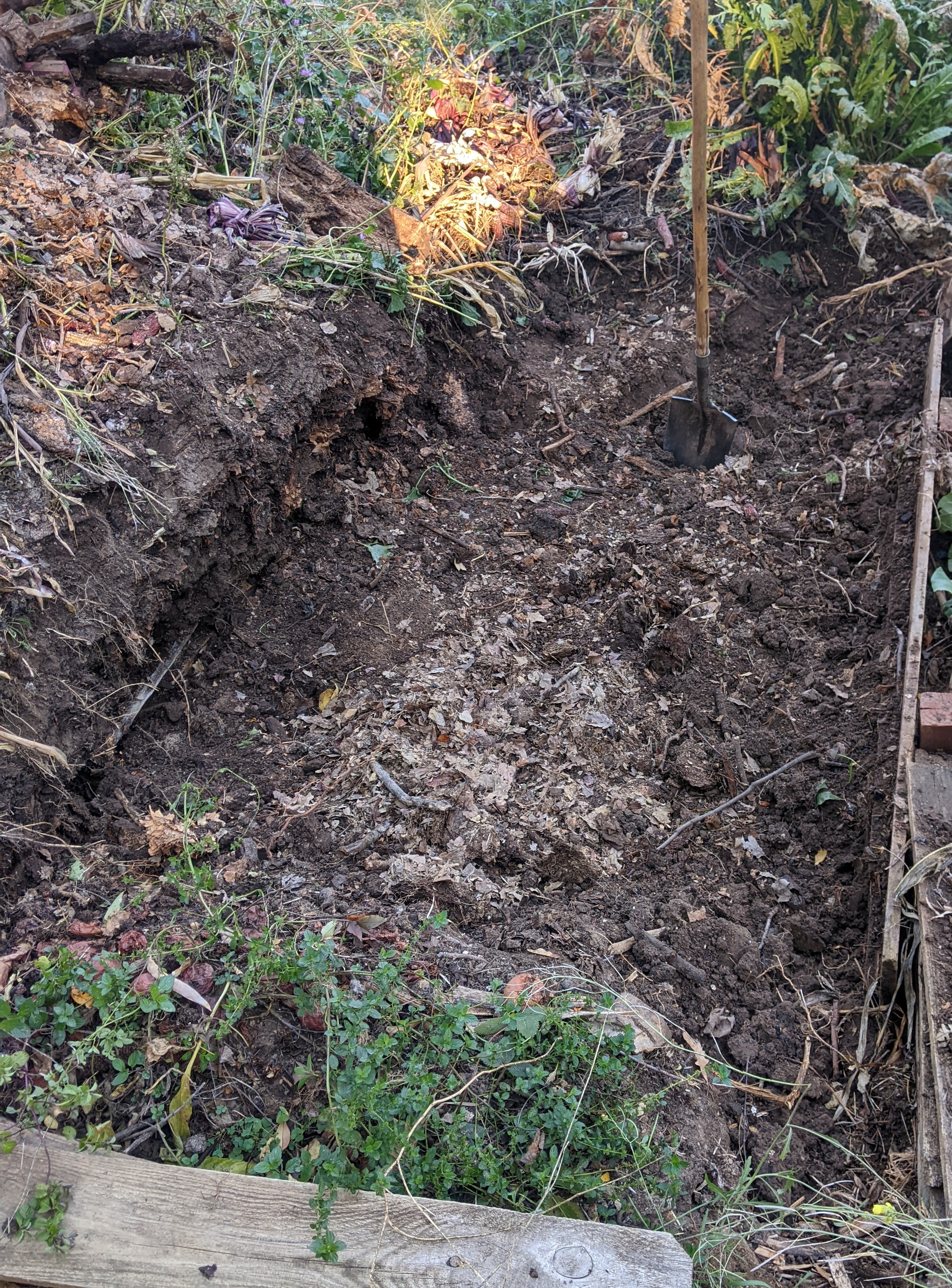
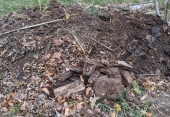
Below are some pics. I dig a deep trench, 3+ feet (about a meter) and lay down a layer of sticks and wood. The wood is a mix of carpentry scraps, green logs and rotting wood, really whatever I have on hand. I'll be trimming trees and cutting out all the saplings that grow up every year so lots of small green wood too.

On top of that goes all the leaves. Some years the neighbor contributes many bags of leaves too. Mixed in goes more sticks and wood and all the kitchen garbage. After the first layer I shovel a layer of dirt on top to hold everything in place. Then another layer of leaves and wood and garbage, then another of dirt. This continues until I have a large mound and can't go any higher without it sliding off. A layer of leaves 3 feet deep will squeeze down to about a 1 inch layer by next fall.

Then I dig another trench and start over. The final trench stays open all winter and gets all the winter kitchen scraps, all the fireplace charcoal and ash and a layer of dead leaves in the spring. In March this last trench gets filled in and  topped with soil.

I immediately scatter lettuce seeds all over the top, regardless of the weather.  Lettuce will sprout and grow even if there are hard frosts and snow after sowing. Cold won't kill it, and I can get early lettuce. Radishes and carrots can also be planted with no worry about cold at this stage.

PXL_20251023_220924412.jpg
Starting the trench
Starting the trench
 
Thom Bri
pollinator
Posts: 874
Location: Illinois
193
  • Likes 6
  • Mark post as helpful
  • send pies
    Number of slices to send:
    Optional 'thank-you' note:
  • Quote
  • Report post to moderator
Wood layer. This is the wood from last year. It was so dry last year it hardly rotted at all. Wood closer to the surface rotted some, and the small sticks did.

PXL_20251023_220934145.jpg
[Thumbnail for PXL_20251023_220934145.jpg]
 
Thom Bri
pollinator
Posts: 874
Location: Illinois
193
  • Likes 9
  • Mark post as helpful
  • send pies
    Number of slices to send:
    Optional 'thank-you' note:
  • Quote
  • Report post to moderator
Filled with leaves and wood
PXL_20251101_144739449.jpg
[Thumbnail for PXL_20251101_144739449.jpg]
 
Thom Bri
pollinator
Posts: 874
Location: Illinois
193
  • Likes 3
  • Mark post as helpful
  • send pies
    Number of slices to send:
    Optional 'thank-you' note:
  • Quote
  • Report post to moderator
And capped with a thin layer of dirt
PXL_20251101_150455930.jpg
[Thumbnail for PXL_20251101_150455930.jpg]
 
pollinator
Posts: 1397
Location: Milwaukie Oregon, USA zone 8b
163
  • Likes 3
  • Mark post as helpful
  • send pies
    Number of slices to send:
    Optional 'thank-you' note:
  • Quote
  • Report post to moderator
Looks like a good method.
 
Thom Bri
pollinator
Posts: 874
Location: Illinois
193
  • Likes 4
  • Mark post as helpful
  • send pies
    Number of slices to send:
    Optional 'thank-you' note:
  • Quote
  • Report post to moderator

Riona Abhainn wrote:Looks like a good method.

It really improve the hard clay soil after a few years. Burning a load of wood in the pit was a big turning point.

 
Thom Bri
pollinator
Posts: 874
Location: Illinois
193
  • Likes 4
  • Mark post as helpful
  • send pies
    Number of slices to send:
    Optional 'thank-you' note:
  • Quote
  • Report post to moderator
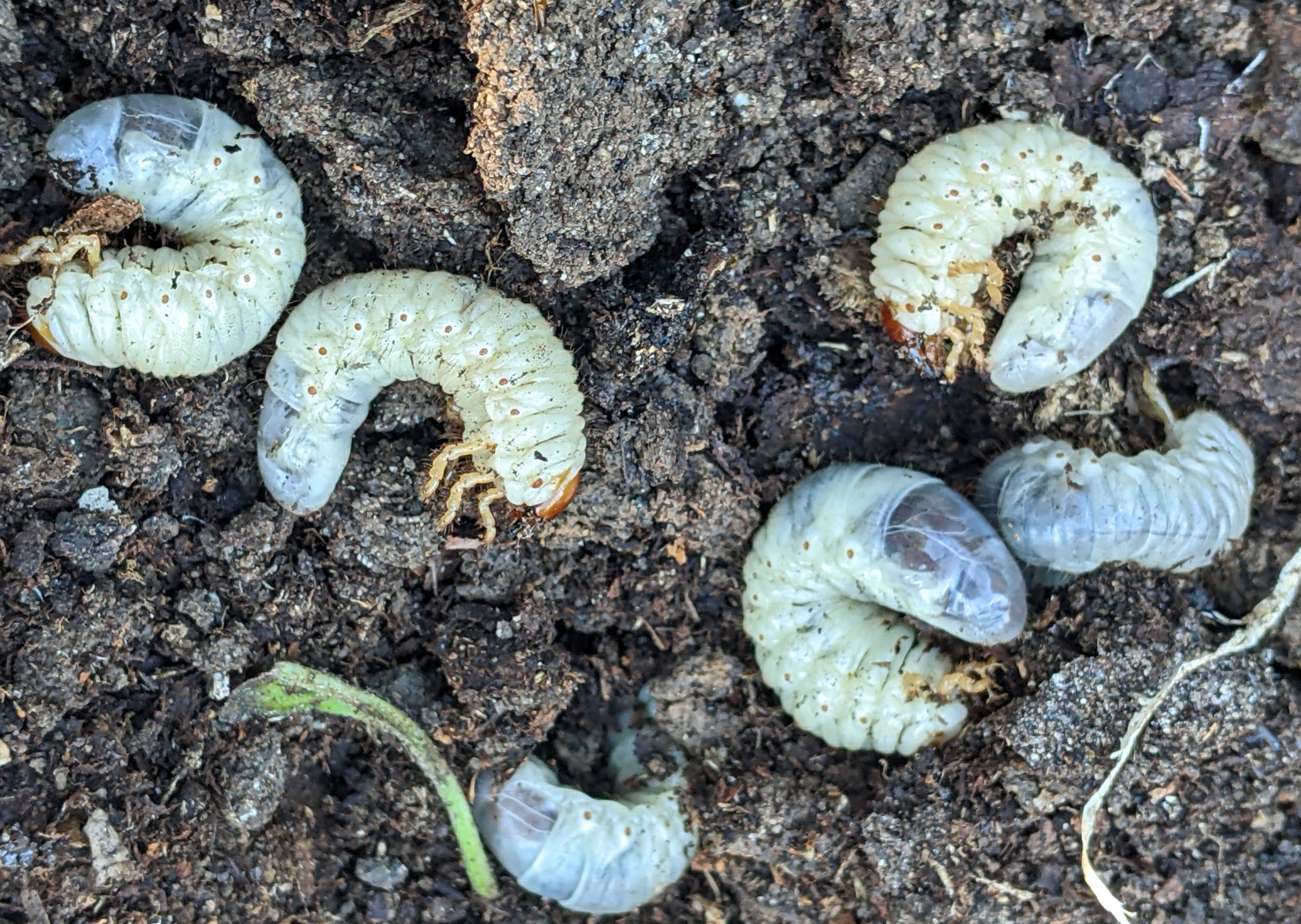
Found these a couple feet deep boring through some rotten wood. Not sure what kind of insect, but they look useful.
PXL_20251023_213538850.jpg
Grubs chewing wood
Grubs chewing wood
 
Thom Bri
pollinator
Posts: 874
Location: Illinois
193
  • Likes 3
  • Mark post as helpful
  • send pies
    Number of slices to send:
    Optional 'thank-you' note:
  • Quote
  • Report post to moderator
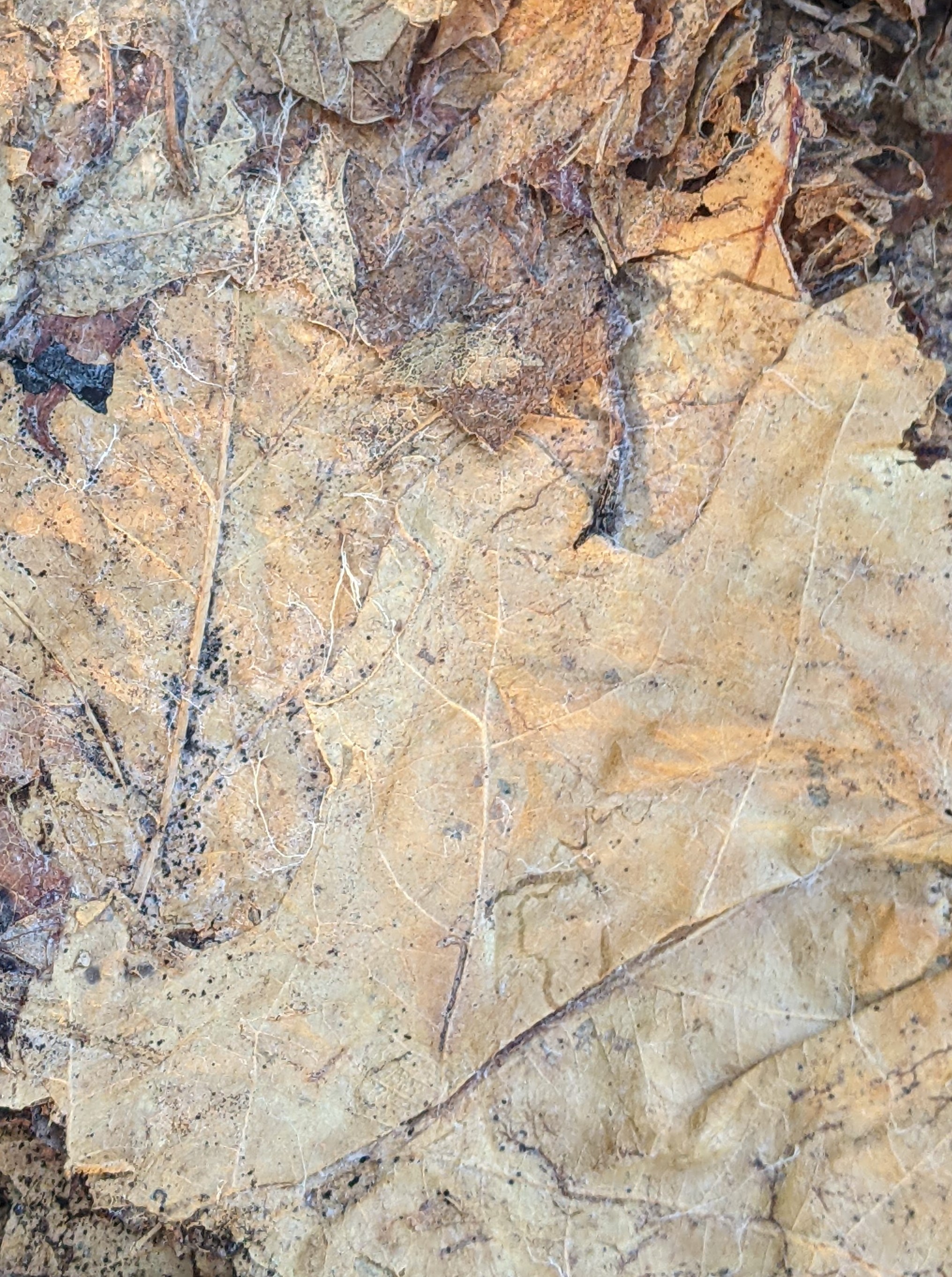
One year of leaf decay in a dry year. Not much. This year I am using the hose to moisten the layers before placing the next layer. I thought about that last year but had already put the hose away for the season and was too lazy to get it out again.
PXL_20251023_213714175.jpg
Decaying leaves
Decaying leaves
 
steward
Posts: 18439
Location: USDA Zone 8a
4682
dog hunting food preservation cooking bee greening the desert
  • Likes 4
  • Mark post as helpful
  • send pies
    Number of slices to send:
    Optional 'thank-you' note:
  • Quote
  • Report post to moderator
Grub worms turn into little eating machines possibly eating the roots of all your plants.

then these larva turn into June Bugs which then eat the leaves and flowers of plants.

Soap or insecticidal vinegar might kill them both.

https://permies.com/t/55244/grubs-decomposers-root-eaters
 
Thom Bri
pollinator
Posts: 874
Location: Illinois
193
  • Likes 3
  • Mark post as helpful
  • send pies
    Number of slices to send:
    Optional 'thank-you' note:
  • Quote
  • Report post to moderator

Anne Miller wrote:Grub worms turn into little eating machines possibly eating the roots of all your plants.

then these larva turn into June Bugs which then eat the leaves and flowers of plants.

Soap or insecticidal vinegar might kill them both.

https://permies.com/t/55244/grubs-decomposers-root-eaters


Ah well. I'll just plant more and hope they leave some. Honestly except for squash bugs I rarely have bug problems.
 
gardener
Posts: 2149
Location: Zone 6b
1347
forest garden fungi books chicken fiber arts ungarbage
  • Likes 6
  • Mark post as helpful
  • send pies
    Number of slices to send:
    Optional 'thank-you' note:
  • Quote
  • Report post to moderator
The grubs could be the larvae of bess beetles if they live inside rotting wood. They speed up the decomposition process, earthworms will move in to eat their frass. Similar looking grubs that are found in soil or root mass are likely pest beetles. bess beetle
 
Thom Bri
pollinator
Posts: 874
Location: Illinois
193
  • Likes 3
  • Mark post as helpful
  • send pies
    Number of slices to send:
    Optional 'thank-you' note:
  • Quote
  • Report post to moderator

May Lotito wrote:The grubs could be the larvae of bess beetles if they live inside rotting wood. They speed up the decomposition process, earthworms will move in to eat their frass. Similar looking grubs that are found in soil or root mass are likely pest beetles. bess beetle


I didn't see any adults, but these grubs were definitely in the rotting wood deep underground. I put them back after snapping the pic.
 
Steward and Man of Many Mushrooms
Posts: 6054
Location: Southern Illinois
1865
transportation cat dog fungi trees building writing rocket stoves woodworking
  • Likes 8
  • Mark post as helpful
  • send pies
    Number of slices to send:
    Optional 'thank-you' note:
  • Quote
  • Report post to moderator
Hi Thom,

I live in Illinois as well, but a good six hours south.  From looking at your pictures, you seem to have more loam than I expected from the text in your post.  Your picture looks a lot like what I tried many years ago—I dug a trench, threw in the leaves and branches and then covered it up.  What I unintentionally did was to just about perfectly preserve my leaves and branches!  My clay is solid brown and very sticky when wet.  I made some near-perfect anaerobic conditions.  Years later I could still find almost perfect preserved leaves and the branches never changed.

While I love the idea that you have (incorporating free organic matter into the soil to loosen it up), my thoughts are to start with it on top instead of burial.  If you start on top, the process will be aerobic—just what you want.  Also, the organic matter will help insulate the soil and encourage soil goodies to work their way up into the OM.  And their waste will work back into soil—GREAT!!  If you dig into the OM after it sits for a while, worms will make their way in—PERFECT!!  If you really go crazy, try inoculating with Wine Cap mushrooms, but that’s not necessary yet (but WOW, does it ever work!).

One way you could do this is to lay the OM on top and maybe sprinkle some soil on top of the OM. This is to inoculate and to hold the OM in place over winter.  In spring, maybe take whatever is left and make a compost pile but put that pile in a place that you want to grow veggies in the future. By making the compost pile on top of the future bed, all the composting goodness that washes down with rain (don’t forget about all the microbes in a compost pile that will wash down into the soil!).

I envy all those organic goodies that you can get into your garden!  On a side note, I envy your latitude as well.  I grew up near Bloomington, definitely south of you, but we still got some real winters.  I love my home, but I miss a good blizzard!


Eric
 
Thom Bri
pollinator
Posts: 874
Location: Illinois
193
  • Likes 4
  • Mark post as helpful
  • send pies
    Number of slices to send:
    Optional 'thank-you' note:
  • Quote
  • Report post to moderator

Eric Hanson wrote:Hi Thom,

I live in Illinois as well, but a good six hours south.  From looking at your pictures, you seem to have more loam than I expected from the text in your post.  Your picture looks a lot like what I tried many years ago—I dug a trench, threw in the leaves and branches and then covered it up.  What I unintentionally did was to just about perfectly preserve my leaves and branches!  My clay is solid brown and very sticky when wet.  I made some near-perfect anaerobic conditions.  Years later I could still find almost perfect preserved leaves and the branches never changed.

While I love the idea that you have (incorporating free organic matter into the soil to loosen it up), my thoughts are to start with it on top instead of burial.  If you start on top, the process will be aerobic—just what you want.  Also, the organic matter will help insulate the soil and encourage soil goodies to work their way up into the OM.  And their waste will work back into soil—GREAT!!  If you dig into the OM after it sits for a while, worms will make their way in—PERFECT!!  If you really go crazy, try inoculating with Wine Cap mushrooms, but that’s not necessary yet (but WOW, does it ever work!).

One way you could do this is to lay the OM on top and maybe sprinkle some soil on top of the OM. This is to inoculate and to hold the OM in place over winter.  In spring, maybe take whatever is left and make a compost pile but put that pile in a place that you want to grow veggies in the future. By making the compost pile on top of the future bed, all the composting goodness that washes down with rain (don’t forget about all the microbes in a compost pile that will wash down into the soil!).

I envy all those organic goodies that you can get into your garden!  On a side note, I envy your latitude as well.  I grew up near Bloomington, definitely south of you, but we still got some real winters.  I love my home, but I miss a good blizzard!
Eric


You are exactly right. The deep layers only rot well if moistened. I often get unrotted layers if put in dry.

By the way the 'loam' you see is real, but it is the result of over 10 years of burying leaves and wood this way. Originally it was only very heavy clay, rock hard when dry, glue when moist. Very hard to dig up the first few years. It took several years of digging and mixing the layers to finally get anything approaching loam. Now I am creating it fast enough that I am using it to fill other beds. Doing a big wood burn helped a lot, and adding lots more wood instead of just leaves.

Putting it all on top and letting it rot naturally doesn't work well for me because of how I plant seeds. A few things are in rows, but most seeds are just broadcast onto the surface. A deep layer of leaves would prevent most of the sprouts from rooting.
 
Thom Bri
pollinator
Posts: 874
Location: Illinois
193
  • Likes 2
  • Mark post as helpful
  • send pies
    Number of slices to send:
    Optional 'thank-you' note:
  • Quote
  • Report post to moderator
One step over. First trench is done and second trench partially excavated next to it. Finding lots of big chunks of partially rotted wood. I will be splitting these up a bit more and reburying at the bottom again. Great exercise!

While I was digging my neighbor was raking and burning his leaves.
PXL_20251114_190713180.jpg
Garden trench
Garden trench
 
Thom Bri
pollinator
Posts: 874
Location: Illinois
193
  • Likes 2
  • Mark post as helpful
  • send pies
    Number of slices to send:
    Optional 'thank-you' note:
  • Quote
  • Report post to moderator
Today's effort, finished digging in the morning and in the afternoon trimmed trees and filled the bottom of the trench.

First with rotting logs, then a layer of outdated financial documents, then all the fresh green limbs I trimmed today, hacked into small pieces. I was tired. Now to wait for lots of leaves to fall, mow them up and put in a layer of leaves.
 
Eric Hanson
Steward and Man of Many Mushrooms
Posts: 6054
Location: Southern Illinois
1865
transportation cat dog fungi trees building writing rocket stoves woodworking
  • Likes 3
  • Mark post as helpful
  • send pies
    Number of slices to send:
    Optional 'thank-you' note:
  • Quote
  • Report post to moderator
Thom,

Your trench reminds me of a composting technique that I once saw, liked, wanted to do but never adopted.


The technique is called the vermiculture trench—a worm trench.  I might be able to find the original website, but it will take time.  The idea was to take a whole lot of OM and use it to fill a trench, about the size you have already dug.  The OM consisted of paper, cardboard, shredded versions of both, fallen leaves, and copious amounts of food scraps (had access to a restaurant, so food scraps were easily available).  The trench was filled to close to surface and topped with straw, though a combination of straw and a very light soil layer—just to keep the straw in place—would probably work just as well.  On one side of the trench, this guy planted tomatoes—known for being nutrient hogs.  Worms quickly invaded the compost trench and began digesting all that OM.  And the tomatoes grew in roots and kinda took what they wanted.  By the end of the season (maybe two in a bad year), that trench was now a super-fertile garden bed and the same process could be started somewhere else.

I don’t know how much land you have, but I thought this might be worthy information given your ambitions.


Good luck!!


Eric
 
Thom Bri
pollinator
Posts: 874
Location: Illinois
193
  • Likes 2
  • Mark post as helpful
  • send pies
    Number of slices to send:
    Optional 'thank-you' note:
  • Quote
  • Report post to moderator
Another pic of a hole in the ground...
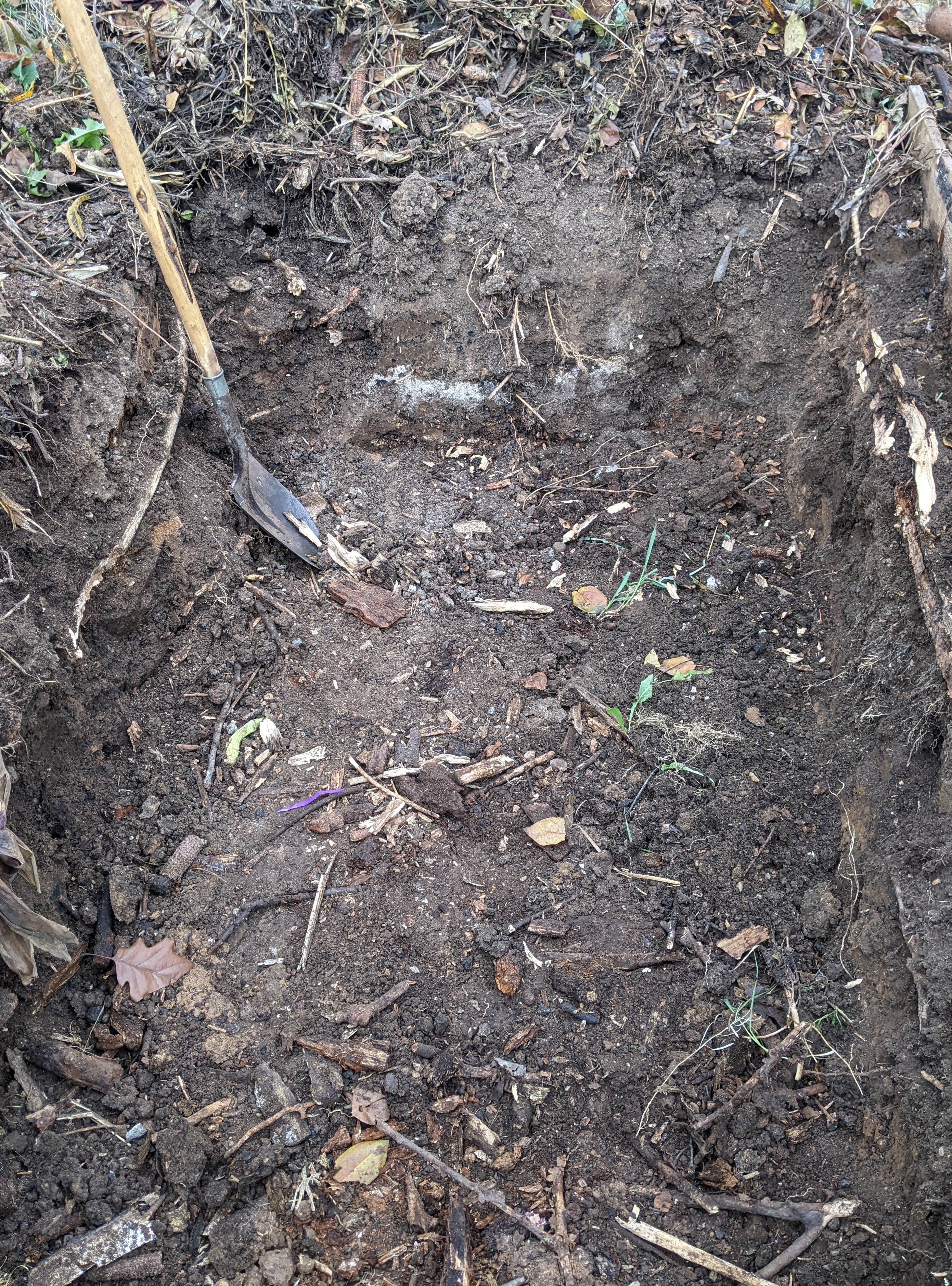
This is the third and last trench this year. It'll stay open until spring and get all the kitchen waste, leaves and sticks, and all the fireplace ash and charcoal. Bottom layer is a lot of logs. Took about 2 days to dig it out. A lot of work because there were masses of sticks and logs that hadn't rotted yet. Funny, some logs were completely rotted and fell apart and others were still hard and solid without any sign of rot. Other half and half. I am splitting them up with the axe to make them go faster.
PXL_20251122_213223285.jpg
Composting trench
Composting trench
 
Thom Bri
pollinator
Posts: 874
Location: Illinois
193
  • Likes 3
  • Mark post as helpful
  • send pies
    Number of slices to send:
    Optional 'thank-you' note:
  • Quote
  • Report post to moderator
In the pic above you see a white line running horizontally through the clay on the far wall. This is fireplace ash, dumped in last winter. The pic below shows a close-up. Above it is a layer of hard clay with some charcoal inclusions, probably from fireplace waste from previous years, but most of the other organic matter is already gone. Without repeated doses of fresh organic matter this soil returns to clay in just one season.
PXL_20251122_213239546.jpg
[Thumbnail for PXL_20251122_213239546.jpg]
 
Thom Bri
pollinator
Posts: 874
Location: Illinois
193
  • Likes 3
  • Mark post as helpful
  • send pies
    Number of slices to send:
    Optional 'thank-you' note:
  • Quote
  • Report post to moderator
A close-up of a chunk of ash and charcoal from the area above. Interesting is all the roots completely filling the ash, far more than in the surrounding clay soil. Some plant, probably a peach tree, really loves the ash layer.
PXL_20251122_213300780.jpg
[Thumbnail for PXL_20251122_213300780.jpg]
 
Eric Hanson
Steward and Man of Many Mushrooms
Posts: 6054
Location: Southern Illinois
1865
transportation cat dog fungi trees building writing rocket stoves woodworking
  • Likes 4
  • Mark post as helpful
  • send pies
    Number of slices to send:
    Optional 'thank-you' note:
  • Quote
  • Report post to moderator
Thom,

I found the old website that I was thinking about HERE:

https://www.redwormcomposting.com/large-scale-vermicomposting/the-vermicomposting-trench/

Here is the short version:  the author of this site dug a trench and buried a whole lot of food waste with the thought that worms would devour the food leaving behind wonderful worm castings.

Making this just a bit more productive, he then planted a row of tomatoes adjacent to and parallel with the worm trench. The tomatoes could send their roots in as necessary to access nutrients.  The tomatoes grew very well that year.


Granted, you are not using food waste, but I see no reason why the same principle would not work using leaves instead of food scraps.


Eric
 
Thom Bri
pollinator
Posts: 874
Location: Illinois
193
  • Likes 4
  • Mark post as helpful
  • send pies
    Number of slices to send:
    Optional 'thank-you' note:
  • Quote
  • Report post to moderator

Eric Hanson wrote:Thom,

Granted, you are not using food waste, but I see no reason why the same principle would not work using leaves instead of food scraps.
Eric


Some food waste, not a huge amount since there are only two of us here now.

I finished digging today. It was real work getting out a few extra inches of the hard subsoil. I ended up using a pick when the shovel wouldn't cut the clay. Then laid a thick layer of mostly rotting logs in the bottom and covered with scoops of dirt. The remaining trench will stay open all winter so there will be a good layer of food scraps and ash.
 
May Lotito
gardener
Posts: 2149
Location: Zone 6b
1347
forest garden fungi books chicken fiber arts ungarbage
  • Likes 5
  • Mark post as helpful
  • send pies
    Number of slices to send:
    Optional 'thank-you' note:
  • Quote
  • Report post to moderator

Thom Bri wrote:A close-up of a chunk of ash and charcoal from the area above. Interesting is all the roots completely filling the ash, far more than in the surrounding clay soil. Some plant, probably a peach tree, really loves the ash layer.


The root mass is impressive! Can you tell if the roots are mycorrhizae inoculated or not?
I plan on preparing a large planting hole with biochar and minerals for a peach pit next year. Maybe that will get the roots to grow deeper and healthier.

 
Thom Bri
pollinator
Posts: 874
Location: Illinois
193
  • Likes 2
  • Mark post as helpful
  • send pies
    Number of slices to send:
    Optional 'thank-you' note:
  • Quote
  • Report post to moderator

May Lotito wrote:

Thom Bri wrote:A close-up of a chunk of ash and charcoal from the area above. Interesting is all the roots completely filling the ash, far more than in the surrounding clay soil. Some plant, probably a peach tree, really loves the ash layer.


The root mass is impressive! Can you tell if the roots are mycorrhizae inoculated or not?
I plan on preparing a large planting hole with biochar and minerals for a peach pit next year. Maybe that will get the roots to grow deeper and healthier.


I have no way to know if there are mycorrhizae. Peaches seem to do well here. Last year someone on Permies suggested spreading fireplace ash around the bases of the peach trees. I did it over the winter and I believe it helped this year. To my eye the trees appeared healthier, and we got an excellent crop.

Peaches don't seem to mind the heavy clay though. Pits sprouting right out of the unadulterated clay seem to do well, and I know from my digging that their roots delve right through the clay.

Incidentally, we are expected to get some 10 inches of snow this weekend with temps to +7F (-13C). If the snow melts off again I'll collect leaves one more time for the trench. Plan to start burning firewood tomorrow.
gift
 
Rocket Mass Heater Manual
will be released to subscribers in: soon!
reply
    Bookmark Topic Watch Topic
  • New Topic