![[Logo]](/templates/default/mobile/images/mobile-permies-2015.png)

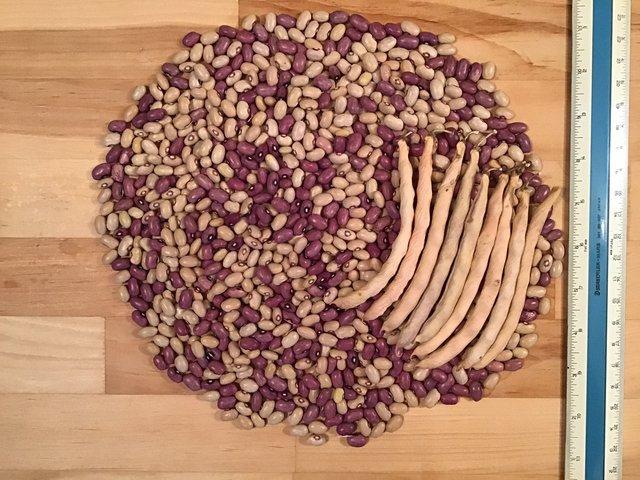
This is why the power of observation in the garden is so important. Photo shows bean seeds acquired from just three volunteer plants I found growing in the compost pile last year. The original bean seeds must have survived my cold z4b winter which is impressive in itself (last winter lowest temp here was -26F). I kept an eye on the plants all summer and left them to grow and produce pods and mature seeds.
The three plants were pole type, maybe half runner. Plants produced many nice sized green stringless pods which dried down papery and easy to shell as typical dry bean varieties do, so I assume they are some type of commercial or crossed up dry bean strains. Very productive plants as can be seen by the entire harvest shown in photo. That is a lot of bean seeds from three short vined plants, better yields than some of the full height pole strains I rely on and plant every year (granting the plants grew in pure compost, which is like supersoil).
What I find interesting is that I know for a fact that I do not have these in my pole or half runner bean collections and landraces, so I do not have any idea of their origin. This coming growing season I will do an isolated trellised growout to observe them and get more seed. If satisfied I will then add these strains to either my pole or half runner dry bean landraces based on what the observations prove out. I have no intention of maintaining pure inbred lines, not at all into such "heirloomy" things that serve no purpose to my food production goals.
I suspect treasures like these show up more than people realize, so keep your eyes open when out in the garden. You should be out there every day during the growing season checking things out, you should know what is going on in every square inch of your garden. I actually take the time on occasion to study each and every one of my food plants. I observe the flowering and fruit production. I observe the types and prevalence of pollinators so I can create habitat that caters to them. I catch insect or disease problems as early as possible so I can react quickly and deal with them. Such attention pays off in so many ways, almost incalculable but directly relates to quality and quantity of the harvest. It is a time investment in knowledge and learning which always pays dividends, on rare occasions little treasures can be discovered as well.
I have acquired quite a few decent strains of food plants unique to my gardens over the years by finding volunteers like this and allowing them to do their thing. This is an easy bonus method for acquiring locally adapted food plant strains, requiring minimal effort involving only observation and seed harvest followed by a trial growout next season. I offer a quiet, respectful thank you to Mother Nature every time she offers me such rewards, reaffirms to me that I just might be on the right track.
The three plants were pole type, maybe half runner. Plants produced many nice sized green stringless pods which dried down papery and easy to shell as typical dry bean varieties do, so I assume they are some type of commercial or crossed up dry bean strains. Very productive plants as can be seen by the entire harvest shown in photo. That is a lot of bean seeds from three short vined plants, better yields than some of the full height pole strains I rely on and plant every year (granting the plants grew in pure compost, which is like supersoil).
What I find interesting is that I know for a fact that I do not have these in my pole or half runner bean collections and landraces, so I do not have any idea of their origin. This coming growing season I will do an isolated trellised growout to observe them and get more seed. If satisfied I will then add these strains to either my pole or half runner dry bean landraces based on what the observations prove out. I have no intention of maintaining pure inbred lines, not at all into such "heirloomy" things that serve no purpose to my food production goals.
I suspect treasures like these show up more than people realize, so keep your eyes open when out in the garden. You should be out there every day during the growing season checking things out, you should know what is going on in every square inch of your garden. I actually take the time on occasion to study each and every one of my food plants. I observe the flowering and fruit production. I observe the types and prevalence of pollinators so I can create habitat that caters to them. I catch insect or disease problems as early as possible so I can react quickly and deal with them. Such attention pays off in so many ways, almost incalculable but directly relates to quality and quantity of the harvest. It is a time investment in knowledge and learning which always pays dividends, on rare occasions little treasures can be discovered as well.
I have acquired quite a few decent strains of food plants unique to my gardens over the years by finding volunteers like this and allowing them to do their thing. This is an easy bonus method for acquiring locally adapted food plant strains, requiring minimal effort involving only observation and seed harvest followed by a trial growout next season. I offer a quiet, respectful thank you to Mother Nature every time she offers me such rewards, reaffirms to me that I just might be on the right track.


