
• Post Reply Bookmark Topic Watch Topic
  • New Topic
permaculture forums growies critters building homesteading energy monies kitchen purity ungarbage community wilderness fiber arts art permaculture artisans regional education skip experiences global resources cider press projects digital market permies.com pie forums private forums all forums
this forum made possible by our volunteer staff, including ...
master stewards:
  • Carla Burke
  • Nancy Reading
  • r ransom
  • John F Dean
  • paul wheaton
  • Jay Angler
stewards:
  • Timothy Norton
  • Pearl Sutton
  • Tereza Okava
master gardeners:
  • Christopher Weeks
  • M Ljin
gardeners:
  • Jeremy VanGelder
  • Matt McSpadden
  • thomas rubino

maslin (mixed grain polyculture)

 
master gardener
Posts: 6105
Location: Carlton County, Minnesota, USA: 3b; Dfb; sandy loam; in the woods
3594
8
forest garden trees books chicken food preservation cooking fiber arts seed woodworking homestead ungarbage
  • Likes 13
  • Mark post as helpful
  • send pies
    Number of slices to send:
    Optional 'thank-you' note:
  • Quote
  • Report post to moderator
So, I'm wanting to grow small grains. I've grown a little wheat and a mixed-grain cover crop. I also want to landrace everything. So I've been acquiring broad genetics in wheat and upland rice and barley and a little bit of rye and oats. And I'm looking at them all and trying to figure out how I want to grow them and what I want to select for. And it's an aside for this particular subject, but I've got Marc Bonfils in the back of my head whenever thinking about wheat. And I wondered about just mixing them all and whether that would be a cool idea or a giant clusterfuck. (Like, maybe they all need to be harvested at a different time or maybe threshed and winnowed using a different procedure, and this will be a terrible idea.)

So I start searching around and I find this article on maslin and it kind of electrifies me. The next thing to do, obviously, is search Permies to see how y'all are engaging with this idea.

...

Really? Nothing? A few people throw out mixed grains for livestock to eat in the field and that's it. Huh.

But, maybe it's just that no one has written about it. So I'm here asking...have you done this? Is it a thing? How does it work and how has it worked for you?
 
Posts: 4
Location: Upstate New York
6
  • Likes 5
  • Mark post as helpful
  • send pies
    Number of slices to send:
    Optional 'thank-you' note:
  • Quote
  • Report post to moderator
This is so interesting! I've just moved my own gardening focus toward starchy, calorie-dense crops and I would love to give this a try. It seems to be such a practical solution to many problems around growing grain, even for small homesteaders and home gardeners. I'm by no means an expert, but I'll be watching this thread to see what other folks think. Thank you for sharing this!
 
Christopher Weeks
master gardener
Posts: 6105
Location: Carlton County, Minnesota, USA: 3b; Dfb; sandy loam; in the woods
3594
8
forest garden trees books chicken food preservation cooking fiber arts seed woodworking homestead ungarbage
  • Likes 4
  • Mark post as helpful
  • send pies
    Number of slices to send:
    Optional 'thank-you' note:
  • Quote
  • Report post to moderator
Just warehousing some related links:
Discussion at GTS (I must have read this when it was fresh and then semi-forgot)
Canadian maslins
stabilize crop yields with maslins

No specific connection to maslin, but I want to stow them somewhere:
continuous grain cropping
RED Gardens first time wheat
 
master pollinator
Posts: 5318
Location: Due to winter mortality, I stubbornly state, zone 7a Tennessee
2275
7
forest garden foraging books food preservation cooking fiber arts bee medical herbs
  • Likes 6
  • Mark post as helpful
  • send pies
    Number of slices to send:
    Optional 'thank-you' note:
  • Quote
  • Report post to moderator
While I have no details myself, I know people are doing this. Going to Seed had a mixed summer grain landrace that they offered this year. (2024) I was able to get a package. But I don't know what records I'll be able to keep on them this year.

Maybe Joseph Lofthouse has some insight to offer?
 
Christopher Weeks
master gardener
Posts: 6105
Location: Carlton County, Minnesota, USA: 3b; Dfb; sandy loam; in the woods
3594
8
forest garden trees books chicken food preservation cooking fiber arts seed woodworking homestead ungarbage
  • Likes 2
  • Mark post as helpful
  • send pies
    Number of slices to send:
    Optional 'thank-you' note:
  • Quote
  • Report post to moderator
I also got a packet of summer grains from GTS. I was thinking today about mixing it with my wheat, barley, and rye just to see how it works.
 
Christopher Weeks
master gardener
Posts: 6105
Location: Carlton County, Minnesota, USA: 3b; Dfb; sandy loam; in the woods
3594
8
forest garden trees books chicken food preservation cooking fiber arts seed woodworking homestead ungarbage
  • Likes 6
  • Mark post as helpful
  • send pies
    Number of slices to send:
    Optional 'thank-you' note:
  • Quote
  • Report post to moderator
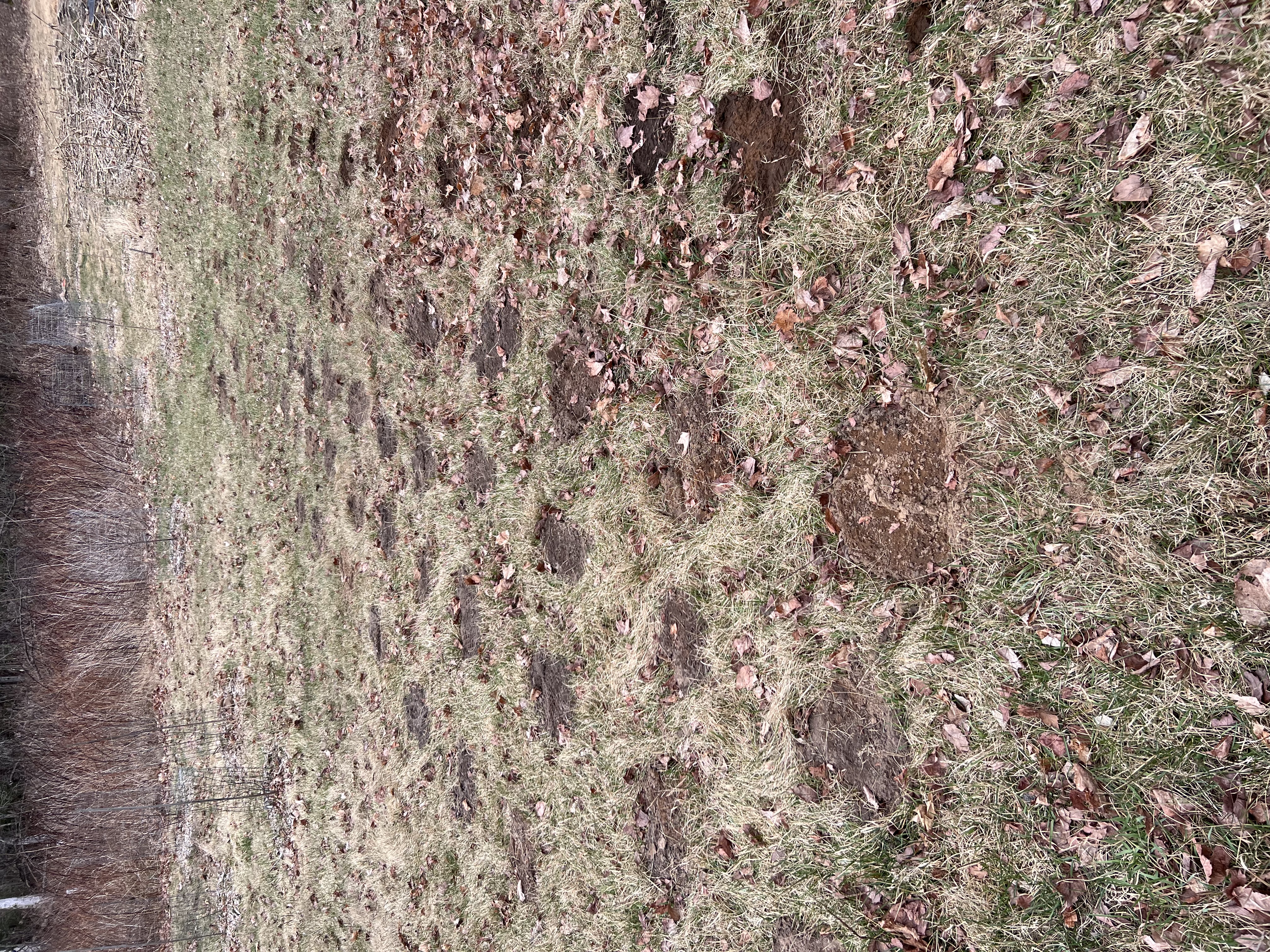
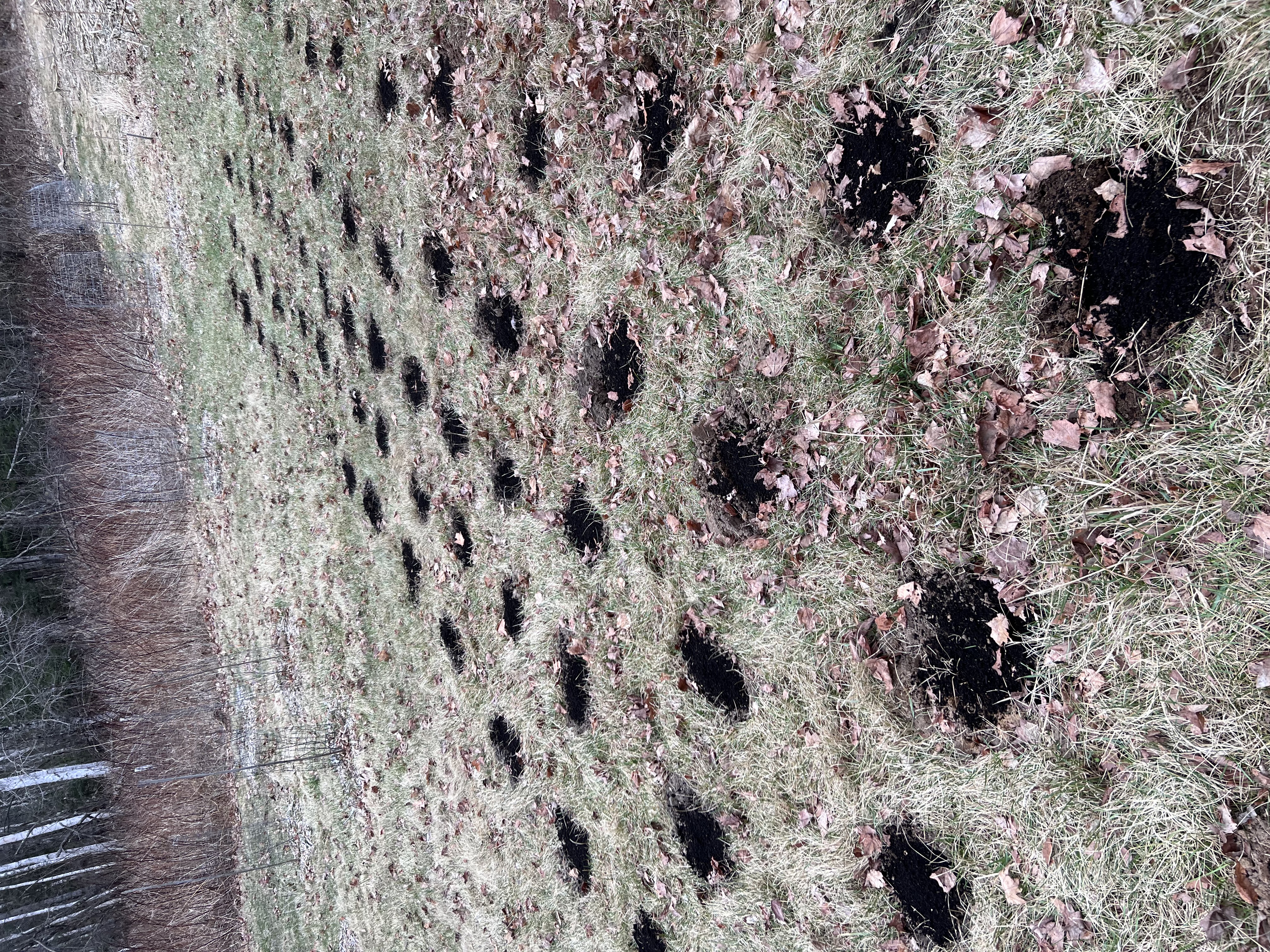
Ok, we’re expecting a rainy weekend and I hustled to get a maslin experiment planted today.

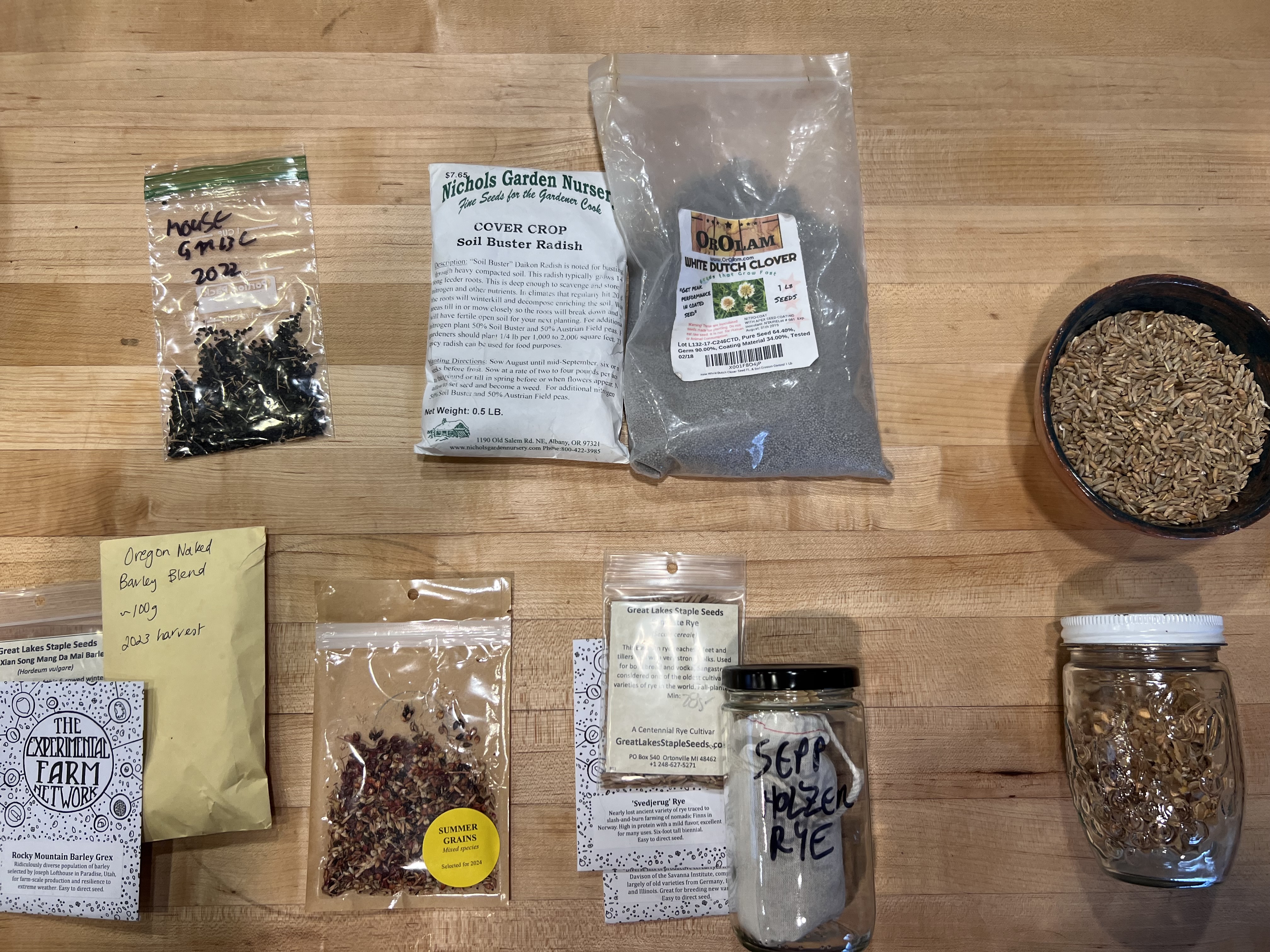
Things didn't really go as planned. I ran out of summer grain mix less than half way through my plot, so I used the other mix of grain lightly on those seeded loci and more heavily on the ones missed. But no harm -- it's all experimentation.
IMG_1730.jpeg
Spading out a single planting locus
After-stomping-it-down-with-turf-at-the-bottom.jpeg
After stomping it down, with turf at the bottom
IMG_1734.jpeg
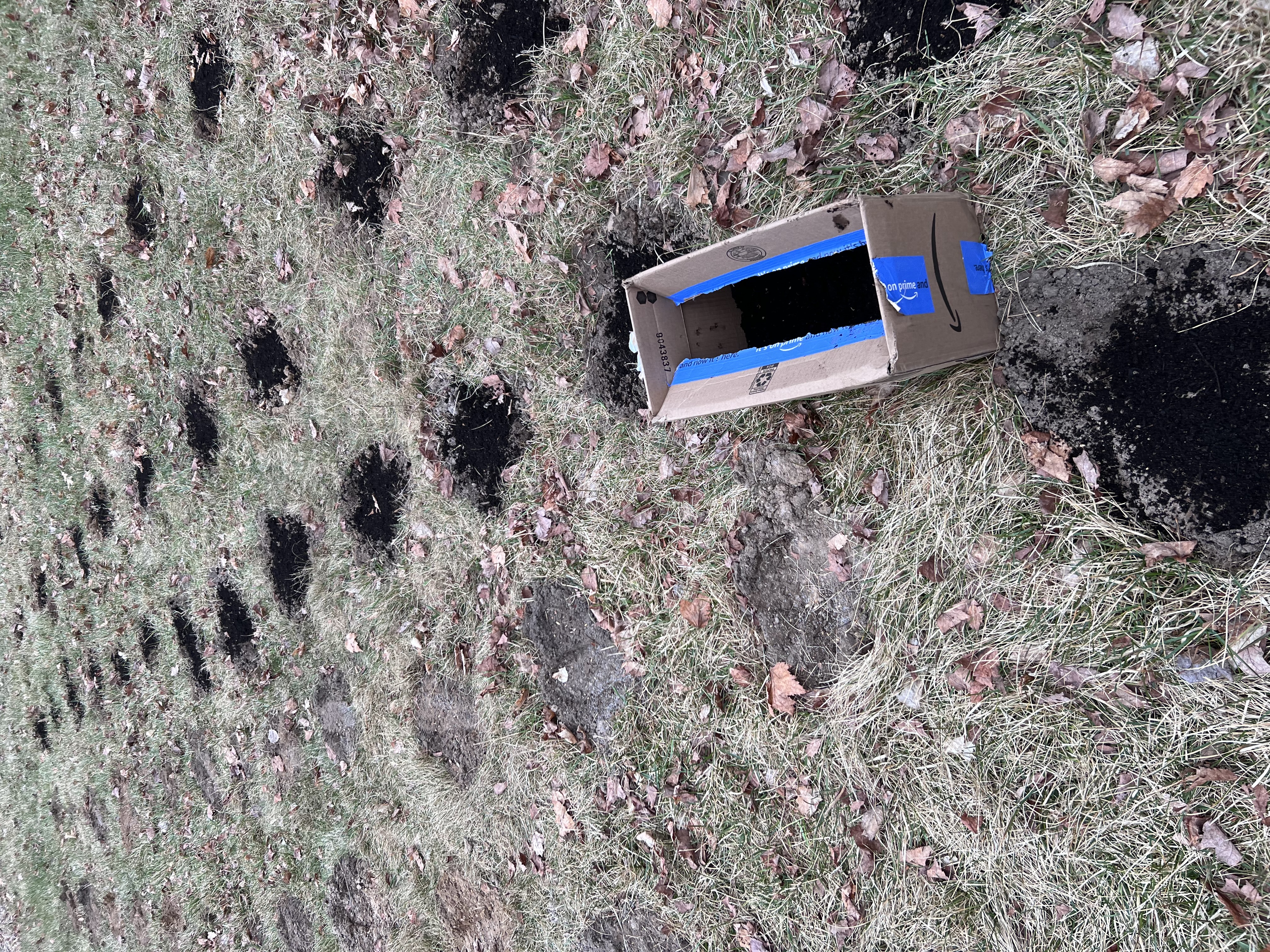
76 planting loci
76 planting loci
IMG_1735.jpeg
Maslin consists of diverse wheat and barley, plus some rye and summer grains. I added clover, daikon, and alliums for diversity
IMG_1736.jpeg
Once things are mixed up, this is how I took it outside.
IMG_1737.jpeg
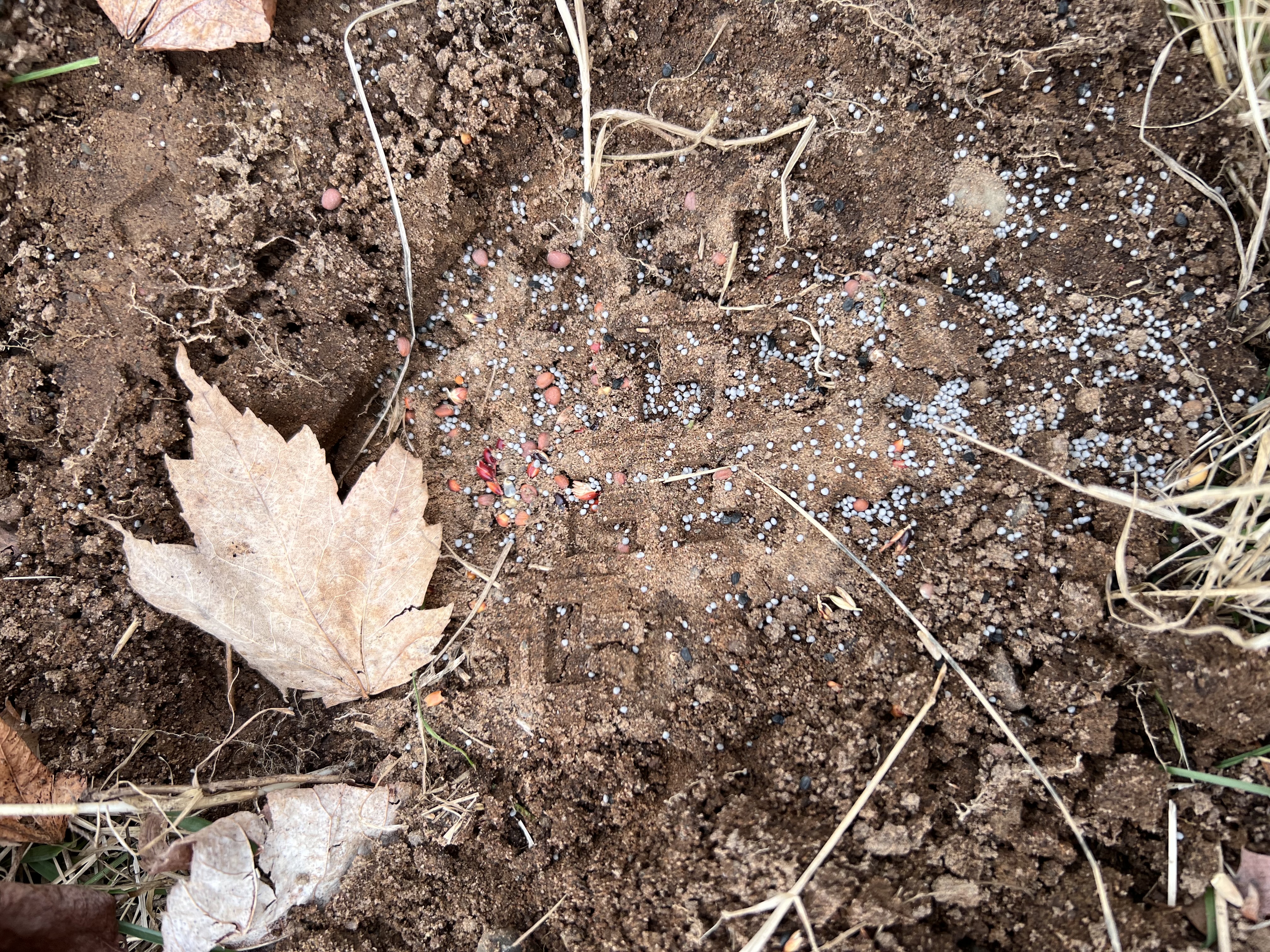
Grain is tossed down and stepped on then followed with a heavy sprinkle of clover.
IMG_1738.jpeg
Onions of several varieties got added last.
IMG_1739.jpeg
Each locus gets a large handful of potting/starting soil on top
IMG_1740.jpeg
All done...we'll see what happens.
current-weather.png
[Thumbnail for current-weather.png]
And we're expecting enough rain that things should be good!
 
Christopher Weeks
master gardener
Posts: 6105
Location: Carlton County, Minnesota, USA: 3b; Dfb; sandy loam; in the woods
3594
8
forest garden trees books chicken food preservation cooking fiber arts seed woodworking homestead ungarbage
  • Likes 5
  • Mark post as helpful
  • send pies
    Number of slices to send:
    Optional 'thank-you' note:
  • Quote
  • Report post to moderator
The only grass heads that came up were whatever horrible mix of perennial grasses I fight with all the time. Nothing that seemed like one of the edible grains I planted. Nothing to save. Nothing good. :-D

I am used to spending money and effort on wild experiments other people think are dumb, but I'm not really used to such dismal outcomes. But it is what it is. I've grown a little wheat before but I have a lot to learn.
 
Posts: 10167
Location: a temperate, clay/loam spot on planet earth, the universe
3385
4
  • Likes 3
  • Mark post as helpful
  • send pies
    Number of slices to send:
    Optional 'thank-you' note:
  • Quote
  • Report post to moderator
and it looked like you did everything right to give the seeds a fighting chance!
Did you mean nothing in the mix came up or just none of the grains?
Birds ate all of my wheat one year and mice maybe?

Seems like the clovers would have made it and radishes?
 
Christopher Weeks
master gardener
Posts: 6105
Location: Carlton County, Minnesota, USA: 3b; Dfb; sandy loam; in the woods
3594
8
forest garden trees books chicken food preservation cooking fiber arts seed woodworking homestead ungarbage
  • Likes 5
  • Mark post as helpful
  • send pies
    Number of slices to send:
    Optional 'thank-you' note:
  • Quote
  • Report post to moderator
There is clover! But I really meant is that none of the grains I planted produced grain for me to carry into the next year.
 
Posts: 69
20
  • Likes 2
  • Mark post as helpful
  • send pies
    Number of slices to send:
    Optional 'thank-you' note:
  • Quote
  • Report post to moderator
Just thinking out loud here. Why do things grow where they grow?

AI Overview
Bacterial-dominated soils (high Nitrogen, low pH) favor fast-growing crops, vegetables, and weeds, while fungal-dominated soils (high Carbon, higher pH) are essential for trees, shrubs, and woody perennials. Bacterial soils cycle nutrients quickly, whereas fungal soils provide long-term stability, water retention, and, according to a Review Considering fungal:bacterial dominance in soils, enhanced carbon sequestration.

I planted Bur Oak acorns years ago and as they grew moved some of them around our farm. Some took and some did not. Those planted near other tress seemed to mainly survive while those planted in grassland away from trees did not. Was it the fungus in the soil near the trees that allowed the transplanted oaks to take root and grow? The acorns were started behind our farm grove sandwiched in between a shelter belt. The survival rate of the acorns was very high except the fox squirrels found some of them !

To add further to the above. The transplanted oaks were mainly bare root with very little accompanying soil. If we could have moved them with more of a root ball along with some soil maybe those planted in the remote locations would have made it?
 
steward and tree herder
Posts: 12826
Location: Isle of Skye, Scotland. Nearly 70 inches rain a year
6705
6
transportation dog forest garden foraging trees books food preservation woodworking wood heat rocket stoves ungarbage
  • Likes 6
  • Mark post as helpful
  • send pies
    Number of slices to send:
    Optional 'thank-you' note:
  • Quote
  • Report post to moderator
A negative result is still a result - thank you Christopher!! I suspect that you may have had a better result if you had grown the patches all together, it sounds like they just got took over by the surrounding vegetation.
Some interesting thoughts though. The idea of a continuous cropping grain field is intriging:
from your link to John Letts' work

A CGC wheat field mimics the ecological structure of a natural grassland. The success of this approach depends on six principles:
(i) early autumn planting of winter cereals that require vernalisation (ie a cold period).
(ii) high genetic diversity within the crop (i.e. populations or genuine landraces)
(iii) undersowing cereal crops with short white clover
(iv) no ploughing or inter-row tillage
(v) leaving all crop residues on the soil surface after the harvest, and
(vi) no use of artificial fertiliser or agri-chemicals.


The timing is presumably climate specific....
 
Posts: 20
6
  • Likes 5
  • Mark post as helpful
  • send pies
    Number of slices to send:
    Optional 'thank-you' note:
  • Quote
  • Report post to moderator
Hi!

I’ve been trying to understand exactly that for the last two years, although I still don’t feel I have enough real experience yet to speak with certainty. What I’m slowly learning is that, in this kind of regenerative approach, the goal is not for every plant to be synchronized in timing, but in function. In other words, they do not all need to sprout, grow, or finish at the same moment, as long as each one is helping the system in its own way.

A good mix seems to work because the plants are doing different jobs at different times without leaving the soil empty or exhausted. Some cover the ground quickly, some send roots deeper, some help with nitrogen, and some may give grain or biomass. So the real “synchronization” is not about making everything uniform, but about keeping the soil active, covered, and biologically alive for as much of the year as possible.

Right now I’m trying something along those lines on a farm near Madrid, where I’m working on regenerating the soil. I’m sowing a mix of cereal, legumes, and clover now, knowing that much of it will probably die by July. Even so, part of it may reseed itself, and at least I hope to avoid having the soil left bare and compacted. Then in October I’ll try another mix, this time hoping that what establishes can either reseed itself more reliably or persist as a perennial. Madrid makes this challenging because winters are cold, while summers are dry and can reach about 111°F, so any system here has to be able to live with both ends of that range.

Whatever you do, make it fun.
 
author & steward
Posts: 7488
Location: Cache Valley, zone 4b, Irrigated, 9" rain in badlands.
3734
  • Likes 7
  • Mark post as helpful
  • send pies
    Number of slices to send:
    Optional 'thank-you' note:
  • Quote
  • Report post to moderator
I planted about 2000 varieties of wheat together. I ended up selecting for varieties that matured seeds at about the same time, and grew about waist high. I don't like to stoop over to harvest.

I would gladly incorporate barley and rye into the same maslin.

Traditionally, a maslin might have also contained seeds from legumes, and from seedy weeds like amaranth or lambsquarters.

 
I agree. Here's the link: http://stoves2.com
reply
    Bookmark Topic Watch Topic
  • New Topic