• Post Reply Bookmark Topic Watch Topic
  • New Topic
permaculture forums growies critters building homesteading energy monies kitchen purity ungarbage community wilderness fiber arts art permaculture artisans regional education skip experiences global resources cider press projects digital market permies.com pie forums private forums all forums
this forum made possible by our volunteer staff, including ...
master stewards:
  • Devaka Cooray
  • Carla Burke
  • John F Dean
  • Nancy Reading
  • Timothy Norton
  • r ranson
stewards:
  • Jay Angler
  • Pearl Sutton
  • paul wheaton
master gardeners:
  • Christopher Weeks
  • M Ljin
gardeners:
  • thomas rubino
  • Eino Kenttä
  • Jeremy VanGelder

Will Bermuda grass spout through landscape fabric?

 
gardener
Posts: 621
Location: Grow zone 10b. Southern California,close to the Mexican border
458
4
home care duck books urban chicken food preservation cooking medical herbs solar homestead greening the desert
  • Likes 4
  • Mark post as helpful
  • send pies
    Number of slices to send:
    Optional 'thank-you' note:
  • Quote
  • Report post to moderator
The two beds, I have just outside the food forest got infested with Bermuda grass.
We have emptied them and have dug down to get as many of the roots as possible.
One of the tour guests told me, that they had used landscape fabric, and the grass spouted through it.
Does anyone know, if a layer of landscape fabric, will be a thick enough barrier? Is there anything else I can do, or a different material ?
It’s not a big problem in the forest garden, since the wildflowers outcompete it, but I can’t have it in my raised beds.
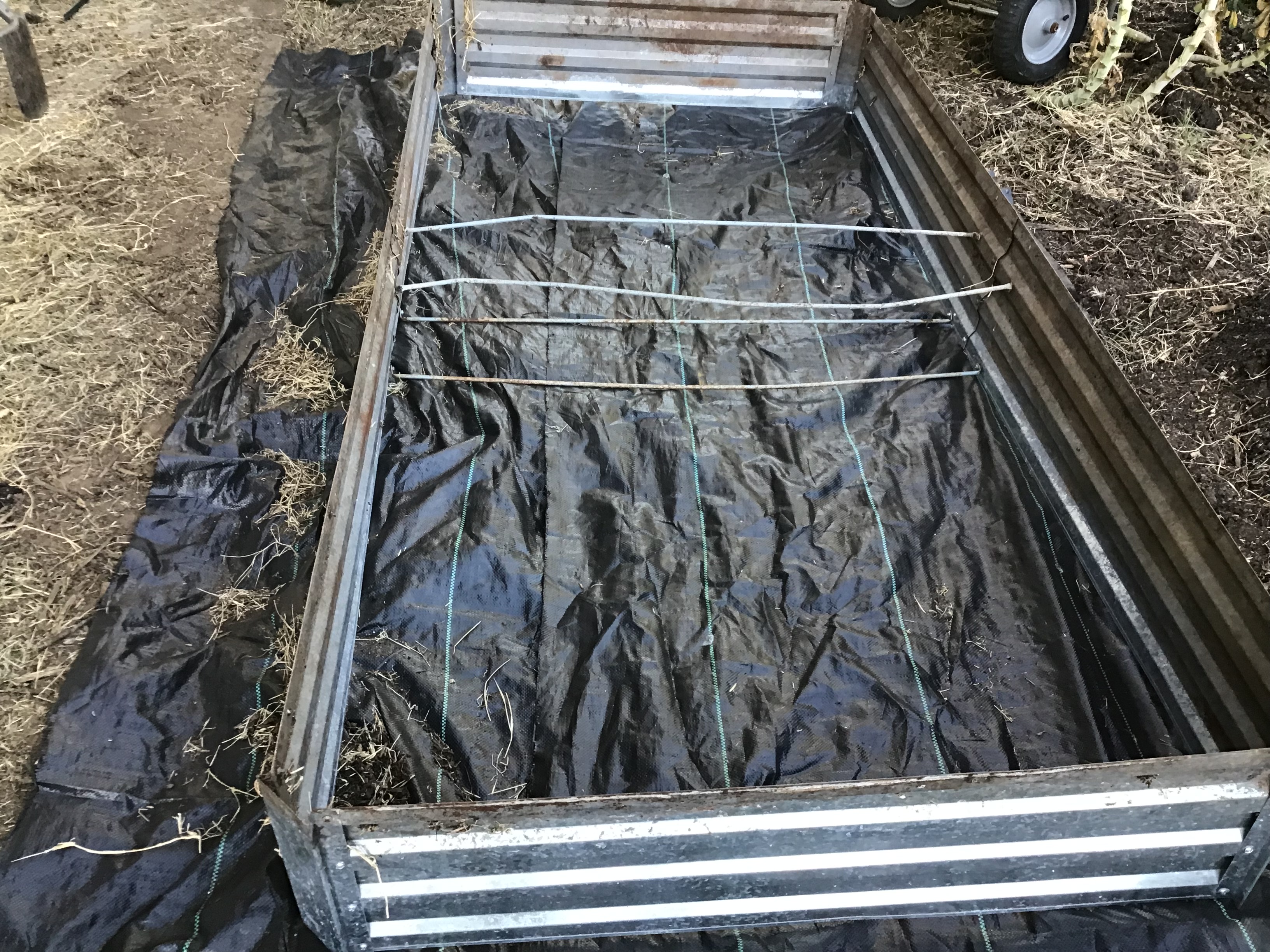
IMG_3196.jpeg
Closeup of the landscape fabric, we thought maybe a double layer
IMG_3195.jpeg
One of the two beds
One of the two beds
IMG_3194.jpeg
How it looks right now
 
steward
Posts: 18112
Location: USDA Zone 8a
4615
dog hunting food preservation cooking bee greening the desert
  • Likes 3
  • Mark post as helpful
  • send pies
    Number of slices to send:
    Optional 'thank-you' note:
  • Quote
  • Report post to moderator
To me as long as the Bermuda cannot see light though it is possible for it to spread under that and come up on the other side.

I like to recommend cardboard and wood chips for 6 inches to 12 inches because ... how much light can get through that?  And those will biodegrade.

This thread seems to indicate that some plants can punch through landscape fabric, I don't know as I have never used it:

https://permies.com/t/114968/Plants-punch-landscape-fabric

I love Bermuda and have never had a problem with my raised beds.
 
Ulla Bisgaard
gardener
Posts: 621
Location: Grow zone 10b. Southern California,close to the Mexican border
458
4
home care duck books urban chicken food preservation cooking medical herbs solar homestead greening the desert
  • Likes 2
  • Mark post as helpful
  • send pies
    Number of slices to send:
    Optional 'thank-you' note:
  • Quote
  • Report post to moderator

Anne Miller wrote:To me as long as the Bermuda cannot see light though it is possible for it to spread under that and come up on the other side.

I like to recommend cardboard and wood chips for 6 inches to 12 inches because ... how much light can get through that?  And those will biodegrade.

This thread seems to indicate that some plants can punch through landscape fabric, I don't know as I have never used it:

https://permies.com/t/114968/Plants-punch-landscape-fabric

I love Bermuda and have never had a problem with my raised beds.


Thank you, I appreciate your help. The reason we have the problem, is that my husband insisted we leave it alone, so he could use it for his rabbits. I warned him it would be a problem, but he didn’t listen. Now he is working hard to fix it. It’s only a problem in that area, the rest of my beds are okay. It is trying to strangle my tangerine and my Barbados cherry, which is in the same area, so wood chips is a good idea.
 
Anne Miller
steward
Posts: 18112
Location: USDA Zone 8a
4615
dog hunting food preservation cooking bee greening the desert
  • Likes 4
  • Mark post as helpful
  • send pies
    Number of slices to send:
    Optional 'thank-you' note:
  • Quote
  • Report post to moderator
Maybe the reason I did not have problems was that the Bermuda grass was planted after the beds were made and the Bermuda was Coastal Bermuda if that makes a difference, I don't know.

If those beds were planted on top of Bermuda that might make a difference, even if dead.
 
pollinator
Posts: 252
Location: Middlebury, Vermont zone 5a
77
  • Likes 5
  • Mark post as helpful
  • send pies
    Number of slices to send:
    Optional 'thank-you' note:
  • Quote
  • Report post to moderator
Yes, it will come through. It will travel great distances, too.  One of my gardens is bordered by a town sidewalk  and the perpendicular side by driveway, yet Bermuda grass jumped or came in from beneath the sidewalk...yikes!
 
Ulla Bisgaard
gardener
Posts: 621
Location: Grow zone 10b. Southern California,close to the Mexican border
458
4
home care duck books urban chicken food preservation cooking medical herbs solar homestead greening the desert
  • Likes 2
  • Mark post as helpful
  • send pies
    Number of slices to send:
    Optional 'thank-you' note:
  • Quote
  • Report post to moderator

Barbara Simoes wrote:Yes, it will come through. It will travel great distances, too.  One of my gardens is bordered by a town sidewalk  and the perpendicular side by driveway, yet Bermuda grass jumped or came in from beneath the sidewalk...yikes!


I am pretty sure, that’s how it got into the beds. In the beginning we only had a little growing beside the walkway. Ohh well, we are doing that was suggested. Double layer of landscape fabric with a layer of cardboard on top. We made sure, that the landscape fabric extends 20” around the bed, and we will add wood chips or mulch on top of that.
Now we are just hoping it will last, because it has been a lot of work removing the beds, cleaning up and refilling them. We have one filled, and are filling the second one tomorrow. We will probably have to do it again at some point, but hopefully it won’t be for a while.
 
Barbara Simoes
pollinator
Posts: 252
Location: Middlebury, Vermont zone 5a
77
  • Likes 4
  • Mark post as helpful
  • send pies
    Number of slices to send:
    Optional 'thank-you' note:
  • Quote
  • Report post to moderator
I didn't mean to make it sound like it's coming in in droves; it's not, but let's just say, I'm vigilant and am always patrolling and on the lookout for invaders. I have blackberries from a neighbor's place that the birds love planting here, sumac that sprouts up to six feet before I see it from the same neighbor....My best advice would be to plant some well-behaved impenetrable perennial on the outside borders.  My personal favorite is hosta but I know some people who love comfrey. I like the hosta because the root becomes a solid mass, it's easy to divide: one plant can become ten very soon, it's well-behaved in that it doesn't run or spread horribly, it's a good height for a border, it's got sweet flowers that the bees love and it's easy enough to dig out as proven by the number of times I do that to divide plants.  
I really think that you could save yourself money and not have to bother with the landscaping cloth, especially if you plan to put wood chips over them--the wood chips will start to break down and create "soil" which is all it takes for something to grow there. The roots will puncture through the cloth and then every year you will be weeding the holes made--ask me how I know!  If you use landscaping cloth, you want to keep the top surface clean.  If there is a bit of dirt or soil, seeds and roots will find it.  I used it both in my vegetable garden and where I have my blueberries.  I used to weed and leave the weeds on top of the landscaping cloth.  Of course, they would start to break down, create soil, and the next thing I knew, I had crabgrass and all sorts of "lovelies" growing there.  My advice would be to either go with just cardboard with chips, or landscaping cloth, but not both unless everything is under the cloth.
 
Ulla Bisgaard
gardener
Posts: 621
Location: Grow zone 10b. Southern California,close to the Mexican border
458
4
home care duck books urban chicken food preservation cooking medical herbs solar homestead greening the desert
  • Likes 4
  • Mark post as helpful
  • send pies
    Number of slices to send:
    Optional 'thank-you' note:
  • Quote
  • Report post to moderator

Barbara Simoes wrote:I didn't mean to make it sound like it's coming in in droves; it's not, but let's just say, I'm vigilant and am always patrolling and on the lookout for invaders. I have blackberries from a neighbor's place that the birds love planting here, sumac that sprouts up to six feet before I see it from the same neighbor....My best advice would be to plant some well-behaved impenetrable perennial on the outside borders.  My personal favorite is hosta but I know some people who love comfrey. I like the hosta because the root becomes a solid mass, it's easy to divide: one plant can become ten very soon, it's well-behaved in that it doesn't run or spread horribly, it's a good height for a border, it's got sweet flowers that the bees love and it's easy enough to dig out as proven by the number of times I do that to divide plants.  
I really think that you could save yourself money and not have to bother with the landscaping cloth, especially if you plan to put wood chips over them--the wood chips will start to break down and create "soil" which is all it takes for something to grow there. The roots will puncture through the cloth and then every year you will be weeding the holes made--ask me how I know!  If you use landscaping cloth, you want to keep the top surface clean.  If there is a bit of dirt or soil, seeds and roots will find it.  I used it both in my vegetable garden and where I have my blueberries.  I used to weed and leave the weeds on top of the landscaping cloth.  Of course, they would start to break down, create soil, and the next thing I knew, I had crabgrass and all sorts of "lovelies" growing there.  My advice would be to either go with just cardboard with chips, or landscaping cloth, but not both unless everything is under the cloth.


It will be hard planting around one of the beds, since my tangerine are too close. I usually have borage growing around beds, since they love it there, and I don’t want comfrey to take over. I keep my comfrey in a raised bed instead. I will look into the hostas. I think my husband will like that better than getting wood chips, and I will love the colors.
I actually also need to prune my blackberries, and my raspberries. We are cleaning up the area behind my blackberries, since we have rats nesting in there.
Anyway, in the rest of the food forest, it’s not a problem. I have lots of perennials and self seeding wildflowers, plus I always end up adding new flowers. I also have vegetables and herbs growing among the flowers. I planned to make this bottom layer of the forest, a place for foraging, and that’s what it is now. I love picking flowers and herbs there. I got so much calendula last year. I filled a 1/2 gallon jar with them. I use calendula oil in a salve I use for my hands, and my son for his psoriasis. I got some really big diakon last year too.
 
Barbara Simoes
pollinator
Posts: 252
Location: Middlebury, Vermont zone 5a
77
  • Likes 2
  • Mark post as helpful
  • send pies
    Number of slices to send:
    Optional 'thank-you' note:
  • Quote
  • Report post to moderator
I refuse to plant comfrey for that very reason.  I have some borage out back, and it's spread a bit, but it's pretty, and seems quite manageable.  I have some calendula out front, and while it's reseeded itself, it hasn't gone crazy.  I, too, used some in some salve and I have some tincture going with it.  I really like using plantain in salve.  More and more, I'm using "weeds" as medicine ; I use chickweed, goldenrod, horsetail, cleavers. etc. in tinctures and I make dandelion wine every year...It makes me think of the old sisters on the Waltons with their "medicine!" I always find some purslane in the vegetable garden that I nibble on while out there.

I have hosta lining most things now because it makes such a nice border that makes it easy for mowing. Edging or trimming is not needed.  It is also edible; while the plant still looks like spikes (before the leaves unfurl), you can cut them at ground level and sauté them.  They smell uncannily like asparagus, however, I found that they were not as flavorful (bland) and yet had sort of a peppery flavor.  I have a huge amount of asparagus growing, so I just eat it as I think they're both ready at the same time.  When the flower stalks on the hosta start to get tippy, I do cut most down as they can look a little raggedy.  It's kind of a relief to my eyes to have them be trimmed back when they start to tip every which way, but I leave some in front and all of the ones out back for the insects.

Your garden sounds lovely.  I, too, love to intersperse flowers, herbs, trees, shrubs, perennials, etc. I love the efficiency of space with the permaculture principle of using different levels to really fill the space and create the lushness.  Insects like butterflies and bees really flock to the flowers and it's good to provide food for them.  Some people might have a problem with some things not being native, but when I see creatures taking advantage of snowdrops in February, I don't care that they are not indigenous.  The ten thousand plants that are native make up for those that aren't!  I figure that I have to be part of the equation as well, so yes, I have daffodils and peonies, but I also have paw paws and persimmons!  Along with garlic, the daffodils help repel the moles and voles from eating / tunneling through the garden, so I'm good with it! Having the color in early spring is so welcome and needed after a very monochromatic winter!

If you have the time, I would absolutely get the cardboard down under the woodchips.  Where I didn't, I have violets proliferating.  I'm not too worried about them; they're pretty and stay quite low, but it was a lesson learned.  I had put chips down along the long east side of the pool, so about 50'x 20' to a depth of two feet or more, which I was certain would be deep enough to keep light from reaching the soil...apparently not!  Where I had laid cardboard in other beds, it has remained weed free...except for Creeping Charlie, but that's because it can easily come in from the top.  That's easy enough to pull...it's sort of like a zipper if I wait until after a rain.  I discovered a great source for cardboard that is clean of any marking or tape and the pieces are quite large and that is a local coffee roaster.  They have tons of hulls, burlap bags and cardboard that they offer to the public for free.  I have probably 150 bags ready for use in the spring and where I am starting a few new beds, I've laid down lots of cardboard and then that's where I dumped loads of leaves from my neighbor's yard.  The coffee hulls are in high demand, but every time I go to town, I drive through and check to see if any are available.  After about ten stops, I've only been able to score about three or four bags of them for the vegetable garden. I'm hoping that with winter coming, people won't be getting so many, although lots of people use them for their chickens.  If you've got chickens and a coffee roaster in your area, it might be worth inquiring!

Know that wood chips make a wonderful medium in which to plant mushrooms, too.  I live in Vermont, so I can't perennialize many types of mushrooms, but I do have quite a few pretty effortless beds of wine cap mushrooms that flush out twice a year: spring and fall.  Their only requirement is moisture and food in the form of something they can break down, so hay, straw, leaves, cardboard and wood chips all do the trick.  If nothing else, I know that I will have leaves every year, so I will be able to "feed" them and have returning flushes every year.  I've also learned that if I sauté them first, I can fit many more into the freezer for mushroom soup or quiche the rest of the year. The flushes don't last very long...only about a week or two, so it can be a bit intensive, but so well worth it. If you decide that eventually you want to try them, keep your eyes peeled come that first spring as they blend in and are hard to see.  A friend and I were walking around and she pointed them out.  I hadn't even seen them and they can get to be a foot in diameter!
 
Ulla Bisgaard
gardener
Posts: 621
Location: Grow zone 10b. Southern California,close to the Mexican border
458
4
home care duck books urban chicken food preservation cooking medical herbs solar homestead greening the desert
  • Likes 3
  • Mark post as helpful
  • send pies
    Number of slices to send:
    Optional 'thank-you' note:
  • Quote
  • Report post to moderator
It sounds like you have a great garden.
My food forest is 3300 square feet big, and was started 10 years ago. You can see it from start (dirt)  to finished here: Building a food forest on the edge of the desert

After we finished the main work there, I started a new topic where I also include my raised bed garden and what else we do here on the homestead. We have 22 raised beds, chickens, ducks and rabbits. While the forest garden is in the front of the house, most of the raised beds are in the back, together with our livestock. Here is a link to that topic. Southern California homestead stories
Together those two gardens produce over 2000 pounds of vegetables, fruits, berries, herbs and grains each year. I spend a lot of time out there, especially in the forest garden, because we have lots of seating and a nice area for yoga and meditation. I always felt outside my extended family because I can’t draw or make sculptures. When I said so to my daughter, she pointed to the garden and said “you are an artist, you have the biggest art installation in the neighborhood”. She is right. I love the riot of colors, smells, sounds and  textures there, and I love how it’s constantly changing.
Fruit trees were supposed to only be in the forest garden, but I ran out of room, so we have started planting some between the swales. I have also added arbors, so I guess I am trying to build a second installation LOL.
 
Barbara Simoes
pollinator
Posts: 252
Location: Middlebury, Vermont zone 5a
77
  • Likes 4
  • Mark post as helpful
  • send pies
    Number of slices to send:
    Optional 'thank-you' note:
  • Quote
  • Report post to moderator
It is remarkable to see all that you have done with your property and the diversity you're able to grow...bananas, oranges, cashews and coffee.  It's a dream!  Do you grow pistachios?  I spend a fortune on them every year, so if I lived in your climate, you can bet I'd have them growing!  As for now, I have to settle for heartnuts and hazelnuts.  I don't want any giant trees because we get big wind storms here.  My rule of thumb is nothing that gets over 40 feet and preferably smaller than that.

I'd looked into and seriously considered raising chickens, but hauling water in the winter and potentially climbing six foot snowbanks to do so, had me rule that idea out.  I'm 65 and just can't take on much more than what I am already doing. I live within a five minute drive to a chicken farm, so I can get eggs at a good price.  The lady across the street has six chickens and I find them very entertaining to watch from my front porch.  

It's such fun to have things start producing after years of care and waiting.  The new things this year were the hardy kiwi (thousands), a small bowl's worth of hazelnuts, some goumis and bush cherries, a few pie cherries and loads of peaches.  We had a weird weather year and the Concord grapes that have always produced for close to 40 years, didn't end up having any.  They had formed but then we had such a drought that none ended up developing...very disappointing as they are some of my favorites.  I think this winter I will need to really prune them hard.
 
Posts: 9
Location: San Francisco, s. Belize, s Louisiana
1
fish food preservation greening the desert
  • Likes 7
  • Mark post as helpful
  • send pies
    Number of slices to send:
    Optional 'thank-you' note:
  • Quote
  • Report post to moderator
The stuff is plastic and polluting and does not work, is unsightly, expensive. Horrible stuff-ought to be banned. I am a professional gardener in San Francisco and I am always ripping it out. Stay away! :-)
 
Ulla Bisgaard
gardener
Posts: 621
Location: Grow zone 10b. Southern California,close to the Mexican border
458
4
home care duck books urban chicken food preservation cooking medical herbs solar homestead greening the desert
  • Likes 5
  • Mark post as helpful
  • send pies
    Number of slices to send:
    Optional 'thank-you' note:
  • Quote
  • Report post to moderator
No, we don’t grow pistachios only pecans and cashews. Also, the cashew tree isn’t producing yet. That will take a few more years.
Since we can grow food all year round, a lot of my fruit and berry decisions, are based on being able to have fresh fruit/berries all year round. The cashew tree was added, because it produce a dual crop. It produces an apple like fruit (very popular in Asia) and then a nut underneath the fruit, so you get two delicious crops from one tree. A lot of research and calculations has gone into building this. This year we planted 2 sapote trees, a Surinam cherry and a fuerte avocado. We already have a has avocado which fruits 6 months of the year. The fuerte will cover the second half of the year. The sapote was picked both because we love the flavor, it cover a time of the year, when we don’t get a lot of fruit, and it’s a money crop. Each of the fruits sells for 10 to 20 dollars each, here in San Diego.
 
Barbara Simoes
pollinator
Posts: 252
Location: Middlebury, Vermont zone 5a
77
  • Likes 4
  • Mark post as helpful
  • send pies
    Number of slices to send:
    Optional 'thank-you' note:
  • Quote
  • Report post to moderator
To be able to go out and pick an avocado every day would be such a treasure  That's fascinating about cashews; I'd never heard anything about the two crops.  Some of your fruits I've never heard of.  They must not transport well and are certainly not going to grow in snow country.  The Sapote sounds wonderful with the black variety tasting like chocolate pudding...I could get behind that! The pawpaws and persimmons are the closest I can come to "pudding" or custard.

I too, made a spread sheet making sure as much of the year as possible was covered, while not having too much at any one time.  I also had other criteria: nothing that spread too wildly or had bad thorns, etc.--no sea buckthorn for me, nor any jujubes, which sound marginal as it is.  I did get  a hawthorn tree, though, because of its ability to work with all things related to the heart.  I was able to cut my medication in half after I started using it.  

I absolutely love raspberries, but didn't want to deal with the canes or thorns.  I found one called "Bushel and Berry" that stays as a bush and doesn't have thorns. They also have blackberries and blueberries. But I already have 40 blueberry bushes and the mulberries are starting to produce, so that will be plenty! I got six of the raspberries ('Raspberry Shortcake') and I've found that they send runners underground, so now I have many more that I can divide and replant.  I find the flavor a little washed out, but that may improve with age.
 
Ulla Bisgaard
gardener
Posts: 621
Location: Grow zone 10b. Southern California,close to the Mexican border
458
4
home care duck books urban chicken food preservation cooking medical herbs solar homestead greening the desert
  • Likes 10
  • Mark post as helpful
  • send pies
    Number of slices to send:
    Optional 'thank-you' note:
  • Quote
  • Report post to moderator
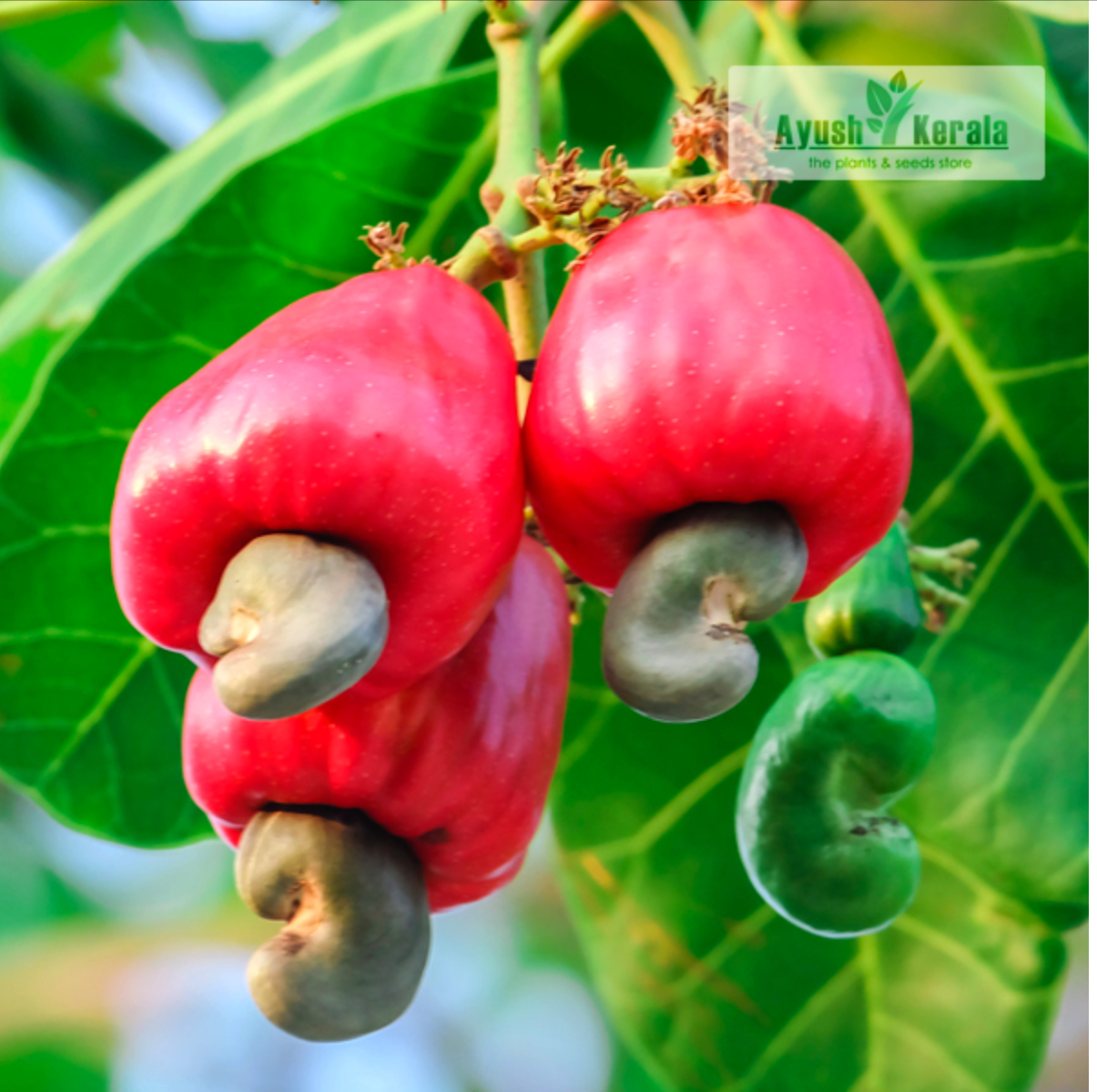
Cashew apples are what is known as touch sensitive. They have to be handled very carefully and shouldn’t be touched wile they grow on the tree.  Once picked, they will do bad very very fast, so they are rarely sold. They are supposed to have a sweet and sour taste similar to apples, and are good for making jam or fresh eating. Professional farmer’s usually use the apple as animal feed and only use the nut, because it is so sensitive.
Here is a photo of it. You can see the nut underneath the “apple”. Until properly processed, they have to be handled with care. The outer layer is toxic similar to poison ivy, so gloves are needed. The apple itself isn’t toxic like the nut.
IMG_3199.jpeg
Cashew apple, with cashew nuts attached
 
gardener
Posts: 1926
Location: N. California
920
2
hugelkultur kids cat dog fungi trees books chicken cooking medical herbs ungarbage
  • Likes 9
  • Mark post as helpful
  • send pies
    Number of slices to send:
    Optional 'thank-you' note:
  • Quote
  • Report post to moderator
Unfortunately I have not figured out a way to defeat Bermuda grass. I don't know what kind it is (native to N. California) but it's my nemesis for sure!!!
I can tell you I had my entire garden at one time covered in weed cloth with about 4" to 6" of wood chips on top.  I still battled Bermuda. I don't think it can push through the weed cloth, but any seam, edge or rip it will find it and come through.  When I redid my garden I removed the weed cloth and there was a solid mass of Bermuda roots.
I still use weed cloth. I know Permies people hate weed cloth, and I understand why. I try very hard to use as little plastic as possible. Without it gardening becomes constant miserable work. I've tried cardboard, wood chips, and a combination of both. It does help, but only for a few months.
I would love to find a good alternative to weed cloth. I think I may try to get a few cotton sheets at the thrift store and see if it works, and  how long will it last before if breaks down. It will be an interesting experiment.
Good luck, do what you need to do to grow what makes you happy.
 
Barbara Simoes
pollinator
Posts: 252
Location: Middlebury, Vermont zone 5a
77
  • Likes 8
  • Mark post as helpful
  • send pies
    Number of slices to send:
    Optional 'thank-you' note:
  • Quote
  • Report post to moderator
Jen, I don't think cotton sheets will work because light will easily penetrate.  The fabric is so thin that I think you'll be disappointed. Cardboard will keep light out and probably will last longer.  I don't know the size of your garden, but with that in the foot paths or wherever you're not growing something along with perhaps trenching along the edges might help.  I know with some weeds, I was seriously tempted to get one of those fire torches!
 
Jen Fulkerson
gardener
Posts: 1926
Location: N. California
920
2
hugelkultur kids cat dog fungi trees books chicken cooking medical herbs ungarbage
  • Likes 6
  • Mark post as helpful
  • send pies
    Number of slices to send:
    Optional 'thank-you' note:
  • Quote
  • Report post to moderator
thanks Barbara. I will keep trying to think of an alternative. My property is . 99 of an acre, so not that big compared to some, but all the gardening is done by me myself and I. I keep adding more and more, so it's a lot especially since I live in Northern California, and hand water.
I've tried cardboard, it works, but needs to be redone every year. as
 
Ulla Bisgaard
gardener
Posts: 621
Location: Grow zone 10b. Southern California,close to the Mexican border
458
4
home care duck books urban chicken food preservation cooking medical herbs solar homestead greening the desert
  • Likes 4
  • Mark post as helpful
  • send pies
    Number of slices to send:
    Optional 'thank-you' note:
  • Quote
  • Report post to moderator
Maybe a thicker fabric would work. I am thinking the type used for furniture or outer wear. It could be treated with oil or wax, so keep water from penetrating the fabric. I think that would last much longer. I have some in my fabric stash, so I think I am going to test it out in a few beds, to see if it will work.
 
Barbara Simoes
pollinator
Posts: 252
Location: Middlebury, Vermont zone 5a
77
  • Likes 8
  • Mark post as helpful
  • send pies
    Number of slices to send:
    Optional 'thank-you' note:
  • Quote
  • Report post to moderator
Jen, I, too, have just an acre, and like you, live here alone, do everything, and I keep adding gardens!  I just discovered a great cardboard supply at a local coffee roaster place.  Their cardboard has no printing or tape and they have it in large flat sheets--some I have to fold to fit into the back of my car.  This fall, I picked up a few carloads to cover some grass out back and then put the leaves I'd swept up from the lawn on top of the it.  Woodchips would also be a great cover, but at that point, I'd already used this year's load of chips.  

The area is a really tight circle--10x10?, and difficult to get in to mow.  Behind it, I have some evergreens, and behind them, I have a place where I can dump debris throughout the year.  The evergreens, being wide at the bottom, hide the raggedy mess of sticks and vine clippings!  I have 40 blueberry bushes alone, and with annual pruning, that can really add up. The mulberries also add a lot to the pile, as do all of the other fruit tree and bush prunings.  I really like having an undisturbed dump spot for wildlife to feel safe in.  Branches don't break down quickly, so sometimes the piles can get pretty high.  

I had thought of planting something in that circle area, but having access to the dump site is more crucial, and now that I have a dependable source of great cardboard, easy enough to keep up.  When I'm in town, I'll swing by and get what I need...all told, the pick up, laying down of cardboard, etc., takes less than a hour a year.  That's a good return on my time to keep that area looking tidy and it helps to help build beautiful soil.  If you have any big box stores or appliance stores, I bet they'd be thrilled to not have to pay to get rid of cardboard, and it wouldn't be covered in tape and labels like Amazon packages are.  Also, it's probably already broken down and cut to size for recycling.  I don't make special trips to get the cardboard, but when I'm driving to town for something else, I'll swing by and pick up a load as needed.  

Right now, my garage has probably 100 large burlap coffee bags waiting for spring.  I had had a huge delivery of wood chips and so I used many of them in the pathways of my vegetable garden, but I found that I couldn't walk barefoot in there because the chips are pretty rough.  I'm thinking that I will cover them with the burlap, and then maybe some hulls on top of those. I will pick up as many large bags of the hulls as I can to store until spring as well--another great thing to layer onto the cardboard or through garden paths or around plants, too.  In season, the hulls are hard to come by, but I'm hoping that through the winter, they'll have more--chicken people use them for deep litter, but at least the gardeners aren't also grabbing them!
 
I am mighty! And this is a mighty small ad:
Support permies and give beautiful gifts to gardeners: permaculture playing cards.
https://gardener-gift.com/
reply
    Bookmark Topic Watch Topic
  • New Topic