• Post Reply Bookmark Topic Watch Topic
  • New Topic
permaculture forums growies critters building homesteading energy monies kitchen purity ungarbage community wilderness fiber arts art permaculture artisans regional education skip experiences global resources cider press projects digital market permies.com pie forums private forums all forums
this forum made possible by our volunteer staff, including ...
master stewards:
  • Carla Burke
  • John F Dean
  • r ransom
  • Nancy Reading
  • Timothy Norton
  • Jay Angler
stewards:
  • paul wheaton
  • Pearl Sutton
  • Eric Hanson
master gardeners:
  • Christopher Weeks
  • M Ljin
gardeners:
  • thomas rubino
  • Megan Palmer
  • Benjamin Dinkel

Starting my Food Forest in Zone 8 (East Alabama)

 
Posts: 10
2
  • Likes 4
  • Mark post as helpful
  • send pies
    Number of slices to send:
    Optional 'thank-you' note:
  • Quote
  • Report post to moderator
Hi everyone. I'm starting my food forest this year in East Alabama. I've compiled a short list of species I think are important. I'm looking to the community to see if you have any opinions or recommendations about my list (things to add, remove, consider, etc.)

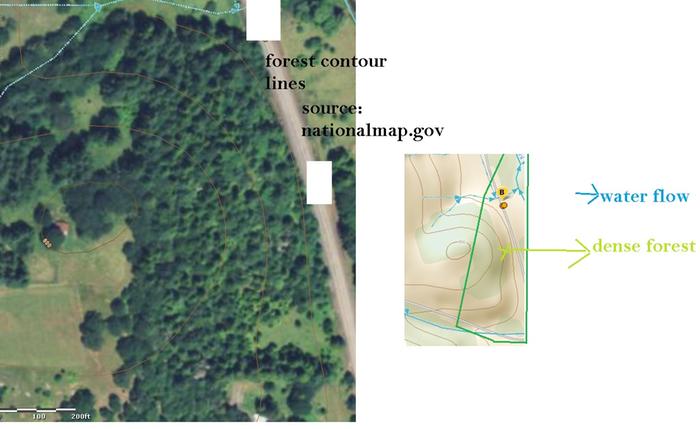
The property is on a light slope. It was previously thick forest (with an abundance of kudzu) which has been mulched down to stumps and groundcover. It has sat over winter, so I expect spring to be a boom of native plants if I don't get desired plants in the ground. The trees on the land were mostly pines.

I was thinking of avoiding non-edible species, but perhaps this is a silly idea.

Thanks for any inputs, cheers.
Screenshot-2026-01-19-at-10.00.20-AM.png
[Thumbnail for Screenshot-2026-01-19-at-10.00.20-AM.png]
 
gardener
Posts: 744
Location: Semi-nomadic, main place coastal mid-Norway, latitude 64 north
436
  • Likes 1
  • Mark post as helpful
  • send pies
    Number of slices to send:
    Optional 'thank-you' note:
  • Quote
  • Report post to moderator
Hello Dan,

That list looks like a good starting point. I'm spontaneously thinking of a few things.

-About the American chestnut. Are you planning for pure American, or American/Asian hybrids? I assume you have chestnut blight in your area, so if you're going with pure C. dentata, do you have access to resistant varieties?
-Blueberries do best with quite acidic soil, which some of the other plants on your list might not appreciate so much. Do you have different soil conditions (pH specifically) in different parts of your area?
-As far as I can see, the only nitrogen fixer on the list is the clover. It might be a good idea to add a later-succession nitrogen fixing species, preferably a tree, so that you don't stand entirely without N fixation once your trees start shading out the clover.

Good luck, keep us updated!
 
pollinator
Posts: 1789
Location: southern Illinois, USA
350
  • Likes 2
  • Mark post as helpful
  • send pies
    Number of slices to send:
    Optional 'thank-you' note:
  • Quote
  • Report post to moderator
From long experience (20 plus years) on two different z8 sites in Georgia, some loose ideas:
1. I would not bother with the currant/gooseberry or the hazelnuts.  They prefer cooler climates.
2. There are particular blueberries (rabbiteyes) that thrive in the South.  Most of the others also prefer it cooler.  Ditto on blackberries and raspberries....be sure to seek out varieties that are assured to thrive in your climate.  Don't rely on what big-box stores sell!
3. Same with apples, pears, and other temperate fruits.  Only a relatively few varieties will thrive in the south, and they become fewer the further south you go.
4. If you are far enough south or have (or could create) some warmer niches, or are game to offer some protection of some kind on the very coldest snaps, you could attempt some marginal subtropicals.  Jelly palm, feijoa, loquat, the very hardiest citrus come first to mind.  Figs should definitely be in there!
 
dan brier
Posts: 10
2
  • Mark post as helpful
  • send pies
    Number of slices to send:
    Optional 'thank-you' note:
  • Quote
  • Report post to moderator
Great points.

1) American Chestnut - I have no idea, just putting together a list, but I will keep an eye out for disease resistance because of your feedback.
2) The soil in my area is notorious for being acidic, so I'm not very worried about that. However, I am aware that many plants change the soil, so I will try to keep the acid lovers together and isolated.
3) Good callout on lack of nitrogen fixing. I will add peanut and sugar snap peas to my list. However, there is an abundance of invasive Kudzu in the area, so I suspect nitrogen in the soil is already at a decent level (at least starting out). I also have a cover crop mix including field peas in some of my ditch/swale beds.

Thanks for your inputs!
 
dan brier
Posts: 10
2
  • Likes 1
  • Mark post as helpful
  • send pies
    Number of slices to send:
    Optional 'thank-you' note:
  • Quote
  • Report post to moderator
Thanks for your inputs Alder.

1) noted on Gooseberry/currants. I'll probably attempt much less of them knowing they are likely to fail.
2) Great note, added a rabbiteye note on my list. I'll also try to target drought/heat resistant species when possible, since I prefer to dry farm.
3) Noted on apples, will look for heat tolerant.
4) Will come back to subtropical later, I want to get the important stuff in the ground this year (I also have priorities with construction, solar, rain harvesting, outhouse, etc), so I expect I'll have many years to try the warmer and cooler loving plants!
 
gardener
Posts: 654
Location: Grow zone 10b. Southern California,close to the Mexican border
496
4
home care duck books urban chicken food preservation cooking medical herbs solar homestead greening the desert
  • Likes 3
  • Mark post as helpful
  • send pies
    Number of slices to send:
    Optional 'thank-you' note:
  • Quote
  • Report post to moderator
I have spend the last 10 years building a thriving food forest in Southern California. Though we are in a different grow  and heat zone than you (10b), I still think you might find some of what I have learned useful.
1. Start with the soil. While starting with the plants that take the longest to grow, it’s better to focus on your soil first. This does depend on how good/bad it is. We have added a lot of compost and mulch to ours.
2. When planning what to grow keep these things in mind: will you and your family actually eat it?, will it grow here?  Will you have food all year round, as in what can be stored in a root cellar or grown fresh during winter?  Will what I grow give our family the nutrients we need. Do we need a greenhouse or tunnel to extend the season?
3. I grow raspberries, blackberries and many other berries in micro climates around our food forest. Do your research. There are plenty that will grow in zone 8.
So, start with your soil, then add large and small trees and slow growing shrubs. Once you get to berries, mark out zones in your garden where they will be protected. Pay attention to when each berry/fruit will be ready for harvest, and pick varieties that stretch out over many months. One thing you don’t want, is for all of your fruits and vegetables to have the same harvest window. It makes preserving the crops a nightmare, and you will end up buying produce the rest of the year.
Look for dual purpose crops. That is crops that will give you two different crops. For example raspberries and blackberries are grow for both their berries and for the leaves. The leaves taste great and raspberry leaves are good for period cramps. Rooted parsley is a vegetable where the top is a herb and the root a vegetable. With peach trees, you can both harvest the fruits and the sap.
Try and make a circle calendar and write in when you can harvest things. It’s a great visual aid, when making crop decisions.
Good luck with your food forest. Here is a link to my blog Building a food forest on the edge of the desert

 
Posts: 56
Location: Piedmont, North Carolina - 7b/8a
24
  • Likes 1
  • Mark post as helpful
  • send pies
    Number of slices to send:
    Optional 'thank-you' note:
  • Quote
  • Report post to moderator
Hi Dan,
Of course, you should grow what you want to use and/or eat, but here are some of my thoughts:

Everyone in the southeast should have figs.  Trouble free and productive.

As noted, choose your apples carefully.  It's not just the heat, it's the fungal diseases, (cedar - apple rust, in particular, for me).  I hear good things about the newer varieties Enterprise and Liberty, as far as disease resistance, but I don't have first hand experience.

Being in the same family as apples (rosaceae), serviceberries are susceptible to some of the same fungal diseases.  I also don't care much for them, so while I have a couple, I give a lot more space to blueberries which are less troublesome and much more tasty.

A few other things to consider that could/should do well:
Teas, camellia sinensis for the caffeine and camellia oleifera for the oil.
Olives (olea europaea)
Prickly pear cactus

And in the likely event the kudzu returns, remember it is also an edible and useful plant.
https://www.eattheweeds.com/kudzu-pueraria-montana-var-lobata-fried-2/

 
These are the worst of times and these are the best of times. And this is the best tiny ad:
Learn Permaculture through a little hard work
https://wheaton-labs.com/bootcamp
reply
    Bookmark Topic Watch Topic
  • New Topic