
• Post Reply Bookmark Topic Watch Topic
  • New Topic
permaculture forums growies critters building homesteading energy monies kitchen purity ungarbage community wilderness fiber arts art permaculture artisans regional education skip experiences global resources cider press projects digital market permies.com pie forums private forums all forums
this forum made possible by our volunteer staff, including ...
master stewards:
  • Carla Burke
  • Nancy Reading
  • paul wheaton
  • John F Dean
  • r ransom
  • Jay Angler
stewards:
  • Timothy Norton
  • Tereza Okava
  • Pearl Sutton
master gardeners:
  • Christopher Weeks
  • M Ljin
gardeners:
  • Jeremy VanGelder
  • Megan Palmer
  • Thekla McDaniels
  • Likes 2
  • Mark post as helpful
  • send pies
    Number of slices to send:
    Optional 'thank-you' note:
  • Quote
  • Report post to moderator
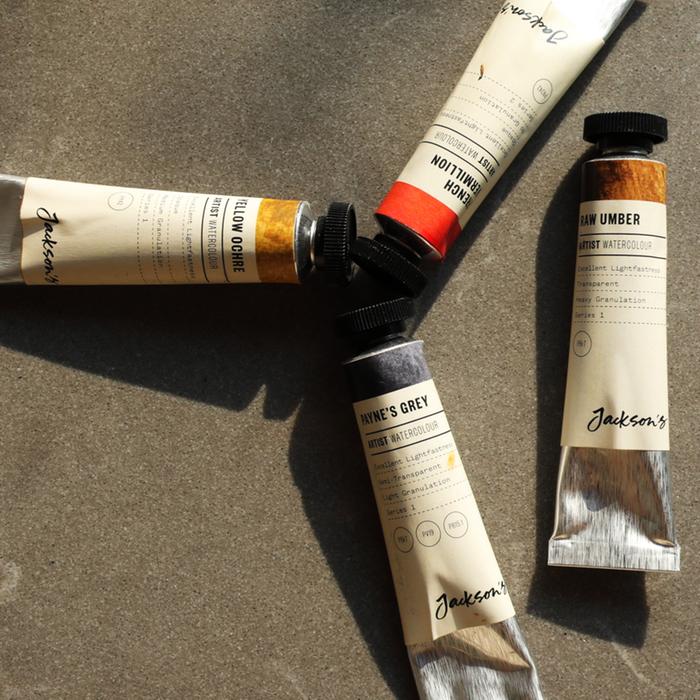
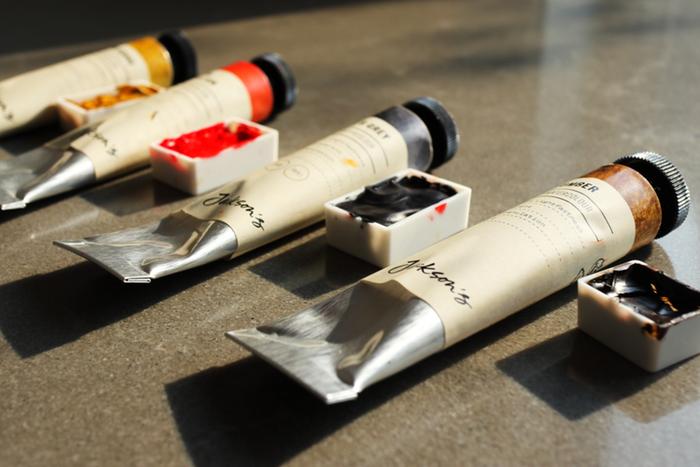
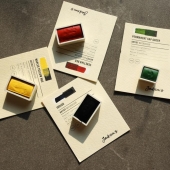
Jackson's watercolour paints comes in both tubes and pans.  They are quite different, so we have a thread for each.  This thread is about the Jackson's Watercolours that come in TUBES

check out the pan review page here

Made to the exact same standards and formulas as the best professional artist watercolours available today, Jackson's Artist Watercolours are as good as any leading brand watercolour but at a fraction of the price.

Large chunks of the finest quality Sudanese Kordofan gum arabic are very slowly dissolved in cold water to preserve the gum's maximum binding strength. Honey is then added to give lustre and vivacity to the colours. Carefully selected for their purity and lightfast qualities, the finest pigments are then finely ground and soaked in purified water to allow the colours to develop their maximum splendour. The two mixtures are then blended together and slowly ground into a fine paste. The process is repeated until the pigment particles are dispersed evenly and finely to allow a flawless unity of the watercolour wash. Stringent quality controls follow, resulting in a selection of professional watercolours that are luminous, intense and a pleasure to use.

Jackson's Artist Watercolour Paint does not contain any ox gall.


COMMENTS:
 
r ransom
steward & author
Posts: 47938
Location: Left Coast Canada
19861
10
art trees books chicken cooking fiber arts
  • Likes 2
  • Mark post as helpful
  • send pies
    Number of slices to send:
    Optional 'thank-you' note:
  • Quote
  • Report post to moderator
I give this paint 7 out of 10 acorns

Jackman's Art has their own line of watercolours that they sell in tubes and pans.  I got a few of both and the painting expierence was so massively different, that I'm reviewing each separately.  


This review is for Jackson's Watercolour TUBES.


You know, I don't know what rating to give these.  Some of the paints are absolute keepers.  I want to use it for every painting I ever do from this moment in my life.  And also, kind of the opposite.  

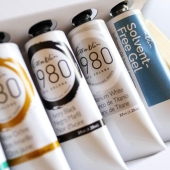
These Jackson's watercolours come in tubes, and I got the largest ones because it was cheaper per ml.  Paint tubes like this are my favourate and very permaculture friendly.  Watercolour paint lasts a LONG time, so even if this was my everyday paint, it would probably last 5 to 20 years.    When it is finished, we can usually drop the empty tube off at the same recycling place we take spent lightbulbs and batteries.  Some art stores also take this kind of waste like empty paint tubes.

The tubes seem strong and the caps lovely and large.  Very arthritis friendly.

Price - that is where these paints shine.  These are about 1/3 of the price of buying student grade paint locally and 1/5th the price of professional grade watercolour paints from any of the big brands.  Maybe I will pay $13 for a half pan of cotman student grade paint locally, These Jackson's paints are about $4 for their professional watercolour line.  That's an incredible savings.

When I opened the packets, the Jackson's watercolour paints hit me with the smell of floral honey - like unfiltered clover honey.  

Well, mostly.  
Um this is where things get problematic.  

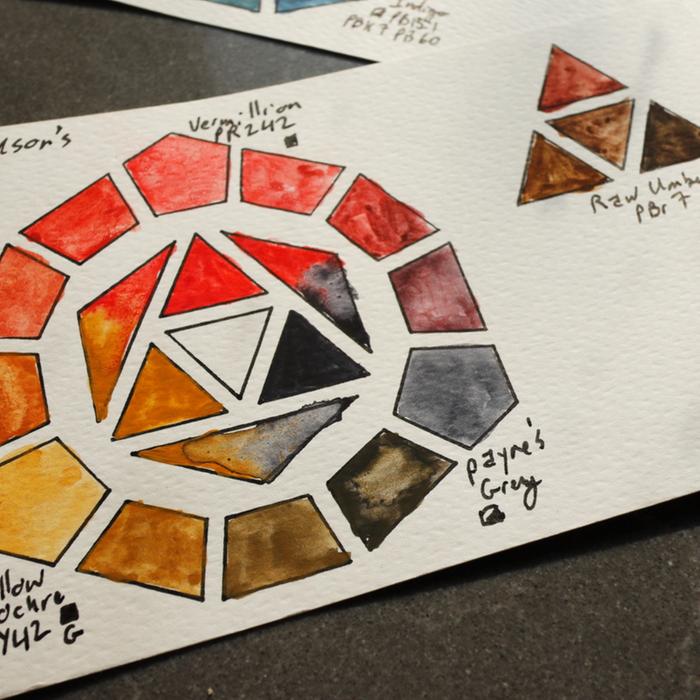
Let's do the swatching first.

SWATCHING TIME!

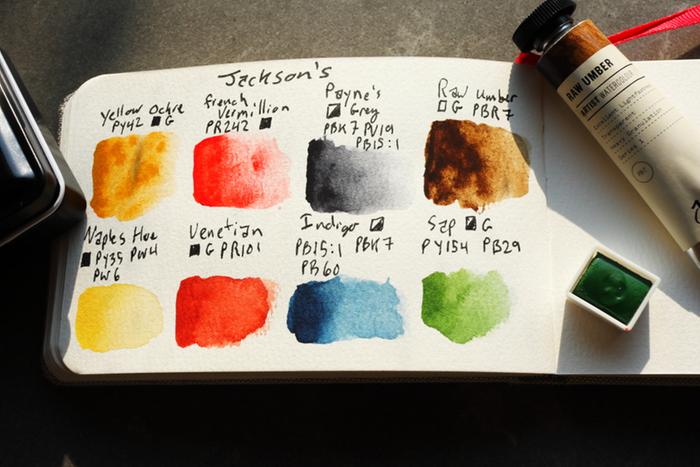
For my primary trio I choose a full pan each of:
Yellow Ochre PY42
French Vermillion PR242
Payne's Grey PB15:1,PBk7,PV19


It's sort of a watercolour take on a Zorn (so named because it's fun to say and easy to spell, not because anyone actually believes the guy only used only four paints ever).  The payne's grey looks a bit darker/blacker than most, so I thought it might fit well here.  I've been really enjoying painting chickens with variations of Zorn lately, and it's become one of my main ways to test a new paint brand.

And because my trio's are almost always four colours these days, I also pour a half pan of
Raw Umber PBr7

This is a paint I'm very excited about as it looks like it will granulate nicely and could make a good mother colour for using up student grade paints that are too vibrant for my tastes.  

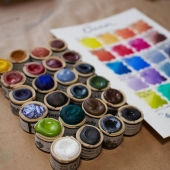
Since I'm a fan of painting from pans, I poured these into pans and left them for about a day to dry or whatever they want to do.  


I wasn't sure what they would do because the listing brags about it being honey based and made in a factory that also makes paints famous for not drying in the pans.  I've got an M Grahm paint that stays liquid for pretty much ever.  Love it, but what a mess.  

These seemed to stiffen up nicely.  Not dry.  The yellow ochre and raw umber both look to be cracking, but even after a week, I can still get smothered in paint if I stick my thumb accidentily in a "dry" pan of this Jackson's watercolour tube paint.


First impressions:

This paint is not fond of cheap watercolour paper (spoilers, it likes the mid grade stuff just fine)

All of the paints rewet easily and there is no need to spray the paint before using.  Mixing was easy-ish. None of these colours are bully or shy.  

The "travel" or eagerness for the paint to move on a wet puddle was moderate.  Probably on par with Winsor and Newton.  More than Holbein, less than Rembrandt.  

The four colours were pretty similar in how they behaved and it felt like a decent staple, professional level paint.  At about 1/3rd the price of student level paint.  


Okay, I can't procrastinate any longer.  

THE STINK

I mentioned before, the mild smell of flowers and clover honey.  This was three of the four tubes of paint.  

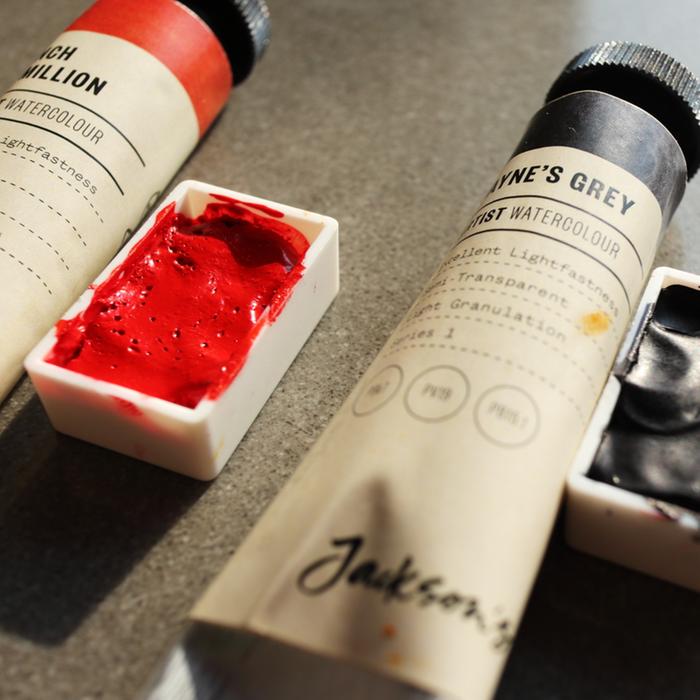
French Vermillion PR242 on the other hand, was not like that.  Not even slightly.  Unlike the others, this tube of vermillion paint had a strong smell.  And I don't even know how to describe it, but the closest I can get to it is decayed tooth.  It is vile.  

My first instinct is, maybe it will go away as the paint dries in the pan.  And it did a little bit.  But it comes back almost as strong when I activate the paint with water, to, um, you know, paint with it.  

I got a few people in the house to smell it.  Some agree with me, some found it mildly unpleasant.  So I'm guessing my reaction is on the strong side.  

What do we do when a something goes wrong with a paint or art supply?  The answer, class, is to contact the seller or maker with a kind word and questions about the product issue.  I talked about the expierence of contacting Jackson's help here, the end result was, this is a normal smell for this pigment.

Hello,

I have heard back from the product team regarding this. They said the following -

I would consider that this scent is completely normal for this shade. Synthetic pigments do have stronger smells which can be considered harsh, especially when compared to more natural pigments and it is not a sign that the paint is faulty.

Please let me know if you have any questions or if there's anything else I can help you with today.
That makes sense... for the most part.  I've noticed some people, like me, can't stand the smell of PBk11 in a highly pigmented paint - iron oxide black as it smells like rotten potato.  Other people never notice this  smell.  I suspect genetics are involved.  

But I also wonder if the AI bot was able to pass on my concerns about the way the paint bubbled in the pan as it dries.  


I've never seen this before and it made me wonder about the binder itself going off.  

Whatever the cause, I find I cannot use this paint due to the smell.  That's a shame because it's so pretty!  

And it's also going to make the next question a bit more difficult to answer:

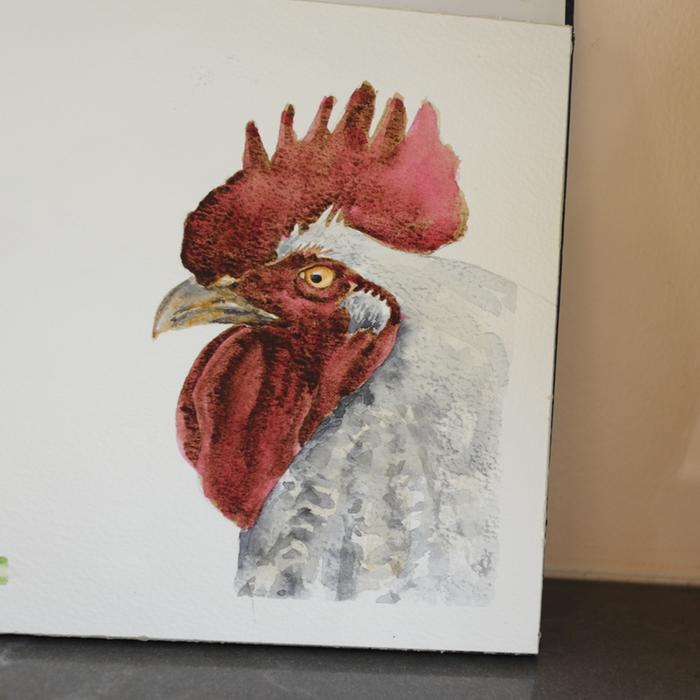
BUT CAN IT PAINT A CHICKEN?

More importantly, can it paint a chicken without red?

The red still smells to me and is stronger when wet, so I'm going to avoid that colour and see what i can do with what is left?  Painting a chicken without red is new to me.  But I am curious how raw umber behaves in watercolours as it's a workhorse colour for my oil painting.  

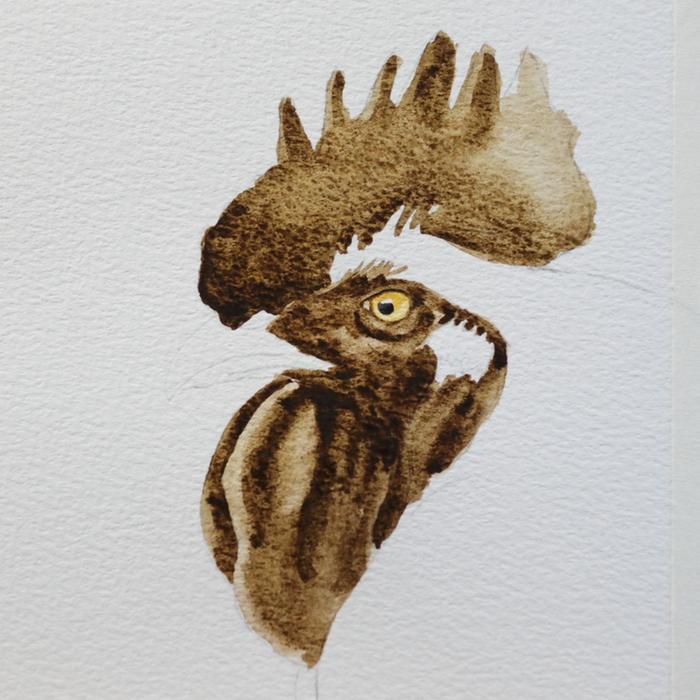
Raw umber is supposed to granulate, so let's give it a wet wash.  Prewet the paper, dab some more, wet in wet, tilting paper when needed, until it does my bidding and a chicken emerges.  


Wow!

That's the first wash and it dried so lovely and dark!  Not really a normal chicken colour, but, in theory, values are everything!

Oh, that's right, there are other colours.  

But for a first wash, I'm pleased.  Don't think there's much to adjust there.  

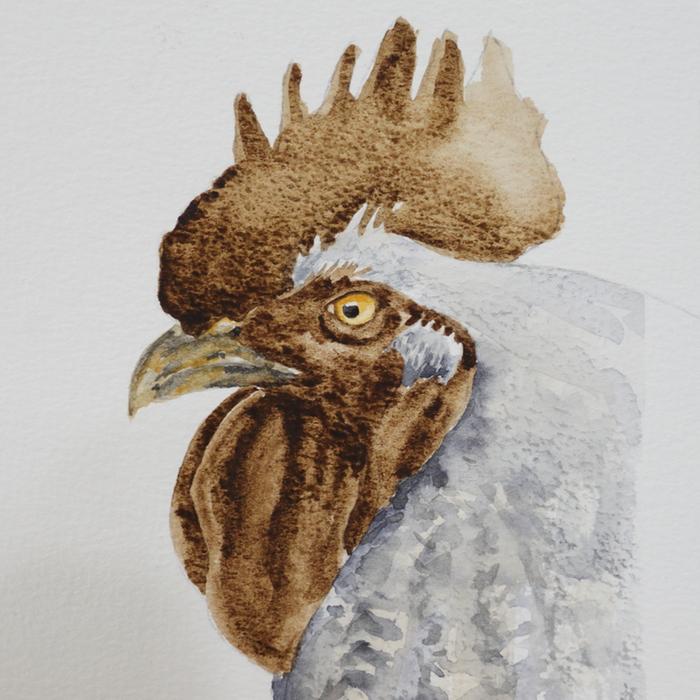
A tiny touch of yellow ochre on it's own for the eye, and I might have just found my new favourite yellow ochre.   I definitely need to play with this some more!  But alas, aside from a light wash of yellow in the beak, this isn't the most lemon-coloured chicken.

This is getting a bit weird, using colours without mixing.  But, that paynes grey looks just about right for the dark feathers... and some more painting later.


The chicken definitely needs some medical attention, but it is chicken shape.  And doesn't that granulation just work for the comb and wattles?  Imagine a red glaze over that... hmmm...

I enjoyed working with these paints.  They are pretty standard big brand professional paint.  I would put it on par with W&N or Rembrandt.  Not quite as much flow as M Graham and no where near the personality as Beam Paints.

When combined with the Jackson's watercolour pan paints I also got at the same time, this will make a nice little pallet... hopefully... still not sure if I can bring myself to use the vermillion red with the smell, but all the other paints seem fine.  So it could simply be a personality of that pigment.  


Jackson's Watercolour's in tubes would be good for students and professional painters alike and is permaculture friendly if a local paint isn't available.  


Your mind is under my control .... your will is now mine .... read this tiny ad
change the world (for the better) with hands on permaculture
https://wheaton-labs.com/bootcamp
reply
    Bookmark Topic Watch Topic
  • New Topic