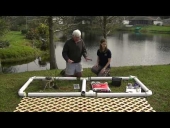
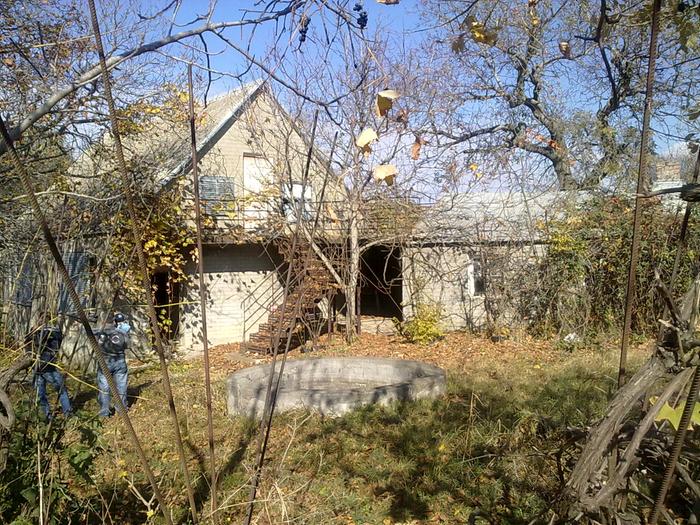
Here in Australia we use barley straw in a specific manner.
Here is a company that commercialised the idea.
The Dam doctor 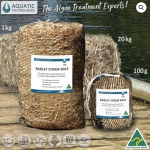
Some other information from that site;
"Using bales to clean dams primarily refers to using barley straw as a natural, preventative water conditioner.
While regular hay bales are occasionally placed in runoff inflows to trap sediment and introduce nitrifying bacteria, barley straw bales are specifically deployed directly in the water to combat algae and improve clarity.
However, experts note that barley straw acts strictly as an algaestat (algae preventer) rather than an algaecide (algae killer), meaning it must be applied before an algal bloom establishes itself"
How Barley Straw Works
When barley straw is submerged in a dam, it undergoes a slow bacterial decomposition process. As it rots in the presence of oxygen, it releases humic acids.
These acids react with sunlight and dissolved oxygen to create low levels of hydrogen peroxide, which inhibits the growth and reproduction of new algae cells without harming fish, livestock, or aquatic plants.
Step-by-Step Application Guide
To effectively deploy barley straw bales in a dam, follow these standard guidelines:Calculate the Dosage: Measure the surface area of your dam (Length × Width in meters).
A standard application rate is roughly 100 grams of straw per 2 square meters of surface area. For large dams or lakes, this equates to roughly 100 to 300 pounds (about 4 to 5 large bales) per acre.
Keep It Floating: Do not sink the bales to the bottom.
They must be packed loosely into mesh bags with a floatation device so they sit near the surface where oxygen and sunlight are highest.
Position in Moving Water: Anchor the floating bales near the dam's inflow, water aerators, or windward sides. Adequate water circulation is essential to distribute the active compounds.
Maintenance & Rotation:
Gently shake or wash the mesh bags every few weeks to clear away sediment buildup. Bales typically take 2 to 8 weeks to activate (depending on whether water temperature is above 20°C or below 10°C) and will last about 4 to 6 months.
Crucial Removal Window:
You must remove old bales before they completely rot. If left to decay entirely in the dam, they turn into organic sludge, releasing nitrates and phosphates that actively fertilize the next massive algae bloom.
Start your next batch of straw 1 month before pulling out the old one to avoid a gap in coverage.






 15
15