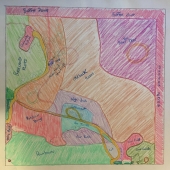
Homestead Apprenticeship — Live, Work & Learn on 20 Acres, Upper Peninsula, MI – Work-Trade Tenancy, Not a Standard Rental
Move-In Target: This Fall/Winter
More photos to be added here soon.
Want to live on a homestead without buying one — and learn from people who've been doing it for decades? Cooperate with us on 20 acres in Michigan's Upper Peninsula. This is a work-trade rental, not a standard rental — the land, the mentorship, and the labor are the point; the cabin is where you sleep while you learn. A few miles from unspoiled beaches, forest trails, and a small historic village, about 20 miles from a thriving tri-city area. $700/mo (or $500/mo + $200/mo work-trade) · 12-month lease · Charming cabin + shared use of 20 acres · Mentorship from experienced homesteaders included.
The cabin will be ready to move into once a few renovations are complete — we'll confirm the date once we're closer. We're posting early because we'd love for you to see the land while it's still open; once the snow comes, you lose the fields, the soil, and the layout. If your timeline is flexible, we're open to working it out.
Are you dreaming of a homestead but not quite ready to buy? What if you could live on one — start with a year, and see where it goes?
We're a couple of seasoned homesteaders who've been living this life for decades. We have the land, the tools, the knowledge, and the patience to pass it on. What we don't have is the energy to do it all alone anymore. We're looking for someone (a solo person, a couple, a small family, or two good friends) who wants to learn by doing — not just read about it.
We're looking for the right fit – a neighbor, not just a tenant. Someone who might be here a year, or five, or longer. Someone we'd want to share a fence line with for a long time. We mostly keep to ourselves and like our privacy, and we respect yours. We're hoping to build something that works for both of us long-term — low-maintenance, mutually respectful, with a clear structure so we avoid stepping on each other's toes.
The Cabin
A rustic, charming, surprisingly spacious cabin (~400 sq ft) with a high ceiling that makes the whole place feel open and airy. When guests enter, they're often surprised by how big it feels inside. Guests who've stayed over have very frequently asked to extend their stay — we just couldn't always make room.
Studio living/sleeping area (large windows with curtains, air conditioner, ceiling fan)
Full kitchen (refrigerator, stove, sink, cupboards & shelves)
Entryway/closet
Bathroom with shower, sink, water heater, indoor composting toilet
Hot & cold running water in kitchen & bathroom
Propane for heat and cooking, good insulation
Note: There is no flush toilet. The only toilet in the cabin is the composting unit. If that's a deal-breaker, this wouldn't be the right place for you. If you're open to it, we'll walk you through it — it's far simpler than people expect and former guests have expressed surprise at the ease and comfort of the system.
The Land & What You'll Get
You won't just be renting a cabin. You'll be living on a 20-acre farm with:
The Maple Grove.
A standing sugar bush with a wood-fired evaporator set-up. We've been pulling 6–8 gallons of finished syrup a year on our own just for fun. With your help — more taps, more hands, more tending of the fire — that number could grow exponentially. We're often able to make enough to last a full year for everyone on the homestead and some left over to sell. We've been considering expanding our practices; if we can make extra together, we can share the proceeds. This is one of our favorite activities of the year, and we'd like it to be yours too.
Fruit & Berries Already in Production.
Apple, pear, and peach trees already in production. Highbush blueberries. Heritage raspberries. And wild berries in abundance through the woods. There's also established rhubarb, some asparagus, and herbs.
Garden Soil Ready for You.
The existing cabin-garden beds are hugelkultur-hybrids and have been improved over years of composting and are currently 2 years fallow — well-rested, fed soil waiting for your first planting. You'll want to rebuild the bed frames (a fun project, and we can help), but the soil is ready, with additional amendments ready and waiting.
Seed Starting.
An indoor setup with grow lights, seed trays, and heat mats is available for spring seedlings, including all the seeds necessary for a robust garden to feed our families and still have surplus.
Preservation Setup.
Both water-bath and pressure canners. Multiple dehydrators. Smoker. We're experienced in canning, dehydrating, curing, and smoking, and we'll teach you all of it.
A High Tunnel (Possibility).
Our current high tunnel is being dismantled. There's a possibility of securing an NCRS grant to offset the cost of a new one through the USDA Natural Resources Conservation Service, which would extend your growing season significantly. If you're interested in doing this, we can explore that possibility with you and help you navigate the application process, etc.
The Chicken/Duck Coop.
Available for use by arrangement – use our coop for your flock, share the eggs.
Dairy (If You Want It). We've kept milk cows and dairy goats in the past on previous homesteads and are open to cooperating with you if you'd like to try to develop small-scale dairy. We'll help with fencing, feeding, and the learning curve.
Access to Our Tractor, Farm Equipment, and Tools.
A wide assortment of hand tools, saws, and farm equipment on site for farm use.
A Builder in the Family.
One of us is an engineer who has built multiple large houses. If you want to add a second bedroom to the cabin for your use while you're here, build a root cellar, frame a shed, or tackle any structural project, you have a patient, knowledgeable person right next door who's done it before. This is not a "we'll point you to a YouTube video" situation.
Mentorship From Us.
Ask us anything: soil prep, canning, fencing, livestock, firewood, building, foraging, dairy, curing, you name it. We have experience with dairy animals, cattle, goats, sheep, turkeys, pigs, chickens, ducks, etc., and bred working shepherd collies and livestock guardian dogs over the years. (Our advice is informal and comes with no guarantee of outcomes — this is a learning partnership, not a management service, of course.)
Joint Projects.
We're open to working together on fencing, any shared garden spaces, a roadside farm stand, firewood processing, permanent structures, livestock care, the maple operation, or whatever you're passionate about. This is a team, not just a rental.
Internet & Cell Phones. High-speed internet is available in our area for you to buy, or we can share our WIFI password if our service can handle the traffic. We use a cheaper service that's fast enough and reliable most of the time, though storms can occasionally slow it down or knock it out given our remote location. We've shared our password with guests in the past and it worked fine for all of us; we're happy to continue doing that with you as long as it can handle the needs for all of us. Cell service is strong — a Verizon tower is close by and it's never been a problem.
The Road.
Reliably plowed by the township in winter, and we're just off a very well-maintained main road. We've found that no 4WD vehicle has been necessary for us. You're responsible for your own driveway snow removal, but you're welcome to use our snowblower.
A Year Here
Life on a homestead has so much variety that it's rarely boring. The cycles keep it interesting.
Spring is sugaring season — the scent of woodsmoke and maple syrup lingering in the air. Soon after the syrup is done, it's time to start seeds inside, watching them sprout gives the promise of good things to come. When the ground is warm enough to work, we get the seedlings in and mulch them well so very little weeding or watering will be necessary through the summer.
Summer means eating fresh from the garden. Because we mulched well in spring, we have more time to spend at the beach — it's just about 3 miles away.
Autumn is when the houses fill up with the harvest and we turn our attention to food preservation to feed us through the winter. The canners keep the house warm, and cozy meals make the whole place smell incredible.
Winter is the season of extra rest. The snow starts to fall, and we know our hibernation has begun. It's wonderful to sit inside where it's warm with a cup of tea and a notebook to plan next year's gardens, to rest, to catch up on reading. The farm's few winter chores leave plenty of time for rest and recreation — and the dark skies up here make for incredible aurora viewing on clear nights. Nearby lantern-lit hikes after dark are a memorable experience.
A note on the climate: We live about a mile, as the crow flies, from the shore of Lake Superior, above the 47th parallel, a latitude farther north than most Canadians live. Winter here lasts five months or more, the snow gets deep and the cold is real. If you can't embrace it, this probably isn't your place. But if you dress for it, -25°F feels manageable — I've been colder in windy West Texas at 40° with the wrong layers. As the Scandinavian proverb says: "There's no bad weather, only bad clothing."
The people who thrive out here tend to share a quality our Finns call sisu — though the word has no direct translation into English, the best definition I've heard is this: where grit and determination end, sisu begins. It's the decision to keep going when continuing is no longer reasonable, without spectacle. The Upper Peninsula is like Alaska without the grizzlies, but we have everything else: moose, wolves, mountain lions, coyotes, bald eagles, owls. The dark, quiet, snow-covered months aren't a bug to be endured. They're part of what makes this place special.
The Setting
3 miles to Big Bay, a small historic village with a tavern, historic inn, working lighthouse, motels, gas station, convenience store, restaurants, propane refill, excellent campground with local day use, beaches, boat launches, marina, a fish cleaning station, etc.
~20 miles to Marquette and its tri-city area that has everything we need; shopping, restaurants, public beaches, bike paths, public transportation, hospitals, tourist attractions, popular gastro-pubs, ski hill, ski jump, trail networks for mountain biking, hiking, ATV, snowmobiles, ice-biking, cross-country skiing, snowshoeing, etc.
Dark skies. No light pollution. Great stargazing. Local clear views of the aurora on crisp winter nights.
Trail networks – the farm is less than a quarter-mile from an entrance to ATV and snowmobile trail network, easily accessible from the farm, and not much farther for cross-country skiing and snowshoeing; there is a private trail on the farm that could be expanded into a forest maze for private hiking, biking, etc.
Wildlife: deer and turkey are plentiful, owls are a regular sound, and when we're lucky, we find moose tracks toward the back of the land
A growing homesteading community in the county — you won't be the only homesteaders out here
How Rent Works
We've structured the work-trade the way a family farm naturally runs — everyone pitches in, everyone benefits, and the work is part of the life rather than a side obligation. The base rent is $700/month. In exchange for participating in shared homestead projects (sugaring, fencing, canning, firewood, building, livestock care, etc.), you earn a credit of up to $200/month, bringing your net rent to $500/month for a fully participating tenant.
The work-trade is not optional — it's the structure of this rental. You're a working participant on the land, not just a tenant. Expect roughly 5–10 hours/week of shared farm work in the growing season, tapering in winter, with occasional intensive stretches (sugaring, harvest). The specific tasks, hours, and credit structure are in a written agreement you'll sign at move-in, structured to benefit us both — because we want this to be something we're all happy to keep doing.
If you're not able to participate in a given month (illness, weather, etc.), your rent for that month is simply the full $700. No penalty, no hard feelings — but the expectation is that you're here to work the land alongside us.
We travel a bit, usually in the winter. While we're gone, you'll be the one on the land tending the animals, checking on systems, and keeping things running. That's part of what it means to live here alongside us — it's a tenancy obligation, not a work-trade task, and it doesn't count toward your $200 credit. In return, we'd love to help with your garden and livestock when you travel, as we're able.
What's NOT Included (Be Clear With Yourself)
You're responsible for your own electricity costs, propane, and any additional utilities. The water is from a well, so there's no water bill for normal household use. Electricity for prior guests ran around $70 - $100/mo including air conditioning in summer and space heaters in winter before the propane heater was added. We'd expect propane to be around $100 mo in the winter, next to nothing in the summer. The cabin is well-insulated.
You'll need to build your own fencing for any personal garden plots, animal pens, or areas you want to define.
No synthetic inputs. We're a synthetic-chemical free farm so no synthetic pesticides, herbicides, fungicides, or fertilizers anywhere on the property. Approved organic, composted, or naturally derived amendments only. We try to work with natural processes so none of this is necessary. We've never had to use any of this here, not even the “organic” stuff, other than a few strategically-placed mosquito dunks this year.
No toxic pest control. No rodenticides, anticoagulant baits, or chemical poisons. Humane methods only (trapping, exclusion, repellents). For example, quick-kill mousetraps would be approved while poison would not. An owl or free-ranging chicken will eat a mouse if it can catch it, so we can't have poisoned mice around – it would kill the bird that eats it.
You're responsible for your own pests and wildlife. We live in the wilds of the Upper Peninsula and wildlife is abundant. If mice get in your cabin, raccoons hit your coop, or deer eat your garden — that's on you. We'll advise, but we won't manage it for you. We haven't had an unusual amount of wildlife issues, but be advised that, for example, an occasional mouse in the house does happen and needs to be dealt with swiftly before it escalates. We've never seen a raccoon, skunk, opossum, invasive stink bug, roach, etc., anywhere on the property, and we hope it stays that way. We lost one free-range chicken to a coyote and a couple others to an unknown predator, and we had a flying squirrel get into the house which exited on its own, probably because of the screaming. (Not going to name names.)
Animals: Current housing supports roomy accommodations for 15 free-ranging chickens or ducks. Additional animals (goats, sheep, pigs, etc.) can be added once you've built approved fencing and secure shelter for them. You'd be responsible for materials and labor; we'll help where we can, but that's not the expectation. Our contribution is advice, land access, and use of shared tools while you're here. All animals must be fenced, contained, and free of nuisance (odor, flies, noise, etc.) at our main house.
Pets: While we love cats, one of us is VERY allergic to them, not to mention cats' impact upon the songbird population we're protecting here, and cats' tendency to use freshly-dug garden soil as a litter box (ask me how I know), so unfortunately no cats can be accommodated. A gentle dog who interacts well with humans and livestock might be considered — talk to us.
No boats, campers, RVs, or non-working vehicles on the property (two car parking spots are provided).
No smoking anywhere on the property. No intoxication by any substance on the property.
No federally or state-regulated crops (cannabis, hemp, etc.). We do everything by the book — if it's restricted at any level, we don't grow it here.
No permanent structures without our prior written approval — and anything approved and built becomes our property upon move-out unless otherwise agreed in writing. For example, if you want to end your lease and take your movable chicken tractor you built, of course that goes with you, but if you built an extra bedroom onto the cabin for your kiddo, well, that has to stay.
Any livestock you keep must be fenced and managed so they don't damage our gardens, buildings, or property. You're responsible for all fencing and structures for your animals.
We retain exclusive use of the main house, its sheds, and backyard.
The Terms
Lease
12-month fixed term
Renewal
We intend to renew for the right person. If the first year is a good fit for all of us, we'd like to keep it going.
Probationary period
First 60 days: either party may leave with 14 days' written notice, no cause needed
Break clause
After 6 months: either party may end agreement with 30 days' written notice, no cause needed
Compatibility clause
Either party may terminate with 60 days' notice (once per lease) if the working relationship becomes untenable
Base Rent
$700/month
Work-Trade Credit
Up to $200/month for approved labor (see Work-Trade Agreement)
Net Rent (full participation)
$500/month
Security Deposit
$500.00
Application
Required — references and a credit check are part of the process
Occupancy
Comfortable for a single person, a couple, small family, or two good friends. A toddler or young child is fine; two or more children would likely feel cramped unless a second bedroom is added (a possibility, with approval — and we can help you build it).
Who This Is For
We envision this for someone who's been saving up and daydreaming about a small homestead with a chicken coop and a garden they actually tend. It's for the homeschooling family that wants their kids to learn where food comes from. It's for the couple who wants to build a life on the land but needs a year or more to figure out what that looks like before making a $200K purchase. It's for the person who wants to try dairy goats or sheep, or who wants to build a root cellar with someone who's actually built houses standing next to them.
This is your apprenticeship. Your test drive. Your first chapter.
Note for homeschooling families: Michigan is a low-regulation homeschool state — no notification, no testing, no approval required. The cabin works best for a family with a toddler or one school-age child. Two older kids would be tight unless a second bedroom is added (a possibility — we can help build it). The 20 acres, the garden, the animals, the maple grove, and the four seasons are a living curriculum that no textbook can replace. We're happy to connect you with available local homeschool groups and resources in the area.
Who This Is NOT For
Anyone who wants a turnkey, no-effort living situation
Anyone looking for a long-term cheap housing solution without interest in the land
Anyone who isn't comfortable with a composting toilet
Anyone who uses synthetic chemicals in their farming
Anyone who expects us to manage their garden, livestock, or pest problems for them
Anyone who needs a guarantee that wildlife won't touch their crops or animals
Anyone who wants to build structures or run an operation without checking in first
Anyone who wants to pay rent and not work the land
Viewing & Timeline
We're scheduling viewings now for mid-October through early November. Once the snow covers the ground, you can't see the fields, the soil, or the layout the same way. If you want to plan fencing, garden beds, or a coop for spring, you need to see the land while it's still open. Viewings are limited — schedule early.
To apply or schedule a viewing: Send us a direct message.
Please include a brief note about:
Who you are (individual, couple, family, friends)
What draws you to homesteading
What skills you already have and what you most want to learn
Your ideal move-in timeframe
Are you comfortable managing your own pests and wildlife, and the day-to-day management of your own homesteading projects?
What's your ideal length of stay?
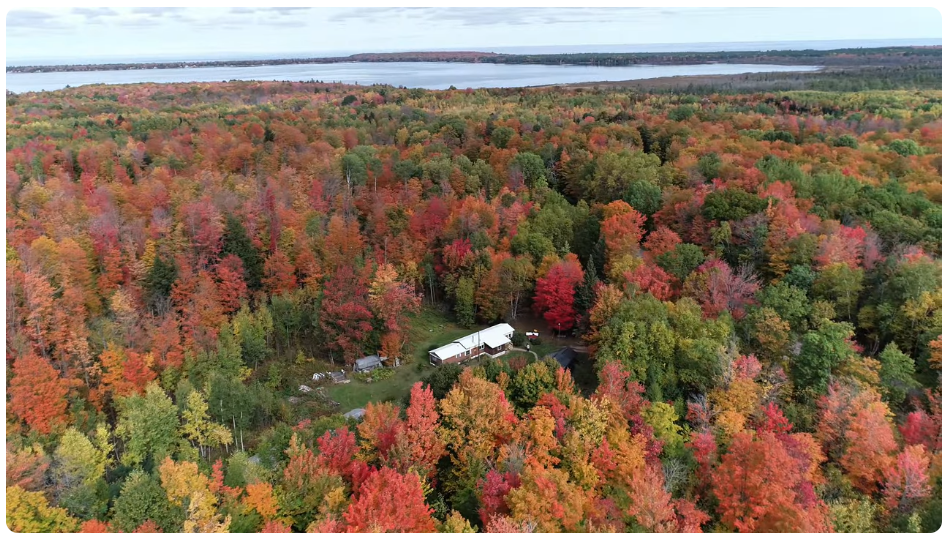
Aerial-Cabin-Woods-with-2-Lakes.png
Looking over farm toward Lake Independence & Lake Superior beyond
Aerial-Corner-with-2-Lakes.png
Aerial-Mobile-with-Street.png
Aerial-Street-with-2-Lakes.png
Slime does not pay. Always keep your tiny ad dry.
Permaculture Voices 1, 2 and 3 - all 117 hours of video!





 2
2


![[Thumbnail for Aerial-Corner-with-2-Lakes.png]](/t/390303/a/297838/Aerial-Corner-with-2-Lakes.png "Filename: Aerial-Corner-with-2-Lakes.png
Description:")
![[Thumbnail for Aerial-Mobile-with-Street.png]](/t/390303/a/297839/Aerial-Mobile-with-Street.png "Filename: Aerial-Mobile-with-Street.png
Description:")
![[Thumbnail for Aerial-Street-with-2-Lakes.png]](/t/390303/a/297840/Aerial-Street-with-2-Lakes.png "Filename: Aerial-Street-with-2-Lakes.png
Description:")