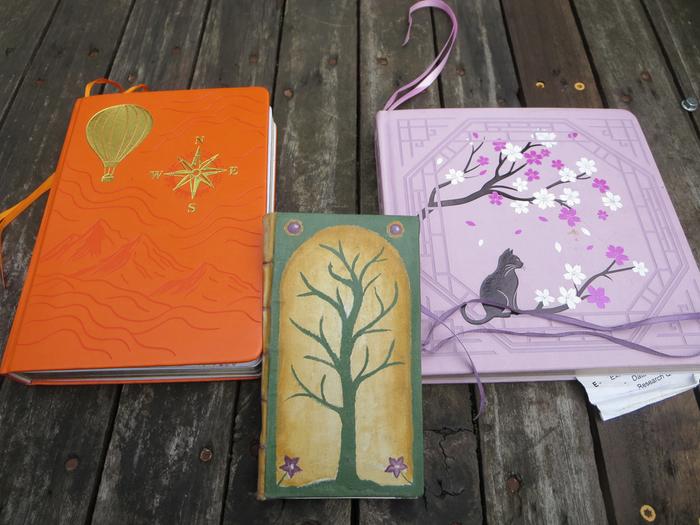
My kids are in a sort of environmental studies/forest school class. A large part of the class is keeping nature journals to observe the world around them and write down things they notice, wonder, and learn. I couldn't resist joining in on the fun!
Step 2: Learn about "sit spots" and how to nature journal. A sit spot is a place you pick out to sit quietly for at least 15 minutes and write down what you notice, wonder, and realize. The things you document can help you identify stuff later on! My kids teachers have 4 rules for sit spots. They should be: silent, solo, sitting and safe (you might not sit if it's raining!).
These are some of the videos my kids have watched to learn about sit spots & nature journaling:
You can pick a sit spot at your own property to continually observe the same area all year round:
Step 3: Start journaling! You can journal at your own place, to see how thing change all year round. You can visit other places to learn about more plants. I'm kind of surprised at how much I've learned in just three weeks of nature journaling. I've found and identified my first Hawthorne, realized trees I thought were Douglas Firs were actually Sitka Spruces, and the Beaufort scale for identifying wind speeds.
It's also a really fun way to engage your creative mind and have an excuse/reason to draw and paint. But, if you don't like art, you can just use words and numbers to record what you're noticing.
I thought I'd share some of my kids' and my journal entries. This is a great way to get kids noticing their world, and also get reluctant artists and writers to see a reason for writing.
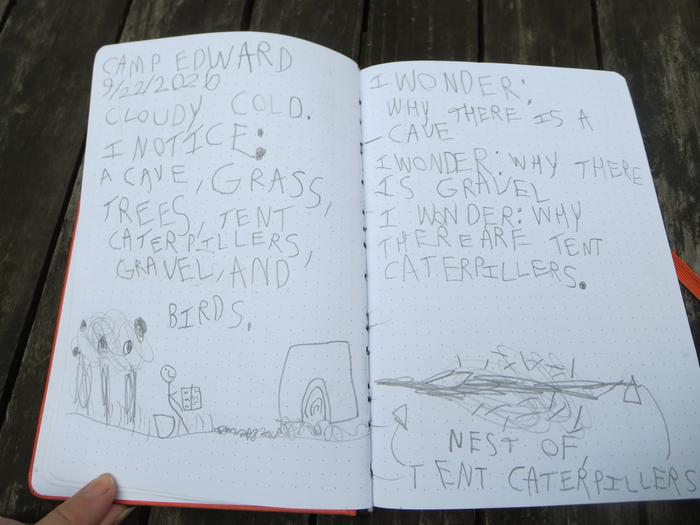
My reluctant writer wrote quite a bit!
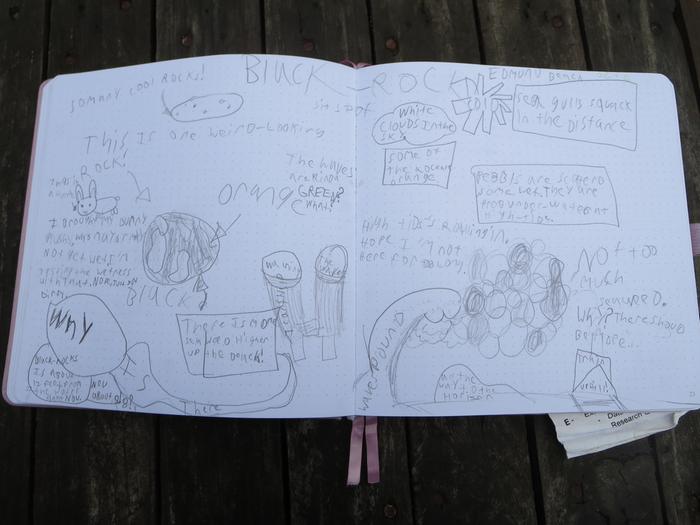
My creative artist/writer had a lot of fun making her journal page be fun and artistic.
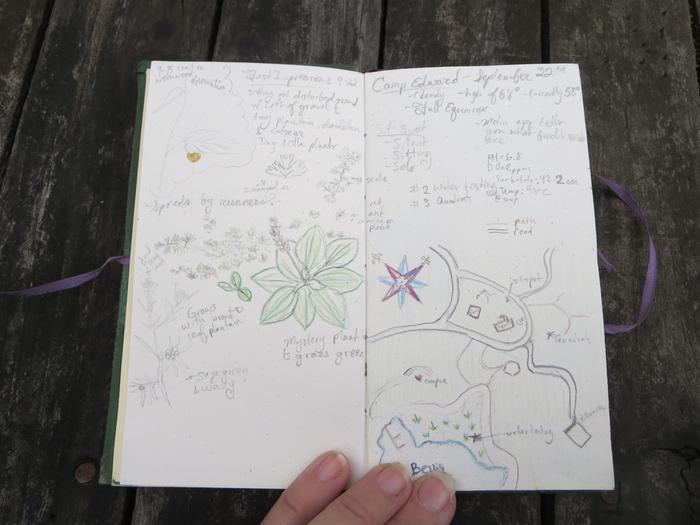
This was our first field trip, and so my first entry. We learned about using meta data--like maps and temperature--in our journal entries
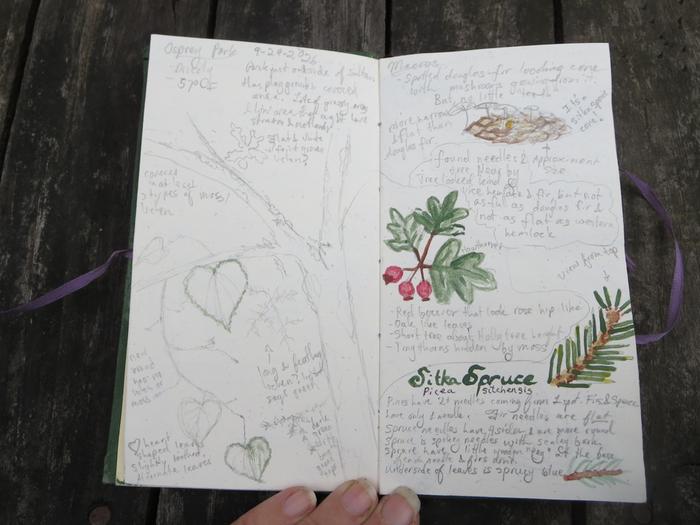
The next week was rather fun, because I finally spotted my first hawthorn! And, I learned how to distinguish Douglas firs from Sitka spruce! One of the students found a cone with mushrooms growing out of it. They thought it was a Douglas fir, but it didn't have the little "bracts" coming out of it. I took as many notes as possible about the tree and plant, and identified it when we got back to school! Then I found out that the trees I'd planted thinking they were doug firs were actually sitka spruce!
I wish I'd recorded more info about the tree on the left. It was covered in moss & lichen, with alternate slightly-serrated heart-shaped leaves. But, I ended up spending most of my time helping my son with his journal since it was raining.
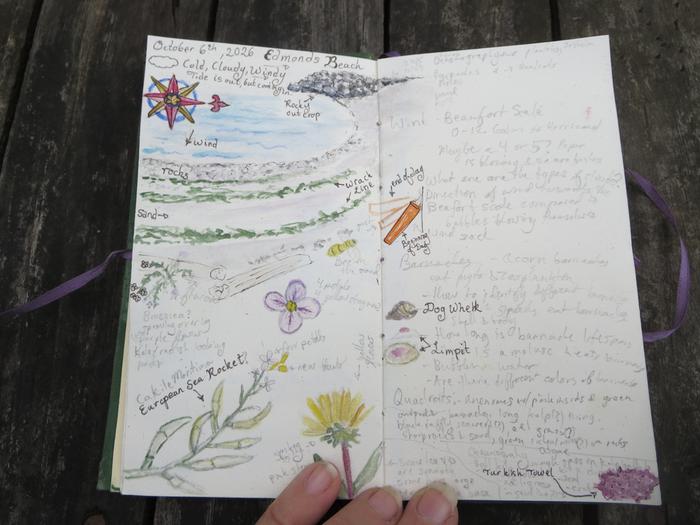
The next week, we went to the beach, and I learned about Turkish towel seaweed, identified European sea rocket (a brassica! I didn't try eating it, though. It probably had dog pee), and I learned about the Beaufort wind scale.
I had fun painting and inking parts of this page when I got home. I took a few pictures with my camera while I was at the beach so I could identify stuff better and paint them better.
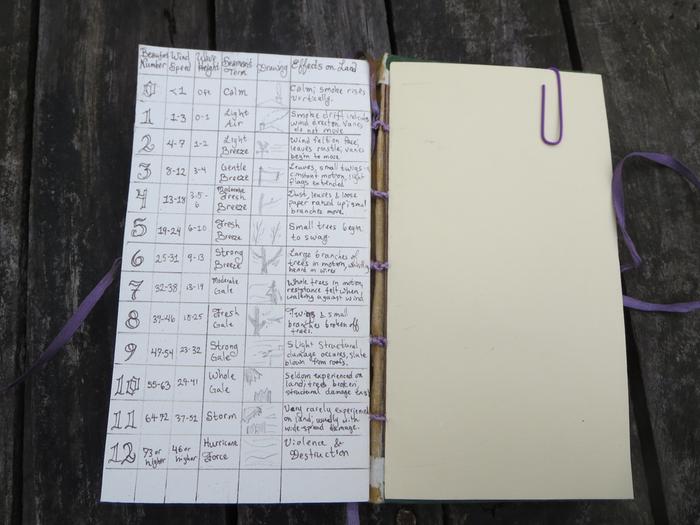
I thought the Beaufort wind scale was facinating and super handy, so I transcribed it into the back of my journal!
I've always kind of wondered what wind speeds were happing outside. Now I have a way, using just what I see and feel!
Here's the video we watched about the Beaufort wind scale:
What beautiful journals you and your kids have made.
Those will be memories that can be carried down through generations.
I have my grandfather journal. The first page that I opened talked about how my mother had taken me and gone back to her home state.
I also have a memory of my dad coming in a big red truck with all our belongings.
Invasive plants are Earth's way of insisting we notice her medicines. Stephen Herrod Buhner
Everyone learns what works by learning what doesn't work. Stephen Herrod Buhner
I'm gonna teach you a lesson! Start by looking at this tiny ad:






 6
6