
• Post Reply Bookmark Topic Watch Topic
  • New Topic
permaculture forums growies critters building homesteading energy monies kitchen purity ungarbage community wilderness fiber arts art permaculture artisans regional education skip experiences global resources cider press projects digital market permies.com pie forums private forums all forums
this forum made possible by our volunteer staff, including ...
master stewards:
  • Carla Burke
  • Anne Miller
  • Nancy Reading
  • John F Dean
  • r ransom
  • paul wheaton
  • Timothy Norton
stewards:
  • Jay Angler
  • Pearl Sutton
  • Andrés Bernal
master gardeners:
  • Christopher Weeks
gardeners:
  • M Ljin
  • Thekla McDaniels
  • May Lotito

Medieval ways to paint baked clay

 
steward
Posts: 23000
Location: Pacific Northwest
13914
13
homeschooling hugelkultur kids art duck forest garden foraging fiber arts sheep wood heat homestead
  • Likes 8
  • Mark post as helpful
  • send pies
    Number of slices to send:
    Optional 'thank-you' note:
  • Quote
  • Report post to moderator
My medieval history class will be making drop spindles, making the whorls out of clay. Since glazing spindles wasn't really a thing anywhere during the Viking Age, I was thinking of painting them afterward. But, what type of paint to use?

Did anybody paint clay objects after they were fired? Are there museum examples to look at?

What types of binders were used back then? Egg tempera, milk paint, gum arabic, linseed? Which ones did the Vikings use? (Since we'll be studying the Vikings during the time we're making the spindles)

All but the gum arabic of those would only be good for a day (or two in the case of linseed), so how much pigment will I waste if we make paint on the spot and it doesn't all get used up?

Which leads me to wonder, how does gum arabic do on clay? Did anyone ever try it in the medieval times?

If anyone finds/knows anything, I'd love to learn about it! If I find out anything, I'll try to post it here in this thread to help others.
 
Nicole Alderman
steward
Posts: 23000
Location: Pacific Northwest
13914
13
homeschooling hugelkultur kids art duck forest garden foraging fiber arts sheep wood heat homestead
  • Likes 8
  • Mark post as helpful
  • send pies
    Number of slices to send:
    Optional 'thank-you' note:
  • Quote
  • Report post to moderator
My students will be studying the Viking Age while making their spindles. And, yes, the Vikings usually used stone for whorls...I don't have access to that much soapstone or other carvable stone, and it's probably pretty tricky to get the symetrical. So, we'll be using clay to make whorls instead. Lots of people in medieval Europe used clay, so I'll just explain to the kids about soapstone and why we're making them out of clay.

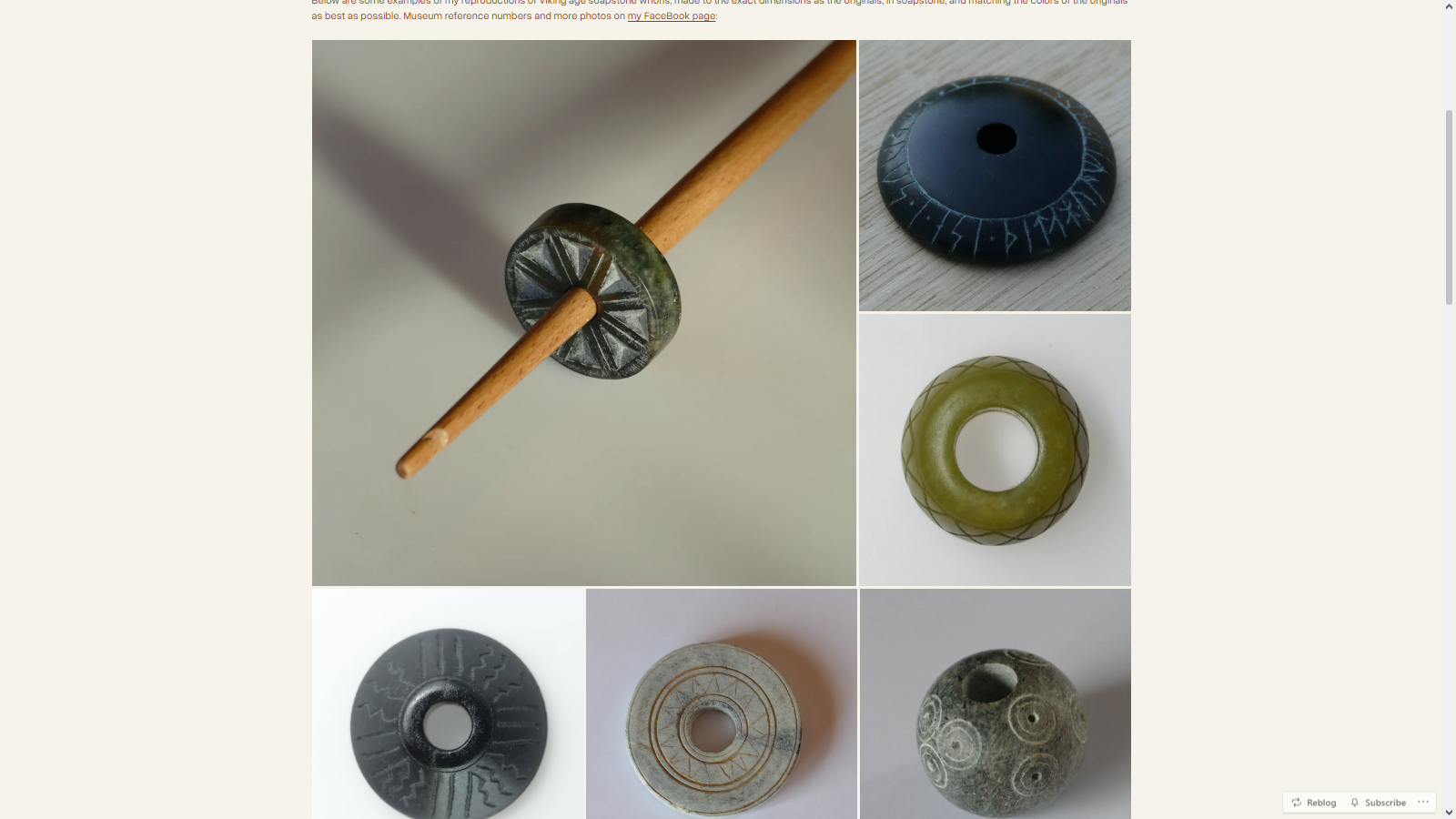
Still, I want to show the kids as many Viking spindle whorls as possible to take inspiration from. They're weirdly hard to find, though! But, I did find Helg Reproduction makes stone spindle replicas and apparently shows which find they were based off of in his facebook page. For now, here's a link to his page to do more research: https://helgreproductions.com/2025/02/05/soapstone-spindle-whorls/. One is even painted. He went with tempera paint, but I didn't see anything in the primary source about the type of paint binder.

image_2026-10-27_230504392.png
Photo from Helg Reproduction website. Look at those pretty spindles!
 
steward & author
Posts: 49058
Location: Left Coast Canada
20791
10
art trees books chicken cooking fiber arts
  • Likes 6
  • Mark post as helpful
  • send pies
    Number of slices to send:
    Optional 'thank-you' note:
  • Quote
  • Report post to moderator
I wonder if carved statues would be an equivalent. These used to be vibrant colours painted on.  

I admit, my brain leaps to egg tempura (i think that's the word, at least my spellchecker says it is) paint.  But my brain filling system has lost the citation why I feel egg paint is common for clay as glaze replacement in the medieval period.
 
Nicole Alderman
steward
Posts: 23000
Location: Pacific Northwest
13914
13
homeschooling hugelkultur kids art duck forest garden foraging fiber arts sheep wood heat homestead
  • Likes 5
  • Mark post as helpful
  • send pies
    Number of slices to send:
    Optional 'thank-you' note:
  • Quote
  • Report post to moderator
I just found this really cool site: Finds.org by the British Museum. There's a LOT more indexed there than on the normal British Museum site. I'm currently looking through all the early medieval spindle whorls. There's so many!

I'm honestly surprised at the amount of early medieval lead spindle whorls. Some are pretty, but many are very boring. After looking at over 100 spindles, 98% of them are lead. Is it because lead was used a lot in England, or just because they survive better? I'm guessing lead doesn't rust like other metals or break as easily as things like clay or stone?
 
r ransom
steward & author
Posts: 49058
Location: Left Coast Canada
20791
10
art trees books chicken cooking fiber arts
  • Likes 4
  • Mark post as helpful
  • send pies
    Number of slices to send:
    Optional 'thank-you' note:
  • Quote
  • Report post to moderator
If memory serves me right from watching loads of Time Team, lead is/was pretty common on or near the surface in Britain.  Lead, tin, and agriculture made Britain the jewl in the roman crown and one of the main sources of wealth.

Because it's so easily recycled, I'm always surprised how much lead roman items remain in the uk.  I guess spindle whorles are too small to bother recycling.
 
Nicole Alderman
steward
Posts: 23000
Location: Pacific Northwest
13914
13
homeschooling hugelkultur kids art duck forest garden foraging fiber arts sheep wood heat homestead
  • Likes 3
  • Mark post as helpful
  • send pies
    Number of slices to send:
    Optional 'thank-you' note:
  • Quote
  • Report post to moderator
That makes sense! I'd known about tin and coal, but not about lead. I'm going to need to find some way to have pretend lead for trade in my Silk Road trade game later this year!


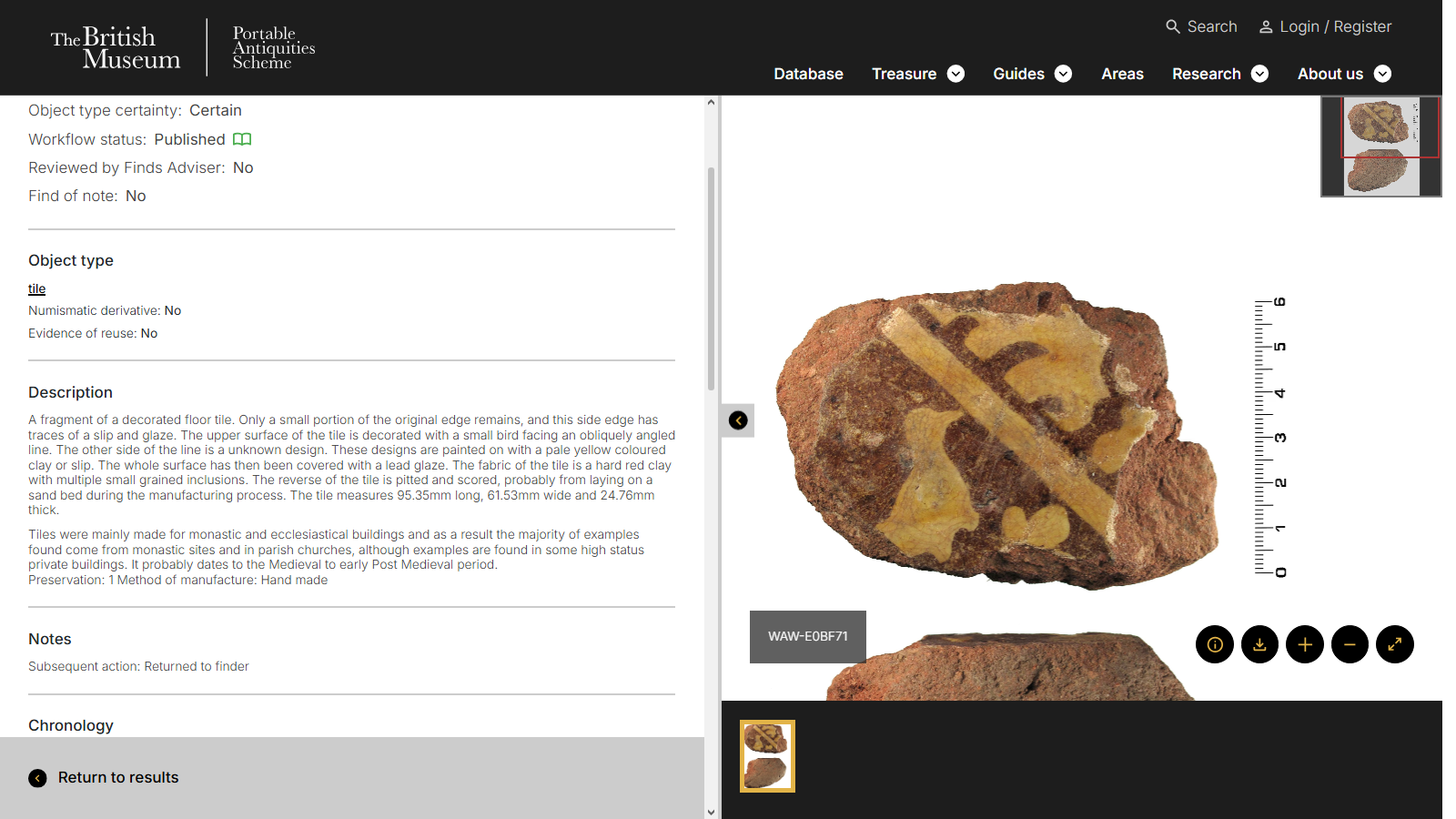
Still trying to find painted ceramics. This doesn't seem to be a thing, at least not in the British finds. I found one ceramic tile that was painted with yellow clay slip and then glazed. Not what I was looking for, but interesting nonetheless!


image_2026-10-28_181614756.png
Glazed floor tile from 1300--too late for the period I was looking at, but it's the closest thing I've found
 
r ransom
steward & author
Posts: 49058
Location: Left Coast Canada
20791
10
art trees books chicken cooking fiber arts
  • Likes 4
  • Mark post as helpful
  • send pies
    Number of slices to send:
    Optional 'thank-you' note:
  • Quote
  • Report post to moderator
Pewter from thrift shops and a cheap lead testing kit.  All Pewter has some lead, but some vintage stuff too much for modern standards.  The kit is a bit like a ph test, it goes darker with more lead.

Douglas fir bark burns hot enough to melt it witout spitting fire at people.  

Cuttlefish or soapstone molds.
 
Nicole Alderman
steward
Posts: 23000
Location: Pacific Northwest
13914
13
homeschooling hugelkultur kids art duck forest garden foraging fiber arts sheep wood heat homestead
  • Likes 3
  • Mark post as helpful
  • send pies
    Number of slices to send:
    Optional 'thank-you' note:
  • Quote
  • Report post to moderator
I've actually been snagging pewters stuff at thrift stores for a while, to use for "tin" in my world trading game (since it has so much tin in it). I really should test some of the pieces, though, because I don't know how many of them actually have lead.

I'm also really tempted to melt one down to use in a soapstone mold, since buying pewter online is so expensive. But, my antique-loving self is holding me back....
 
Posts: 7
3
  • Likes 1
  • Mark post as helpful
  • send pies
    Number of slices to send:
    Optional 'thank-you' note:
  • Quote
  • Report post to moderator
They were well into glazing by the middle ages. Ceramic glazes mad their appearance about 3000 BCE in Mesopotamia.  The Craft of pottery "painting" did not involve paint, but glaze.
Natural slip (basically different colored clay in liquid to paste form can be painted on before a second (I believe) firing.
 
Nicole Alderman
steward
Posts: 23000
Location: Pacific Northwest
13914
13
homeschooling hugelkultur kids art duck forest garden foraging fiber arts sheep wood heat homestead
  • Likes 3
  • Mark post as helpful
  • send pies
    Number of slices to send:
    Optional 'thank-you' note:
  • Quote
  • Report post to moderator
I'm avoiding glazes because I couldn't find any examples of medieval spindles that were glazed (maybe there were some, but I couldn't find them). It seems like glazes were reserved for expensive items, and spindles generally weren't expensive in the medieval era. They were made of whatever people had access to (chalk, soapstone, clay, old terracotta tiles, lead, wood, bone, even old broken spindles). Which tells me that, if people painted them, they would have been more affordable pigments and easily accessible binders.

Natural slip (basically different colored clay in liquid to paste form can be painted on before a second (I believe) firing.

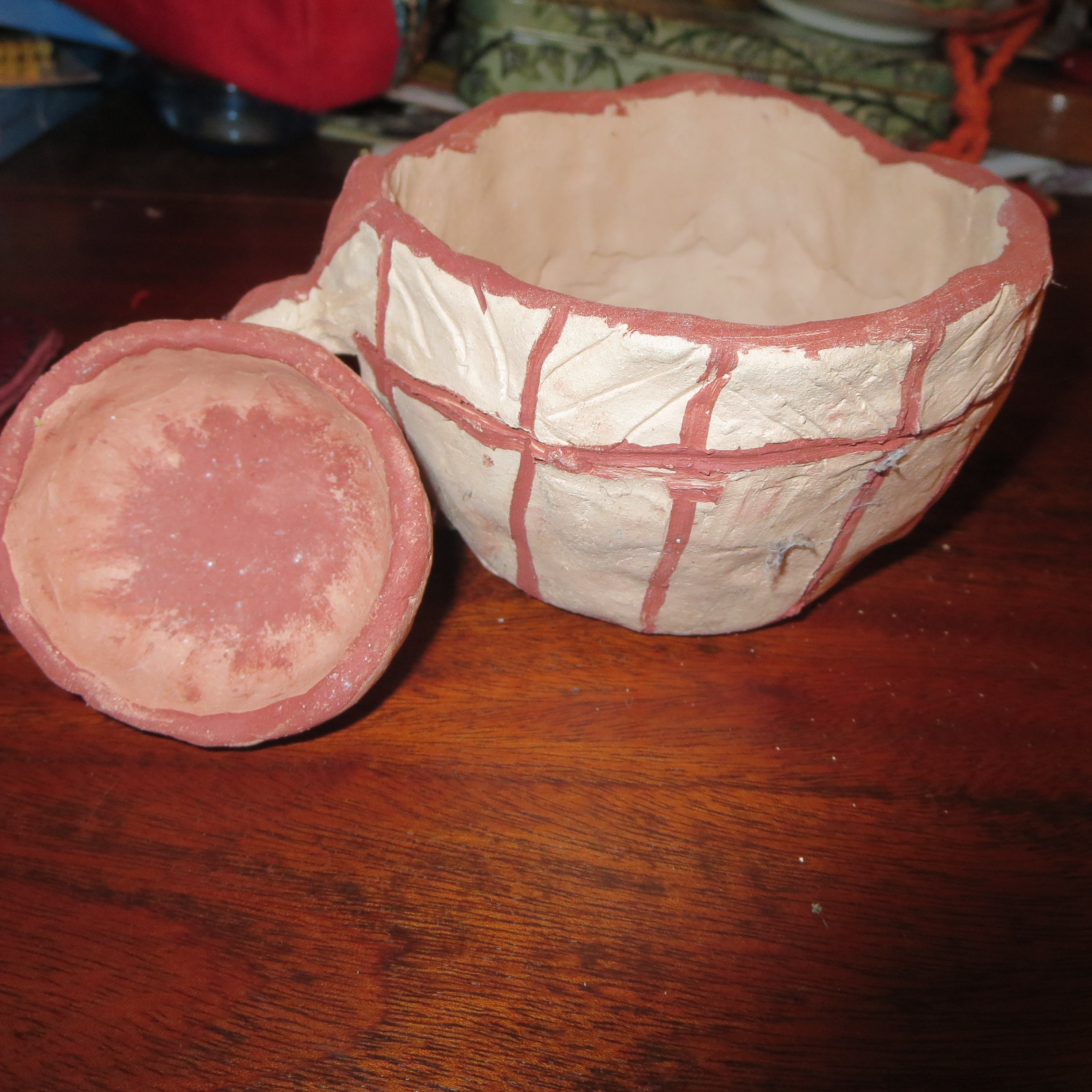

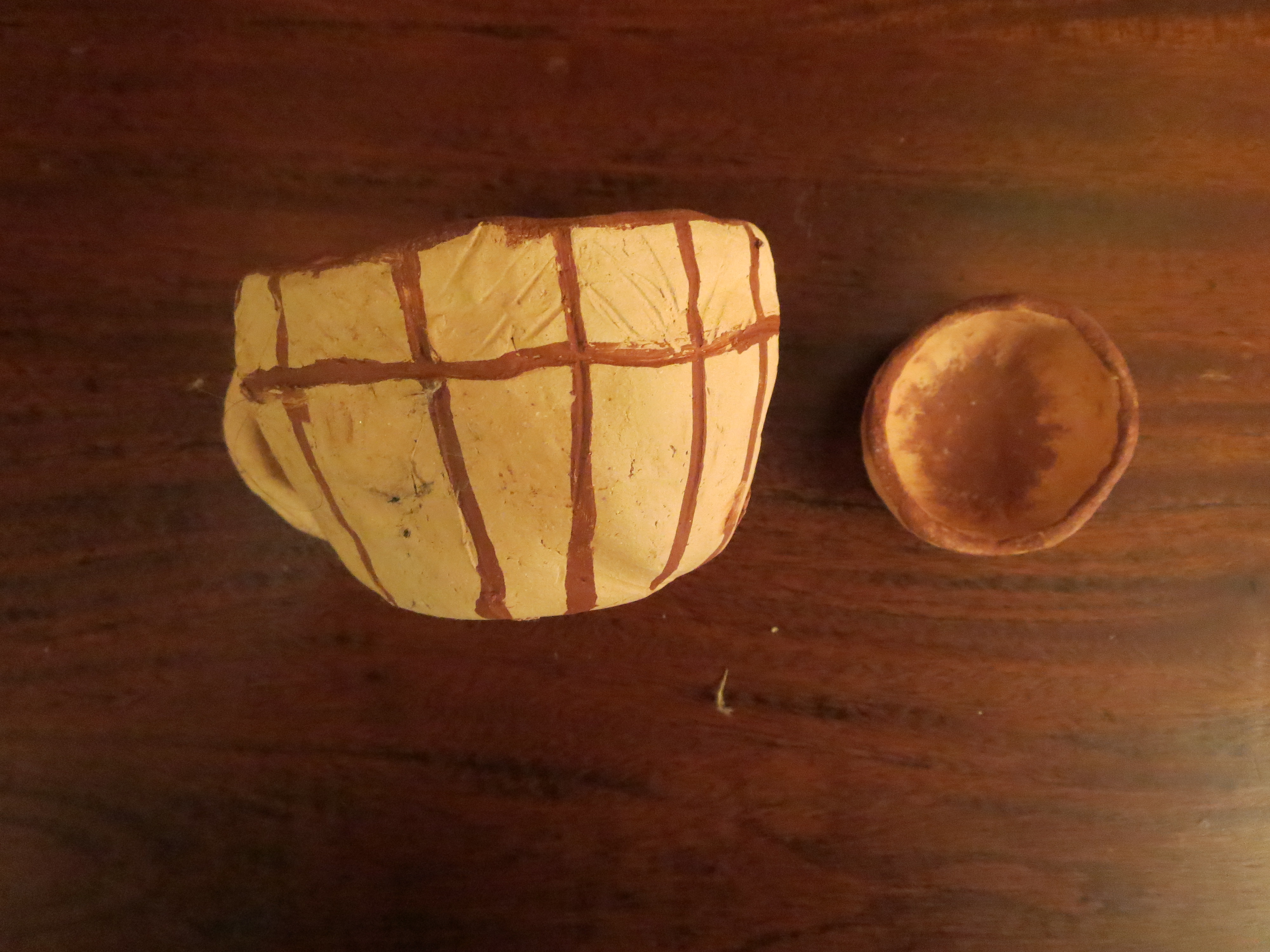
During my ancient history class last year, I had the kids use red ochre slip (red ochre pigment + clay-y water) on their pottery. We applied it before firing, and it worked quite well. But, I'm hoping for more color choices than that.

I know medieval people painted wood and lime plaster and stone. The tricky thing about paint is that usually washes off with erosion and time. So, it's hard to know what was painted and what wasn't....
IMG_3115.JPG
Unglazed clay with red ochre decorations (without flash)
IMG_3118.JPG
Unglazed clay with fired red ochre decorations (with flash). Smaller one was made with clay mixed with ochre, and then painted with ochre
 
Nicole Alderman
steward
Posts: 23000
Location: Pacific Northwest
13914
13
homeschooling hugelkultur kids art duck forest garden foraging fiber arts sheep wood heat homestead
  • Likes 5
  • Mark post as helpful
  • send pies
    Number of slices to send:
    Optional 'thank-you' note:
  • Quote
  • Report post to moderator
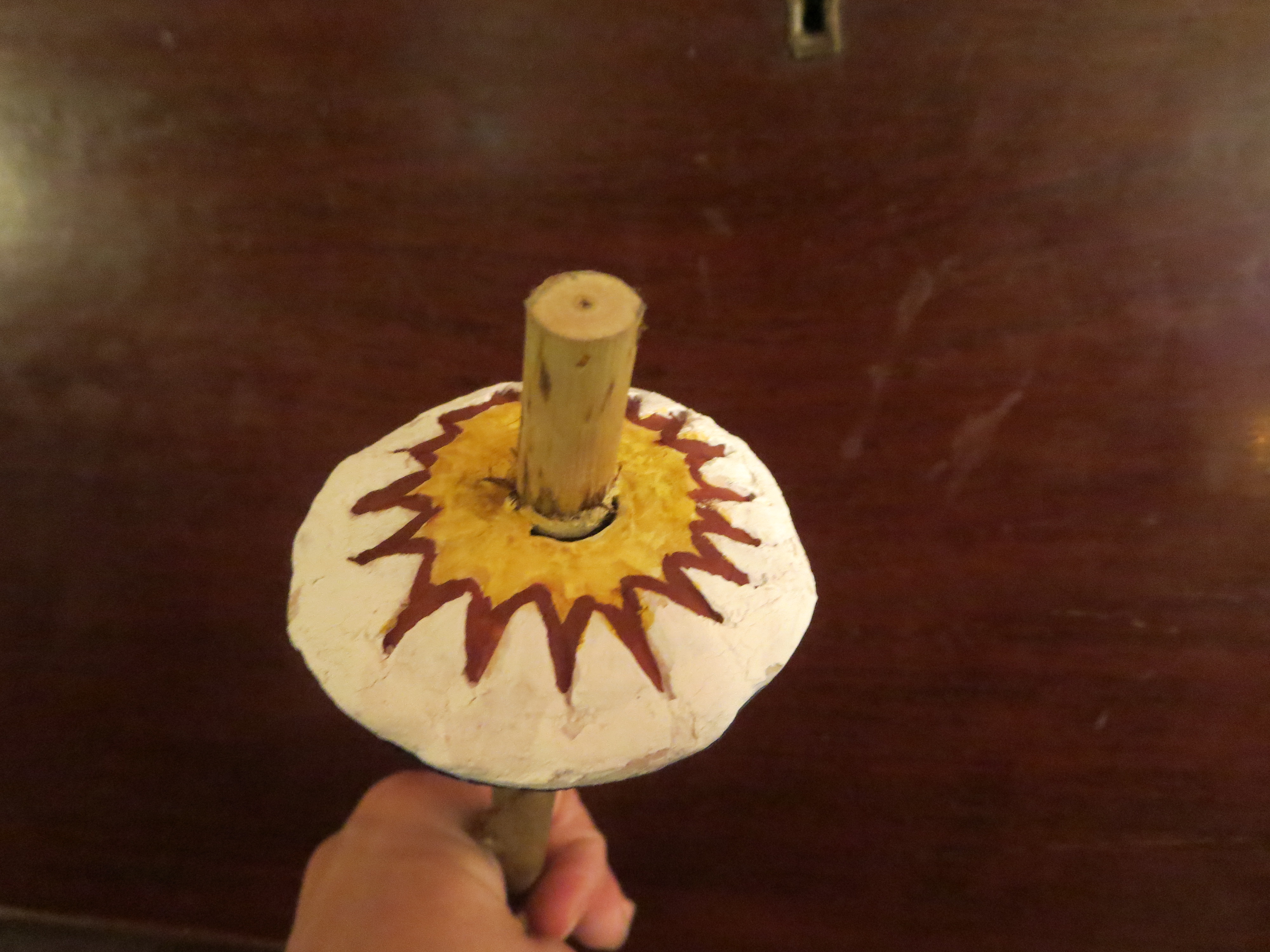
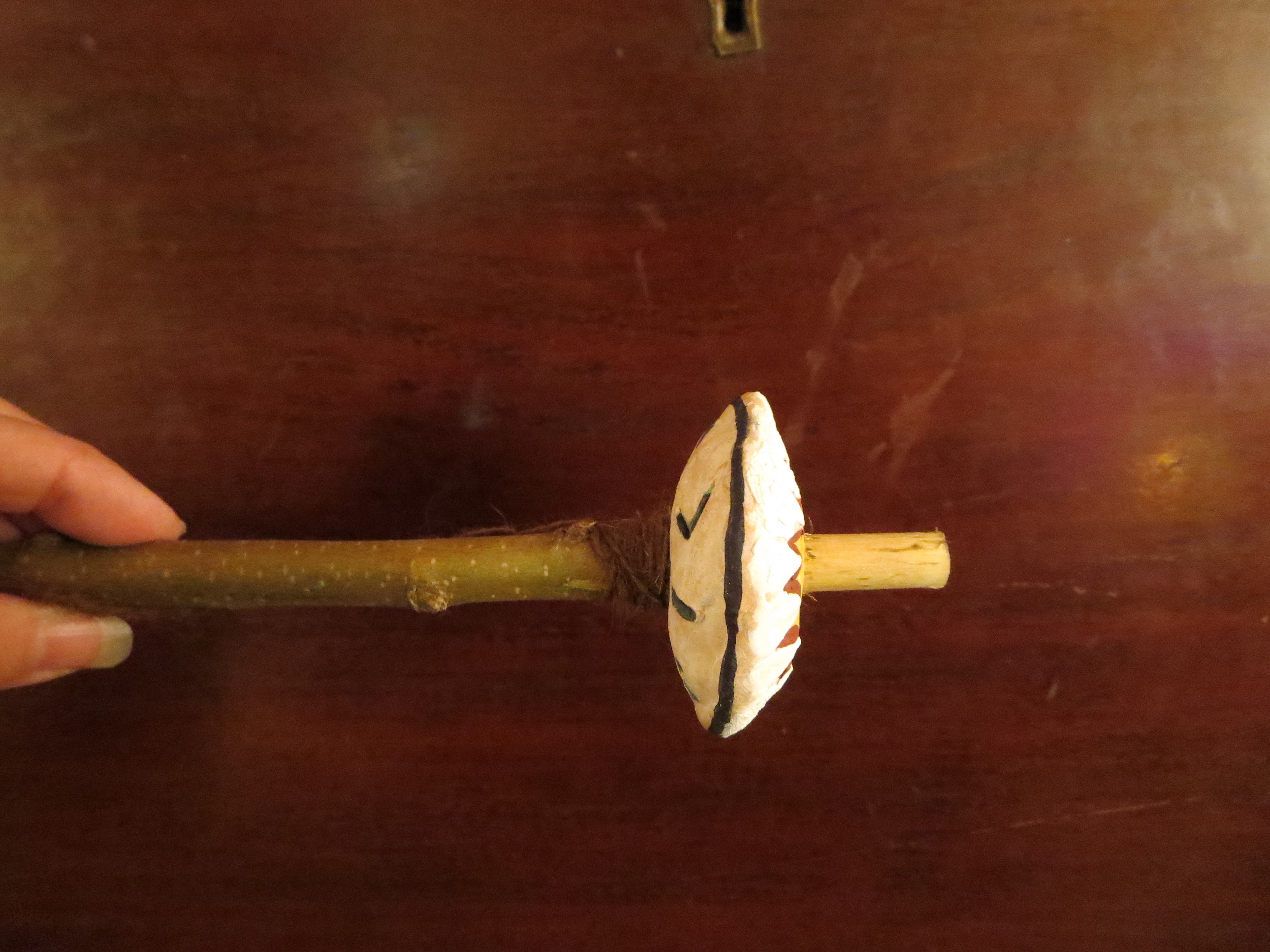
I did some experimenting last night. Since I have gum arabic, I tried it on the clay. It worked surprisingly well. I didn't have much white paint (and didn't want to make more), so I tried using slacked lime. This was pretty thick and tended to crack or chalk off, so I don't think it's the best option.

I'm honestly tempted to go for milk &/or paint. Milk is a pretty accessible binder, and lime is pretty common in many parts of Europe. Is there lime in Scandinavia? Do we have any evidence for milk paint in medieval Scandinavia?

The one downside to using milk paint is that the paint we didn't use goes to waste. Watercolor paints stay good (as long as kids don't mix the colors up), so there's a lot less waste.
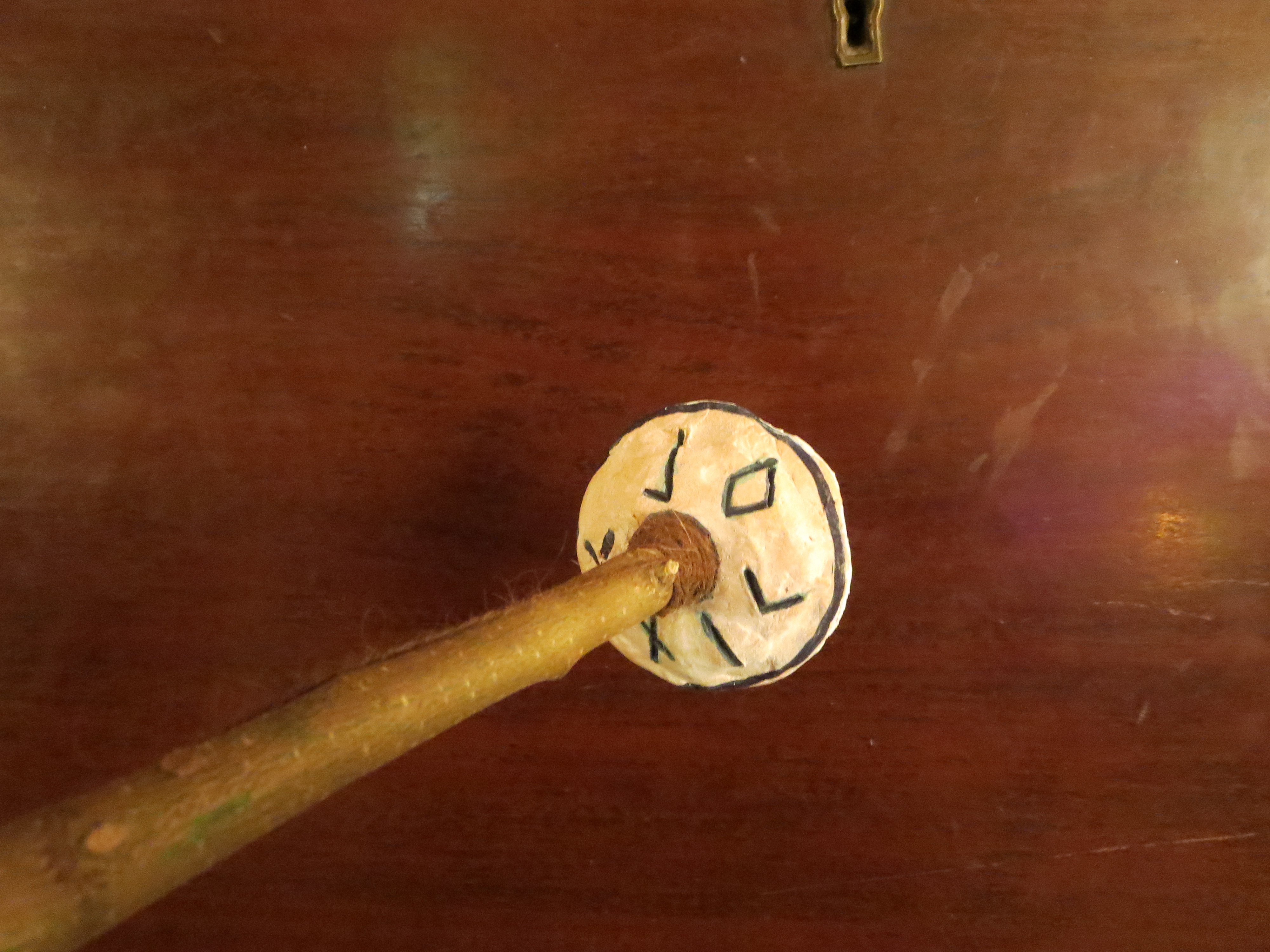
IMG_3122.JPG
Painted with watercolors (chalk & indigo w/ gum arabic binder)
IMG_3123.JPG
Painted with red & yellow ochre w/ gum arabic binder. The white is slacked lime
IMG_3124.JPG
Two experiments, one spindle!
 
Nicole Alderman
steward
Posts: 23000
Location: Pacific Northwest
13914
13
homeschooling hugelkultur kids art duck forest garden foraging fiber arts sheep wood heat homestead
  • Likes 5
  • Mark post as helpful
  • send pies
    Number of slices to send:
    Optional 'thank-you' note:
  • Quote
  • Report post to moderator
I did a little "testing" today by using the spindle for demonstration purposes in class. The lime white wash flaked off...but it was also applied about a millimeter thick, and I'm pretty sure you're supposed to do multiple thin coats. The watercolor paint seemed to hold up well.

I did a bit of research into Viking Age paint binders. I've found a few sources, but none definitive (and many are very much secondary/tertiary sources!).

From VikingsOnline.org's wiki

Pigments could be derived from natural earth metals and the like, such as yellow from ochre, or greens from copper salts. Others like black could be made from charcoal or soot. The range of colours available does seem relatively large, but almost all colours are subdued even dull to the modern eye. There are no really bright colours ; even pure white was not available. Dull or off-white could be made from burnt lime and was used as whitewash for buildings.

For an example range of period colours see http://www.milkpaint.com/color.html Binders could be egg yolk (tempera) and/or milk (casein), but it is very questionable as to whether such paints would remain weatherproof. Oil base binders were probably also used. Turpentine could be produced by heating pine trees over a collecting pit, and know that turps based paints were used on ships because turps was used to thin out tar as a protective coating to ship timbers. Similarly linseed oil is a traditional paint binder, and which considering the production of linen should have been available.


Not any more definitive or knowledgeable than me, so not too helpful.

This facebook post has some possible leads in the comments:

Buttermilk? That's the main Ingredient they use to paint the longship with at Roskilde.


If you use the search function, you'll find that there have been discussions around paint etc before.
Linseed oil can be provenanced as a varnish in Europe from the 8th century onwards and obviously you can just mix pigments into the oil to produce a coloured opaque varnish/paint.
This seems to be was used to create the yellow and red paints found on woodwork in the Prittlewell chamber burial. It's also thought to be the source of the red paint found on some rune stones.


One of the posts linked to https://www.vikinganswerlady.com/wood.shtml, which has LOTS of primary source images of viking wood designs. Totally will be using some of those for my lesson slides for Viking design ideas!

She also quotes a Theophilus in the 11th century as saying:

How To Redden Doors; and Linseed Oil
If you want to redden doors, get linseed oil which you should make in this way. Take some flax seed and dry it in a pan over the fire without water. Then put it in a mortar and pound it with a pestle until it becomes a very fine powder. Put it back in the pan, pour in a little water, and heat it strongly. Afterwards wrap it in a new cloth and put it on the press where oil is usually pressed from olives, nuts and poppy seeds, and press out this oil also in the same way. Grind some minium (red lead, Pb3O4) or cinnabar with this oil on a stone without water, spread it with a brush on the doors or panels that you want to redden and dry them in the sun. Then coat them a second time and dry them again. Finally spread on top if it the gluten called varnish...


She also quote this SCA article:

"Very little is known of the actual extent of Viking Age painting. Black, red, yellow, and brown comprise the majority of colors employed in extant Viking painted artifacts. Most known Viking painting was executed on carved woodwork; the Gokstad ship tiller and the Oseberg sledges are some standout examples of carved painted woodwork. Usually the objects were painted a light color (white, yellowish white or plain yellow) and highlights were picked out in black, brown, and/or red. (Yes, even Vikings knew that the heraldic color system works!) Rows of dots or billets, sometimes paired with parallel lines, are found on some extant pieces" (Mistress Þóra Sharptooth, "Personal Display for Viking Age Personae: A Primer for Use in the SCA").


She mentioned the painted Oseberg ship, with ship tiller, bed boards, tent supports, chair and other ship parts painted with: red, yellow, white, yellow-ish white, brown, and black.

There's also mention of shields from around northern Europe that are painted with grey-green, dark blue (maybe from woad? apparently charcoal with chalk and a bit of orpiment!), white, black, and yellow.

Another interesting source for Viking Age paint on wood comes from shields. The Gokstad ship, for example, had 64 shields, with some painted entirely in yellow, with the others painted in black (Nicolay Nicolaysen, The Viking Ship Discovered at Gokstad in Norway). Other interesting examples of painted wooden shields come from Ballateare and Cronk Moar, on the Isle of Man. The Ballateare shield has a leather facing that was painted, instead of the paint being applied to the wood, and it seems to have been painted with black and red patterns on a white background, using a gesso (organic matrix, such as egg yolk) paint was used, while the Cronk Moar shield has traces of white paint (Bersu and Wilson 1966. Peter Beatson, The 'Viking Shield' from Archaeology). Another example is from a 10th century chamber grave at Grimstrup, Denmark, where a circular wooden board that covered the corpse from head to hip, considered to be a "shield blank" or unfinished shield, "was elaborately painted with interlace patterns, though the overall design is no longer discernible. The background colour is dark blue, the interlace is grey-green edged with white lines. Some lines of red paint and white dots are also visible"
...

For one example of surviving paint on wood, consider the Gokstad ship, which had 64 shields, with some painted entirely in yellow, possibly using a paint based on orpiment, As2O3, and the others painted in black, possibly with a paint based on charcoal as its pigment agent.

"Red pigments in ancient paints seem to derive from mineral sources i.e..red ochre (Fe2O3, as on the Jelling figurine: Marxen and Molkte 1981); or cinnabar (HgS, as on the Illerup shield of c.200AD: Forhistoriskmuseet, Moesgard Denmark: pers. obs. 1994). Also on the Jelling figurine were a dark blue paint made by mixing powdered white chalk with burnt organic matter (charcoal?), and a yellow of orpiment (As2O3) in an oil base" (Peter Beatson, (Peter Beatson, The 'Viking Shield' from Archaeology).


She also mentions the 11th century Theophilus, again, saying,

Theophilus describes creating paints from a variety of pigments: red from burnt ocher, cinnabar, minium (red lead, Pb3O4), carmine (cochineal), and folium (a vegetable juice); yellow from orpiment or saffron, green from various copper salts, especially copper acetates and copper chlorides, as well as various chlorophyll greens from vegetables; blue from copper carbonate (Cu3-(CO3)2OH2), indigo, and various plant substances; black from lampblack or ground charcoal; and white from lead carbonate, ground bone ash, calcium carbonate, lime, gypsum or chalk.


Reading all of this, it seems like these are the best colors to offer:
  • Red Ochre
  • Yellow Ochre
  • Copper green
  • Woad/indigo blue
  • Chalk
  • Charcoal


(I'll probably offer some other colors, too. Because it's hard to tell a little 5 year old girl she can't have purple or pink....), but will heavily encourage the kids to see what sort of designs they can make with the Viking palette.

I'm probably going to go with the gum arabic, even though casein/milk paints would probably be more accurate....just because it's a whole lot less work and waste to use gum arabic, and we can focus the project on the colors and designs that Vikings had, and discuss how milk probably would have been a better binder. I just really don't want to have to make milk paint and waste a bunch of pigment! But, my desire for historical accuracy might win out, and I might end up making milk paint for it...
 
Nicole Alderman
steward
Posts: 23000
Location: Pacific Northwest
13914
13
homeschooling hugelkultur kids art duck forest garden foraging fiber arts sheep wood heat homestead
  • Likes 5
  • Mark post as helpful
  • send pies
    Number of slices to send:
    Optional 'thank-you' note:
  • Quote
  • Report post to moderator
I'm honestly kind of tempted to just buy powdered milk paint binder and then add pigment. It's so much more expensive than making my own, but then I don't have to fiddle with making and straining quark, adding the right amount of lime, etc. All I need to do is add 1 to 10 ratio of pigment to binder. That should result in less mess and less waste, too. And, I can still use the historical pigments, and they'll get the benefit of milkpaint binding better to the spindle than gum arabic probably does, and they'll be using something a lot closer to what the Vikings would have.
 
Nicole Alderman
steward
Posts: 23000
Location: Pacific Northwest
13914
13
homeschooling hugelkultur kids art duck forest garden foraging fiber arts sheep wood heat homestead
  • Likes 3
  • Mark post as helpful
  • send pies
    Number of slices to send:
    Optional 'thank-you' note:
  • Quote
  • Report post to moderator

J wexler wrote:They were well into glazing by the middle ages. Ceramic glazes mad their appearance about 3000 BCE in Mesopotamia.  The Craft of pottery "painting" did not involve paint, but glaze.
Natural slip (basically different colored clay in liquid to paste form can be painted on before a second (I believe) firing.


I also have to admit that a large reason I'm having them paint their spindle whorls is because I want them to have a chance to paint with the hues (and maybe even designs) that Vikings would have painted their ships, shields and houses.  Since the kids are learning about how important wool and spinning was to Viking survival and success (sails, clothing, blankets, trading etc), we're doing a multi-week project of:

- Spindle whorl making
- Assembling spindles (sanding and carving the spindle sticks) & decorating spindles
- Carding & spinning wool
- Dying wool

This allows the kids to learn: clay working, wood working, painting, carding, spinning, and dying skills.

Yeah, the clay painting is a little bit of a stretch. Maybe painting wooden whorls would have been better. But, the kids love working with clay, so I try to incorporate at least one clay project a year :D
 
Nicole Alderman
steward
Posts: 23000
Location: Pacific Northwest
13914
13
homeschooling hugelkultur kids art duck forest garden foraging fiber arts sheep wood heat homestead
  • Likes 3
  • Mark post as helpful
  • send pies
    Number of slices to send:
    Optional 'thank-you' note:
  • Quote
  • Report post to moderator
I thoroughly enjoyed starting our Viking unit with fiber production instead of weapon production, bwahahahaha!

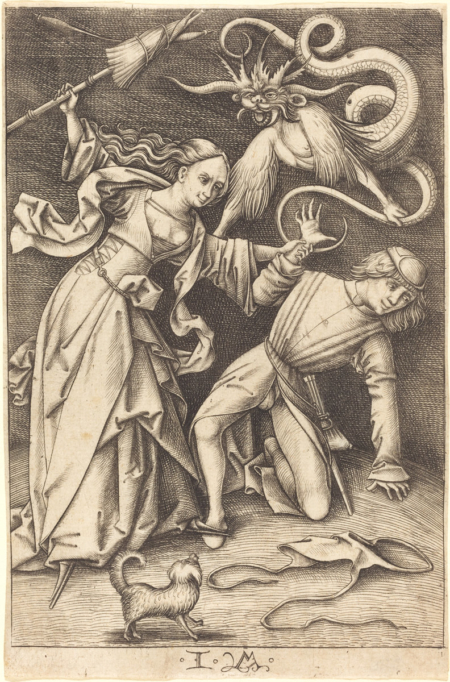
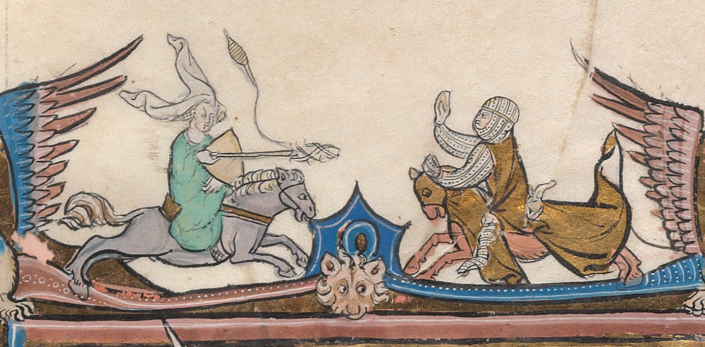
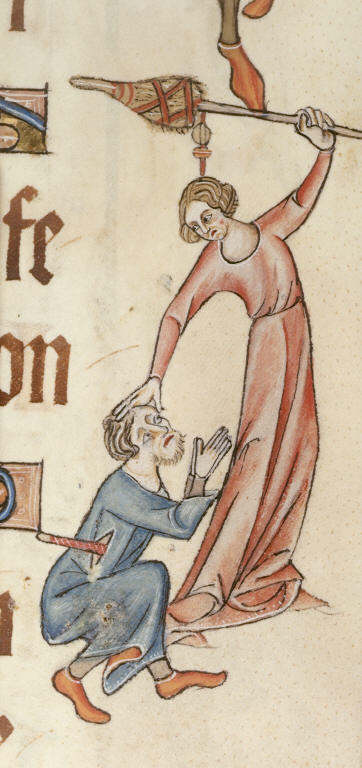
It was only my 12-14 year old boys that might have noticed, but they just starting thinking about how spindles could have been used as weapons, kind of like flails. And, well, I didn't dissuade them too much--it's hard to know from archeological evidence whether they did or didn't! I'm pretty sure there's medieval paintings of women attacking things with distaffs and rolling pins. Why not spindles?

*Wanders off to research* Yep! Medieval (though not Viking) women using spindles (though usually distaffs) as weapons! The spindles are usually dangling from the distaff--distaff is a longer range weapon, I guess!

From: https://15thcenturyspinning.wordpress.com/2013/06/21/picture-friday-domestic-violence/

Here is a miniature of Orpheus lying on his back, protecting himself from Thracian women armed with spindles and distaffs


And from https://plymagazine.com/2020/07/a-womans-work-was-never-done-spinning-in-medieval-art/

Ishrael van Meckenem produced this engraving called The Angry Wife near the end of the medieval period, around 1500.


This illustration is from a French Arthurian romance created between 1275–1300. A woman with her headdress flying behind her is jousting with an unarmed knight.


Woman attacking fox that took her goose


And from: https://www.pallia.net/en/start-en/spinning-and-spindles/medieval-spindles

British Library MS Additional 42130, f.60. A woman striking a man with her distaff.
 
He does not suffer fools gladly. But this tiny ad does:
A rocket mass heater is the most sustainable way to heat a conventional home
http://woodheat.net
reply
    Bookmark Topic Watch Topic
  • New Topic