• Post Reply Bookmark Topic Watch Topic
  • New Topic
permaculture forums growies critters building homesteading energy monies kitchen purity ungarbage community wilderness fiber arts art permaculture artisans regional education skip experiences global resources cider press projects digital market permies.com pie forums private forums all forums
this forum made possible by our volunteer staff, including ...
master stewards:
  • Carla Burke
  • Anne Miller
  • Nancy Reading
  • John F Dean
  • r ransom
  • paul wheaton
  • Timothy Norton
stewards:
  • Jay Angler
  • Pearl Sutton
  • AndrĂ©s Bernal
master gardeners:
  • Christopher Weeks
gardeners:
  • M Ljin
  • Thekla McDaniels
  • May Lotito

outdoor cooking stoves using concrete blocks instead of kiln cured clay brick vs actual fore brick

 
Posts: 148
14
  • Likes 4
  • Mark post as helpful
  • send pies
    Number of slices to send:
    Optional 'thank-you' note:
  • Quote
  • Report post to moderator
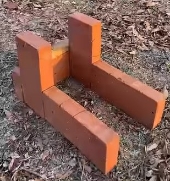
A few months ago I was toying around with surplus clay bricks from a construction site to build a small outdoor cook stove.   I never actually started a fire but I stacked the bricks and
the stove looked like it would work but only for very small pots or fry pans.   Recently I came across twenty or so  concrete CAP blocks which are much larger and stacked them up impressively
as shown in an earlier post here.       https://permies.com/t/370415/CapBlock-Stove-show-photos

If the concrete blocks are kept dry and out of the rain will the concrete composition hold up to the heat  of a fire like the kiln cured clay bricks ?

If someone knows maybe they can relay their experience and save me the time and trouble of trying the bigger blocks to make  a bigger stove for cooking bigger pots ?.

my photos are here......     https://permies.com/t/370415/CapBlock-Stove-show-photos         These are much bigger concrete CAP BLOCKS.     They do soak up water so I am pretty sure
if they have been rained on recently they would probably somewhat explode if heated by a fire..  or maybe the moisture would dry out while they were heating up.
Does anyone know ?   I wonder if there is a special mixture of concrete that would handle heat better if I wanted to cast my own blocks to make a fire with.

 
master pollinator
Posts: 2247
Location: Ashhurst New Zealand (Cfb - oceanic temperate)
811
duck forest garden fungi trees chicken cooking solar sheep wood heat woodworking rocket stoves
  • Likes 4
  • Mark post as helpful
  • send pies
    Number of slices to send:
    Optional 'thank-you' note:
  • Quote
  • Report post to moderator
Concrete has pretty miserable performance once you get anywhere above the boiling point of water. Three main things happen, all of them destructive: Thermal stress, which causes cracking and deformation from uneven heating; steam buildup and explosive pressure release, which lead to spalling and catastrophic failure of bearing masses; and thermal decomposition of the portland cement matrix itself, which breaks down the crystalline "glue" holding everything together and turns it to useless powder.

Firebricks and refractory materials are used in these things for a reason.
 
pollinator
Posts: 806
Location: SE Indiana
480
dog fish trees writing
  • Likes 3
  • Mark post as helpful
  • send pies
    Number of slices to send:
    Optional 'thank-you' note:
  • Quote
  • Report post to moderator
My experience with concrete is that it can work just fine. Upside is they are cheap and easy to work with. Downside is if used regularly they will start to crack in just a couple of seasons, but I've never seen one explode. If you want to throw something together quick and easy and that will only be used once in a while, they're great. For something nicer looking and that will last longer brick is the way to go. I don't think fire brick is really necessary but solid bricks, not the ones with holes, are good.
 
reply
    Bookmark Topic Watch Topic
  • New Topic