• Post Reply Bookmark Topic Watch Topic
  • New Topic
permaculture forums growies critters building homesteading energy monies kitchen purity ungarbage community wilderness fiber arts art permaculture artisans regional education skip experiences global resources cider press projects digital market permies.com pie forums private forums all forums
this forum made possible by our volunteer staff, including ...
master stewards:
  • Nancy Reading
  • Carla Burke
  • John F Dean
  • Timothy Norton
  • r ransom
  • Jay Angler
  • Pearl Sutton
stewards:
  • Devaka Cooray
  • Leigh Tate
  • paul wheaton
master gardeners:
  • Christopher Weeks
gardeners:
  • M Ljin
  • thomas rubino
  • Megan Palmer

The Tree field Skye

 
steward and tree herder
Posts: 12307
Location: Isle of Skye, Scotland. Nearly 70 inches rain a year
6298
5
transportation dog forest garden foraging trees books food preservation woodworking wood heat rocket stoves ungarbage
  • Likes 8
  • Mark post as helpful
  • send pies
    Number of slices to send:
    Optional 'thank-you' note:
  • Quote
  • Report post to moderator
Putting the net curtains over the blueberries made such a difference that I'm definitely going to protect more of my bushes. The birds also have eaten all of my Aronia this year, so I'm very disappointed in that, and again may have to think harder about distraction/protection for those.

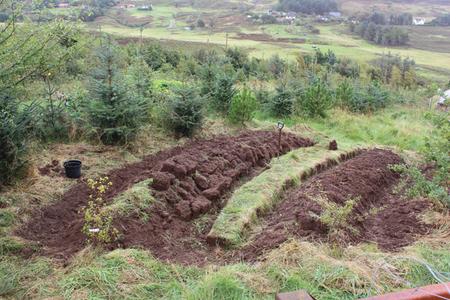
The nice weather we have had during August encouraged me to make a start on finishing off some of the raised beds I started last year. I quite enjoy the physical labour and seeing the results of it. The rains have come back now, so I haven' quite finished off the first section.

raised beds without sides under construction
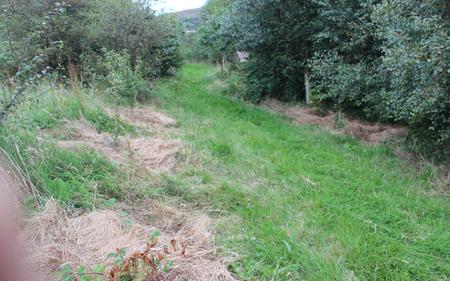
the Avenue progresses


I used some of the mulch from cutting the trackways again to mulch the small trees and bushes at the edges.

a grass trackway between green leaved trees
mulching with hay


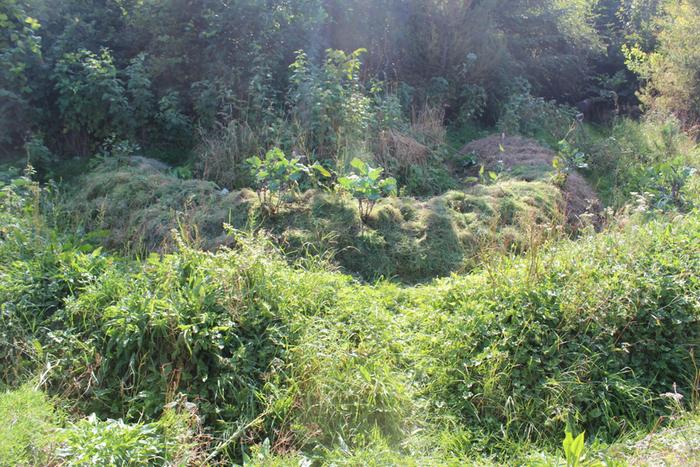
A little more weeding of onion grass in the shell garden. It still seems to be coming back strongly, so I tried an experiment here - the left hand side (South) is thickly mulched after a rough 'goat mode' chop and drop. The right side (North) I really tried to get out as much of the onion grass bulbils as I could, and then mulched similarly. Hopefully I'll be able to see more clearly in a few weeks whether the extra effort pays off.

curved raised bed mulched with hay
shell garden experimental mulching


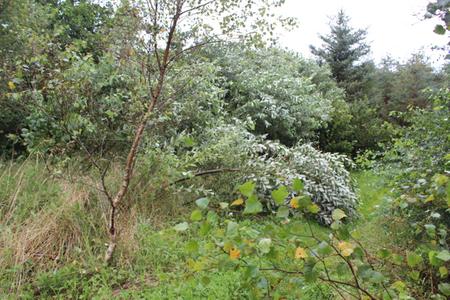
Although the weather has been generally lovely during August we dd get rather strong winds in the middle of the month - probably gusting to about 75 or 80mph, which is pretty unusual for the time of year. Because of the leaves all being still on the trees there would be a lot more loading and a lot of small twiggy branches were snapped off the alder and the more exposed birch trees. Several willows were snapped at the crotches and one aspen was blown right over. I lost a fair amount of the apples of the tree that was promising the best crop ever, but fortunately they were ripe enough for cooking with, so it wasn't a complete loss. I'm hoping that the tree, which seems slightly loose, will settle back in time.

silver leaved trees
willows broken by winds


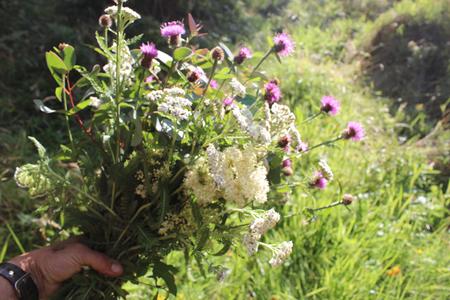
The late summer flowers are coming out now - knapweed and field scabious - as the meadowsweet starts to fade.

a bunch of wild flowers
late summer flowers
 
pioneer
Posts: 358
87
cat trees urban
  • Likes 3
  • Mark post as helpful
  • send pies
    Number of slices to send:
    Optional 'thank-you' note:
  • Quote
  • Report post to moderator
N, that is a really gorgeous photo of your late summer flowers. Thank you so much!!!
 
Nancy Reading
steward and tree herder
Posts: 12307
Location: Isle of Skye, Scotland. Nearly 70 inches rain a year
6298
5
transportation dog forest garden foraging trees books food preservation woodworking wood heat rocket stoves ungarbage
  • Likes 9
  • Mark post as helpful
  • send pies
    Number of slices to send:
    Optional 'thank-you' note:
  • Quote
  • Report post to moderator
I was asked to give some advice to someone building a new home locally so I pulled together this table of trees I have planted and how well they have done for me here. I hope this helps and will modify as more information comes available.

Tree common namelatin namevole damagecommentswind resistance
Common alderAlnus gutinosanoBrilliant pioneer, likes damp, Nitrogen fixingcan be brittle
Italian alderAlnus cordatanogood pioneer for drier spots, Nitrogen fixingwind sculpted
appleMalus domesticayesslow growing, get own root or vigorous rootstock, flower well, but not always set fruitCan blow over in soft soil
crab appleMalus sylvestrisyesoften crossed with improved apple, some of mine are good fruiters themselves (also pip sown apples)yes
European AshFraxinus excelsioryesshallow roots, suffer from ash die back nowsaltwind die back too
AspenPopulus tremuloidesyesFew clones available so does not set seed, spreads by suckers, original trees did poorly (dies back) but suckers seem better, I also have some collected from local trees, which are doing wellyes!
BeechFagus sylvaticaunknownslow growing but steady, wind and salt tolerant, likes it well drainedyes wind sculpted
Silver BirchBetula pendulayesseems to struggle in damper spots and can suffer from canker or dieback, others seem perfectly happy, so seed source seems to mattercan be brittle
Downy birchBetula pubescensyesgenerally happier than silver birch, but smaller growingyes
BladdernutStaphylea pinnataunknownplanted in garden area, flowers well but few fruit set as yetseems OK but planted in more sheltered area
Wild cherryPrunus aviumunknownfast growing in reasonable depth of soil small sweet fruityes
CherryPrunus cerasusunknownget vigorous rootstock, slow growing, set fruit but birds get themyes
Cherry plumprunus cerasiferaunknownshrubby tree grows well but slow to fruityes
Sloe/blackthorneprunus spinoanosuckers a lot! Thorny slow to fruityes
Chilean hazelnutGevuina avellanaunknownslow to get established evergreen and so far has not survived (planted in garden area)suffers wind burn and wind rock
ElderSambucus nigrayesgrows quickly once established (cuttings do not take well in turf) flower well but poor fruit set.Yes, can be brittle
Eucalyptus (various)Eucalyptus sp.unknowngrows very quickly, only three different ones planted, once diedcan suffer from windrock
GinkgoGinkgo bilobaunknownearly days, slow growingunknown – planted in more sheltered spot
HawthorneCrataegus monogynayesfairly slow growing, thorny growth deters browsersmay have windburn from salt winds (seed source dependant), bushy growth habit so can blow over in soft soils
Improved HawCrataegus sp.Yesflower later than common haw, fruit does not always set (early days)yes
HazelCorylus avellanayesSeems to like the companionship of alders, whether that is shelter or root companionship I’m not sure.Seems to suffer from dieback (in salt winds?) may be seed dependant.
HollyIlex aquifoliumunknownGrows surprisingly well if not too damp soil,can outgrow it’s roots in softer soil and blow over (evergreen)
HornbeamCarpinus betulusunknownfairly slow growing, a bit like beech but tougheryes
JuniperJuniper communisunknownslow growing very prickly needlesyes
European larchLarix deciduanoreasonably fast growing, can remain juvenile in shady conditionsyes
Small leaved limeTilia cordataunknownfairly slow growing with slightly bushy habit (better drained soil). Beautiful established trees at Armadale. Tasty edible salad leaves when young.yes
Field mapleAcer campestreunknownseems to like Skye shrubby sort of tree but can eventually get quite big, colourful autumn leaves and ribbed barkyes
SycamoreAcer pseudoplatanusyesFast growing where happy (deeper soil) but can be very slow if no soil depthyes
Monkey puzzleAraucaria araucanaunknownSeems to love Skye, like other pines very slow to start, but grows exponentially for first 5 years, very prickly – plant well away from paths! Sculpural branching and hoping for staple nuts in 30 years….Yes - shrugs off wind and grows straight up
Penduculate oakQuercus roburyesslow growing but variableseems to suffer dieback but this again seems to be dependant on seed sourcing gets better with developing shelter
Sessile oakQuercus petraeayesslow growing but variableseems to suffer dieback but this again seems to be dependant on seed sourcing gets better with developing shelter
Holm oakQuercus Ilexunknownslow growing, but about the same as holly, gets a bit windscorched in winter (evergreen leaves) but comes back nicely in spring. Surprisingly successful on Skyecan blow over in soft ground if outgrows roots
Wild pearPyrus communisunknownearly days, slow growing hoping to graft with good fruiting varieties for possible fruit in sheltered areasyes
Scots pinePinus sylvestrisnoQuite slow growing at first then quite robust (may have mixed up with the lodgepole pine?)yes
Lodgepole pinePinus contortanoQuite slow growing at firstsuffers from salt wind damage (may have mixed up with the Scots pine?)
Forestry pine (unknown)Pinus (unknown)noTakes a couple of years to settle in then grows quite quickly with bushy green needlesyes
Korean pinePinus koraiensisunknownlike other pines slow growing at first, but then seems to pick up after three years. Looking good so far hoping for edible nuts in a few yearsyes
Austrian pinePinus nigraunknownGot as potted tree, lovely long needles. Seems to be pretty robustyes
hybrid poplarPopulus (unkown)probablyearly days yet, but appears to be happyyes
RowanSorbus aucupariayesCan be slow or fast growing, may have dieback or canker (seed source dependant?),robust to wind.
WhitebeamSorbus ariaunknownsteady growing, seems happyyes
Southern beech (Rauli)Nothofagus nervosaunknownonly planted a few, slow to get establishedcan suffer from windrock in soft soil
Antarctic beechNothofagus antarcticaunknownone only planted (substitute instead of N. nervosa by supplier) but is attractive fast growing treeyes
European sprucePicea abiesnoTakes a couple of years to get established then grows quickly. Shallow rootsyes
Forestry spruce (unknown)Picea (unknown)noEstablishes well and grows quickly after first couple of yearsyes
Sweet chestnutCastanea sativanovery slow growingsuffered salt wind damage
Persian walnutJuglans regiaunknownplanted as larger (grafted) trees, early days but seem happy so far (lost one)not sure how they would take exposure as planted in more sheltered spots
Japanese heartnutJuglans ailantifoliaunknownearly days but growing wellunknown, planted in sheltered areas
Buart nutJuglans ailantifolia X J. cinereaunknownearly days but very slow growingunknown; planted in more sheltered areas
Wayfaring treeViburnum lantanaunknownearly days but growing wellseems healthy
Local WillowSalix (unknown)yesseeds itself in damp areas, easily takes from cuttings, bushy growing habityes
Osier willowSalix viminalisyesonly grew a few, but seems to really hate it here, poor growth and diebackno
Purple willowSalix purpureayesgrows vigorously once established forming multistemmed stool, Long straight growth for weaving. Easily takes from cuttingscan blow over in soft ground, but carries on growing happily.
Hybrid willowSalix (unknown)nolarge white backed leaves, thicker stems than white willow,, vigorous and happycan be brittle and break at branch points
Willow (unknown)salix (unknown)yesthin stemmed very quick growing willow (possibly white willow) Makes quick growing woven hedges and other structuresyes, but can be brittle and suffers from some salt burn
Western red cedarThuja plicatanoCan be very slow to start depending on soil, but faster once established. Can cut back hard to make an evergreen hedgeYes - no salt burn
WychelmUlmus glabranoFairly slow growing, better where soil is deeper. There is at least one venerable tree locally so they should be happyyes
YewTaxus baccatanoslow growing, planted as pot grown bushes and lost most in first few years. Survivors doing OK.Probably OK if planted as smaller tree


Those marked with 'unknown' vole damage were either planted with vole guards and/or larger trees which are expected to be more resistant.

Edited - added wychelm
edit - added western red cedar
 
Nancy Reading
steward and tree herder
Posts: 12307
Location: Isle of Skye, Scotland. Nearly 70 inches rain a year
6298
5
transportation dog forest garden foraging trees books food preservation woodworking wood heat rocket stoves ungarbage
  • Likes 10
  • Mark post as helpful
  • send pies
    Number of slices to send:
    Optional 'thank-you' note:
  • Quote
  • Report post to moderator
In the meantime.....

I haven't managed to get all my coppice wood form last year cut and away. This is bad Nancy There just is so much else to do that is more fun, especially in summer! However I am making a concentrated effort on it in between rain and snow now. I've even put my polytunnel project on hold! I can't really cut more trees until I've dealt with the ones already cut.
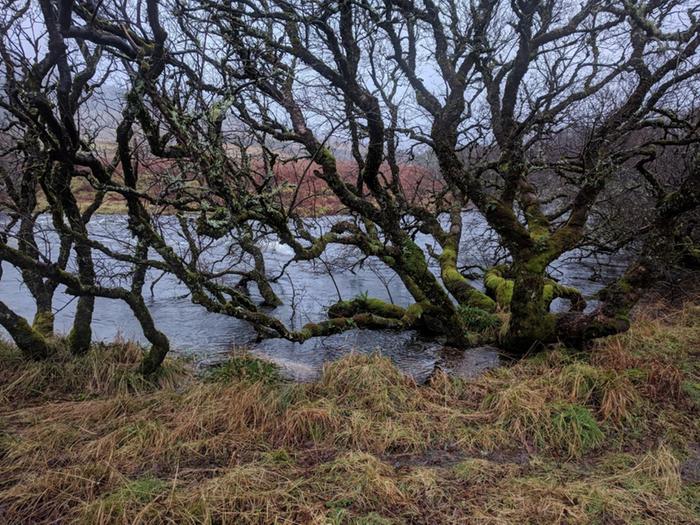
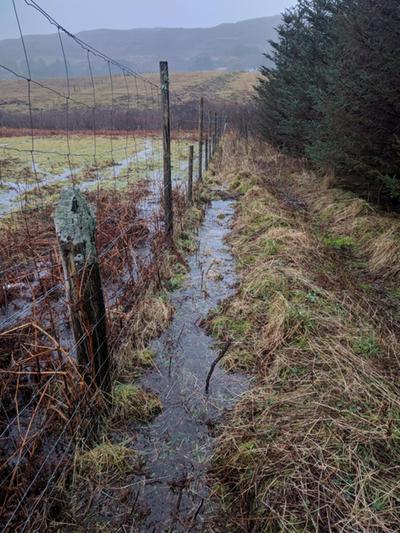
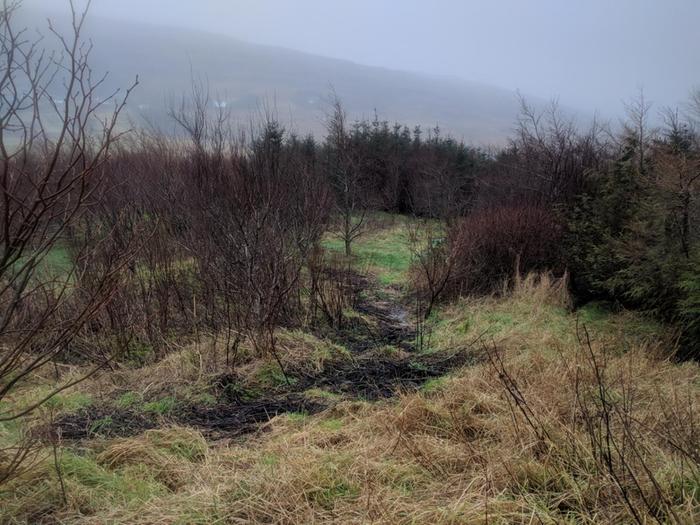
I had a good observation opportunity earlier in the week. Snow melt on top of hard frost followed by persistent rain meant the tree field was as wet as it ever gets. It's a horrid time of year in some ways as we don't get enough dry weather to dry the ground out between times. Just as well we have a good gradient on the hill. Imagine this without some drainage!

Starting at the bottom of the hill, just because the river is always pretty! The river was in full flood. It can get higher than this, but very rarely. When it overflows here it can go through our pond from top to bottom, but I don't think it was more than brimming and lapping over on the little plateau it has cut already.

Scotland temperate rainforest
River in spate


To the North side of the field the hillside next door drains across into our field. The ditch here is not well designed; the bank seems to hold the water back rather than letting it go into the ditch and down the hill under the fence into the river. I think I'll try and improve this a bit. We have planted willows along the inside of the fence here - just cuttings, but they don't seem to have taken perhaps as well as I'd hoped. I suspect that the run off generally from the bracken infested field next door may have allelopathic chemicals which inhibit the root growth. However we can transplant from elsewhere where the cuttings have taken too well. I also have a couple of alder seedlings (from the driveway - the only place they have seeded in!) and several local hazel seedlings which probably won't mind a bit of wet. I probably have some aspen, that again won't mind wet feet. I think plants with some roots will stand more chance against the bracken.

observing water flow under fence after heavy rain
looking down the fenceline; water held back from ditch


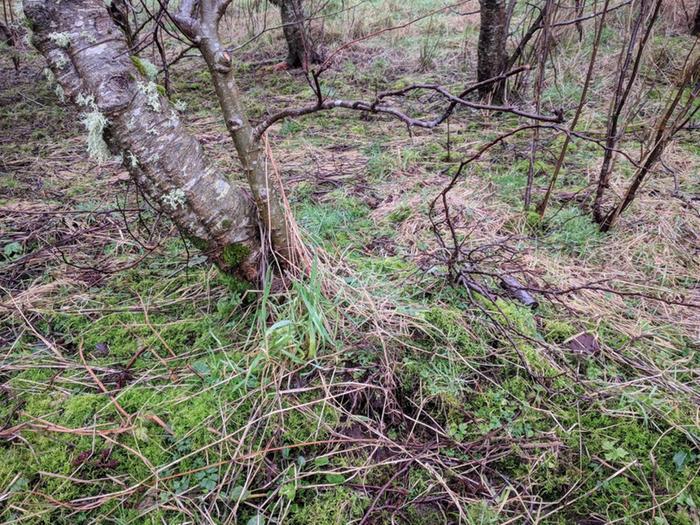
One or two alders have gone wobbly. This will be a combination of wet ground and stiff winds over the winter. There are two close together and I think they are now much more exposed after the coppice I cut last year. It's a bit difficult to tell, but there is a crack in the ground around the trunk where this tree is lifting. I was going to leave this section for another year, but I may as well cut these alder and the adjacent ones, in the hope that they will re-root without the mass of top growth moving the rootballs all the time.

alder tree with crack in wet ground
wobbly alder


It was amazing how many streams there were running across the surface of the ground. Usually these were where I have been walking - I guess that there is more compression of the ground there, and certainly lower herbacious growth. Where the rain can penetrate the soil, I guess it is running underneath as well; above and below the rock strata.
I haven't noticed this stream appearing above my orchard area before. I did plant the tree on raised humps, so hopefully they are not entirely waterlogged. I could try and divert the run off a bit, but it would take some careful ditch digging and there are tree roots and bushes in the way. I think I'll put it quite far down my list of priorities. Again difficult to see, but in the clear patch where the comfrey has died down is where the water was running. I do have a little interception ditch above the leach field (which is the grassy green patch through there) but obviously it doesn't extend that far up. I suspect this is run off collected along where pipes run underground....

winter view on Skye woodland
stream above orchard


More springs on the escarpment below the new polytunnel site are coming out onto my improved pathway which is a bit annoying. I've marked the places where the water emerges, so hopefully I can divert the water so I don't get a large soggy patch making the path muddy. These are coming out from the rock strata themselves so could be from just above the escarpment or from way up the hill, it's difficult to say.

springs from basalt rock strata Skye
springs running on new path


I do have a couple of 'nancycam' videos with the springs and the path-streams, which I'll try and upload later.
 
Posts: 40
Location: Southeastern Norway, half coastal - half inland climate
12
  • Likes 9
  • Mark post as helpful
  • send pies
    Number of slices to send:
    Optional 'thank-you' note:
  • Quote
  • Report post to moderator
Has spruce been planted in your area before? No spruce species are native on the west coast of Norway, but several have been planted, maybe starting between the world wars. Some of them have become very invasive, once mature they produce a *lot* of shade and seeds. Sitka spruce is considered the worst, displacing native vegetation (completely in some places) and being very difficult to remove. I'm not sure it is always literally the species sitka spruce, may spruce species are quite similar, and hybrids have been planted as well.

Other than worrying about spruce, I have to say the number and variety of trees in that table is amazing, makes me envious - or maybe that's not the right word; I wish I had more space and time, anyway!
 
Nancy Reading
steward and tree herder
Posts: 12307
Location: Isle of Skye, Scotland. Nearly 70 inches rain a year
6298
5
transportation dog forest garden foraging trees books food preservation woodworking wood heat rocket stoves ungarbage
  • Likes 10
  • Mark post as helpful
  • send pies
    Number of slices to send:
    Optional 'thank-you' note:
  • Quote
  • Report post to moderator

E Nordlie wrote:Has spruce been planted in your area before?


There are a few spruce plantations on Skye. I won't say where I got some of my starts from! but yes they do seed around a bit. I think the deer and sheep take care of any seedlings they can reach, so I have not heard of spruce being invasive as such around here. There are some much older ones locally and no sign of regeneration. I did consider quite hard before planting the spruce because of the downsides you mention, but haven't regretted it - it is such a good windbreak once it gets going that I could forgive it almost anything else!
The only downside I have had, is that they are so good at shelter that I have difficulty persuading my husband that I need to take some of them out! Many of the first ones I planted, I interplanted with other trees on the assumption that the spruce would be harvested first and the other trees woud have more room to grow. Since those spruce haven't been harvested, the other trees that were interplanted are now being shaded out by the spruce . I may sneakily take one or two of the spruce on the edges down to give some of the other trees a chance, but on the whole that was an idea that didn't really work. We like the windbreak effect at the edges of the field, even though I still worry a bit about funnelling effects, potentially concentrating the wind at any breaks and edges.

I wish I had more space and time, anyway!


Don't we all!?
 
Nancy Reading
steward and tree herder
Posts: 12307
Location: Isle of Skye, Scotland. Nearly 70 inches rain a year
6298
5
transportation dog forest garden foraging trees books food preservation woodworking wood heat rocket stoves ungarbage
  • Likes 7
  • Mark post as helpful
  • send pies
    Number of slices to send:
    Optional 'thank-you' note:
  • Quote
  • Report post to moderator
Belated links to Nancycam channel -

stream running down pathway: https://www.youtube.com/watch?v=U3-mkCoNO1w

temporary spring in rock strata: https://www.youtube.com/watch?v=8t36bUjfEng
 
Nancy Reading
steward and tree herder
Posts: 12307
Location: Isle of Skye, Scotland. Nearly 70 inches rain a year
6298
5
transportation dog forest garden foraging trees books food preservation woodworking wood heat rocket stoves ungarbage
  • Likes 8
  • Mark post as helpful
  • send pies
    Number of slices to send:
    Optional 'thank-you' note:
  • Quote
  • Report post to moderator
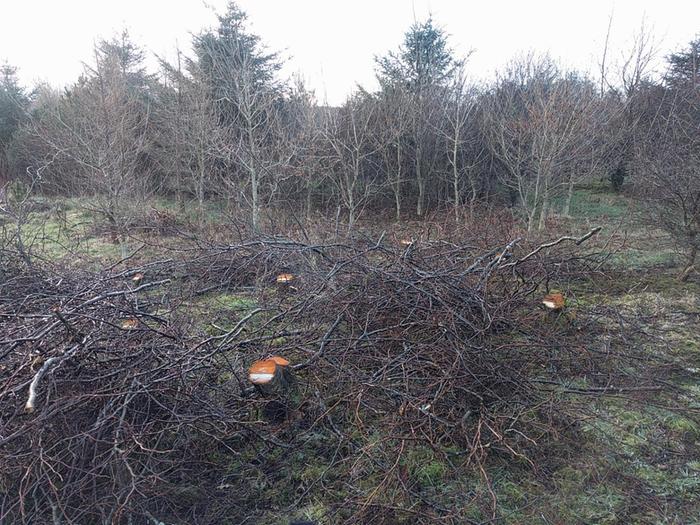
I've almost finished the coppicing for the year; still at the messy stage at the moment though.

I've cut quite a bit of birch this year - I got fed up with looking at the tatty diseased trees, so I have cut most of them out in the hope that if they do grow back they will be healthy, and if they don't - no big loss. The worst were the one's down by the pond and on the Southern side of the field.

Apart from those, I cut a section of alder and birch adjacent to one of the alder patches I coppiced last year. I'm hoping to give a bit more light to those alder, and cut the birch (nice ones this time) before they get too mature. I'd still like to try making birch shrink pots...

birch and alder on lower trackway


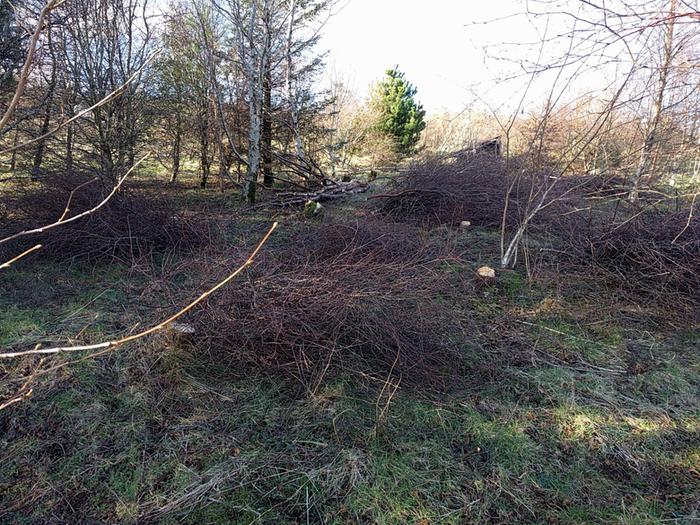
The other main patch I cut was adjacent to the main trackway.

twiggy branches after alder coppicing


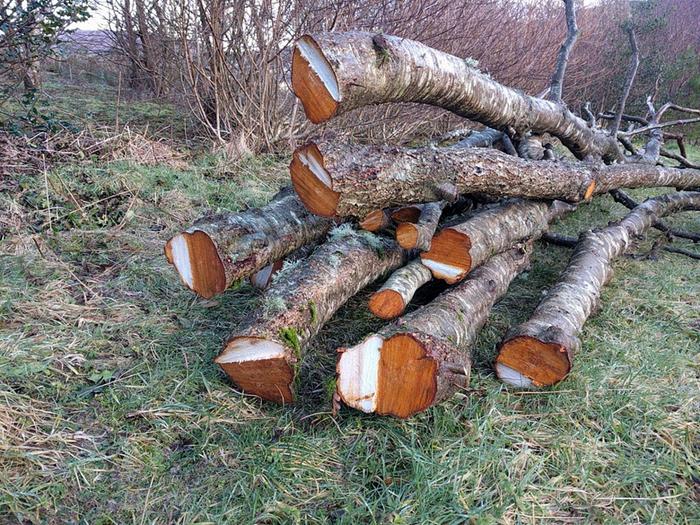
The interesting thing I noticed this year was the cut sections showed a clear pale or orange colour - half and half. Alder wood goes orange arfter being exposed to the air, but some of the cuts stayed pale. It seems that this is because I was using both my reciprocating saw (to make the initial cut) and the bowsaw (to make the through cut). The reciprocating saw seems to have heat sealed the cut surface so that it stays pale. I wonder if there is a use for that? I'll have to check whether the cut surfaces are now consistent in hue after a few days.

contrasting colours in cut surface


The effect was the same on the stump as well as the cut off trunk.

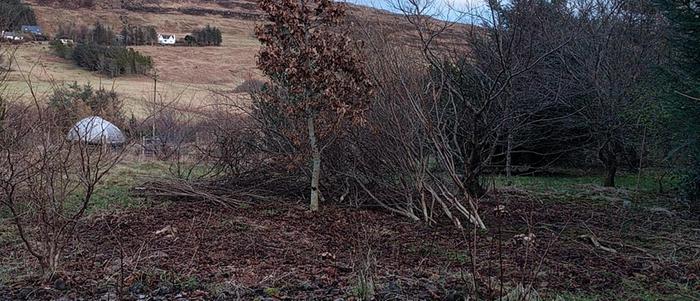
I also coppiced another small area of hazel. I had planted some around the 'royal oaks' (grown allegedly from seeds from one of the royal estates to commemorate Queen Elizabeth's 60 years as queen) as I had read that hazel coppice under oak standards (not coppiced) was a good management style for woodlands. On the other side of the track both the oak and the hazel are still really small, but on the uphill side they needed cutting. I selected out some of the straight thicker sections of hazel for a project that I'll share later (hopefully) but there is a fair amount of halfway reasonable firewood there as well as pea sticks and straight rods of smaller diameter. The oak still has most of it's leaves from last year - they tend to lose them in spring when the new leaves break.

hazel coppice around 'royal' oak


Not pictured is the willow that badly broke during the summer storms, which I finally got round to tidying up by coppicing also.

I have stripped most of the side branches of the cut trunks now, although still a bit to do. Once I move the wood from last year up to the wood shed I can hopefully get this year's away int the shelters in a more timely manner. I'm intending to use the smaller branches for my polytunnel irrigation channels, but hopefully I will still have plenty for making a few more mini hugels (and kindling).
 
Ac Baker
pioneer
Posts: 358
87
cat trees urban
  • Mark post as helpful
  • send pies
    Number of slices to send:
    Optional 'thank-you' note:
  • Quote
  • Report post to moderator
Impressive work!  We are just finishing off coppicing our hazel.

Those alder hemispheres are beautiful, and interesting.
 
It wasn't my idea to go to some crazy nightclub in the middle of nowhere. I just wanted to stay home and cuddle with this tiny ad:
Learn Permaculture through a little hard work
https://wheaton-labs.com/bootcamp
reply
    Bookmark Topic Watch Topic
  • New Topic