Allen Jackson

+ Follow
since Jan 20, 2013
Merit badge: bb list bbv list
For More
Apples and Likes
Apples
Total received
In last 30 days
5
Forums and Threads

Recent posts by Allen Jackson

John Weiland wrote:Thanks for these continued additions, Allen, and giving a personal shout-out to others who have helped a newbie like myself get knee-deep into solar/battery power so quickly.  So much great experience and expertise here to help along interested members of the community.

I hope to add more soon regarding a larger desired system....likely 48V for reasons you and others have noted....and hope to take advantage of the current (and hopefully not disappearing???) deals on hybrid inverter systems for our home.  This may be sized to handle full home loads, but as noted elsewhere may also just be targeted, at least initially, for critical loads like furnace, water-well, and sump-pumps.  One item I did wish to bring up for discussion is your comment about 30A 220/240VAC outlet and perhaps I misunderstood your explanation.  Below is the plug configuration for connecting our gas generator to the transfer switch on our utility (grid) power pole.  It's rated for 30 amps and does indeed all for 120V and 220/240VAC through that same plug.  In fact, I'm actually hoping to set up a hybrid inverter (pure sine wave, 12 - 15 kW) that would be connected to parallel-tied, 100 Ah batteries (scalable).  The hope initially is just to charge the batteries from the grid to test out the interface, then add solar panels step-wise to fine the balance between cost and battery charging that appears to match our battery draw-down.

Now time for some crude math (sets up abacus...  )  I have gas gennies in the 7-9kW range, but only if I use 240V in the equation of 240 X 30 amps do I get the 7200W that the gennie is rated at.  A question arises as to what might happen if I wire the inverter as split phase to provide both 120V and 240V across that same cable and into that same transfer switch:  I'm assuming a (combined?) load larger than 30 A might be attempted, but at what point does this become dangerous?  Pretty sure the generators are breaker protected so that if such a draw/load occurs, the breaker will be tripped, but I've not had this happen to date.  I guess the question is whether the inverter 'AC OUT' terminals will have a breaker that one can size appropriately for all downstream considerations....wire size, etc.

Finally, the specs on the EVE 3.2V cells that you posted look very similar to the ones I'm looking at....only difference being the dimensions.  The cells I'm looking at are ~1.4 inches thick, which will allow me to place them, along with appropriate dividers and bonding wrap, side-by-side into a ~6+ inch space.  Additional space in the casing  will easily allow for BMS and associated wiring.   Fingers crossed!


In the JAG35 YouTube video referenced in the BB, about making a lithium battery powered "Solar Generator", as they were called back then, the both the Inergy Kodiak and his DIY box have a NEMA TT-30R panel mount outlet on them.  I believe that it was mistaken for a 240 Vac outlet commonly used for electric clothes dryers back in the day, which would have been the NEMA 10-30R outlet.  They look similar enough that over the years, many folks have incorrectly wired the TT-30R as a 240 Vac outlet, and then when anyone plugs in an actual RV, it fries all the 120 Vac electronics...  In the YouTube comments, Jehu Garcia even responds to a question about the outlet, saying it is the 120 Vac RV outlet, NOT a 240 Vac outlet at all.

Modern electrical code has replaced the old dryer outlet with a grounded version, so it now has 4 prongs on the plug, not 3, as the retired NEMA 10-30 didn't have a ground connection, only 2 hots and a neutral, and folks were expected to ground the frames of appliances that used the old plugs.

Your NEMA 14-30 is fine.  The "L" just means it is the locking variant, and the "R" is for receptacle, whereas "P" is for the plug side of the connection.

As far as the genny connection, your plug has 4 prongs.  1 is a ground, 1 is a neutral, and the other 2 are hot wires of opposite phases, so there will be 120 Vac measured between each of the hot wires and neutral, but if measured between the 2 hot wires, it will measure 240 Vac.

If you're only using a 120 Vac load, the return path is through the neutral, and the other hot wire is sitting idle, with no current flow, but only using a single leg, you can't draw more than 30 amps through that leg before it should blow a breaker on the generator.  That's what's called an imbalanced load, and different systems can handle load/phase imbalances of different magnitudes.  The genny I was working on this afternoon can only handle a 50% load imbalance.  Yours may be different, but you can't get full power from the generator without using both legs in close to a balanced fashion.  It's hoped that if plugging into a 240 Vac breaker panel, random distribution of 120 Vac breakers will average out and balance the phases, but often they have to be juggled and breakers/circuits may need to be moved around to get as balanced as possible.

A hybrid inverter will also have a maximum load imbalance, and they all should have breakers on their outputs, although it is customary for a split-phase capable inverter will feed a breaker box, and then the distribution goes from there, as arranged by the installer/electrician.  In my powerwall BB entry, both of those inverters are split-phase 120/240 Vac inverters and they're powering a mix of 240 Vac and mostly 120 Vac circuits.

In this picture, the black L1 on the load side feeds the bypass transfer switch L1, which feeds the load center L1, and the red L2 on the load side feeds the bypass transfer switch L2, which feeds the load center L2.

If we need to work on the inverters, the load center can be transferred over to grid power, and then the inverters can be shut down with impunity, or at least without the users knowing, unless we lose grid power...  I did work at balancing the phases, so that while running a 5 Kw load on the system, the phases are less than 3% different , but I had to do that before the powerwall installation because they were blowing breakers and taking down the entire server room in the process when they were highly imbalanced -- then they chose to add more servers, and I had to upgrade the power feed, add the 2nd inverter, etc.
16 hours ago
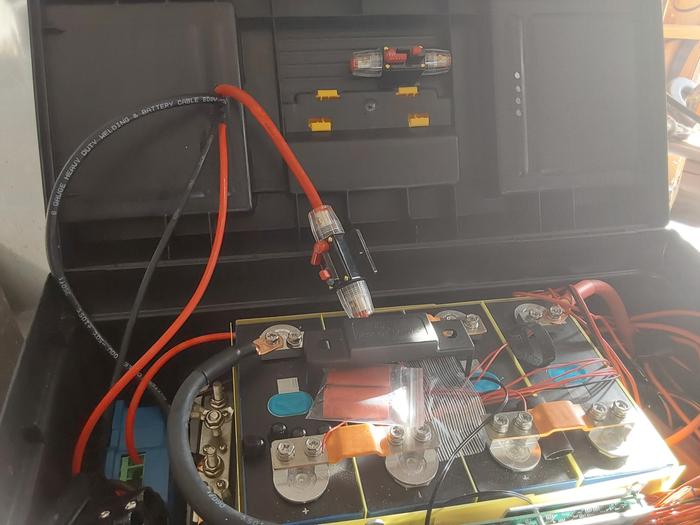
My entry for installing an outlet:

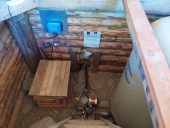
This is a part of a larger job I did installing a large "DIY" powerwall for a server room.  The room adjacent to the server room was selected for its proximity to the server room, (there's a furnace and a water heater in the room) but it was suitable for running conduit from the main breaker box and also to the server room (in our county, all high voltage wiring needs to be in conduit).

I had a helper on this job, but they didn't want to work on high voltage, so I did all the work on this outlet. It's a dedicated 20 Amp GFCI outlet (technically any outlet installed below grade are supposed to be GFCI).

On heavy-duty outlets of this type, there is a brass plate in each contact, which allows attaching wires by clamping force when the screws are tightened. This completely avoids the issue of a wrap-around failure of the wire looping around screws.  I think these also allows the spring clip push-in type, but I don't like using those either, especially with the clamping option available.
18 hours ago
Please note, this is a running document, as long as I'm able to update it, and still need to, so I don't expect to type out the entire thing in one sitting.  Buckle up and enjoy the ride!  Part 1:

History

I've wanted to build a grab-n-go portable battery box for many years, and I'm going to jump into that pool with both feet, explaining my choices of why I make them, etc...  I invite anyone who's curious to join in, and follow along.

Ever since I saw Jehu Garcia's YouTube video 7+ years ago, although I was very critical of that original box in the video, I'd wanted to make my own & do better.  Been a fan of his work since long before then, and he'd done better battery work than that one.  For all of it's shortcomings, it was one of the pioneers in showing the world that they could do that sort of thing.  It was inspirational and lots of folks have posted videos showing their own twist in building such since!

His inspiration for building it was from the Inergy Kodiac, (which has since been discontinued).

The Kodiac specs were loosely what the PEP BB for building a "Charge and Carry" lithium battery power box are based on, and I say "loosely", because the BB requirements are both missing some specs and have at least one spec wrong.  They say:

To complete this BB, the minimum requirements are:
 - 1100 watt hour capacity
 - 1500 watt inverter
 - reasonably water resistant case
 - One 220VAC 30 amp RV outlet  - There is NO such thing!*
 - Four 110VAC 15 amp outlets
 - Four USB plugs
 - Two 12V sockets
 - Power meter with display
 - Solar input plugs
 - Plug to charge the unit from 110V or 220V

What they don't say, is that the solar charge controller in the Kodiac is a 600 watt charge controller, which could become significant if one wants to use this box more than 1 day in a row.  Jehu's box only had a 300 watt charge controller (built-in to the inverter), so that was even worse.

*The 30-amp RV outlet is a 120 VAC outlet, NOT a 240 VAC outlet.  The 50-amp RV outlet is 240 VAC, but the NEMA TT-30R is the outlet in question (TT stands for travel trailer), and it bears a resemblance to the obsolete NEMA 10-30R outlet, which WAS a 240 VAC outlet, and sometimes folks might wire them wrong because of the confusion about this.

This is all well and good, but maybe you're not trying to build this exact thing, or maybe your needs/wants/desires are different?   How to build the system of YOUR preference starts in the design phase.

Design phase

Where to start?  Start with the end in mind!  Figure out what you want to do, so you can tell when you've accomplished it.  If you have a specific goal or set of goals, figure out what it will take to power those goals, and work backwards from there.

Going the other way is prone to wasting money, resources and time, only to find that what you built won't do what you really want it to have done in the first place.  If your goal is just to meet the BB for this, your end result will look VERY different than it would if your goal was to be able to power your refrigerator for an indefinite time period, or be able to run a circular saw building furniture at a cabin, etc...

Along the way, there will be a few major design choices that will need to be made, because they will either restrict your options going forward but save money immediately, or allow for other choices, but likely cost more for that luxury.

One of the early choices is what system voltage to run at.  This is not necessarily the same as the output voltages, for example, one can have a 25.6 V system voltage, and still produce 12 volts for 12 V outlets.  The Kodiak actually had a system voltage of 11.1 volts...  Common options are normally "12 Volt", "24 Volt", or "48 Volt", with pros and cons for each of them, plus if being able to generate 120 Vac (or 230 Vac) is a goal, the system voltage will lock you into which inverters you can use, and thereafter, it can't be changed without replacing the inverter and probably wasting the money spent on the first inverter...

You don't have to make the choice first, just be aware that the choice is coming, and it will lock the build into that path once you do.  Keep this in mind when shopping for inverters, so it can help you evaluate your choices.

Choosing an inverter (or so many options, how to choose?)

As alluded to before, inverters will have an input voltage (range) that ties them to the system voltage, but they also have other choices of options.  Modified sine wave or pure sine wave?  Pure sine wave output more closely resembles what utility power looks like, while modified sine wave will look closer to a square wave pattern, if you look at them on an oscilloscope.  More importantly, the modified sine wave is electrically noisy, and can cause problems with sensitive electronics, or in some cases, won't even run them at all.  But it's cheaper...  Stick to the pure sine wave whenever there's a choice and the budget will allow it, as there are lots of folks who end up wishing they'd bought the pure sine wave versions, or end up switching them out for such.

The other main choice one will have with inverters, is the power output rating.  This is where the end goal comes home to roost, because choosing too small here means you can't run whatever device you were hoping to run!  Keep in mind, more power = more expensive, and also more power output = more power input, so as that scales upwards, the system voltages will need to go up too.   Buying a really huge inverter will force you to also buy huge battery power to run it, so exercise some caution and restraint, as needed

When I sat down with my wife and chatted about "What would we ever want to use something like this for?", in light of our planned trip to WL, she first said "Lights!", which can be done pretty easily, and on a low power budget.  The next thing, was refrigeration, since a week of camping would go better for us, if we had a way to keep food cold.  Fine - there are several manufacturers of electric refrigerator coolers.  Looking at the specs of the BougeRV 30 L one, it's reported to draw an average of 55 watts, although when cooling down initially, can go upwards of 100 watts.  Charging phones & tablets made the list, as well as a truly luxury cooking item - a sous vide cooker (1000 watts?).  Don't know how close I'll get to that, but lets clarify that and reduce it to hard numbers.

I estimate about 50 watts for LED lighting (aim high), and 8 hrs of use, that's 400 watt-hrs for lighting.

Charging electronics?  Both of our phones can likely stay charged for 50 watt-hrs /day, but the tablets will be much greater power draw.  I'm going to guess 500 watt-hrs/day to start, and then check it with a Kill-o-watt meter later.
Let's start with 550 watt-hrs for electronics (for now)

Refrigeration - If the 30 L refrigerator used 100 watts all the time, that would add up to 2400 watt-hrs/day.  It won't be that high, but aim high for calculations, just in case.

That brings the total up to 3 Kwh/day, without the fancy cooking gear for total power usage!  I can surely build/bring a box that can handle that amount of power for a day, but it's going to be tough to be able to bring that amount of solar to recharge 3 Kwh/day, minus inefficiency losses (maybe 20%?)...

That brings us to a sidebar interruption to our thought process - charging capacity!  If we were to bring a 200 watt solar panel, and we got the functional equivalent of 4 hrs of sun each day, that would only allow us to recharge 800 watt-hrs of power, and using more than 3.6 Kwh/day isn't sustainable.  We'd need to have at least 5 of those panels, or have more than 4 hrs of functional daylight, just to keep up, and that still doesn't include the fancy cooking gear.

About that fancy cooking gear...  Not sure if we'll end up pulling it off, but it does highlight another inverter (and battery) criteria that explains why it matters.  Peak power demand matters.  If that were used at the same time as everything else, the peak power requirement from our inverter would be likely 1000 watts, but the peak power demand from the battery system will be 1100 watts, for the inverter, 100 watts for the refrigerator, 50 watts for lighting, 50 watts for phone charging, and 100 watts for tablet charging, totaling 1400 watts...

Not only does the inverter have to be able to supply 1000 watts (normally pretty easy to get that), the battery system will need to provide nearly half again as much, but at a much lower voltage, so for a 12.8 Vdc LiFePO4 battery, that comes out to about 110 Amps.  The system battery has to have enough current capacity to source that, hopefully without exceeding the 1C rate, to keep the batteries healthy longer.  For this example, a 100 Ah battery bank will be too small!

That brings us back around to the system voltage, because if this were a 24 Vdc system, the numbers would be much more favorable, because at that same power output, the demand from the battery would be only about 55 amps.  As an added bonus, the 24 Vdc system can use smaller wires for battery power, and lose less heat from resistance losses in the wires (which also eats up efficiency, so I'd stay with as large a wire size as will fit).  For a LiFePO4 battery, that means cells in groups of 8, which is likely to increase the size and weight of such a system, but hopefully not so much as to make it impractical, but that depends on the choice of battery.

A 48 Vdc system will only need to supply about 28 amps, although the need to carry batteries with cells in groups of 16 starts to off-set the portability of it all...

If we add the fancy cooking gear, with a budget of using it for only 2 hrs/day, our daily power needs go up to 5 Kwh/day, plus efficiency losses. or 6 Kwh, but that also drives up the solar requirement to 8 panels, to be able to charge enough to sustain it.

In any case, that shows how there's a careful dance with capacity vs. weight/size.  I don't actually know which choice I'm going to make right now, as I should probably chat with my wife to find out how badly she'll want to have the fancy cooking gear in use have met with the boss, now I know what size I'm building and what system voltage - while Harbor Freight still has the portable 200 watt panels on sale for the next 2 days...

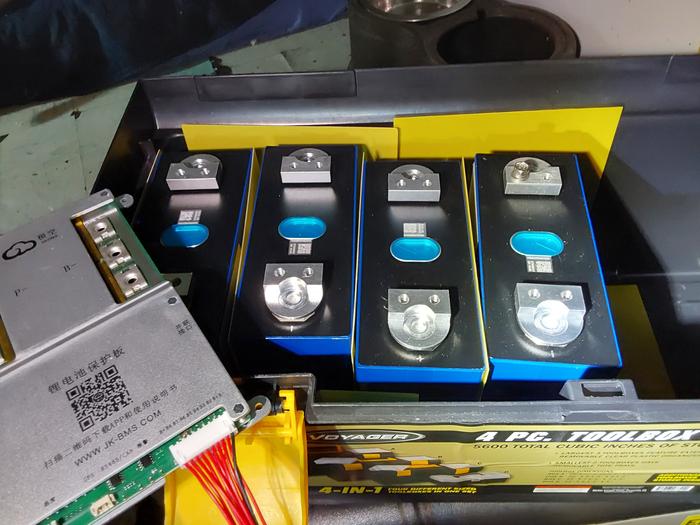
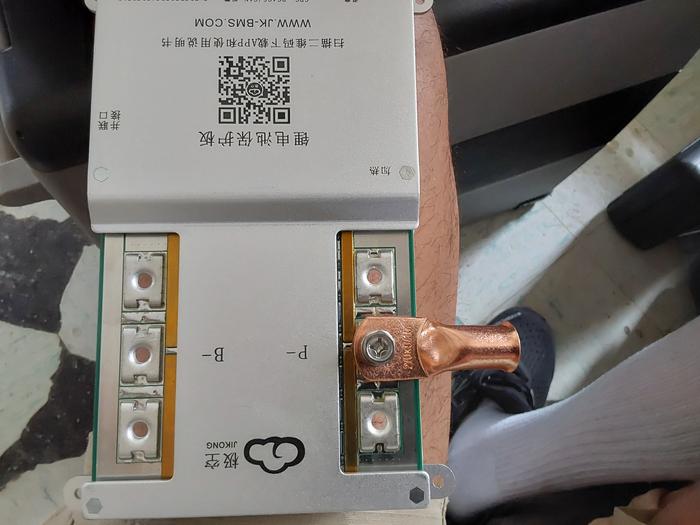
It looks like I'll be building a 24 V system with 8 Kwh of battery power.  Technically, it could still be made to work as a 12 V system, but then I'd need to buy another BMS for the 2nd battery bank of 4, and the one I already have, will support anywhere from 4-8 cells, so I guess I'll be buying a 24 Volt inverter then, and the system is locked into that path...

Part 2
Batteries

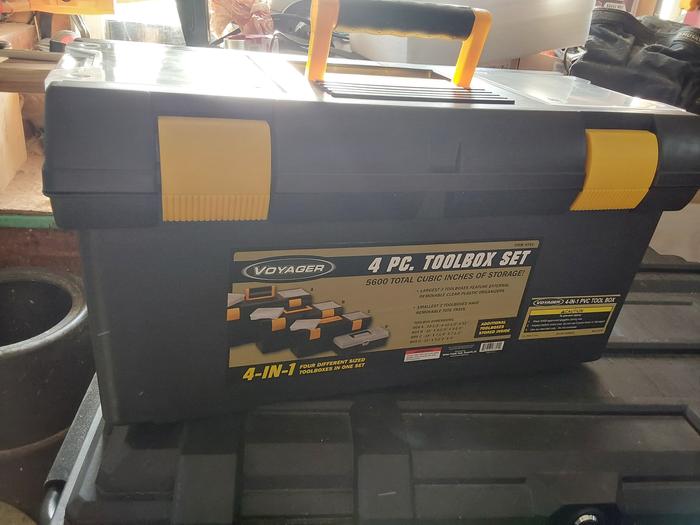
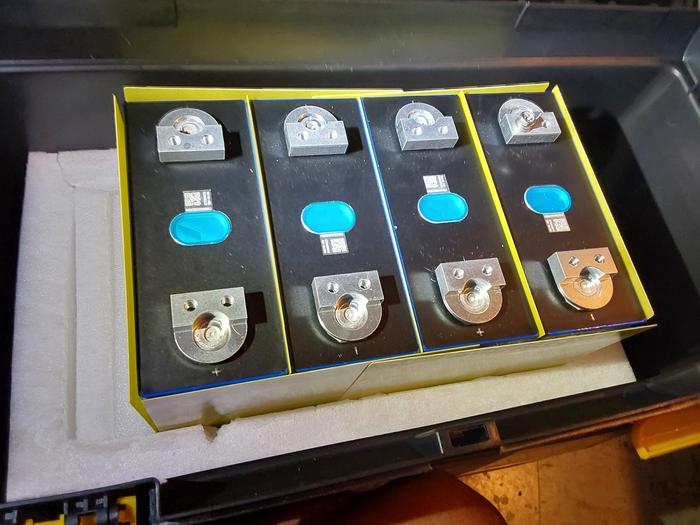
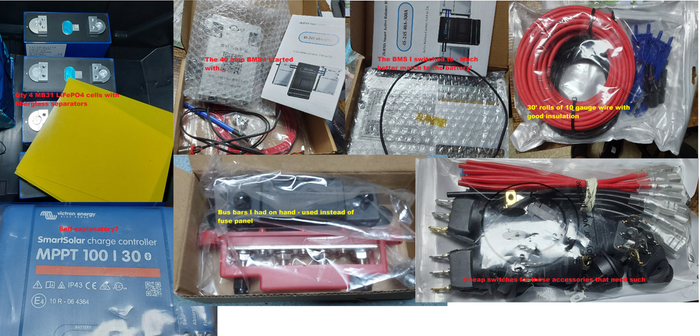
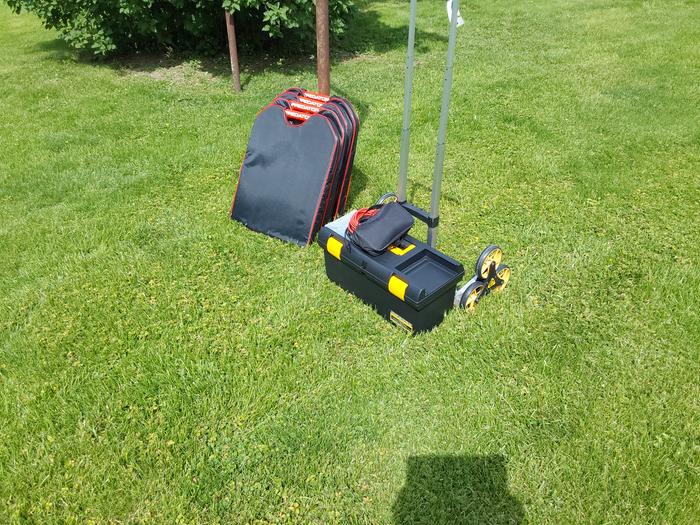
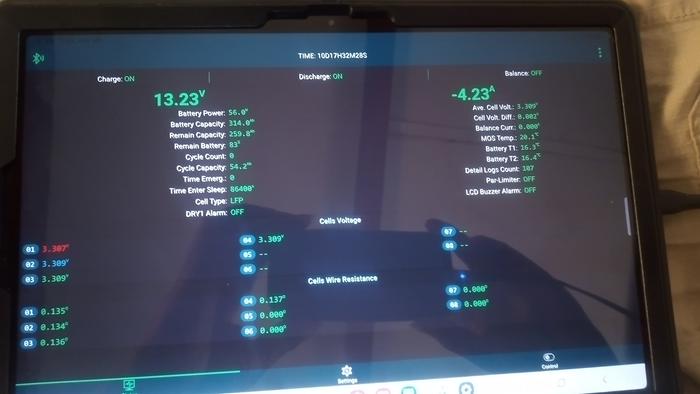
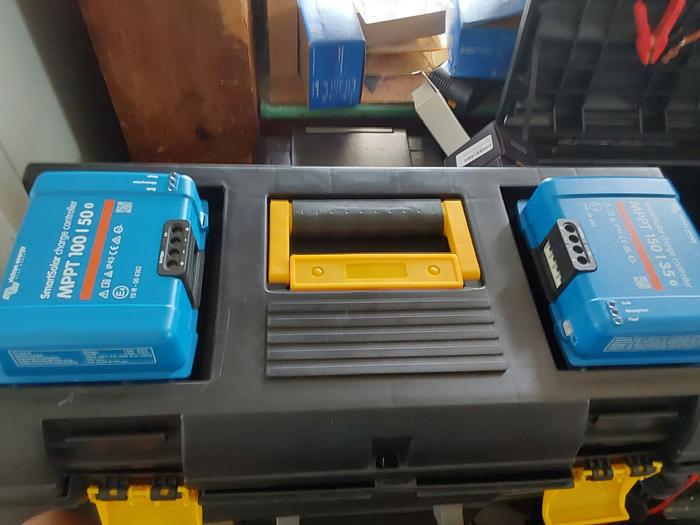
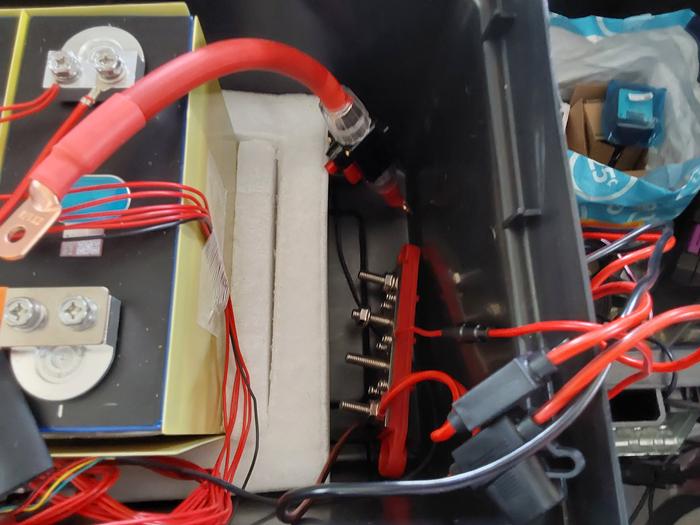
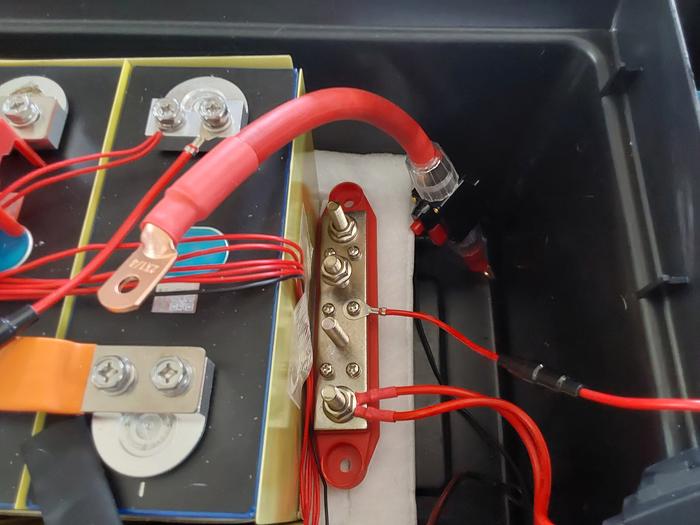
I have several new EVE MB31 cells.  I think I ordered 40 of them directly from China right before the tariff war started, although it took about 2 months to get them delivered.  They're a bit on the heavy side to use for a portable battery box, but it's what I've got, and I have a rolling toolbox that should be able to handle the 100 lbs of stuff...  (8 of these batteries weighs about 96 Lbs, and then there's the rest of the build)

(That's the single biggest reason that the lithium-ion polymer batteries are so popular.  To build a system with 8 Kwh of lithium polymer batteries, the batteries would end up weighing only about 70 lbs!)

Depending on the goal, the system voltage, the storage capacity requirements, and sometimes the peak current requirements, one can change which battery is used for this, so for example, if one is using EVE 100 Ah LiFePO4 cells, a stack of 4 of those would yield a 12.8 Vdc stack, and 1.28 Kwh (1280 wh) of energy, so it would meet the minimum capacity requirements for the "Charge and Carry" lithium battery power box BB  (1100 wh), but it might not be enough to run your freezer for a full 24 hrs...  Keep the goal in mind!

(You could also meet those same requirements with a 100 Ah (1200 wh) deep-cycle lead-acid battery, although you'll kill that battery very quickly if you ever actually used all 100 Ah...)

If you stay with the EVE 100 Ah cells, but go to 8 of them, they can be an 8S bank of 25.6 Vdc, which still works as 24 V system, with 2560 wh (2.56 Kwh).  That will probably be enough to run a freezer for 24 hrs, depending on the freezer.

If one were to go all out, and use the new EVE MB56 628 Ah cells, it certainly won't be very portable, but it would yield a whopping 5024 wh, but weight over 200 lbs.

12 V pack4S voltage4S energy4S weight4S cont. current4S peak current
EVE 100 Ah12.8 Vdc1280 wh16.94 lbs100 Amps200 amps?
EVE 314 Ah12.8 Vdc4019 wh49.38 lbs314 Amps628 amps?
EVE 628 Ah12.8 Vdc8038 wh101.4 lbs 314 amps 314 amps
24 V pack8S voltage8S energy8S weight8S cont. current8S peak current
EVE 100 Ah25.6 Vdc2560 wh33.88 lbs100 Amps200 amps?
EVE 314 Ah25.6 Vdc8038 wh98.76 lbs314 Amps628 amps?
EVE 628 Ah25.6 Vdc16077 wh202.8 lbs 314 amps 314 amps
48 V pack16S voltage16S energy16S weight16S cont. current16S peak current
EVE 100 Ah51.2 Vdc5120 wh67.76 lbs100 Amps200 amps?
EVE 314 Ah51.2 Vdc16076 wh197.52 lbs314 Amps628 amps?
EVE 628 Ah51.2 Vdc32154 wh405.6 lbs 314 amps 314 amps

(In case anyone's wondering, the MB56 628 Ah cells are only rated at 0.5C, so their current capacity is the same as the MB31 cells, they just hold twice as much energy.)

So, in my case, I'm going to build an 8 Kw 24 volt system, that will weigh 100+ lbs.  I need to order a 24 volt inverter, and a solar charge controller that can work with 24 volt batteries and has as high of a charging capacity as possible, because I'll need to be able to feed this beast on occasionally.   My wife indicated that we don't have to use the fancy cooking gear every day , but it will be nice to be able to use it a time or 2.  I should probably also get to Harbor Freight, and pick up another pair of 200 watt solar panels.
1 day ago
Amazon actually sells parallel compatible versions of the JK BMS, if you are wanting to do combo series/parallel battery packs

https://www.amazon.com/gp/aw/d/B0FPCZS56M
1 day ago
An example of an EVE 100 Ah cell specs from this website: https://www.evlithium.com/LiFePO4-Battery/eve-lf100la-100ah-battery.html

Specification
Battery Brand: EVE
Battery Model: LF100LA
Min. Capacity: 100Ah
Min. Energy: 320Wh
Initial internal resistance: ≤0.5mΩ
Nominal Voltage: 3.2V
Charging Cut-off Voltage: 3.65V
Discharging Cut-off Voltage:2.5V (T>0℃), 2.0V (T≤0℃)
Standard Charging Current: 50A(0.5C)
Max. Continuous charging/discharging Current: 100A 1.0C
Max. Pulse charging/discharging Current: 200A 2C(30S)
Cycle Life: 4000 Cycles @80% DOD
Charging Temperature: 0℃~55℃
Discharging Temperature: -20℃~55℃
Dimension: 118.5±0.50mm(H)*160±0.50mm(w)*50.1±0.5mm(T)
Weight: 1.98±0.05 kg
Encapsulation mode: U-shaped capsule

This may not be the same model of cell you're looking, as there are 3 different 100 Ah cells listed, but this gives a good example of what the peak current specs are, and how they derate the lifecycle claims for higher current use.

1 day ago

craig howard wrote:I don't think I've ever been ripped off on alliex.


I have also, with proof that that they delivered to the wrong address to some place 3 states away, to a recipient I'd never heard of, but I got my credit card company involved, and after 4 months, they ruled in my favor and I got a full refund. The vendor started by insisting that I return the product that was mis-shipped...

Never again!

A few months later, that vendor was nowhere to be found on aliexpress.

Use alibabba.com, AND use a credit card that will have your back if things go south, the consumer protections we take for granted in the USA don't exist in most of the rest of the world!
1 day ago
October 5th - 9th still works, and in order of preference, Allerton Abbey, Red Cabin, or RMH Tipi, as I don't think I'd fit very well in a twin bunk.  I'm too tall for most of them.  I've sent email to bunks (at) richsoil . com and was awaiting a response/confirmation of what was available.

paul wheaton wrote:we are not doing a jamboree this year.  damn.


We're still wanting to come out as SEPPers

Allen Jackson wrote: but I'm personally willing to baby my cells and only use the top 50%, just to get 10K-12K cycles from them...


Should read "but I'm personally NOT willing to baby my cells and only use the top 50%, just to get 10K-12K cycles from them"
3 days ago