Please note, this is a running document, as long as I'm able to update it, and still need to, so I don't expect to type out the entire thing in one sitting. Buckle up and enjoy the ride! Part 1:
History
I've wanted to build a grab-n-go portable battery box for many years, and I'm going to jump into that pool with both feet, explaining my choices of why I make them, etc... I invite anyone who's curious to join in, and follow along.
Ever since I saw Jehu Garcia's YouTube video 7+ years ago, although I was very critical of that original box in the video, I'd wanted to make my own & do better. Been a fan of his work since long before then, and he'd done better battery work than that one. For all of it's shortcomings, it was one of the pioneers in showing the world that they could do that sort of thing. It was inspirational and lots of folks have posted videos showing their own twist in building such since!
His inspiration for building it was from the Inergy Kodiak, (which has since been discontinued).
The Kodiak specs were loosely what the PEP BB for building a
"Charge and Carry" lithium battery power box are based on, and I say "loosely", because the BB requirements are both missing some specs and have at least one spec wrong. They say:
To complete this BB, the minimum requirements are:
- 1100 watt hour capacity
- 1500 watt inverter
- reasonably water resistant case
- One
220VAC 30 amp RV outlet -
There is NO such thing!*
- Four 110VAC 15 amp outlets
- Four USB plugs
- Two 12V sockets
- Power meter with display
- Solar input plugs
- Plug to charge the unit from 110V or 220V
What they don't say, is that the solar charge controller in the Kodiak is a 600 watt charge controller, which could become significant if one wants to use this box more than 1 day in a row. Jehu's box only had a 300 watt charge controller (built-in to the inverter), so that was even worse.
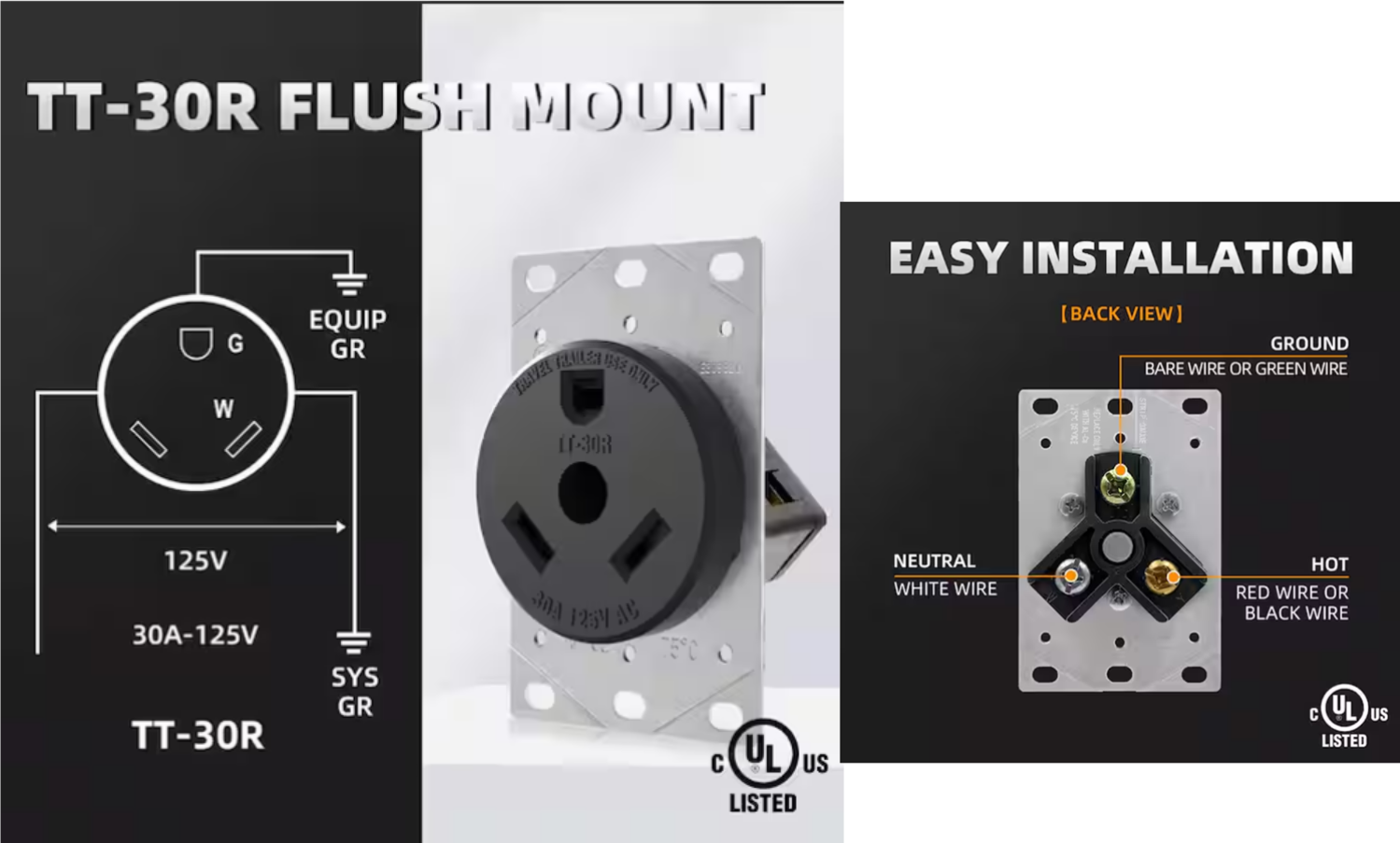
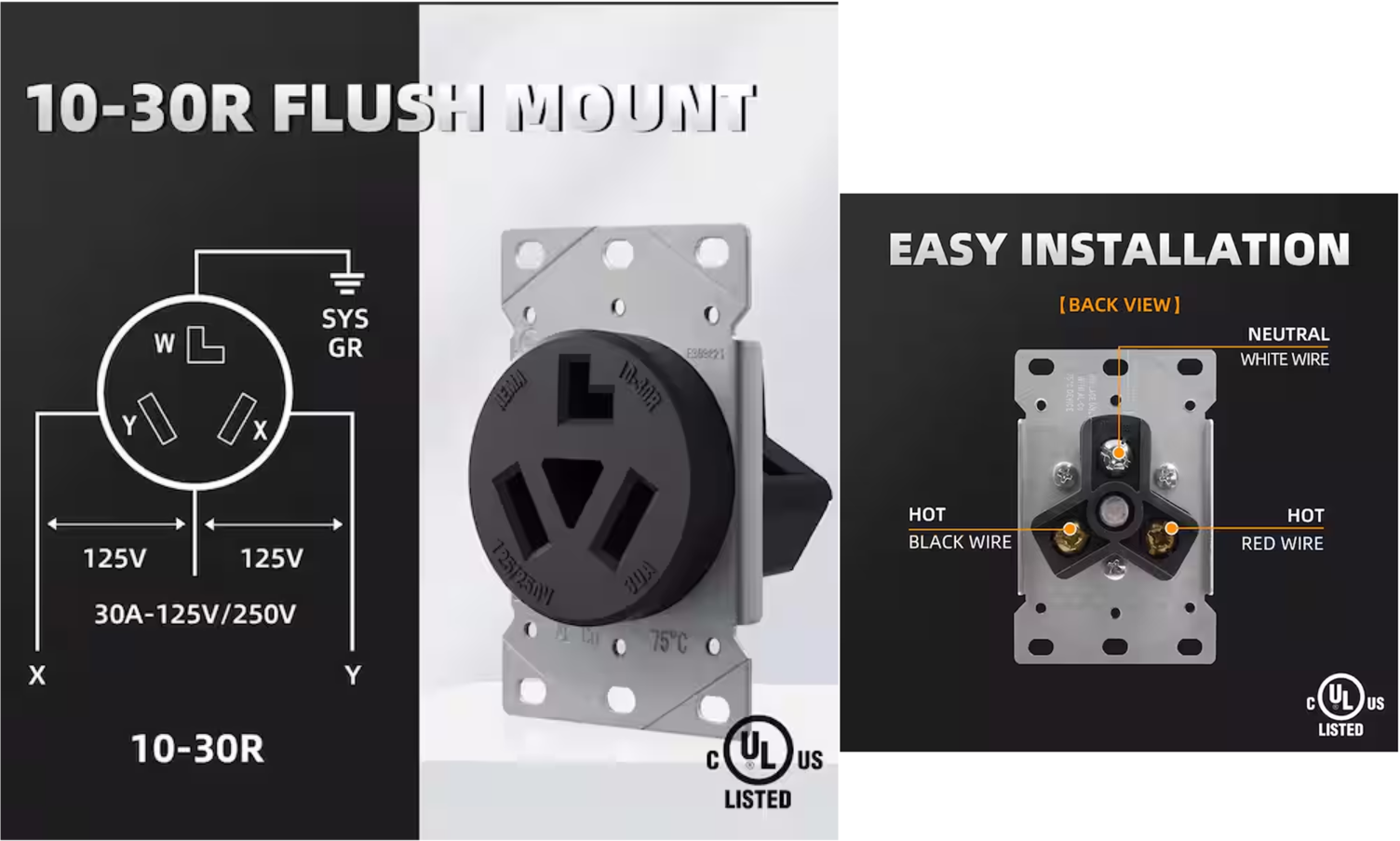
*The 30-amp RV outlet is a 120 VAC outlet, NOT a 240 VAC outlet. The 50-amp RV outlet is 240 VAC, but the NEMA TT-30R is the outlet in question (TT stands for travel trailer), and it bears a resemblance to the obsolete NEMA 10-30R outlet, which WAS a 240 VAC outlet, and sometimes folks might wire them wrong because of the confusion about this.
This is all well and good, but maybe you're not trying to build this exact thing, or maybe your needs/wants/desires are different? How to build the system of YOUR preference starts in the design phase.
Design phase
Where to start? Start with the end in mind! Figure out what you want to do, so you can tell when you've accomplished it. If you have a specific goal or set of goals, figure out what it will take to power those goals, and work backwards from there.
Going the other way is prone to wasting money, resources and time, only to find that what you built won't do what you really want it to have done in the first place. If your goal is just to meet the BB for this, your end result will look VERY different than it would if your goal was to be able to power your refrigerator for an indefinite time period, or be able to run a circular saw building furniture at a cabin, etc...
Along the way, there will be a few major design choices that will need to be made, because they will either restrict your options going forward but save money immediately, or allow for other choices, but likely cost more for that luxury.
One of the early choices is what system voltage to run at. This is not necessarily the same as the output voltages, for example, one can have a 25.6 V system voltage, and still produce 12 volts for 12 V outlets. The Kodiak actually had a system voltage of 11.1 volts... Common options are normally "12 Volt", "24 Volt", or "48 Volt", with pros and cons for each of them, plus if being able to generate 120 Vac (or 230 Vac) is a goal, the system voltage will lock you into which inverters you can use, and thereafter, it can't be changed without replacing the inverter and probably wasting the money spent on the first inverter...
You don't have to make the choice first, just be aware that the choice is coming, and it will lock the build into that path once you do. Keep this in mind when shopping for inverters, so it can help you evaluate your choices.
Choosing an inverter (or so many options, how to choose?)
As alluded to before, inverters will have an input voltage (range) that ties them to the system voltage, but they also have other choices of options. Modified sine wave or pure sine wave? Pure sine wave output more closely resembles what utility power looks like, while modified sine wave will look closer to a square wave pattern, if you look at them on an oscilloscope. More importantly, the modified sine wave is electrically noisy, and can cause problems with sensitive electronics, or in some cases, won't even run them at all. But it's cheaper... Stick to the pure sine wave whenever there's a choice and the budget will allow it, as there are lots of folks who end up wishing they'd bought the pure sine wave versions, or end up switching them out for such.
The other main choice one will have with inverters, is the power output rating. This is where the end goal comes home to roost, because choosing too small here means you can't run whatever device you were hoping to run! Keep in mind, more power = more expensive, and also more power output = more power input, so as that scales upwards, the system voltages will need to go up too. Buying a really huge inverter will force you to also buy huge battery power to run it, so exercise some caution and restraint, as needed

When I sat down with my wife and chatted about "What would we ever want to use something like this for?", in light of our planned trip to WL, she first said "Lights!", which can be done pretty easily, and on a low power budget. The next thing, was refrigeration, since a week of camping would go better for us, if we had a way to keep food cold. Fine - there are several manufacturers of electric refrigerator coolers. Looking at the specs of the BougeRV 30 L one, it's reported to draw an average of 55 watts, although when cooling down initially, can go upwards of 100 watts. Charging phones & tablets made the list, as well as a truly luxury cooking item - a sous vide cooker (1000 watts?). Don't know how close I'll get to that, but lets clarify that and reduce it to hard numbers.
I estimate about 50 watts for LED lighting (aim high), and 8 hrs of use, that's 400 watt-hrs for lighting.
Charging electronics? Both of our phones can likely stay charged for 50 watt-hrs /day, but the tablets will be much greater power draw. I'm going to guess 500 watt-hrs/day to start, and then check it with a Kill-o-watt meter later.
Let's start with 550 watt-hrs for electronics (for now)
Refrigeration - If the 30 L refrigerator used 100 watts all the time, that would add up to 2400 watt-hrs/day. It won't be that high, but aim high for calculations, just in case.
That brings the total up to 3 Kwh/day, without the fancy cooking gear for total power usage! I can surely build/bring a box that can handle that amount of power for a day, but
it's going to be tough to be able to bring that amount of solar to recharge 3 Kwh/day, minus inefficiency losses (maybe 20%?)...
That brings us to a sidebar interruption to our thought process -
charging capacity! If we were to bring a 200 watt solar panel,
and we got the functional equivalent of 4 hrs of sun each day, that would only allow us to recharge 800 watt-hrs of power, and using more than 3.6 Kwh/day isn't sustainable. We'd need to have at least 5 of those panels, or have more than 4 hrs of functional daylight, just to keep up, and that still doesn't include the fancy cooking gear.
About that fancy cooking gear... Not sure if we'll end up pulling it off, but it does highlight another inverter (and battery) criteria that explains why it matters. Peak power demand matters. If that were used at the same time as everything else, the peak power requirement from our inverter would be likely 1000 watts, but the peak power demand from the battery system will be 1100 watts, for the inverter, 100 watts for the refrigerator, 50 watts for lighting, 50 watts for phone charging, and 100 watts for tablet charging, totaling 1400 watts...
Make sure your choice of inverter can handle the demand of your preferred loads.
Not only does the inverter have to be able to supply 1000 watts (normally pretty easy to get that), the battery system will need to provide nearly half again as much, but at a much lower voltage, so for a 12.8 Vdc LiFePO4 battery, that comes out to about 110 Amps. The system battery has to have enough current capacity to source that, hopefully without exceeding the 1C rate, to keep the batteries healthy longer. For this example, a 100 Ah battery bank will be too small!
Make sure your battery system can handle the current draw of both your peak & continuous loads too.
That brings us back around to the system voltage, because if this were a 24 Vdc system, the numbers would be much more favorable, because at that same power output, the demand from the battery would be only about 55 amps. As an added bonus, the 24 Vdc system can use smaller wires for battery power, and lose less heat from resistance losses in the wires (which also eats up efficiency, so I'd stay with as large a wire size as will fit). For a LiFePO4 battery, that means cells in groups of 8, which is likely to increase the size and weight of such a system, but hopefully not so much as to make it impractical, but that depends on the choice of battery.
A 48 Vdc system will only need to supply about 28 amps, although the need to carry batteries with cells in groups of 16 starts to off-set the portability of it all...
If we add the fancy cooking gear, with a budget of using it for only 2 hrs/day, our daily power needs go up to 5 Kwh/day, plus efficiency losses. or 6 Kwh, but that also drives up the solar requirement to 8x 200 watt panels, to be able to charge enough to sustain it.
In any case, that shows how there's a careful dance with capacity vs. weight/size. I
don't actually know which choice I'm going to make right now, as I should probably chat with my wife to find out how badly she'll want to have the fancy cooking gear in use have met with the boss, now I know what size I'm building and what system voltage -
while Harbor Freight still has the portable 200 watt panels on sale for the next 2 days...
It looks like I'll be building a 24 V system with 8 Kwh of battery power. Technically, it could still be made to work as a 12 V system, but then I'd need to buy another BMS for the 2nd battery bank of 4, and the one I already have, will support anywhere from 4-8 cells, so I guess I'll be buying a 24 Volt inverter then, and the system is locked into that path...
Part 2
Batteries
I have several new EVE MB31 cells. I think I ordered 40 of them directly from China right before the tariff war started, although it took about 2 months to get them delivered. They're a bit on the heavy side to use for a portable battery box, but it's what I've got, and I have a rolling toolbox that should be able to handle the 100 lbs of stuff... (8 of these batteries weighs about 96 Lbs, and then there's the rest of the build)
(That's the single biggest reason that the lithium-ion polymer batteries are so popular. To build a system with 8 Kwh of lithium polymer batteries, the batteries would end up weighing only about 70 lbs!)
Depending on the goal, the system voltage, the storage capacity requirements, and sometimes the peak current requirements, one can change which battery is used for this, so for example, if one is using EVE 100 Ah LiFePO4 cells, a stack of 4 of those would yield a 12.8 Vdc stack, and 1.28 Kwh (1280 wh) of energy, so it would meet the minimum capacity requirements for the "Charge and Carry" lithium battery power box BB (1100 wh), but it might not be enough to run your freezer for a full 24 hrs... Keep the goal in mind!
(You could also meet those same requirements with a 100 Ah (1200 wh) deep-cycle lead-acid battery, although you'll kill that battery very quickly if you ever actually used all 100 Ah...)
If you stay with the EVE 100 Ah cells, but go to 8 of them, they can be an 8S bank of 25.6 Vdc, which still works as 24 V system, with 2560 wh (2.56 Kwh). That will probably be enough to run a freezer for 24 hrs, depending on the freezer.
If one were to go all out, and use the new EVE MB56 628 Ah cells, it certainly won't be very portable, but it would yield a whopping 5024 wh, but weight over 200 lbs.
| 12 V pack | 4S voltage | 4S energy | 4S weight | 4S cont. current | 4S peak current |
|---|
| EVE 100 Ah | 12.8 Vdc | 1280 wh | 16.94 lbs | 100 Amps | 200 amps? |
| EVE 314 Ah | 12.8 Vdc | 4019 wh | 49.38 lbs | 314 Amps | 628 amps? |
| EVE 628 Ah | 12.8 Vdc | 8038 wh | 101.4 lbs | 314 amps | 314 amps |
| 24 V pack | 8S voltage | 8S energy | 8S weight | 8S cont. current | 8S peak current |
|---|
| EVE 100 Ah | 25.6 Vdc | 2560 wh | 33.88 lbs | 100 Amps | 200 amps? |
| EVE 314 Ah | 25.6 Vdc | 8038 wh | 98.76 lbs | 314 Amps | 628 amps? |
| EVE 628 Ah | 25.6 Vdc | 16077 wh | 202.8 lbs | 314 amps | 314 amps |
| 48 V pack | 16S voltage | 16S energy | 16S weight | 16S cont. current | 16S peak current |
|---|
| EVE 100 Ah | 51.2 Vdc | 5120 wh | 67.76 lbs | 100 Amps | 200 amps? |
| EVE 314 Ah | 51.2 Vdc | 16076 wh | 197.52 lbs | 314 Amps | 628 amps? |
| EVE 628 Ah | 51.2 Vdc | 32154 wh | 405.6 lbs | 314 amps | 314 amps |
(In case anyone's wondering, the MB56 628 Ah cells are only rated at 0.5C for charge & discharge, so their current capacity is the same as the MB31 cells, they just hold twice as much energy.)
The "C" rate, is the amount of current that a battery can suffer, and it's expressed as a comparison of its ampere-hour capacity. A 100 Ah battery would have a 1C rate of 100 amps, a 50 Ah battery would have a 1C rate of 50 amps, etc. Manufacturers usually use that to describe how fast a battery can be discharged or charged, and under what circumstances. High-rate discharge cells/batteries will have a much higher "C" rate, and some battery chemistries are better at high-rate discharge than others. Lead-acid is great for high-rate discharge, it just has several other limitations. Lithium Polymer cells are usually pretty good for that too, with "C" rates being 5C, 10C, or even 25C, & serious advantages of light weight at the same time. LiFePO4 cells are typically a compromise, and normally are 1C-3C, with the tendency to be lower as the capacity goes up. They do have a weight advantage over lead-acid, and they charge faster than lead-acid, but most often their charge and discharge are recommended to be 1C or less (lead-acid can discharge quickly, but not charge quickly).
Because of this parameter, the way to increase available discharge current is to parallel cells/banks (it's the "P" in a pack description, like 4S2P, or 2S8P, etc., where the "S" is the number of cells in series, but more on that later in the BMS section)
So, in my case, I'm going to build an 8 Kw 24 volt system, that will weigh 100+ lbs. I need to order a 24 volt inverter, and a solar charge controller that can work with 24 volt batteries and has as high of a charging capacity as possible, because I'll need to be able to feed this beast on occasion. My wife indicated that we don't have to use the fancy cooking gear every day
, but it will be nice to be able to use it a time or 2. I should probably also get to Harbor Freight, and pick up another pair of 200 watt solar panels ASAP.
Part 3
Solar panels
I've scored a total of 5 of the Harbor Freight "Predator" brand 200 watt portable solar panels now (Why in the world, would I or anyone do that?), so I should probably delve into choices for solar panels next. (Either that, or charge controllers?) Anyway, anyone who's half-awake and knows much about solar panels, knows that the Harbor Freight panels are typically much higher price/watt than buying "real"
full-size solar panels, from just about any source... The operative phrase is "full-size" solar panels!
Unless one has a full-size pickup truck with an empty bed to start with, a trailer with room for same, or one of those Dodge mini-vans with the Stow-and-Go fold down seating, it's going to be a challenge to haul around full-size solar panels, because they're typically 6-7+ feet long, and often over 3 feet wide. That also means that full-size panels require LTL truck shipping to get to you, and the additional fees for that. The prices/watt are often close to half what the prices/watt will be for the smaller portable panels,
but at least the portable panels are, well - portable, like they'll fit into the trunk of a normal sedan. It also helped that Harbor Freight had a sale on at the time, and they ended up being cheaper than the less portable Renology 200 watt panels that Amazon is willing to ship me for free - The Predator panels can fold up, where the Renology ones can't.
If you're looking at this as a way to build a solar installation large enough to power your house off-grid style, please consider paying the truck delivery fee, as the difference will more than pay for itself in the long run, especially if you're doing the work yourself.
Depending on how you wire up your solar panels, the panel output may be more or less compatible with your solar charger, so be prepared to do some juggling on choices of solar charge controller, if you get a really good deal on panels.
The published specs for the Predator 200 watt panels are incomplete, but the specs on the Renology 200 watt panels are as follows:
Specifications
Max Power at STC 200W - (the panel rating, although you probably won't ever see that much from it)
Open Circuit Voltage 36.5V - (This starts to matter when panels are tied in series, because controllers can be burned out by to much voltage)
Short Circuit Current 6.86A - (This starts to matter when panels are tied in parallel...)
Optimum Operating Voltage 31.3V - (This is about what voltage to expect when the panel is in full sun, and cranking out power)
Optimum Operating Current 6.38A - (This is about what current to expect when the panel is in full sun and cranking out power)
Maximum System Voltage 1000VDC - (This will matter to large installations, where they're stringing LOTS of panels in series)
Maximum Series Fuse Rating 15A - (This will limit the number of parallel groups of strings)
Module Efficiency 20.7% - (Higher is always better here, but do the best you can)
Operating Temperature -40°F~185°F / -40℃~85℃
Dimensions 1262 x 764 x 30 mm/49.69 x 30.08 x 1.18 inch
Weight 10.81 kg/23.83 lbs
Another spec that they (all) have, but don't list here, is the temperature coefficient. These panels have a temperature coefficient of -0.27%/degree C (most are similar). That part won't matter much unless you're building a larger fixed solar array in an area where it gets cold, because solar panels are more efficient, the colder they are, and their voltage goes up with the cold. If you're maxing out your strings of panels and don't account for that change, in the dead of winter, you may find they've exceeded your charge controller's max voltage and destroyed the charge controller. Midnight Solar has a string calculator on their website to figure this out, if you know ALL the specs of your solar panels, but for my example build, it's small enough to be portable, so I shouldn't get anywhere close to this problem. If you are, please do your homework and check it!
Part 4
Charge controllers
This part can make or break your system, or at least determine/limit how useful your system is, because for an off-grid system, long-term, you really only can use what you can charge, in terms of power. No matter how big your batteries are, or how big your solar array is, if you can't charge with enough power your system will run out of power. If you use 4 Kwh/day, even if your batteries hold 16 Kwh, you have to be able to recharge that 4 Kwh on average, every day, or you will run out of power. If that means a 1 Kw charge controller connected to 1 Kw of solar panels, for an entire day, hoping that they can collect at least 5 hrs of good sunlight, then that's what you have to do (a 1 Kw solar array WON'T produce 1 Kw in real life, only in perfect lab conditions, so plan for no more than 80% output unless you're in the desert southwest!)
The JAG35 box in the YouTube video had a 300 watt PWM solar controller built-in to the inverter he used, which is tragically small for the size of the battery (1200 wh), because if you're using the system faster than 300 watts, even if you have 12 hrs of good sunlight and a huge solar array, you'll run the system battery down faster than you can charge it! The next day, you couldn't use the system until you'd been able to charge it for 4+ hrs. You can do better than that, and we all should! Remember, if you have the ability to use a 2000 watt inverter, you have the ability to use up battery power at a rate of more than 2200 watts, so even with a good MPPT charge controller efficiency of 98%, you'd have to replace that with 2250 watts, or you can't maintain that use for longer than your battery reserves can support, and then you STILL have to recharge the battery.
In an ideal situation, charging capacity should well exceed maximum use capacity, but in the real world, aim as high as possible, within budget and reason, recognizing the limitations you may be encumbered with because of such because it's cheaper to start with the capacity than to rip it out and upgrade it later. That is, if you want to use the system on Day 2...
Stepping off of the soap box about wimpy charge controllers, and back to my example build, it appears that the only 2 charge controllers on the shelf at my local Harbor Freight are way too pathetic to even be compatible with their 200 watt solar panels, so I turned to Amazon for help. Amazon is awash with cheap junk, claiming to be solar controllers, and even worse, MPPT solar controllers. For clarification, there are pretty much only 2 types of charge controllers - the least complex/expensive kind uses PWM (pulse-width modulation) to regulate the charge, and the other is called MPPT (maximum power point tracking), which is much more complicated, but in a nutshell, it is more efficient, and can adjust to changing input voltage and current, to wring the most power out of a variable solar array.
If you see a solar charge controller for $20, no matter what it claims to be, it's NOT an MPPT charge controller, and Amazon doesn't require its listings to be technically accurate, counting on customer feedback and popularity to weed out the horrible, so don't be mislead by marketing from folks just trying to sell you on popular buzzwords. Of the hundreds/thousands? of charge controllers listed that claimed to be MPPT, I think I had to get to the $40+ range before I found the first one that was actually MPPT, but it had other limitations that made it really less than desirable for my project. I've settled on a Victron Smart Solar 150V/35A model for these reasons:
The Smart Solar vs. the "Blue Sky" means the Bluetooth is built-in, not from a sold-separately dongle, so it's convenient, although some complain about the Bluetooth range.
The 150 V over the 100 V is because if I end up wanting to connect all 5 of my 200 watt Predator panels in series, they'd have an open circuit voltage of close to 125 volts, and even that would go up with colder weather (Don't exceed your controller voltage!).
The 35 A vs the 45 A; my 200 watt panels produce just over 10 amps by spec, and in series, I won't need more than 11 amps of current capacity to get their full output.
This model is compatible with all battery systems from 12 volt to 48 volt, and suitable for all the common battery chemistries too, so I have the flexibility to change the battery bank to Lithium Polymer, or lead-acid (never gonna, but I could)., and if I later gut the system and rebuild it as a 48 volt system, I can still use this charge controller.
In addition, as this controller will support something like 5250 watts of power input (150 volts x 35 amps, but I wouldn't push it over 4500 watts just to keep a safety margin), it's not going to bottleneck my setup, and I have plenty of room to add more solar and/or batteries as the need arises or the opportunity arises. My first choice would have been a Midnight Solar Kid, but those are now going for about $400/each, so this is my best compromise, without hobbling the system.
I've also chosen to get a Victron 100 V 30 A model for my small DC only solar system BB submission
https://permies.com/wiki/112937/PEP-BB-electricity-sand-big, because that system will likely end up using a single 12.8 volt battery, and the Victron is compatible with both 12 and 24 volt systems.
Part 5
Breakers/fuses
These are important, and protect against major catastrophes, Everything that can produce power, should have a way to both disconnect that power, and protect against a short/overload. Fuses are OK, but they aren't disconnects, while a proper DC breaker does both protection and disconnection. It's common to have a last resort fuse on or right off of the main battery positive terminal, as that fuse is sized large enough that it only blows in a dire emergency, like a dead short/dropped tool across the buss bar, etc. There should still be a disconnecting switch, or better, a breaker on the same feed.
About DC breakers: They aren't the same as AC breakers, and even if you use a common AC breaker on a DC circuit, it's going to wear prematurely, plus it won't handle the same current that a DC breaker of the same value would. Lots of technical verbiage to explain why, but the bottom line, use DC breakers for DC, it matters...
A fuse and a switch will work, but the first time you blow a fuse in the field, for something you didn't have a replacement fuse for, you'll regret not using a breaker.
Part 6
BMS
This section is primarily for those who are building their own batteries from cells, since the commercially available batteries will already have some kind of BMS built-in.
(More later, UPS just delivered a part I need for a job, so I have to go back to work)



.png)







 5
5


![[Thumbnail for NEMA30A120_240.jpg]](/t/370620/a/286687/NEMA30A120_240.jpg "Filename: NEMA30A120_240.jpg
Description:")
) I have gas gennies in the 7-9kW range, but only if I use 240V in the equation of 240 X 30 amps do I get the 7200W that the gennie is rated at. A question arises as to what might happen if I wire the inverter as split phase to provide both 120V and 240V across that same cable and into that same transfer switch: I'm assuming a (combined?) load larger than 30 A might be attempted, but at what point does this become dangerous? Pretty sure the generators are breaker protected so that if such a draw/load occurs, the breaker will be tripped, but I've not had this happen to date. I guess the question is whether the inverter 'AC OUT' terminals will have a breaker that one can size appropriately for all downstream considerations....wire size, etc.