Doug McGregor

+ Follow
since Nov 28, 2020
Merit badge: bb list bbv list
Biography
Oak Summit Nursery, southern Manitoba, Canada
Apples and Likes
Apples
Total received
In last 30 days
3
Forums and Threads

Recent posts by Doug McGregor

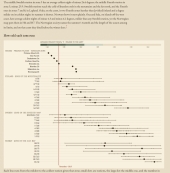
feedback here has been great.   I've been continuing the research downloading more old books and publications, and just putting together details into pages including tables and images when they're out of copyright. Sometimes a table says a lot.   A good example is cross pollination in cherry plums, it's a little mysterious - in some case one is a good pollinator for the other, but it's not reciprocal.    Here are a few of the new tables and images added to Opata https://pomologica.ca/fruit/159-opata as an example.     These old early 1900s articles might seem like ancient history, but it's often the best information available - it's more detailed and they cared more back then to actually do the large trials and they were excited about the future of these fruits.   Today I've tried to collect all of the cherry plums I can find as a germplasm and for stock plants at my little nursery, and they're great, I enjoy propagating them and I can't seem to grow enough.  I hear from Americans all the time that they're not widely available, and it's crazy because most of them are from South Dakota.  It's a hybrid western sandcherry bush that grows plums, the history behind them in Hansen's publications really is an interesting story and it's totally relevant today.  Finding the right pollinator combinations for them is in fact best done by reading the most relevant and up to date document on the topic - a study from 75 years ago. https://sherwoods-forests.com/Downloads/UMinnAgExpStation-Stone_Fruit-Pollenation.pdf    


1 day ago

Eino Kenttä wrote:That does seem like a useful resource.

A side note about growing zone systems: Some countries have their own zone systems, which are not necessarily at all equivalent to the USDA system. For instance, Norway, Sweden and Finland all have their own systems, which are roughly equivalent to each other, but not quite. They all run the opposite way to the USDA system (lower number is warmer) and take more factors into account than winter minimum temperature. Trying to translate USDA hardiness to any of these is... challenging. Our place is in Norwegian zone 4. According to the maps I've seen, it's placed in USDA zone 6. However, since it's heavily oceanic, the winters are longer and harsher than you'd expect for a similar minimum temperature elsewhere. I generally think that things hardy to USDA zone 5 might work at our place, but as always, it depends.


started to answer some of this here https://pomologica.ca/scales  , should add more about the other systems.

(edited) I've been doing some work on maps in this area and this is an update about to be posted, it tries to show some mapping that answers your question.  the zones don't line up exactly with the temperature data available so it's not as simple as the USDA zones that only use temperature
1 week ago

r ransom wrote:Nice there is an about tab there now,  i couldn't find it at the top or bottom of the page yesterday.

There is good information in the about page that makes it easier to use the resourc and explains why the dates for the species are so recent. They are using the dates the fruit came to that region.

I hope they add more about day length and how it influence fruit production. That's the major problem i find living above the 49th.  Temperatures is important, but if the day length needs is awkward, it's tricky to get a harvest.


will do some searching for these, good suggestion
1 week ago

r ransom wrote:Thanks.  I wish they could have said that on their site.  It makes a big difference how we can use the site.


Feedback appreciated, I added some details in the about on the site, and it's really a zone 2-3 focus for what's listed, there are other sites that try and list every single apple cultivar and that's cool, but I'm mostly just tracing the ones from breeders and research stations on the prairies or nearby cold areas, and native species.  https://pomologica.ca/breeders
1 week ago

r ransom wrote:Very interesting site

The site goes on about "northern" and "here".  Where is that?  Not knowing makes it hard to use the resource.  The dates don't add up to European history, so I'm guessing north america?  


North america, we're in southern Manitoba but I'm growing cultivars from cold areas in Europe and Russia so I wanted to just call it northern.  We're in zone 3 here, and that covers a good piece of Canada but the same temperature bands run through other countries, just the zones are all different systems.  I made some maps this week that try and tie Northern together.  https://pomologica.ca/scales/world     If there's cultivars of anything that we can grow here that lines up to European history I want to add them.  There's a few plums that are kind of borderline can grow in zone 3/4 but most of them are modern.  
1 week ago
I think a way to build your intuition here is to look at when the tree puts out a flush of new growth from all the stored carbohydrates / energy in the root system, when you bud in the fall the tree is done most of it's growth for the year so often the bud doesn't grow. Chip budding apple early in the year can produce new growth this season just like any other graft, you might use it if you're low on scion wood.
3 years ago
I have a similar sized 3/4 acre project coming up in the spring, it's also just been mowed for years so it has some well established grass and weeds.    There's going to be a heavy amount of weed seeds banked in the soil, so I'm going to use some no till methods.  A couple layers of cardboard and some heavy wood chip mulch in all of the areas where things are getting planted, and then we'll just continue to mow around them.  Trees will get planted in just by moving the mulch and digging a hole, and for bushes and other perennials I like to drop down some compost or decent topsoil in a mound to make small raised beds. It lets them get established and root through the cardboard.   I'm going to continue to have grass over much of the area for years and just gradually add stuff, but if I was doing a larger planting area, and it sounds like maybe you're planning to replace most of the ground cover and you have that soil compaction, you might do well to do a one time till and then use some large tarps to kill all the weeds that will germinate.  Check out the No-Till Growers youtube channel there's some excellent discussion on establishing market garden beds, terminating cover crops, establishing living mulches / ground cover between the rows https://www.youtube.com/channel/UCLhu5JoRWPgEGDoUFfQHTPQ/videos
This is great, I would also ask chatGPT to provide a calendar for starting everything given your last frost date.  
Rhubarb grows quickly from seed, if you found a southern seed source that might be the best way to try it.   You can start some in pots and they're the size you find at a garden center in about 3 months.
3 years ago