

|

|

|

|

|

|
|
|
|
|
|
|
|

|

|

|

|

|


 14


 8


 11
How Permies works: https://permies.com/wiki/34193/permies-works-links-threads
My projects on Skye: The tree field, Growing and landracing, perennial polycultures, "Don't dream it - be it! "
10
12
15
Nancy Reading wrote:The link to the 'nursery' (presumably the originator) seems to be in Southern Manitoba, so Canada I believe.
“The most important decision we make is whether we believe we live in a friendly or hostile universe.”― Albert Einstein
10
John Weiland wrote:
Nancy Reading wrote:The link to the 'nursery' (presumably the originator) seems to be in Southern Manitoba, so Canada I believe.
Yes, quite likely from the Morden Research Centre which is SW from Winnipeg. This is an Agrifood Canada (Federal research entity) station and coupled with trials in Saskatoon and Lethbridge give good data for hardiness from the Canadian Rockies back through Ontario. Several tree varieties out of southern Manitoba are sold at nurseries in North Dakota and northern Minnesota in the US as these come with strong genetics for productivity in our soil types and tolerance to cold winters.


 8


 12
r ransom wrote:Thanks. I wish they could have said that on their site. It makes a big difference how we can use the site.
12
7
Leaftide - garden planner w/ 1228 plant types. Need permaculture testers for fruit trees & perennials. Free Pro month for detailed feedback, even just suggesting plants
19
Douglas Alpenstock wrote:Perhaps the UK and EU have different systems also?
Gert in the making
9
Joao Winckler wrote:........The day length point is a fair one, it catches people out more than temperatures sometimes, especially anyone used to using zone maps from further south.
“The most important decision we make is whether we believe we live in a friendly or hostile universe.”― Albert Einstein
11
13
Their formula is:
Y = -67.62 + 1.734X₁ + 0.1868X₂ + 69.77X₃ + 1.256X₄ + 0.006119X₅ + 22.37X₆ - 0.01832X₇
where:
Y = estimated index of suitability
X₁ = monthly mean of the daily minimum temperatures (°C) of the coldest month
X₂ = mean frost free period above 0°C in days
X₃ = amount of rainfall (R) from June to November, inclusive, in terms of R/(R+a) where a=25.4 if R is in millimeters and a=1 if R is in inches
X₄ = monthly mean of the daily maximum temperatures (°C) of the warmest month
X₅ = winter factor expressed in terms of (0°C - X₁)Rjan where Rjan represents the rainfall in January expressed in mm
X₆ = mean maximum snow depth in terms of S/(S+a) where a=25.4 if S is in millimeters and a=1 if S is in inches
X₇ = maximum wind gust in (km/hr) in 30 years
13
12
r ransom wrote:Very interesting site
The site goes on about "northern" and "here". Where is that? Not knowing makes it hard to use the resource. The dates don't add up to European history, so I'm guessing north america?
Oak Summit Nursery - Zn 3b Manitoba, Canada
www.oaksummitnursery.ca
@OakSummitNursery
8
r ransom wrote:Thanks. I wish they could have said that on their site. It makes a big difference how we can use the site.
Oak Summit Nursery - Zn 3b Manitoba, Canada
www.oaksummitnursery.ca
@OakSummitNursery
2
r ransom wrote:Nice there is an about tab there now, i couldn't find it at the top or bottom of the page yesterday.
There is good information in the about page that makes it easier to use the resourc and explains why the dates for the species are so recent. They are using the dates the fruit came to that region.
I hope they add more about day length and how it influence fruit production. That's the major problem i find living above the 49th. Temperatures is important, but if the day length needs is awkward, it's tricky to get a harvest.
Oak Summit Nursery - Zn 3b Manitoba, Canada
www.oaksummitnursery.ca
@OakSummitNursery
10
Eino Kenttä wrote:That does seem like a useful resource.
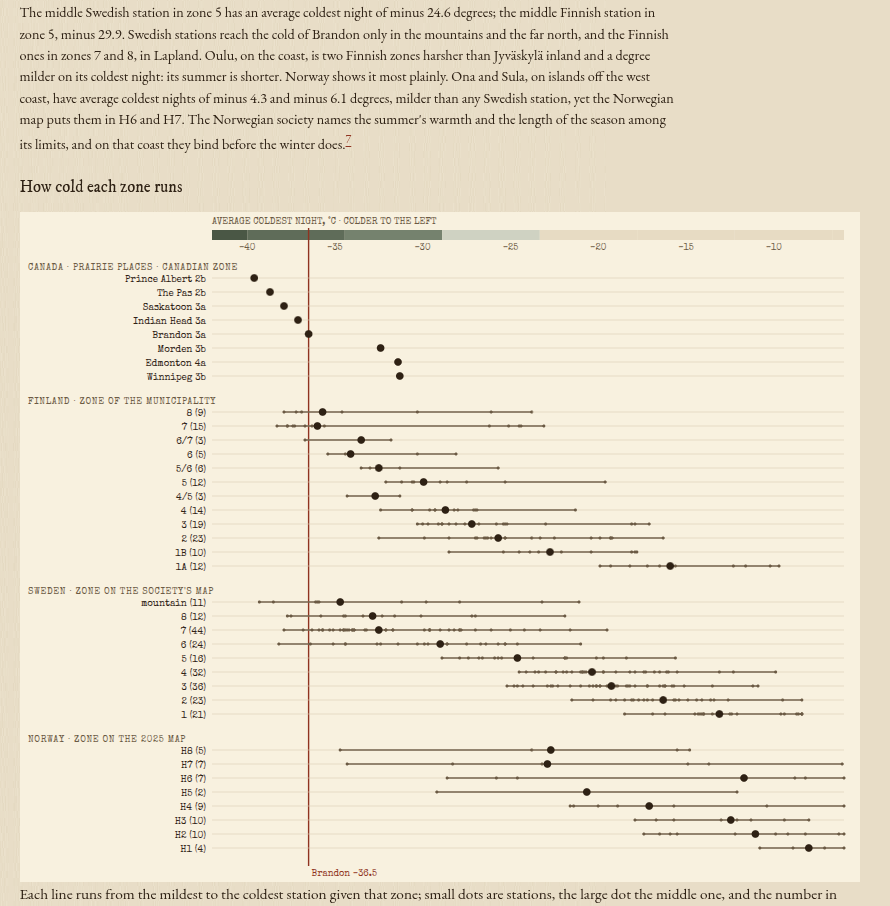
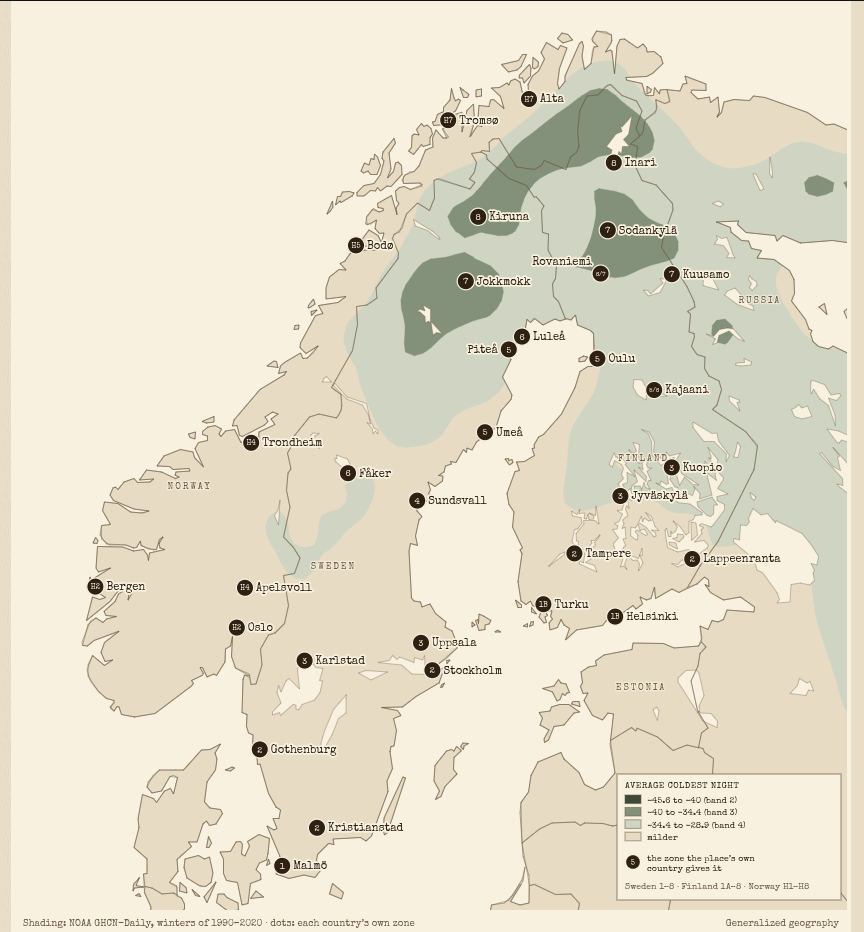
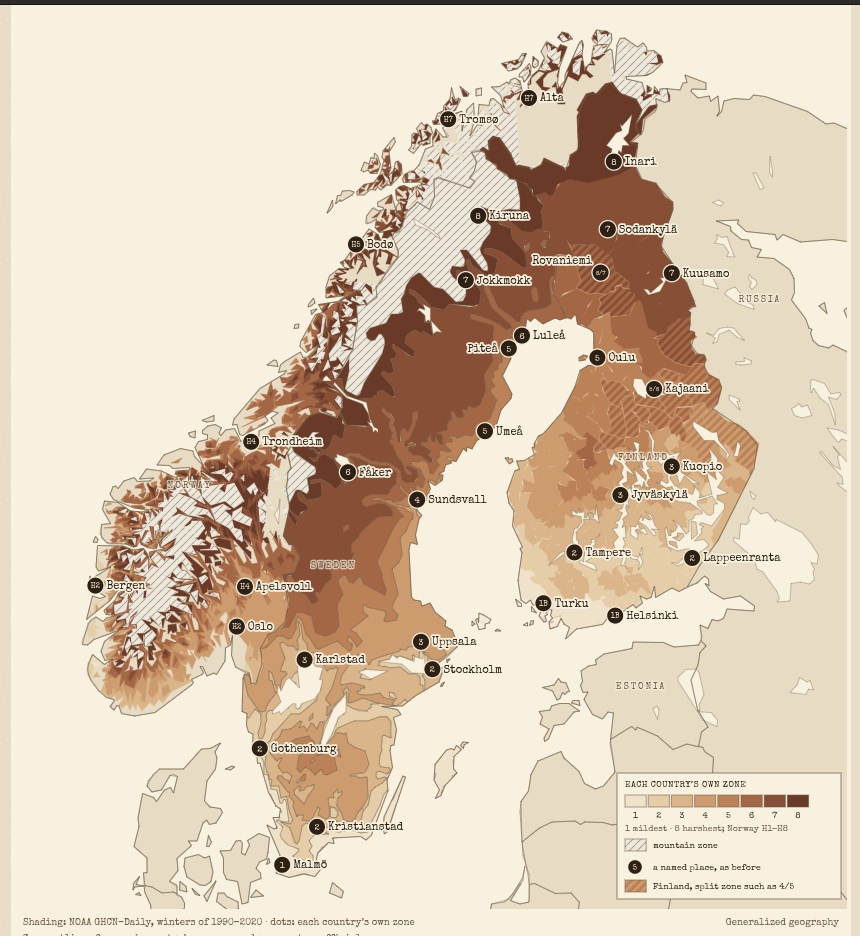
A side note about growing zone systems: Some countries have their own zone systems, which are not necessarily at all equivalent to the USDA system. For instance, Norway, Sweden and Finland all have their own systems, which are roughly equivalent to each other, but not quite. They all run the opposite way to the USDA system (lower number is warmer) and take more factors into account than winter minimum temperature. Trying to translate USDA hardiness to any of these is... challenging. Our place is in Norwegian zone 4. According to the maps I've seen, it's placed in USDA zone 6. However, since it's heavily oceanic, the winters are longer and harsher than you'd expect for a similar minimum temperature elsewhere. I generally think that things hardy to USDA zone 5 might work at our place, but as always, it depends.
Oak Summit Nursery - Zn 3b Manitoba, Canada
www.oaksummitnursery.ca
@OakSummitNursery

 8
Working toward a permaculture-strong retirement near sunny Sperling.
 6
7
Oak Summit Nursery - Zn 3b Manitoba, Canada
www.oaksummitnursery.ca
@OakSummitNursery
|
You ridiculous clown, did you think you could get away with it? This is my favorite tiny ad!
40 things, worth over $600, all for $35 - the permaculture adventure bundle
https://richsoil.com/bundle
|


