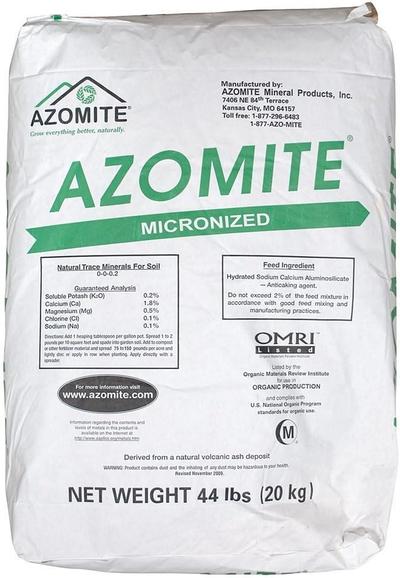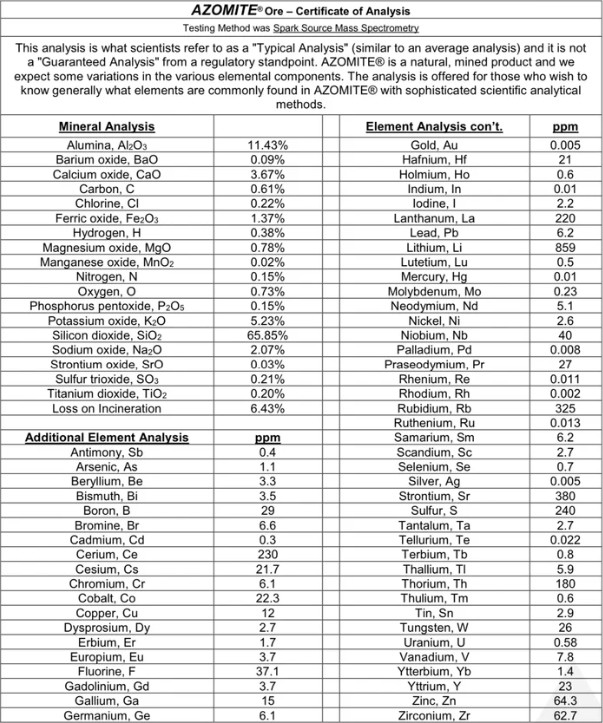
Azomite is a blend of minerals (complex silica ore) sourced from a particular volcanic ash deposit in Utah, USA. Advertised as containing over 70 minerals, this product is said to help remineralize soils in growing spaces. Azomite comes in several forms (micronized, granulated, field, ect ect) which effects how quickly it is available for plant uptake.
Azomite has been on the market for some time now and I have seen a mixture of reviews on the product. Some folks swear by it. Some folks think there are better options out there and don't see a use for it.
I fall somewhere in between. A lot of my growing spaces are high in layers of organic matter. I like my deep mulches and compost layers! I have utilized azomite to freshen up some of these areas and believe to have seen an improvement in yields the following years. I don't go out of my way to use it often, but I treat it as some insurance against the Law of Minimums. I'm especially interested to see the effects that the minerals have on my orchard spaces.
I almost bought a bag of this last week. Then I got to thinking it looks to supply most if not all the same stuff as wood ash. I am fairly certain wood ash contains more pieces and parts as a whole but I am 100% not sure. Ash is amazingly complex and fast acting.
I'm currently trying to make some homemade super soil with all kinds of crazy stuff and almost bought this and greensand to add to it, but I think I have it covered with things I have on hand. If not live and learn and try again.
Air and opportunity are all that stand between you and realizing your dreams!
I've used this in the past in potting soil mixes where added minerals were needed. I've since decided that I don't want the extra lead and other stuff that's in it. That seems to be the main issue with any of the mined products. Now if I need added minerals I will use a highly paramagnetic rock dust from basalt or granite.
"Rock dusts like Azomite, bentonite, zeolite and others are called 'colloidal minerals' - alumina-silicate. For example Azomite is a brand name. A geologist would know it as "Hydrated Sodium Calcium Aluminosilicate" and it's known as "Montmorillonite clay"
This clay has been used in France to built ceramic bread ovens which look like a bee hive. They have a small door in the front of the oven where loaves of bread are move in and out using what is called a peel.
While it makes a great ceramic oven I can't find much to cause me to recommend it in a true living soil that is supposed to last 'forever' if taken care of using organic methods."
source
"Don't believe every tiny ad you see on the internet. But this one is rock solid." - George Washington