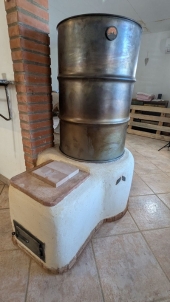
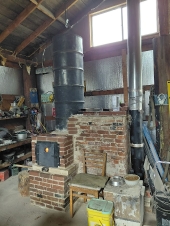
Gerry and I built the Studio Dragon last fall.
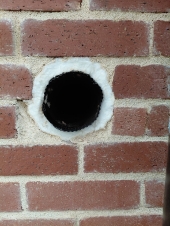
We installed a 4" stovepipe near the top of the bell through both brick skins'
Then, since I didn't have the parts on hand to install a bypass, I capped it off for the winter.
After the smoky first start, she warmed up and never smoked again all winter long!
I thought I wouldn't need a bypass, until... late spring, early summer ( Shoulder Season). No fire for over a month.
We got a wet, windy day, just raw feeling outside; I knew Liz planned on working out there, so... I thought I would warm it up for her...
Nice guy, right??? Wrong, Big mistake; I smoked out the room in no time. When it's warm outside, it can be hard to establish a draft...
Here came Liz, before it had a chance to clear out... Studio Dragon and I were both in the doghouse that day.
I promised her I would install the bypass before this fall.
Today was that day.
The entire job couldn't have gone faster or easier, almost like I'd planned it!
Took about 3-4 hrs, and it works perfectly!
I left it open for about 30 minutes, then shut it to 80 %; 30 minutes later, I had it 100% closed, and Studio Dragon was up and circling the neighborhood.
Like Shorty Core, I used a traditional cast-iron damper sealed with Superwool.
This seems to work better than the blast gates I used before.



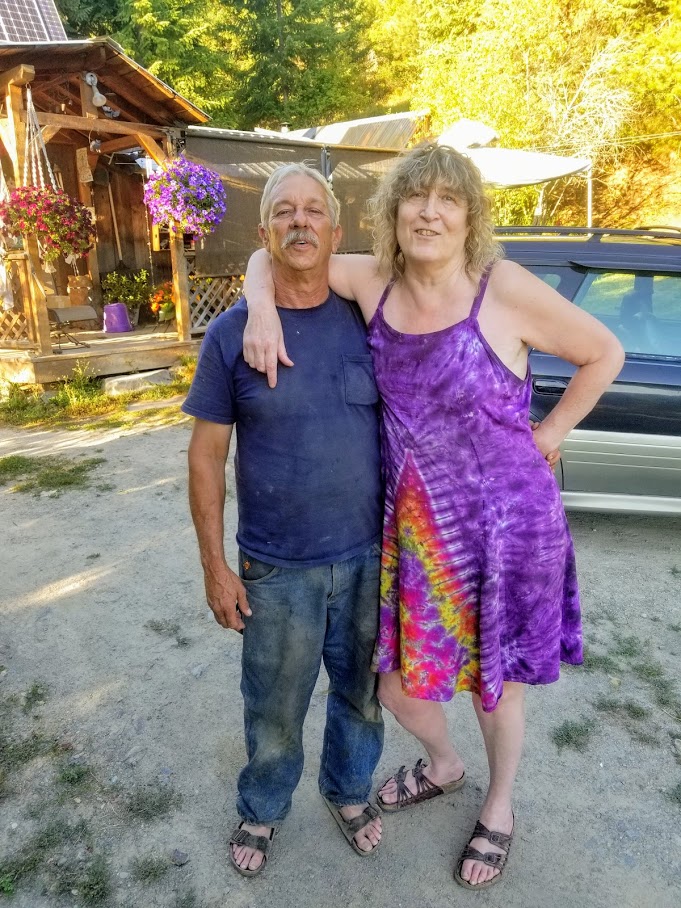 13 acres in extreme rural Montana 100% off grid since 1983. Solar and micro hydro. Summer time piggy farmer. Restoring 2000-04 Subaru outbacks wagons for fun and a little profit. Not quite old enough to retire YET but closing on it fast... until then I must occasionally leave Paradise "home" and run large construction cranes on union job sites across the inland northwest. I make (Well try) A-2 A-2 cheese, I love cooking with my wood smoker for everything! Would not live anywhere else but rural Montana ! My wife Liz runs "Rocks by liz" a successful Etsy store and we have a summer booth at the Missoula peoples market. We currently breed and raise persian cats but are about to retire all the girls and let them be happy kittys for the remainder of their days.Oh and my biggest thing is... I LOVE MY RMH !