

|

|
|
|
|

|

|

|

|

|
| Message | Posted on | Last post by |
|---|---|---|
| [+] sculpture » Homeschooling and Art (Go to) | Greg Strong | |
|
I'm sad that only one person replied all those years ago! I'll answer for anyone else who might also be looking for some permaculture-related art ideas with kids.
I wrote a children's book last year on this theme, partially funded by a grant from the Minnesota State Arts Board. It's called Wild Art: Awesome Art Projects Using Wild & Invasive Plants & Other Nature Items (aff link) and these are a few projects from it if it helps. I have also put out a free, nonprofit nature and foraging magazine for kids for over six years called Wild Kids Magazine and I often put nature art projects in there. All of the archives are online so you can search for keywords like paint, charcoal, or certain plants. Each issue is about 20 pages in PDF format to read online or print. |
||
| [+] personal care » What do you do for joy and why is it important? (Go to) | Thekla McDaniels | |
|
I do a lot of things for joy and feel a really deep need for it, for myself and for my 5 kids. Nature is huge, and that's one reason I put out a free nature/foraging magazine for kids and their grown ups (Wild Kids Magazine), to help spread that. Playing is big too -- playing pool at the free community arts center our family created out of a rescued 125 year old church, playing pickleball with my kids at the Y, playing tennis in the street with my son, playing Poetry for Neanderthals with my family, whatever. Spending time with friends is huge. I have to travel to spend time with my best friend but I find a way to do it every few months for a week or so because it feels me and my kids and her family up so much.
But writing poetry is another way, even if the poems seem anything but joyful when I'm writing them. And combining poetry with nature is the biggest. I wrote this last fall when I was feeling less than joyful and it really helped. Combining art and nature always helps me find joy. |
||
| [+] wild harvesting » Favorite Spring forage? (Go to) | Joylynn Hardesty | |
|
I've put out a free nature and foraging magazine for kids for over 6 years now, Wild Kids Magazine. I covered our favorite spring edibles to forage in the March 2026 issue.
Here are the ones I listed as our favorites, though there are many more. |
||
| [+] homeschooling » Favorite Preschool-Aged Books about Nature? (Go to) | Les Frijo | |
|
I love this thread and see a lot of our favorite nature books in the comments! Miss Rumphius especially is my all-time favorite picture book.
I have written two nature-related picture books for children myself. A is for Acorns (A Foraging Alphabet Book) is a rhyming book that teaches kids about wild edible and medical plants. It was funded by a grant from the Minnesota State Arts Board. And Poems from Under a Toadstool is whimsical poems about mushrooms, crystals and other natural items (and a few fairies!). I'm also working on a book that I got another grant to produce, Wild Art, which teaches kids how to make art materials like ink, paint, paper, charcoal and paintbrushes from wild and invasive plants and nature materials, that should be out in the next couple of months. |
||
| [+] cooking » Seeking nettle recipes (Go to) | Donn Cave | |
|
We love stinging nettle smoothies. Mostly I just blend nettles, a banana, frozen pineapple and water. My kids love them.
I also like to make nettle seasoning -- dried nettles, salt, pepper, dried ramps, whatever else seems fun. |
||
| [+] art » Share your Art - post here (Go to) | Madison Woods | |
|
I'm a writer and poet, and I have a grant this year to publish a book that uses flowers as analogies for women and women's experiences, with money in the grant to pay local artists to do art for each of the 40 poems. Prints will be available of them all with the art and the poems on them, and the artists will keep all the profits. Two of my grown kids are among the artists who are taking part.
The book is called Flower Girls and will be out later this year (you can follow along at my poetry page on FB here. I love the art that my artists have created for the poems so far! Here are a few. |
||
| [+] food preservation » Is a Pressure Canner Worth the Money? (Go to) | Thekla McDaniels | |
|
I love my pressure canner. I use both a pressure canner and a hot water canner, but I tend to use the pressure canner more often. I especially love it for roasted tomato sauce. I personally really dislike the flavor of tomato sauce and salsa with lemon juice or vinegar added, and I love the flavor of roasted tomato sauce. I take all my garden tomatoes and cut them in big chunks along with chunks of onion, peppers, lots of basil, salt, pepper, garlic cloves, and then drizzle olive oil all over it and roast it until the house smells divine and everything is soft and cooked. Then I put it all through the food mill and can it. It tastes divine, better than any store bought sauce (here's the recipe). I use this pressure canner/cooker/steamer (aff link) and I love it. I purposely bought this one because I love that I can also use it for things like steaming tamales and other dishes where I need a great big pot. I've had it for ten years now and use it every summer and fall.
At this point I use the regular hot water canner for applesauce and pears since the pressure canner makes them too soft, but the pressure canner for just about everything else. I just find it fairly quick and easy and it doesn't heat up the kitchen to the extent the hot water canner does when it's going all afternoon either. I can also use it for water bath canning by just not screwing the lid on. I use it for all kinds of things like -- juices, sauces, salsa, etc. I love the taste of pressure canned salsa so much more than acid-added salsa. I'm hoping to try doing beans in it sometime soon, since we use a lot of beans and I've heard it's very simple to make canned beans from dried with the pressure cooker. |
||
| [+] kids » Wild Kids Magazine (Go to) | Alicia Bayer | |
|
I just thought I'd mention this here. I put out a free, nonprofit kids nature magazine every month called Wild Kids Magazine. It's usually about 20 pages and is in full color, designed to be read online or on a device like a kindle or printed out. Every issue features ways for kids to learn and play with nature, seasonal poetry, nature journal pages, foraging information, etc. There is usually an in depth topic for each year like herbs or flowers, and this year it's wild mushrooms, with kids learning about two new wild mushrooms each month.
The July 2023 issue just came out yesterday and you can access it on the main site here: Wild Kids Magazine. All of the past issues are online too, going back to 2019. |
||
| [+] kids » New kids' foraging alphabet book (Go to) | Anne Miller | |
|
I just thought I'd share this here. I just published my latest book, A Is For Acorns: A Foraging Alphabet Book (aff link). My 25 year old and another local artist did the art for it, and I got a grant from the Minnesota State Arts Board to write it and to pay my artists.
Here's the description: A is for acorns, Free for the taking. We leach out the tannins Then grind them for baking. From Acorns to Zapote fruit, here are all kinds of wonderful fruits, nuts, greens, mushrooms and more to teach children (and their grown ups) about foraging. Each page features a poem and charming illustration about a different wild edible or medicinal plant, with other plants that start with that letter decorating the margins for kids to try to identify. The end pages feature reference photos of all of the additional drawings. Kids can also sign the forager's pledge, keep track of their foraged plants and wish lists, and will be reminded about foraging safety and ethics. With illustrations and reference photos of over 130 wild edible and medicinal plants! |
||
| [+] wild harvesting » Sansai (Japanese Mountain Vegetables) or Foraging in Japan (Go to) | Jeff Steez | |
|
I read Eating Wild Japan as a reviewer before it was released. Here's my review from back then:
I do recommend the book as it is quite interesting, but it's not necessarily the best modern foraging book. If you want to take a look at it on Amazon, it is here: Eating Wild Japan (affiliate link). |
||
| [+] berries » Best way to preserve pokeberry dye? (Go to) | Robert Ray | |
|
Just wondering what people recommend as the best way to fix pokeberry dye on clothes. I'm in love with the brilliant magenta stain it gives and my kids and I had fun making a tie-dye t-shirt with some of the berries last summer. I know most natural dyes fade or go muddy so I still have it in the laundry room until I know if there's a best way to preserve the gorgeous color. :)
I was thinking that we could just take it as a fact of life that it will fade/change and just keep using new stuff to make a sort of ever-changing natural stain shirt, but I'd also love be able to use pokeberries to give new beauty to stained dishcloths and stuff like that, even if it's a paler version in the end. Any experience? |
||
| [+] gardening for beginners » Safe containers? (Go to) | William Bronson | |
Yes, I've read that one. That's the article I referenced when it said they looked and the plastic flower pot they bought was a type of plastic not considered food safe. I know they basically have it come down to it's probably all fine because it's low doses but it didn't reassure me that much. |
||
| [+] gardening for beginners » Safe containers? (Go to) | William Bronson | |
|
Wondering what your thoughts are on safe containers for growing veggies. I'm super frugal but I'm always kind of reluctant to grow veggies in a lot of containers because of fear of toxins. Every time I research it, I find so much information about the nasty stuff plants take up in their roots from containers, but it doesn't seem to be addressed in any container gardening books I've read.
I read a post the other day about what plastics were safe to grow in and they listed the numbers that are food safe. They pointed out that they got a flower pot from a garden center and the number on the bottom was a type of plastic not considered safe for holding food. Most people would assume a flower pot would be safe for growing veggies. But even the food safe plastics don't strike me as very safe anyway, as plastic breaks down in heat. And then I've read all these reports that grow bags and "cloth" grocery bags are made of a type of plastic and have tested positive for things like lead, not to mention a ton of nasty chemicals.... Plastic containers like kiddie pools have pthalates and such to make them bendable, not to mention all the stuff in plastic and in the coating and coloring. Even things like reused metal containers can have lead and aluminum. And obviously tires are full of all kinds of toxic stuff, but I see people growing veggies in those. And then some kinds of pallets have dangerous chemicals in them and you're supposed to look for numbers but I never know which numbers... It turns out those concrete blocks can have awful stuff in them if you don't know which types are safe, which I never realized at all. I know from following Lead Safe Mama that almost all dishes and containers (even expensive ones) are full of stuff like lead (mostly older and cheaper stuff) and cadmium (especially stuff with colors). And some wood is treated, and on and on. I know I sound like a crackpot to most people when I say any of this. LOL But I figured this was a safer place to mention health concerns and ask questions. Obviously I know fresh grown organic stuff is still healthy but I really don't want to grow plants that are taking up all kinds of nasty stuff from the things they're grown in. Our oldest child is a cancer survivor and I'm not one of those people who just says everything is bad for you so you might as well just give up. What are your favorite frugal, safe containers? |
||
| [+] gardening for beginners » Setting up large garden: mint invasion (Go to) | Lem Huang | |
|
I have some bully mint too, but what I do is just treat it as a wonderful free volunteer and I cut it to the ground whenever I see it and use it. There are so many uses for mints that it's easy to make use of. Here are 30 great ways to use mint. It eventually gives up and just grows elsewhere for me.
PS If you have chocolate mint I found that I could transplant mine to a shade area and it became the most fabulous groundcover. It stays rather low and pretty, with dark leaves, and when you walk on it the entire yard smells heavenly. It spreads well even in shade but not in the aggressive way that other mints do. I have shared it with so many friends for problem shady areas of their yard. |
||
| [+] gardening for beginners » Best veggie seeds for lazy gardeners? (Go to) | Anne Miller | |
|
I always plant a garden but I have to admit I'm a very lazy gardener! I am much more fond of things like foraging where nature does most of the work, or permaculture gardening where it takes care of itself once I put in the initial effort.
That said, I do love having a garden every year. I've found that some plants grow and thrive even though I am not responsible about things like weeding, thinning and watering, and I never fertilize. Some of the plants I've had the best success with from seed this way are rainbow swiss chard (we get months of it all the way to hard freeze, just cut and come again), nasturtiums, radishes, peas and parsley. Other plants I know myself well enough to know I need to just buy seedlings, like tomatoes. Even when I successfully start them inside and have happy little plants a month later, somehow I always manage to lose them before they're big and tough enough to survive. So what are your favorite lazy garden seeds to plant? Any tips to help them survive if they're direct seeded, other than to make sure to keep them watered the first couple of weeks? |
||
| [+] gardening for beginners » Celery starting to regrow right in the kitchen compost bucket (Go to) | Angela Wilcox | |
|
I was inspired to grow some veggies from scraps again this morning from the threads here! I've done it in the past but just hadn't lately. I went down and raided the kitchen compost bucket and found that a head of celery I had just trimmed yesterday was already sprouting and trying to make more. :) It was so freshly cut that the ends hadn't even browned, but it was already sending up new baby shoots. I properly rescued it and a few romaine lettuce stumps from last night to get back to making more free food. Thanks for the reminder, folks!
|
||
| [+] gardening for beginners » Geraniums as easy blooming houseplants (Go to) | May Lotito | |
|
Just thought I'd share this here as some people don't realize geraniums are such easy houseplants. I bring ours inside every fall to overwinter in our zone 4 Minnesota home and they bloom all year long inside, at all different times. I purposely buy all different colors so I have hot pink, red, white, peach, variegated, etc. They don't require any additional fertilizer, grow lights or anything fiddly. I have them on window sills, tables, everywhere. They're inexpensive and they get pretty big when you are keeping them multiple years. You can also easily take cuttings and make even more. :)
Pictured are a couple of them I happen to have in a photo of my daughter. These ones aren't in bloom at the time the photo was taken but each of them blooms at least once a month for me. Once we're sufficiently warm I'll bring them outside again for the summer. |
||
| [+] gear » Best modern Buy-it-once brands? (Go to) | K Eilander | |
|
I'm very frugal but I often spend more on something to get a well made product that should last a lifetime. My Vitamix is an example of that -- it cost more but I've had it for 12 years of rigorous use and it's still going strong, and the company has promptly fixed it the two times over the years that something did go wrong.
Lately I've noticed that a lot of the brands that used to be Buy-It-Once brands are now making their products in China and are just as poor quality as the cheap stuff, just getting by on the reputation they used to have. When we went to buy a new washing machine, the Maytag salesperson told me to expect a new Maytag washing machine to last 8 years, when they used to last decades (we found a good old one instead for less money and better quality). Fiscars used to have such good scissors and gardening tools, and the last two products I got from them were junk. I've heard the same about Craftsman tools, though I haven't bought any lately. I've noticed if you look at reviews, the ones from way back are great but the recent ones for so many products are the same thing -- the products from this company are nothing like they used to be. So I'd love to hear your recommendations for companies that are still making quality products! Have you gotten any recently where you've been impressed by the materials and workmanship? Any modern purchases where they stood by their warranty and made it right when things went wrong, where the quality impressed you? So far Vitamix is the only brand that's still impressing me, but my model is now 12 years old so I hope they are still as great as they were then. Any you'd add? TIA! |
||
| [+] frugality » Nettle seasoning salt (Go to) | Denise Cares | |
|
I do something similar with dried ramp leaves too, since they have such a strong garlic/onion flavor that's great for rice, eggs, potatoes, chicken, etc. And yes, you can do it with any wild greens. Nettles are just particularly healthy and this time of year especially it's nice to get that extra boost. :)
|
||
| [+] frugality » Nettle seasoning salt (Go to) | Denise Cares | |
|
I thought I'd share this here since pretty much all of us either have a free supply of nettles on our properties or know where to easily find some. People consider nettles such a nuisance but they're so healthy. They're loaded with vitamins, minerals and health benefits for allergies, inflammation, blood sugar, prostate health, so much more -- far part most wild or cultivated plants.
We eat them cooked in season as a spinach substitute and use them for teas and infusions (I drank nettle infusions every day when I was battling C**** in early 2020), but I also make nettle seasoning salt as an easy way to get their benefits all winter. All I do is grind dried nettles and then mix them with some sea salt, dried garlic (can use dried ramps too) and pepper, then put them in a reused spice jar. I use them on chicken, fish, potatoes, rice, soups, stews, eggs, you name it. The taste is very mild and it's a great way to boost the flavor and benefits of any dish. |
||
| [+] meaningless drivel » Trying to quit Amazon - alternatives please (Go to) | Anne Miller | |
|
Great thread! I try to avoid Amazon, Walmart and the other big businesses. We're in a rural area too but here are some things that work for us.
* We have a membership to Costco, which is an hour and a half for us but worth it for stocking up on organic staples for our big family. * If I see something I like on Amazon, I search for the item on eBay to find an independent seller. They tend to sell the same things for the same prices and the shipping is generally just as fast if you click to only search US sellers. Since feedback is so crucial on eBay, sellers also tend to work hard to please you as opposed to Amazon where these days the sellers just rack up fake reviews and then create a new account once enough real (bad) reviews come in. * We also buy from Misfits Market. We've been buying from them for about a year and for the most part I'm happy though the prices are higher lately and there are sometimes issues (for instance, in really cold weeks we've had damaged produce here in MN if it sat in a truck overnight and got frozen). They are quick to refund bad produce though, especially if you comment on their Facebook page in the comments (do that if you don't get a good resolution from just clicking on their site and they will move fast to make it right). I do not like their prices much lately on things like fruit but they have a lot of organic options and some seasonal things are very good prices for things like cabbage, zucchinis, daikon radishes, etc. and lots of things that you'd never find organic in the local stores here. They are also building their offerings into more than produce, with meat and seafood now (with a cold pack) and pantry items. Some of these are junk though and not organic, so check the individual listings. If you want to join and get $10 off your first order, here's my affiliate link: COOKWME-IG1HMU. It used to be that you had to build a box out of just lists of options, but now they let you just buy whatever you want and it's a flat $5.50 shipping fee as long as you meet the minimum order of $30. * We have a membership to Thrive co-op, which is an online store for organic and natural foods. They sell shelf stable stuff and not produce, other than now you can also order frozen stuff if you meet a minimum of something like $100. I haven't bought frozen but I often shop there for other stuff like healthy mayo, natural toothpaste and cleaning supplies, supplements, organic snacks, mushroom powders, keto and organic baking supplies, organic cereal, etc. They cater to special diets like vegan, vegetarian, gluten free, keto, paleo, etc. too and you can even set the page to only show you things that meet your dietary requirements. They run fairly regular sales and offer things like this free expensive thing if you spend $49 today and stuff like that. All of their products are non-GMO and most are organic. Their prices tend to be fair, though not as cheap as buying in bulk. If you are low income, they'll waive the yearly fee (I think it's $50?). Here's my referral code if you want to join: http://thrv.me/pjfqyH. I order from them fairly regularly, but I do tend to shop their sales. * I used to do Azure Standard but lately their prices have been increased and they're becoming a big business that's still trying to sell themselves as a small family business (they are still a family business, just a big one now). Until a couple of years ago we'd buy cases of organic apples from there for around $22 for 20 pounds every fall and they were great quality, plus things like bulk grains, organic cereal, etc. Now their apples are almost double the price and I can get almost everything cheaper elsewhere and still shop from ethical places. They deliver by truck once a month to most locations in the US but you have to go to the drop off point to pick up, which is a couple of hours away from us and often at a really inconvenient time. It can still be a good option, especially if you want to buy in bulk for things like baking supplies, natural cheese, vegan and vegetarian items, produce, etc. Here's my affiliate link for them: https://www.azurestandard.com/?a_aid=18c34Y8HiN * We buy from local farms and farmers. We get our beef from a regenerative farm a couple of hours away, and got it when they did a "clear the freezer" sale. We get produce from a local farm. It's not organic but it's local and they don't spray much. We also shop the farmers' markets and such for the few organic vendors. * We grow our own and forage. We forage a ton of wild mushrooms, apples and pears, wild asparagus, nettles, lambsquarters and other greens, elderberries, etc. It's a large part of our food source and my kids always gasp at the idea of buying asparagus at the store. :) * If you have a buy nothing group in your area, they're awesome. Same with Freecycle. * Put the word out when you need/want things. If you have any kind of social network like church newsletters or bulletin boards, friend groups, town FB group, etc. those are great for sharing want needs. I have friends who probably haven't bought hobby supplies in years for instance, because they'll post something like "anybody have perler beads they don't need? my daughter is looking for some" or "anyone know where I can find a bird cage?" and at least one friend is usually quick to post that they'll give them one they have sitting around. * Craig's List is good for used, larger item things. We've found lots of great furniture through them. Great thread! Thanks for starting it. |
||
| [+] tiny house » Easy entrance steps/stairs? (Go to) | Ac Baker | |
|
Hi! I'm wondering if anybody has advice for installing outdoor steps/stairs for the entrance to our daughter's house. She bought a small house very inexpensively but it doesn't have steps to the front door anymore. It's about 2 feet up and we just launch ourselves up but I'd like to help her put some proper steps there. Money is tight and we don't have much experience with building. We've done small things together like installed laminate flooring and she and her ex redid the roof of the garage (he's a roofer and they're still good friends), so we can do some stuff but we're definitely newbies. :)
I've thought about wood, stone, concrete.... All of it seems pretty overwhelming, TBH. We love the look of stone but I don't know of a source around here for flat stones and it's pricey to buy them from places like Menards. Any advice, oh wise ones? Thanks so much! |
||
| [+] wild harvesting » Easy Acorn Flour Muffins (gluten free or wheat) (Go to) | Michael Littlejohn | |
I'm so glad you liked them!  |
||
| [+] cooking » Sorrel - how to sneak it into meals without people noticing! Ideas needed. (Go to) | Jay Angler | |
|
Our family loves nibbling wood sorrel for the lemony tang. We put it in salads or sandwiches or top soups with a sprinkle, but mostly we just nibble it outside.
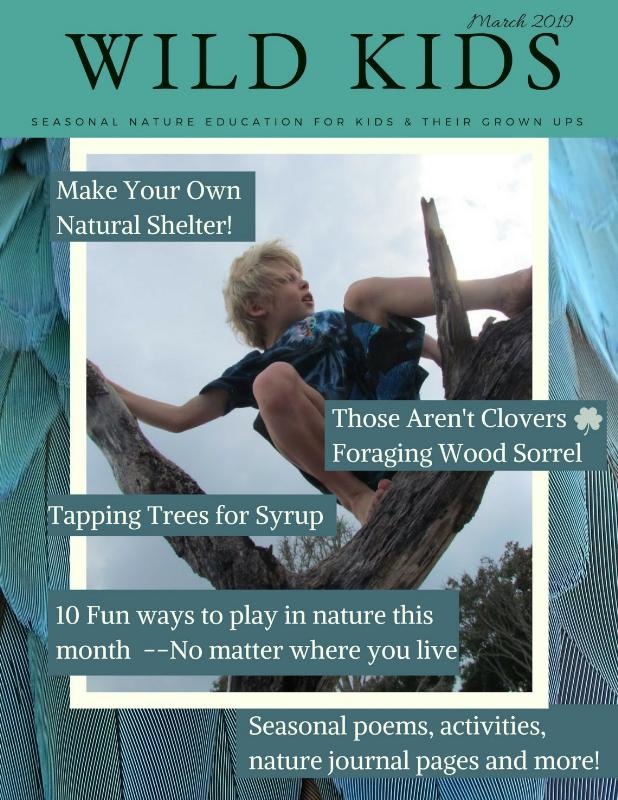
I put out a free non-profit nature/foraging magazine for kids and I featured wood sorrel in the March 2019 issue. It's here if anybody wants to read it or download it. It's in PDF form and you can read it online or save it and send it to your Kindle or just print it (I print it for my daughter each month so she can do the nature activity pages and such).
 |
||
| [+] homestead » Best warm socks? (Go to) | Timothy Norton | |
|
Thank you all for such good info and advice! I'm off to look at links. :)
|
||
| [+] homestead » Best warm socks? (Go to) | Timothy Norton | |
|
I tried searching the forums but didn't see a topic about this. I'm looking for the warmest socks that folks recommend (especially from small and sustainable companies). We live in Minnesota and I have a blood condition that leads to poor circulation and painfully cold toes in the winter time. I frequently have to take scalding foot baths during the days just to warm them up, as they get so cold the pain distracts me from anything else and they turn white or purple. It also keeps me from enjoying winter sports like ice skating and sledding with my kids because my toes start to ache so quickly even with layers and good boots. Now I'm recovering from covid several months ago and even though it's summer I can't get my feet to stay warm even with socks on (this thing can affect your circulation, blood vessels, blood pressure and more for months). I am not looking forward to fall if my toes are this icy when it's 90! I'm also doing all I can to improve my circulation but it's not making a big difference. I'd love to hear recommendations for brands, materials, etc. of socks that work really well. TIA!
|
||
| [+] volunteer offerings » (currently closed) Recipe testers wanted for cookbook (can be anywhere) (Go to) | Bejo Lino | |
|
I'd be interested in testing too. I tried to click on the link to read the rules but it said I didn't have access.
|
||
| [+] food choices » Perennial plant based diet (Go to) | Alicia Bayer | |
|
We live in town but have a fair bit of perennials that we eat from our land.
Mainstays: asparagus (some on our land and lots that we forage and then freeze, up to 60 pounds a year) lambsquarters (use it like spinach, in smoothies, soups, casseroles, etc.) nettles (used in smoothies, soups and casseroles, also as tea during sickness -- we mostly forage these and get them from my daughter's yard) elderberries and elderflowers (used for medicine but also baking, wines and liqueurs, elderberry lemonade, elderflower fritters, etc.) acorns (we forage ours and I would also add that you typically need to soak for far longer than 24 hours to get rid of tannins or do the boiling water method) mints and herbs cherries (tree and bush) rhubarb greens of all kinds wild onion maple sap and walnut sap walnuts (from the streets in our neighborhood and parks) apples for applesauce pears for canned pears some seeds, though they're not typically favorites and I usually just grind them and add them to gluten free flour mixes and crackers in small amounts If you have access to cattails, they are great eating all seasons and different parts of the plant are good for different things. We particularly like the young bottoms of the shoots in early spring, simmered and then served with a bit of butter and salt. If you're just talking veggies, our standards are greens, asparagus, wild onions and herbs. Acorns are a big part of our diet though, especially as they are so versatile (I have an acorn foraging book and cookbook that I've written, as we love them so much). We use acorns for everything from polenta to tortillas to cookies to porridge to veggie meatballs to pie crust to an utterly delicious hot drink (racahout, an acorn based drink, was the original hot chocolate). Fruits are other mainstays, especially elderberries (I have a foraging book and cookbook for elderberries and elderflowers too). Despite having a yard full of hostas and daylilies, I've still not tried cooking those. I'm not sure why I can't get past the mental block but next year those are on the list to try. |
||
| [+] gardening for beginners » Planting a fall garden in zone 4 (Go to) | Christopher Weeks | |
|
I'm a long-time gardener for spring and summer gardening and have quite a few perennial crops on our property, but I'd really like to plant a fall garden this year, especially as I missed out on some spring crops because we were sick this year. We're in zone 4 Minnesota and I know to look for really short season stuff at this point and for things that can take some frost.
Anybody experienced with planting fall gardens in similar climates who has favorite crops to plant? TIA! |
||
| [+] online learning » Fantastic free 110-page rain garden resource (Go to) | Dian Hong | |
|
I stumbled onto this resource while researching nature study topics and wanted to pass it on. It's a free 110 page PDF on how to build rain gardens. It's designed for schools and organizations and goes into very precise detail with step by step plans, a glossary, pictures of all kinds of rain gardens (at the end), planning info and lots more. Here's the link.
Hope it helps someone! |
||
| [+] gardening for beginners » Favorite easy ways to make garden beds? Here's mine using mulch and potatoes! (Go to) | Steve Lewis | |
|
I have never had success growing potatoes this way. I used to use grass and clippings, and I just didn't ever get much yield at all. Then I read a garden book this year that said it was so important to use soil if you want a good potato crop. I think if you're trying to make a new bed and will just be pleasantly surprised by a few potatoes, this is a great plan. I'm tired of sad potato results though and will use good garden soil for mine this year. I usually have great success with anything planted in our good Minnesota soil. We'll see what happens.
PS The best way I have established new beds is by putting kiddie pools in the yard for the kids to play in all summer. Come fall I put away the kiddie pool and underneath is a perfect circle of nothing but dirt. I plant there, edge it in large stones, and then keep making it bigger as the stones kill the sod underneath. With five kids and limited time, I have slowly converted much of our grass to permaculture gardens this way over the years. :) |
||
| [+] writing » getting my book in the hands of one million people (Go to) | Jay Angler | |
|
Wow. That's a lot of money. To be frank, I'm a little worried for you. I have never used a publicist or agent, but I also haven't sold $9,000 worth of books (though I'm getting up there). My biggest advice would be to ask for proof that he's done this for other people. Who has he made moderately rich and famous with his services? Ask for some success stories and some references that you can contact. Otherwise, it just feels like this could be a really expensive lesson.
Here are some ways you can ask people to support you and help make this book successful without spending any of their own money. You have such a big following here that I would hope you could get some big responses along these lines even for people who can't donate cash. People who want to help can: ~ Sign onto Goodreads and make an account. Once there, either rate the book, better yet review the book, and possibly add the book to lists so people will see it when they're looking for related books (click on lists, and then search for topics like permaculture, etc.). It's also helpful to friend people there, because the more friends you have, the more people will see the books you've rated. That's not nearly as important as just getting the numbers up there and getting good quality reviews up there. ~ Ask your library to carry the book. ~ Post on social media about the book, with a direct link to it. ~ Review the book on Amazon. ~ Recommend the book to groups, websites, etc. with similar values. Always post a link when you do so. People are lazy. :) ~ If you can't buy the book but buy anything else on Amazon, click through one of Paul's links so he gets a commission and support him that way. ~ Share social media posts about the book. If you're on Twitter, Facebook, and especially FB groups about related topics, post about it. Also forward posts/ads about it. Here's where a good social media post can really help. You can make them for free on Canva. There are templates and graphics to make it easy. Here's an example of a social media post that I made last week for a children's nature poetry book I just published with one of my children (she did the art).  Then ask people to share it, and share it yourself anywhere like-minded folks hang out. Be sure the post has relevant information and a call to action ("please share!" or "Ask your library to carry it!" and so on), with a link to buy the book (make it an affiliate link and say so, to increase profits). (Here's the post and what I wrote to accompany it on my author page). You may also want to look into offering your book for review at NetGalley, where librarians, bloggers, booksellers and other reviewers access ARCs (advanced reader copies) for free in exchange for reviewing them on the site and on sites like book blogs, Goodreads and Amazon. That's also how many librarians and booksellers find out about new titles to order. NetGalley has become a rather important way of promoting books in today's market. It costs more money than I'm willing to pay ($400 or $500 maybe?) but at the scale you're looking to sell at, it could be a good move. That's probably one of the routes your publicist is planning on going. I have never paid for advertising, but that could also be helpful for the numbers you want. Sponsored books on Amazon seem to do well and start at a very low cost. The way it works is that it suggests it to people who search for similar books or search words. I have never used a publicist or agent and have only used word of mouth and this sort of thing but I have sold quite a few books (my elderberry book is by far the best seller, though my acorn foraging book and nature study books also do fairly well). Part of that also is because I do a lot to help people online for free with my free nature magazine, foraging help, blogs, etc. and so people tend to want to support me. You have that going in spades, which can really help. I realize you are looking for much bigger numbers of sales than my little books, but I hope that's some help. I would be happy to create a social media post like mine for you at no charge if you want to email me and give me a basic outline of what you'd want on it. I believe strongly in helping others for free, which is probably why I am not the type to hire a publicist and balk at anybody charging you that much. :) It may be a smart move, but I wouldn't count out word of mouth and karma in helping to bring good sales your way at much less cost. Good luck either way! |
||
| [+] forest garden » Map/Notes for Collecting Free Seeds and Wild Edibles from Native/Wild Plants (Go to) | Alicia Bayer | |
|
My husband uses Google maps to map foraging spots too, and he has it color coded and by season, too. He wrote a blog post about his system on our family foraging and green living blog here.
 He has a pretty easy system that works really well and has added a lot more wild edibles since then that might be hard to keep track of otherwise, so we know where there's a great site for wild asparagus in May or where to find wild grapes in late summer, etc. I personally try to stay away from Google these days, but I'm a cranky old thing. ;) |
||
| [+] kids » Free nature magazine for kids and their grown ups (Go to) | Almond Thompson | |
|
I don't think I've ever posted this here and I'm not sure why, but I wanted to pass this on in case anybody found it helpful.
Starting in January of 2019 I've been putting out an ad-free nature magazine online for kids.  It's in PDF form and can be read online or printed out. It's usually about 16 pages and has information for kids (and their grown ups) about foraging, fun things to do outside, ways to help the environment, etc. Each month has two botanical coloring pages from Elizabeth Blackwell, a fantastic artist who created some of the best botanical illustrations ever done as a way to free her husband from debtor's prison a couple of hundred+ years ago (I teach about her in the first issue). There are also seasonal nature poems, weather trees (color in a leaf for each day to keep track of the day's weather), foraging record keeping pages, nature study records and more. I have tried to include information for folks in the Southern hemisphere but I must admit there is a slant towards foraging and nature study in the Northern hemisphere as I live in Minnesota and I'm just not as familiar with foraging in places like Australia as the U.S. I have included some and have tried to make it useful for all though.
Here are a few of the covers from past magazines.    And here is this month's magazine.  You can view them all on the Wild Kids website and download them or read them there. You don't have to sign up for anything or do anything at all to download it. It's just a project I do to try to do some good in the world.
I have not decided if I'm going to continue into 2020. I originally committed to doing one year and said I'd take it from there. My family is encouraging me to stop as it's a lot of time every month and we have a busy life with 4 kids still at home, and it costs money as so many people download it that our little website charges us an overage fee. But I believe strongly in this subject and it's a bit of a "Miss Rumphius" project of mine (in the picture book Miss Rumphius, an elderly lady spreads lupines all through the countryside because her grandfather has taught her that we all must find something to do to make the world more beautiful). In any case, I'm strongly leaning towards continuing it into the new year and thought folks here might like the magazine or know a child in their lives who might. Feel free to pass it on to anyone you think might benefit, and if you'd ever like to contribute any content (or know a child who would -- my kids have written some of the content) feel free to do that too! |
||
| [+] books » Building a Better World in your Backyard by Paul Wheaton and Shawn Klassen-Koop (Go to) | Keshav Boddula | |
|
Here's another tip for boosting the book via Goodreads if you have an account there. I haven't read it yet but I clicked on "want to read" and so that was posted in the update feed of all 160 or so of my friends. Just like you have a feed on Facebook or Twitter, you have a news feed on your home page as a Goodreads member that says X just reviewed X book, X rated X book, X wants to read X book and so on. That's a really great way to get books noticed, just asking folks to click on it to say they want to read it, because others see the book title and will very frequently click on it to see what it's about and then add it to their own "want to read list" -- which then sends an an announcement to all of their friends and so on. It's basically free advertising.
Also, if anybody else is a member there I'd love to connect as friends. This is my profile: https://www.goodreads.com/author/show/16317001.Alicia_Bayer but it is showing my author profile and I'm not sure how to just click to add me as a friend instead of following me as an author. If you'd like to be friends, please post your profile link. I would love more Permies friends. :) |
||
| [+] frugality » Cheap Destemmer (Go to) | Susan Mené | |
|
Great idea! I do something similar to de-stem herbs and foraged greens like lambs quarters for smaller plants -- I use a colander and just pull them through. :)
|
||
| [+] medicinal herbs » Elderberry toxicity and tinctures (Go to) | gina southern | |
It depends on what I'm using them for. If I'm using elderberries for medicinal purposes or baking, yes (if you have enough of them you can even pickle them as capers). If I'm using them for jellies or jams where the pectin in the occasional green berries will help them set and there aren't many, then I dump them in. You may be harvesting too early if you have green berries though. There are generally different stages of ripeness on a cluster, but you want most of them to be a nice deep purplish-black and by that stage then even the less ripe ones should be nice and purple. If you're harvesting early because you only have access to a few and are fighting the birds for them, that might be the best bet. I'd look for bigger patches where you can afford to wait until they're really ripe though for maximum medicinal value (and best taste). :) |
||
| [+] medicinal herbs » Elderberry toxicity and tinctures (Go to) | gina southern | |
|
It should be noted that you hear a lot about how toxic other parts of elder are, but there is only one official case of food poisoning by elderberry in US history and that was with a group of people who gathered large amounts of elderberries, stems, branches and leaves and crushed them into a juice that they then served raw during a multi-day religious gathering in the California mountains many years ago. Even in that case (where some folks were hospitalized) everybody fully recovered very quickly.
The reports that I've read of stomach aches and diarrhea have dealt with the berries, not other parts. You absolutely can get stomach aches and diarrhea from eating raw elderberries. You also may not, but I personally wouldn't chance it since raw elderberries don't taste that great anyway and the best ways to use them are other ways. There are also anecdotal stories of children who got sick making pea shooters out of hollowed elderberry sticks, though they have also been used traditionally for flutes for many years after they were dried. I've never found a confirmed case of anybody being sickened by using elder branches in this way but stories from "the old days" are plentiful. You also hear a lot about the toxicity of red elderberries. The USDA warns not to eat *raw* red elderberries, but they were traditionally used as both food and medicine for some Native American tribes. There are some folks online who have experimented with making things like red elderberry fruit leather but the main drawback of red elderberry is that it just doesn't taste good. But yes, even more caution should be taken not to eat those raw. You do not need to worry about tiny bits of stem that are in your elderberries if you'll be cooking them or using them in tinctures. It is nearly impossible to get every tiny bit and it's not necessary. People have been cooking elderberry pies and making elderberry syrup, tincture, wine, etc. for centuries and it is generally accepted that there will be some tiny bits of stem in elderberries you use for cooking, wine making, medicine or other uses. Even dried elderberries from respected herbal companies like Mountain Rose Herbs will contain small bits of stem. This is fine. You hear a lot that the best way to de-stem elderberries is to freeze them and then knock off the berries. We've found that this results in more stems (and mess) in your berries. We have the best results simply raking them with a fork or even wide mouthed comb (see the photo below of our youngest daughter, Fiona, using a fork to destem elderberries a few years ago). We then spread them on a cookie sheet and give it a little shake to spread them evenly, and press a finger onto the bits of stem on the cookie sheet to lift them up and get them out. Tiny bits of stem are left unless we're making pies of muffins, in which case I work at it a bit longer just for aesthetic reasons (nobody wants a chunk of elderberry stem in their pie). Flash freeze on cookie sheets for a few hours and then bag them up if you're using them for baking, so you have single frozen elderberries that are easy to scoop out. When you bag them up, you can do another little shake and more stems will have stuck to the pan. When making juice (covered in water and simmered and strained), you can worry less about bits of stem. There are many ways to dry them (too many to list right now) but again, just remove the larger bits of stem. I got into more detail about elderberry toxicity and ways of preserving (freezing, drying, dehydrating, canning, juicing, etc.) and de-stemming them in my elderberry book (affiliate link), along with 70+ recipes for medicinal remedies, baked goods, wine and liqueurs, jellies, desserts, etc. for elderberries and elder flowers. But the bottom line is that you don't have to overly worry about tiny bits of stem. :) |
||
| [+] medicinal herbs » Three Ways to Use Elderberries & Elderflowers to Ward Off Sickness (Besides Elderberry Syrup) (Go to) | Carla Burke | |
You're one of the lucky ones! There are a large number of people who can consume elderberries raw without adverse effects (maybe as many as 1/3 of the population?). Unfortunately, there's no way of knowing whether you're one of the lucky ones without trying it. For most folks, raw elderberries cause pretty significant discomfort -- stomach cramping, diarrhea and misery that can last for days. Some native tribes used elderberry carefully as a remedy for constipation for this reason. The rest of the shrub is more toxic (stems, leaves, etc.) but you're best off not eating them raw in any case. Also, raw elderberries just don't taste nearly as good as cooked or as good as other wild berries that you can eat raw. Elderberries are absolutely delicious in lots of cooked recipe (especially with the presence of lemon, which not only makes their flavor pop in a wonderful way but also makes whatever you're cooking turn red, magenta or hot pink since elderberries are also pH indicators). Here's my recipe for elderberry lemonade concentrate and an example of a naturally carbonated elderberry lemon soda I made last year of some that I lightly fermented with some wild elderflower yeast to show how fun these little beauties are for recipes besides health remedies, too. I highly recommend using them for your medicinal remedies, baked goods, drinks, etc. instead of taking any chances on eating them raw. :) |
||
| [+] cooking » Is anybody else making their own pasta? (Go to) | greg mosser | |
|
Love this thread! We've made our own pasta for years, especially as we're gluten free and frugal and I find it's the best way to cook for a crowd and make it healthy and affordable.
Our most recent experiment was making ramp pasta with wild ramps. My youngest daughter, Fiona, helped make it and had fun rolling and cutting it. It was potent but delicious. I have photos and the recipe in a slide show on our Instagram account here. I imagine I'll put the recipe up on our family foraging/sustainable living blog when I get a free minute, too. I had forgotten to do that. :) |
||