• Post Reply Bookmark Topic Watch Topic
  • New Topic
permaculture forums growies critters building homesteading energy monies kitchen purity ungarbage community wilderness fiber arts art permaculture artisans regional education skip experiences global resources cider press projects digital market permies.com pie forums private forums all forums
this forum made possible by our volunteer staff, including ...
master stewards:
  • Carla Burke
  • John F Dean
  • Nancy Reading
  • r ransom
  • Jay Angler
  • Timothy Norton
stewards:
  • paul wheaton
  • Pearl Sutton
  • Anne Miller
master gardeners:
  • Christopher Weeks
  • M Ljin
gardeners:
  • Jim Garlits
  • thomas rubino
  • William Bronson

Pear slug control

 
Posts: 471
Location: Jackson County, OR (Zone 7)
3
  • Likes 3
  • Mark post as helpful
  • send pies
    Number of slices to send:
    Optional 'thank-you' note:
  • Quote
  • Report post to moderator
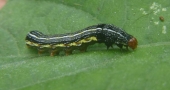
Anyone else have trouble on their pear and cherry trees with pear slugs (sawfly larvae)?

http://www.ipm.ucdavis.edu/PMG/r603302211.html

These slimy guys did a bit of damage to my pears (asian and european) and cherry trees before I picked them off. They are back again this year, right on schedule. I am hand picking again, but I'd like to see if anyone has come up with a way of getting nature to resolve the problem? Encourage a natural predator, some kind of sawfly detering companion plant, etc...?

 
gardener
Posts: 523
Location: The Old Northwest, South of Superior
320
books building wood heat
  • Likes 6
  • Mark post as helpful
  • send pies
    Number of slices to send:
    Optional 'thank-you' note:
  • Quote
  • Report post to moderator
I just noticed that the pear sawfly (Caliroa cerasi)  larvae are back on our pear tree.  I understand that Bt isn't effective on them.  My plan is to spray with neem oil.  I've also seen a recommendation in a couple of the state extension service circulars to dust with wood ash, but that would be difficult on this tree, as it's approaching 20 feet tall.  Wood ash (or even fugitive road dust) apparently acts as a dessicant on the young larvae.

A couple of years ago, we had a locally heavy infestation of gypsy moth (not common in this area), which stressed this pear tree.  I did spray those with neem oil, but not quickly enough to prevent substantial damage.  This year, the tree had no blossoms - zilch - and the adjacent flowering crab apple tree is done blooming, so I am hoping it is a safe time to spray the pear with neem oil, since the pollinators will have mostly moved on.

I think I can reach most of this tree's foliage with the garden sprayer from a tall step ladder.  We'll see how this goes.  I'll report back.
 
Posts: 46
Location: Southeastern Pennsylvania (Zone 7a)
10
  • Likes 6
  • Mark post as helpful
  • send pies
    Number of slices to send:
    Optional 'thank-you' note:
  • Quote
  • Report post to moderator
I could be wrong and haven't battled these myself (yet), but I think kaolin/surround is effective against them?
 
master pollinator
Posts: 2174
Location: Ashhurst New Zealand (Cfb - oceanic temperate)
760
duck forest garden fungi trees chicken cooking solar sheep wood heat woodworking rocket stoves
  • Likes 4
  • Mark post as helpful
  • send pies
    Number of slices to send:
    Optional 'thank-you' note:
  • Quote
  • Report post to moderator
I get these from time to time. Never enough to drag out the heavy artillery, but if I did feel the need to intervene I would probably try soap, and then maybe dilute wood vinegar. They are annoying and nothing seems to want to eat them.
 
Kevin Olson
gardener
Posts: 523
Location: The Old Northwest, South of Superior
320
books building wood heat
  • Likes 6
  • Mark post as helpful
  • send pies
    Number of slices to send:
    Optional 'thank-you' note:
  • Quote
  • Report post to moderator

Syd Smith wrote:I could be wrong and haven't battled these myself (yet), but I think kaolin/surround is effective against them?


That seems likely, since "road dust" was mentioned in one of the state ag extension services bullletins, along with wood ash.  Probably any dessicant would work, but I'll be jiggered if I can figure out how to nicely dust the whole tree, or even some substantial portion thereof.  There's probably a way, but I haven't thought of what it might be.

I did spray almost 1 gallon (a scant 4 liters) of neem oil, mixed about 2 fluid ounces of cold pressed neem oil to the gallon of hot tap water, through the pump-up garden sprayer.  I got as high as I could reach, all around the tree, saturating the leaf surfaces and giving some special love and attention to any larvae I saw.  This is about the same concentration I used on the gypsy moth chrysalises and caterpillars, as best I recall.  I wasn't able to reach the top of the tree, but the vast preponderance of sawfly larvae and damage they'd already caused was on the lower leaves, as best as I could see.

Now we wait...
 
Kevin Olson
gardener
Posts: 523
Location: The Old Northwest, South of Superior
320
books building wood heat
  • Likes 6
  • Mark post as helpful
  • send pies
    Number of slices to send:
    Optional 'thank-you' note:
  • Quote
  • Report post to moderator

Phil Stevens wrote:I get these from time to time. Never enough to drag out the heavy artillery, but if I did feel the need to intervene I would probably try soap, and then maybe dilute wood vinegar. They are annoying and nothing seems to want to eat them.


Phil -

I'll keep those in reserve, if the neem oil seems ineffective.

Thanks for the alternatives.

Kevin
 
Kevin Olson
gardener
Posts: 523
Location: The Old Northwest, South of Superior
320
books building wood heat
  • Likes 2
  • Mark post as helpful
  • send pies
    Number of slices to send:
    Optional 'thank-you' note:
  • Quote
  • Report post to moderator
So, here's tonight's update.

Despite an early morning rain (around 6AM), the pear sawfly larvae which were within range of the garden sprayer are kaput!

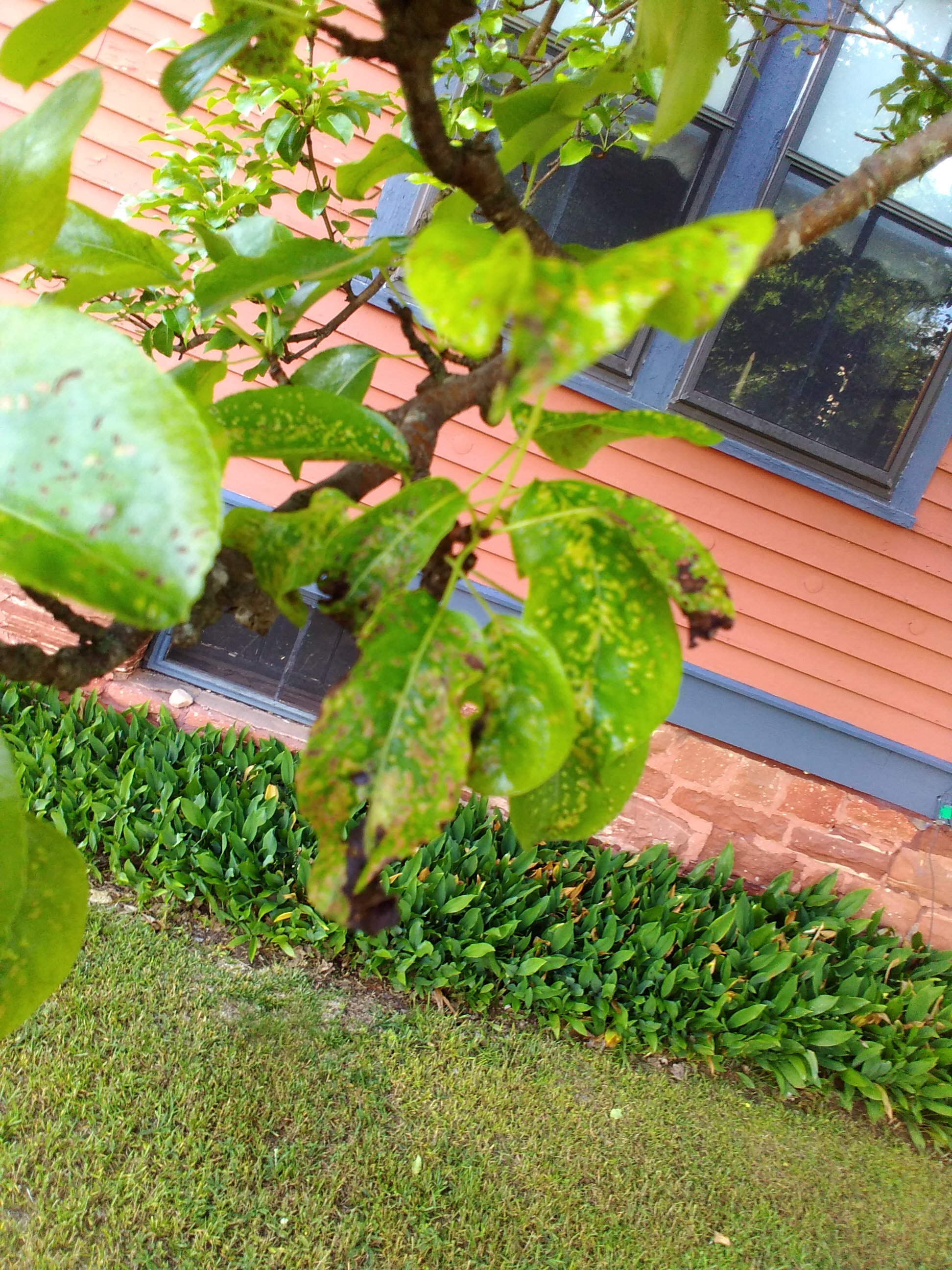
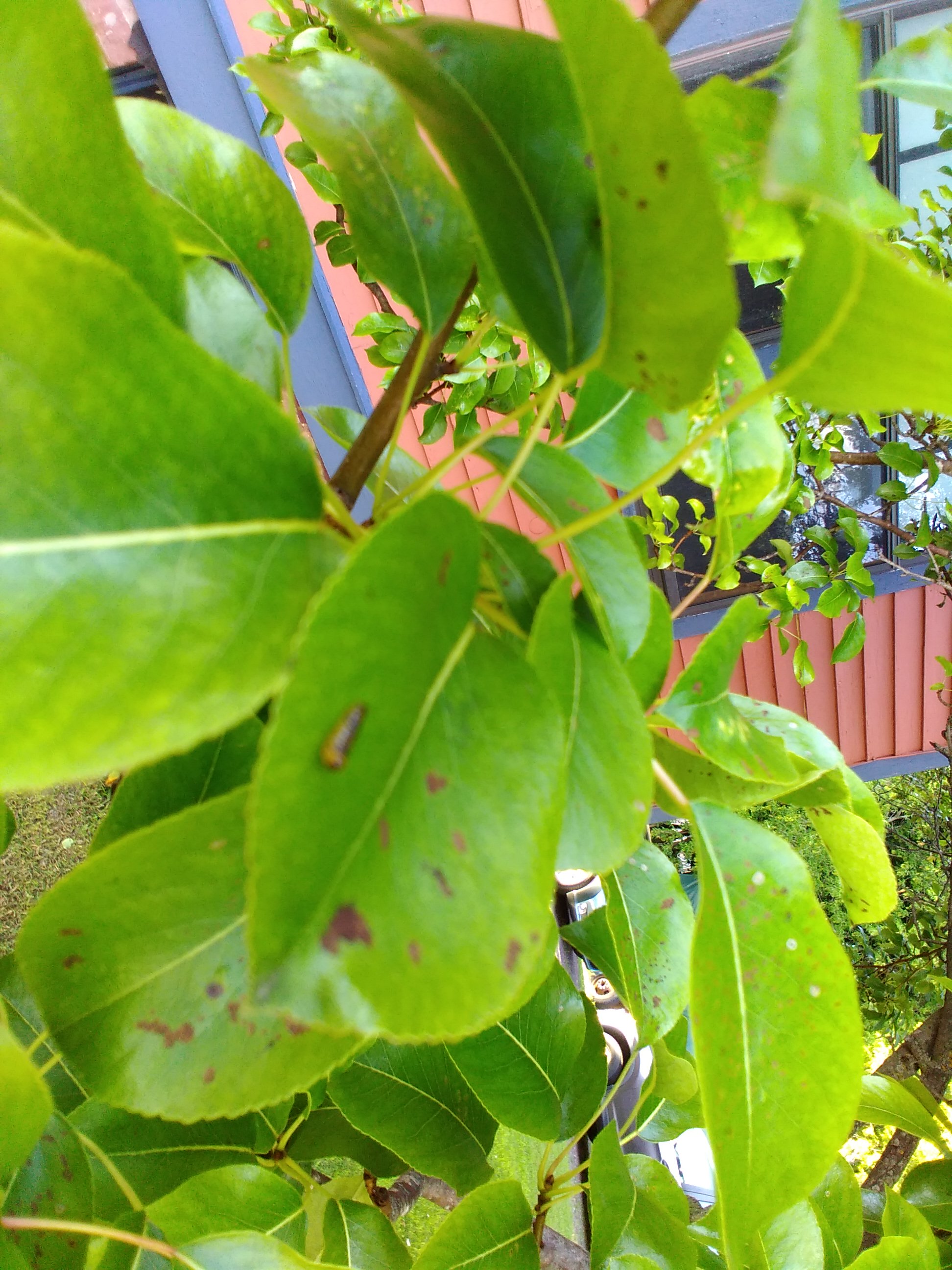
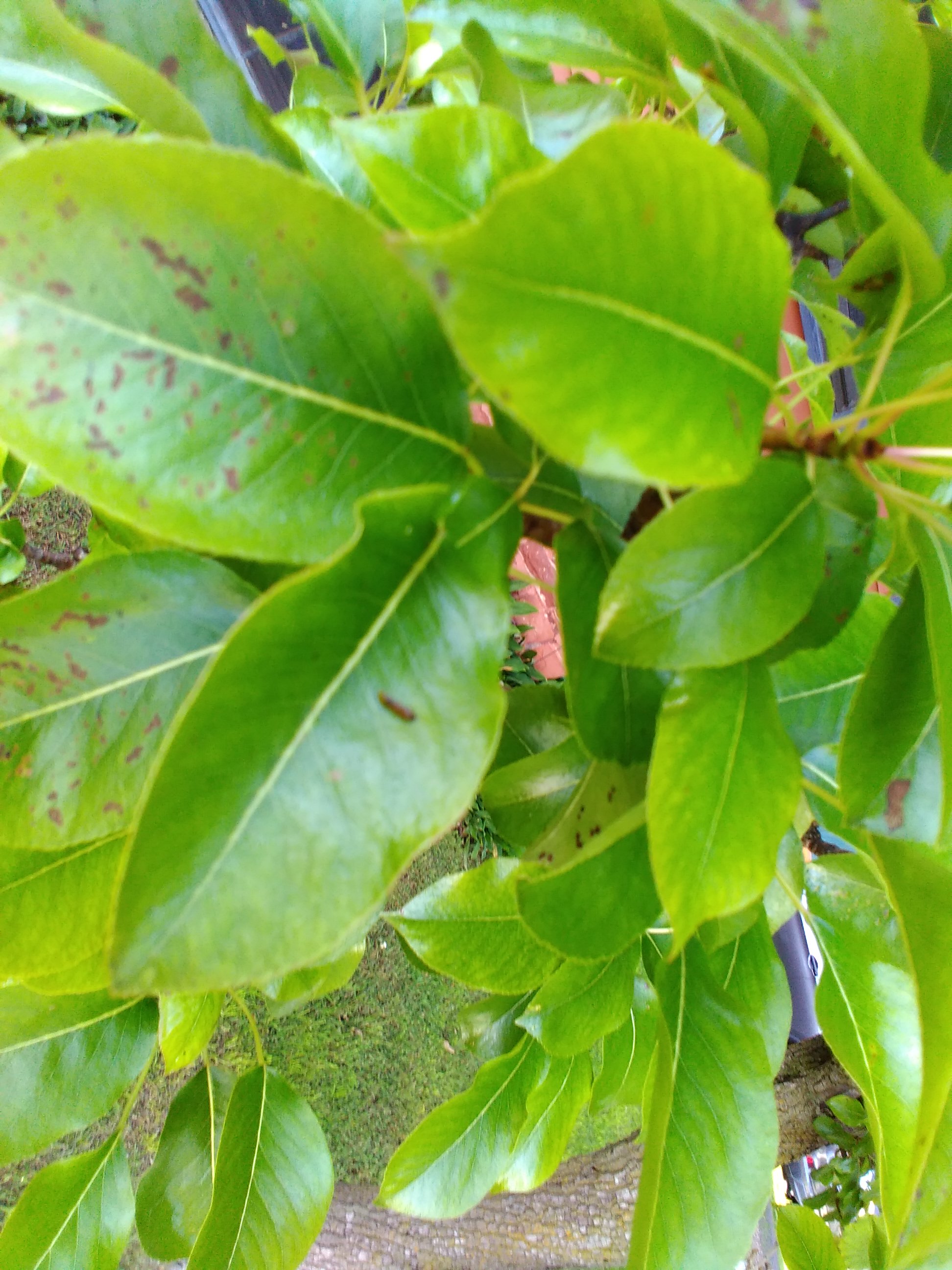
I spotted several immobile and dessicated - no twitching when prodded with the carbide scribe which lives in my shirt pocket (see attached photos).  I've also attached a photo of typical damage, if not particularly advanced.

So, it would seem that a couple of ounces of neem oil per gallon, sprayed rather heavily (in part due to a rickety old garden sprayer, with wonky spray nozzle and a leaky and perished o-ring which only sort-of seals the pump to the jug - greater pressure would lead to better atomization, but this was the maiden voyage for the season, and the o-ring will need replacement, but I digress...), is sufficient to dispatch sawfly larvae.

I may yet need to treat the upper branches of the tree, but I'll need to replace the o-ring and borrow an extension ladder from my sister to get up that high.

I would qualify this as a success.
IMG_0264.jpg
typical early sawfly damage to foliage
IMG_0262.jpg
kaput sawfly larva - neem oil success
IMG_0263.jpg
kaput sawfly larvae - more neem oil success
 
The only cure for that is hours of television radiation. And this tiny ad:
try homesteading without buying a homestead
https://wheaton-labs.com/bootcamp
reply
    Bookmark Topic Watch Topic
  • New Topic