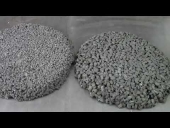

Hi! I am using a mix of sand and smooth pebbles of varying size between 0.1-5 cm and the slope is about 19%. I read that 15% is the maximum for gravel otherwise it will slide down. Looking for more sources to confirm whether this is true. Should I give it a try or do my best to get it below 15%? I'm in the wet tropics by the way, about 2000 mm rain fall.
A lot depends on the weather.
If you get hard rains or snow and ice I would strive to keep it below 15% perhaps even 10% if you get heavy rains.
If your weather is generally pleasant than you might be ok with a steeper grade.
For all your Montana Masonry Heater parts (also known as) Rocket Mass heater parts.
Visit me at
dragontechrmh.com Once you go brick you will never go back!
If it is not easy to lessen the grade, then an option is to use diagonal water bars across the path.
In hard rain, your gravel might be washed to the side but would be retrievable.
If the rain is allowed to travel directly down a steep path, you can get ruts to develop that would swallow all your sand and gravel.
For all your Montana Masonry Heater parts (also known as) Rocket Mass heater parts.
Visit me at
dragontechrmh.com Once you go brick you will never go back!
With that rainfall, I would suggest adding a rip-rap layer of larger rock, parallel to the path, at intervals to diffuse the force of the moving water. Otherwise it may wash your gravel downhill.
Thanks for the advice!! @Douglas, don't you mean perpendicular to the path? I imagine lines of rock in that orientation would hold segments of gravel in place.
When considering the appropriate maximum slope for a gravel path, it's essential to ensure both stability and safety. Typically, a gravel path on a slope should not exceed a gradient of 1:10 (10%). This means that for every 10 units of horizontal distance, the path should rise no more than 1 unit vertically. However, for optimal traction and stability, especially for pedestrian use, a slope of 1:12 (8.33%) or gentler is recommended.
Wow.. interesting to learn that the degree should be even lower than I feared. So what are the alternatives? Concrete steps seems best but I would explore cheaper alternatives first. We have a good amount of bricks and big rocks. There was a staircase built out of bricks in the woods here and they did use cement to glue it together, and it works pretty well.
Jonathan Andersson wrote:Thanks for the advice!! @Douglas, don't you mean perpendicular to the path? I imagine lines of rock in that orientation would hold segments of gravel in place.
Yes of course, perpendicular to the path. I mistyped.
Gravel shape matters too. Angular crushed gravel stays in place better than round pebbles. You might also want to look at geogrid type answers. May be too expensive but would hide a bit that it was there. In this area we have a lot of round bale baler net wrap left over from feeding livestock and I am wanting to play with it as a poor mans geogrid.
Country oriented nerd with primary interests in alternate energy in particular solar. Dabble in gardening, trees, cob, soil building and a host of others.
I would examine other driveways in the area. I am going back deep into my memory, but in Northern MInnesota in the 1980s we tried to keep a 7% grade … this was the goal. This doesn’t mean we always reached that goal.
I learn from the mistakes of others who take my advice.
Think of how stupid the average person is. And how half of them are stupider than that. - Carlin But who reads this tiny ad?
grow your own garden and build your own home in the gardening gardeners program