• Post Reply Bookmark Topic Watch Topic
  • New Topic
permaculture forums growies critters building homesteading energy monies kitchen purity ungarbage community wilderness fiber arts art permaculture artisans regional education skip experiences global resources cider press projects digital market permies.com pie forums private forums all forums
this forum made possible by our volunteer staff, including ...
master stewards:
  • Carla Burke
  • John F Dean
  • Nancy Reading
  • r ransom
  • Jay Angler
  • Timothy Norton
stewards:
  • paul wheaton
  • Pearl Sutton
  • Anne Miller
master gardeners:
  • Christopher Weeks
  • M Ljin
gardeners:
  • Jim Garlits
  • thomas rubino
  • William Bronson

Tools for Composting

 
Steward of piddlers
Posts: 7894
Location: Upstate New York, Zone 5b, 43 inch Avg. Rainfall
4525
monies home care dog fungi trees chicken food preservation cooking building composting homestead
  • Likes 5
  • Mark post as helpful
  • send pies
    Number of slices to send:
    Optional 'thank-you' note:
  • Quote
  • Report post to moderator
What tools do you use to help you with your compost creation?

There are a few that I frequently use.

Sifter

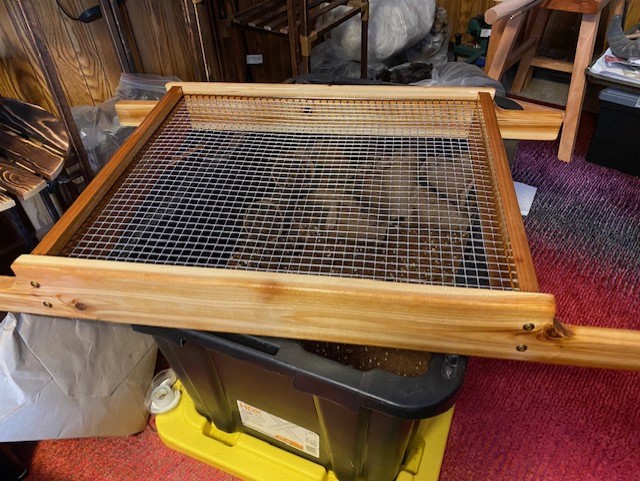
Compost Sifter


I use a sifter when I am harvesting finished compost to remove any large chunks. Anything that doesn't pass through the screen ends up back into a working compost pile to continue to break down. This assists with handling of the finished compost and gives me an amendment that is rather consistent.

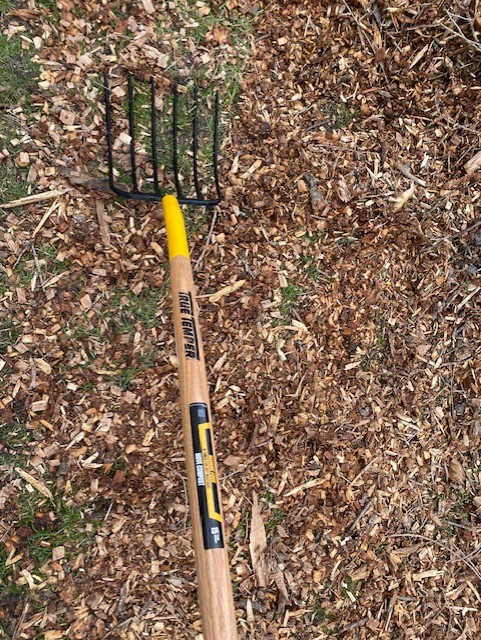
Pitchfork


My go-to tool for handling compost is the pitchfork. It is great for transferring materials and poking around in the piles. I keep one near my active piles so I can expose the core, add more materials, and recover it quickly. Out of all of my compost related tools this is the one that gets the most use.

What tools do you use?
 
Timothy Norton
Steward of piddlers
Posts: 7894
Location: Upstate New York, Zone 5b, 43 inch Avg. Rainfall
4525
monies home care dog fungi trees chicken food preservation cooking building composting homestead
  • Likes 5
  • Mark post as helpful
  • send pies
    Number of slices to send:
    Optional 'thank-you' note:
  • Quote
  • Report post to moderator
I'm thinking of purchasing a scraper/chopper tool with the intent of being able to process down some woodier material by hand and to work the compost pile itself.

Anyone have any experience with one?
 
gardener
Posts: 6444
Location: Carlton County, Minnesota, USA: 3b; Dfb; sandy loam; in the woods
3886
8
forest garden trees books chicken food preservation cooking fiber arts seed woodworking homestead ungarbage
  • Likes 7
  • Mark post as helpful
  • send pies
    Number of slices to send:
    Optional 'thank-you' note:
  • Quote
  • Report post to moderator
First, my hands. I mostly pull weeds and carry them to the heap. Then, a year or two later, a fork to scrape the stuff away from the top of the heap. And last, a spade to load up buckets of humus that I take back to a garden bed. I've thought about building a screen for the purpose you outlined, but so far, I just use my hand to toss large chunks -- bone or avocado seeds or the base of a cornstalk or whatever else hasn't broken down completely, back onto the heap.

But honestly, I'm doing less and less composting and more just mulching chop'n'drop nearby. Our kitchen scraps still go to one of the heaps until I get chickens online and at that point I probably won't really compost at all anymore.
 
master pollinator
Posts: 5820
Location: Canadian Prairies - Zone 3b
1673
  • Likes 6
  • Mark post as helpful
  • send pies
    Number of slices to send:
    Optional 'thank-you' note:
  • Quote
  • Report post to moderator

Timothy Norton wrote:I'm thinking of purchasing a scraper/chopper tool with the intent of being able to process down some woodier material by hand and to work the compost pile itself.

Anyone have any experience with one?


Yes, I do this a lot. Mostly I use a long handled shovel with a sharp blade that has basically no offset from the line of the handle -- great chopper for compost, weeds, or ice.

Another very useful tool is a stout lawn edger. You know, the half moon shape. I sharpen these on one side and sometimes use a battery angle grinder to add little serrations as well. These have a wider contact area with the material being chopped (compared to the shovel), so you can put your weight on it and rock it back and forth.

Naturally I scrounge all of these tools for cheap/free.
 
Posts: 96
Location: West central Minnesota
37
  • Likes 7
  • Mark post as helpful
  • send pies
    Number of slices to send:
    Optional 'thank-you' note:
  • Quote
  • Report post to moderator
I like that 6 tine pitchfork, would be hard to find one round here, mostly 4 and 5 tines. I have worn out all of our forks using them like a broadfork. So many times with a fork I have gently loosened the soil in the garden and good things happen. The pitchfork is my go to tool. My composting is rather quaint in that I pile the overwinter mulch on the garden edge and just let the soil critters have at it. Might add some gypsum, chicken pellets and new green weeds and turn it a few times, it is soon dark and earthy. Use it around the garden plants for fertility and to hold moisture.
 
pollinator
Posts: 293
Location: Middlebury, Vermont zone 5a
102
forest garden books food preservation fiber arts medical herbs homestead
  • Likes 7
  • Mark post as helpful
  • send pies
    Number of slices to send:
    Optional 'thank-you' note:
  • Quote
  • Report post to moderator
I use a screen very similar to the one pictured above that my dad had built probably over 60 or 70 years ago. I place it on top of my very large orange double-wheeled wheelbarrow and then shovel on the compost from the bottom of the bin.  What doesn't get sifted through, goes back into the compost at the top. I use my hand and rub across the screen until nothing else will slip through. When I reach a level where I'm pulling out very recognizable items, avacado pits or banana peels, for example, I stop--work smarter, not harder!

Just a side note: if you buy produce, make sure to pull of those horrible little stickers.  They are plastic and will not decompose, nor do you want them to!
 
pollinator
Posts: 86
Location: Half acre on a hill in Central Alabama, Zone 8a and 8b
79
hugelkultur art forest garden fungi foraging food preservation cooking writing composting
  • Likes 6
  • Mark post as helpful
  • send pies
    Number of slices to send:
    Optional 'thank-you' note:
  • Quote
  • Report post to moderator
One day I'll build a proper sifting station, something I've been saying for probably twenty years. Until then I'll keep using a commercial bread tray, much like this one, to sift compost. They're fairly sturdy, and the handles are convenient, though you do have to lean forward a bit to shake them, and that can be a strain on the back. Not bad enough to make me quit using it - yet.

I've never purchased one, but there always seems to be one around. For some reason they turn up on roadsides and in ditches. I'm always glad to give them a new home. (Leave the ones that live behind the grocery store alone. Those are tame, and their humans would miss them.)
Bread-Tray.jpeg
[Thumbnail for Bread-Tray.jpeg]
 
pollinator
Posts: 267
75
kids urban seed
  • Likes 5
  • Mark post as helpful
  • send pies
    Number of slices to send:
    Optional 'thank-you' note:
  • Quote
  • Report post to moderator
Bread trays are genius, never thought of that. I use a bit of old chicken wire stapled to a wooden frame, does the job but the holes are probably too big for fine stuff. The tool I reach for most is just a cheap garden fork with the tines bent slightly outward from years of abuse. Better for turning than a proper pitchfork because it grabs more.
 
pollinator
Posts: 973
Location: 10 miles NW of Helena Montana
561
hugelkultur chicken seed homestead
  • Likes 5
  • Mark post as helpful
  • send pies
    Number of slices to send:
    Optional 'thank-you' note:
  • Quote
  • Report post to moderator

Timothy Norton wrote:I'm thinking of purchasing a scraper/chopper tool with the intent of being able to process down some woodier material by hand and to work the compost pile itself.

Anyone have any experience with one?


I purchased an inexpensive chipper from Harbor Freight a couple years ago.  Main idea was to chip the corn stalks for mulch and compost.  (I only have a few dozen corn stalks each year).
It works great for that.   I saved a pile for mulch and found it had already started to compost down by the time I wanted to use it for mulch.

I always am on the lookout for a workable used and very cheap in price blender for the kitchen scraps for the garden.   Our chickens get the majority of them, but some go to the garden.   The stuff I work into the garden I chop up fine so the worms don't have to work to hard.  lol.

About 10 years ago I did a small experiment with composting.   I chopped up some of the kitchen waste fine and put it in one corner of my compost pile, the rest went into the rest of the pile.  Just cold composting, but the chopped turned into great soil over the summer, while the other took until the next summer.   I was pleased with the results but the work of chopping all the time was the down side.  Hence the eye out for a decent blender.
 
gardener
Posts: 5714
Location: Cincinnati, Ohio,Price Hill 45205
1317
forest garden trees urban
  • Likes 5
  • Mark post as helpful
  • send pies
    Number of slices to send:
    Optional 'thank-you' note:
  • Quote
  • Report post to moderator
Chickens are my favorite composting tool!
Seriously, they shred and turn many bags of leaves and hundreds of pounds of food scraps every year.

To turn their pile, and retrieve the finished compost I use a garden fork.
I only bought first garden fork not that long ago, now I have many
I think I now have more garden forks than I do shovels!

Most of the compost goes into buckets for transportation, which makes the humble bucket my third most used tool for composting.

Coming on a distant 4th place is the composting auger.
I have one for my dog poop bucket, and another at my sisters house.
Her compost is contained in a large commercially made residential compost and is almost entirely food scraps.
The "augur" we use there is a steel rod with two folding spurs that close when it's shoved into the pile and pop open when it's yanked out.
It's like blunt harpoon, and it does good job aerating the pile.
 
Douglas Alpenstock
master pollinator
Posts: 5820
Location: Canadian Prairies - Zone 3b
1673
  • Likes 6
  • Mark post as helpful
  • send pies
    Number of slices to send:
    Optional 'thank-you' note:
  • Quote
  • Report post to moderator
I also keep short handled cutting tools by my composters, and use them constantly. A stiff-spined, 10" serrated "junk" kitchen knife with a spear point. And a cheap cleaver with some serious heft to it, almost a machete.

It's easy to keep a crude edge on these tools. And as I churn my primary composters (1000L IBC totes cut in half) I can easily chop up the soaked-up material with the serrated knife. That makes the material easier to handle.

The cleaver/machete mulches up the fresh greens/weeds pulled out of the garden. And sunflower stalks as well.
 
steward
Posts: 19137
Location: USDA Zone 8a
4828
dog hunting food preservation cooking bee greening the desert
  • Likes 3
  • Mark post as helpful
  • send pies
    Number of slices to send:
    Optional 'thank-you' note:
  • Quote
  • Report post to moderator
A hay fork for turning the pile.
 
Posts: 6
2
  • Likes 4
  • Mark post as helpful
  • send pies
    Number of slices to send:
    Optional 'thank-you' note:
  • Quote
  • Report post to moderator
I’ve got this really handy lightweight plastic shovel that’s perfect for shifting those last few scoops of compost when turning a pile. I was pretty skeptical at first, but after using it I’m a real fan. It has a large blade and is so light and easy to use, it’s made finishing the job a lot less effort.
 
I agree. Here's the link: http://stoves2.com
reply
    Bookmark Topic Watch Topic
  • New Topic